Kirjojen hintavertailu. Mukana 12 211 374 kirjaa ja 12 kauppaa.

Kirjahaku

Etsi kirjoja tekijän nimen, kirjan nimen tai ISBN:n perusteella.

1000 tulosta hakusanalla Dan E. Perry

The Political Pundits

The Political Pundits

James E. Combs; Dan Nimmo

Praeger Publishers Inc
1992
nidottu
The Political Pundits surveys in detail the small, elite group of persons who comment on and analyze politics in newspapers and newsmagazines, on radio and television, through lectures, books, and all other forms of political media. Dan Nimmo and James E. Combs discuss the key political role pundits play, their methods and strategies, and the potential danger they present to American political life. Our democracy is being transformed into a punditocracy, which replaces serious citizen debate with discussion guided by show business values. Punditry, Nimmo and Combs argue, produces symbolic rather than effective healing of political ills, political paternalism rather than political reflection, and, in the end, public disenchantment with politics. The authors conclude that pundits should not be taken too seriously, and approach their outpourings using a comic, or bardic, framework. In Part One, the discussion focuses on four generic types of pundits: Priests, Bards, Sages, and Oracles. Part Two identifies three pundit roles: as technicians, as members of the Chattering Class, and as media critics. Each chapter provides examples, cases, and profiles to demonstrate the dominance of punditry. The Political Pundits challenges the generally accepted view that learned and informed public discussion in politics provides an adequate forum for informing and involving citizens. Scholars and students of political science and communications will find the role of the pundits demystified--the curtain pulled back to reveal the wizards.
Questions to All Your Answers

Questions to All Your Answers

Roger E. Olson; Dan Kimball

Zondervan
2008
nidottu
Many Christians’ faith exists as a loose collection of unexamined clichés and slogans borrowed from songs, devotional books, sermon illustrations, and even the internet. Too often this belief system (if it can be called a “system”) lacks coherence and intelligibility; it can hardly be expressed, let alone defended, to others. The problem with folk religion is that it too easily withers under the onslaughts of secularism or seemingly reasonable answers provided by cults and new religions. Christianity has a long tradition of intellectual examination of other faiths and its own beliefs. Socrates said that the unexamined life is not worth living; great Christian minds of all the ages have believed the unexamined faith is not worth believing. Reflective Christianity is Christian faith that has subjected itself to the rigorous questioning of Scripture, tradition, reason, and experience. It is mature Christian faith that goes on believing even as it questions what it believes. The goal of this book is not to destroy anyone’s faith but to build it up by placing it on a firmer foundation of critical examination. Ten popular Christian clichés are subjected to critical inquiry and interrogated to discover whether they contain truth or are in error. In most cases the conclusion is—both. The aim is not to tear down straw men but to demonstrate a path toward stronger, more mature Christian belief.
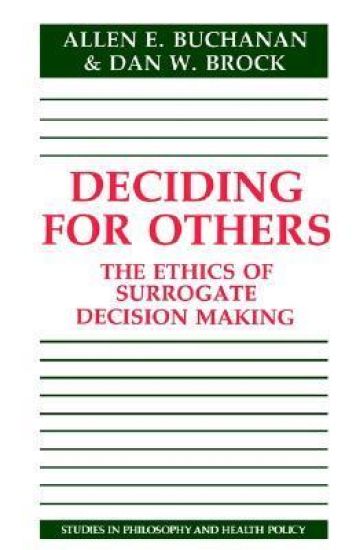
Deciding for Others

Deciding for Others

Allen E. Buchanan; Dan W. Brock

Cambridge University Press
1990
pokkari
This book is the most comprehensive treatment available of one of the most urgent - and yet in some respects most neglected - problems in bioethics: decision-making for incompetents. Part I develops a general theory for making treatment and care decisions for patients who are not competent to decide for themselves. It provides an in-depth analysis of competence, articulates and defends a coherent set of principles to specify suitable surrogate decisionmakers and to guide their choices, examines the value of advance directives, and investigates the role that considerations of cost ought to play in decisions concerning incompetents. Part II applies this theoretical framework to the distinctive problems of three important classes of individuals, many of whom are incompetent: minors, the elderly and psychiatric patients. The authors’ approach combines a probing analysis of fundamental issues in ethical theory with a sensitive awareness of the concrete realities of health care institutions and the highly personal and individual character of difficult practical problems. Its broad scope will appeal to health professionals, moral philosophers and lawyers alike.
Deciding for Others

Deciding for Others

Allen E. Buchanan; Dan W. Brock

Cambridge University Press
1990
sidottu
This book is the most comprehensive treatment available of one of the most urgent - and yet in some respects most neglected - problems in bioethics: decision-making for incompetents. Part I develops a general theory for making treatment and care decisions for patients who are not competent to decide for themselves. It provides an in-depth analysis of competence, articulates and defends a coherent set of principles to specify suitable surrogate decisionmakers and to guide their choices, examines the value of advance directives, and investigates the role that considerations of cost ought to play in decisions concerning incompetents. Part II applies this theoretical framework to the distinctive problems of three important classes of individuals, many of whom are incompetent: minors, the elderly and psychiatric patients. The authors’ approach combines a probing analysis of fundamental issues in ethical theory with a sensitive awareness of the concrete realities of health care institutions and the highly personal and individual character of difficult practical problems. Its broad scope will appeal to health professionals, moral philosophers and lawyers alike.
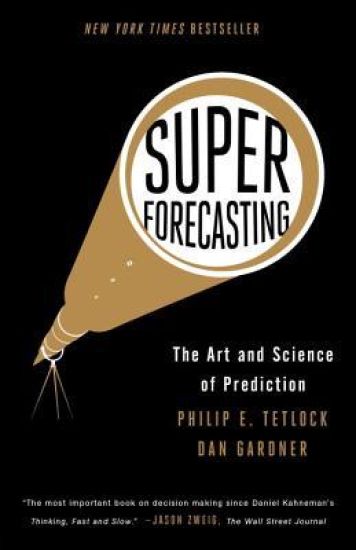
Superforecasting: The Art and Science of Prediction

Superforecasting: The Art and Science of Prediction

Philip E. Tetlock; Dan Gardner

Crown Publishing Group (NY)
2016
nidottu
NEW YORK TIMES BESTSELLER - NAMED ONE OF THE BEST BOOKS OF THE YEAR BY THE ECONOMIST "The most important book on decision making since Daniel Kahneman's Thinking, Fast and Slow."--Jason Zweig, The Wall Street Journal Everyone would benefit from seeing further into the future, whether buying stocks, crafting policy, launching a new product, or simply planning the week's meals. Unfortunately, people tend to be terrible forecasters. As Wharton professor Philip Tetlock showed in a landmark 2005 study, even experts' predictions are only slightly better than chance. However, an important and underreported conclusion of that study was that some experts do have real foresight, and Tetlock has spent the past decade trying to figure out why. What makes some people so good? And can this talent be taught? In Superforecasting, Tetlock and coauthor Dan Gardner offer a masterwork on prediction, drawing on decades of research and the results of a massive, government-funded forecasting tournament. The Good Judgment Project involves tens of thousands of ordinary people--including a Brooklyn filmmaker, a retired pipe installer, and a former ballroom dancer--who set out to forecast global events. Some of the volunteers have turned out to be astonishingly good. They've beaten other benchmarks, competitors, and prediction markets. They've even beaten the collective judgment of intelligence analysts with access to classified information. They are "superforecasters." In this groundbreaking and accessible book, Tetlock and Gardner show us how we can learn from this elite group. Weaving together stories of forecasting successes (the raid on Osama bin Laden's compound) and failures (the Bay of Pigs) and interviews with a range of high-level decision makers, from David Petraeus to Robert Rubin, they show that good forecasting doesn't require powerful computers or arcane methods. It involves gathering evidence from a variety of sources, thinking probabilistically, working in teams, keeping score, and being willing to admit error and change course. Superforecasting offers the first demonstrably effective way to improve our ability to predict the future--whether in business, finance, politics, international affairs, or daily life--and is destined to become a modern classic.
Arthritis and Common Sense: With Illustrations and Menus

Arthritis and Common Sense: With Illustrations and Menus

Dan Dale Alexander; H. E. Kirschner

Literary Licensing, LLC
2012
sidottu
Arthritis and Common Sense is a comprehensive guide to understanding and managing arthritis. Written by Dan Dale Alexander, a renowned expert in the field, the book provides readers with practical advice and easy-to-follow tips for living with arthritis. The book is filled with helpful illustrations and menus that make it easy to understand and implement the advice provided. The book covers a wide range of topics related to arthritis, including the causes of arthritis, the different types of arthritis, and the symptoms of arthritis. It also provides detailed information on how to manage arthritis through diet, exercise, and lifestyle changes. One of the unique features of the book is its focus on the importance of common sense in managing arthritis. Alexander emphasizes the importance of listening to your body and making informed decisions about your health. He provides practical advice on how to do this, such as learning to recognize the signs of arthritis flare-ups and adjusting your activities accordingly.Overall, Arthritis and Common Sense is a valuable resource for anyone living with arthritis or caring for someone with arthritis. It provides practical advice that can help readers manage their symptoms and improve their quality of life.This scarce antiquarian book is a facsimile reprint of the old original and may contain some imperfections such as library marks and notations. Because we believe this work is culturally important, we have made it available as part of our commitment for protecting, preserving, and promoting the world's literature in affordable, high quality, modern editions, that are true to their original work.
Trichotillomania, Skin Picking, and Other Body-Focused Repetitive Behaviors

Trichotillomania, Skin Picking, and Other Body-Focused Repetitive Behaviors

Jon E. Grant; Dan J. Stein; Douglas W. Woods; Nancy J. Keuthen

American Psychiatric Association Publishing
2011
pokkari
Underestimated, under-researched, and often poorly understood, the body-focused repetitive disorders nevertheless cause human suffering that is serious, persistent, and pervasive. These disorders can occur in both adults and children and manifest themselves as hair pulling (trichotillomania), pathologic skin picking, thumb sucking, and nail biting. Although these disorders are common, very few medical students and residents hear them addressed in lectures or know where to begin when confronted with a patient presenting with these behaviors. Trichotillomania, Skin Picking, and Other Body-Focused Repetitive Behaviors seeks to remedy this situation by synthesizing the latest research on body-focused repetitive disorders and presenting it in a systematic, easy-to-grasp manner. Much has changed in the more than a decade since the last book on this topic was published. This new volume reflects the most current and substantive research into the etiology and symptoms of body-focused repetitive disorders and therapeutic options. Organized in logical fashion, it begins with a review of the clinical characteristics, moves on to diagnosis and evaluation, and concludes with a full review of treatment options. Special features include: • Extensive material to help clinicians and patients understand the underlying purpose of engaging in these behaviors, which include, reducing tension, regulating strong emotion, and alleviating boredom.• Separate chapters on adults and children, who may have a different presentation and a different set of treatment options. An additional chapter focuses on the role of the child patient's family in the diagnosis and treatment of the disorder.• Thorough coverage of the full range of treatments—including psychotherapy, medication, and alternative treatments—which provides the clinician with an evidence-based approach to treating patients.• Discussion of the psychobiology of hair pulling and skin picking, which allows the reader to understand and contextualize the disorder from a neurological perspective and offers clues that may assist in optimizing treatment.• A presentation style that is detailed enough for clinicians, yet accessible enough for a lay audience, including patients with the disorder and the families who seek to understand and support them. Trichotillomania, Skin Picking, and Other Body-Focused Repetitive Behaviors fills a critical gap in the literature by addressing this common and frequently debilitating disorder in an utterly current, highly practical, and wholly compassionate manner.
Faded Glory

Faded Glory

Thomas E. Alexander; Dan K. Utley

Texas A M University Press
2012
nidottu
Each of the wars fought by Texans spawned the creation of scores of military sites across the state, from the lonely frontier outpost at Adobe Walls to the once-bustling World War II shipyards of Orange. Today, although vestiges of the sites still exist, many are barely discernible, their once-proud martial trappings now faded by time, neglect, the elements and, most of all, public apathy. ?In Faded Glory: A Century of Forgotten Texas Military Sites, Then and Now, Thomas E. Alexander and Dan K. Utley revisit twenty-nine sites—many of them largely forgotten—associated with what was arguably the most tumultuous hundred-year period in a five-century span of Texas history.?Whether in the war with Mexico, the American Civil War, in clashes between Indians and the frontier army, or in two worldwide conflicts fought on foreign shores, Texas and Texans have often answered the call to arms. Beginning in 1845 and continuing through 1945, the Lone Star State and its people were fully involved in seven major conflicts. ?In this thoroughly researched and absorbing guide, Alexander and Utley recount the full story of the sites from their days of fame to the present. Comparing historic sketches, paintings, and period photographs of the original installations with recent photographs, they illustrate how time has dealt with these important places. Providing maps to aid readers in locating each site, the authors close with a resounding call for preservation and interpretation for future generations. ?The descriptions and images restore, at least in the mind’s eye, a touch of vitality and color to these forgotten and disappearing sites. Thanks to Faded Glory: A Century of Forgotten Texas Military Sites, Then and Now, both the traveler and the armchair tourist can recover a sense of these places and events that did so much to shape the military history of Texas.
Echoes of Glory

Echoes of Glory

Thomas E. Alexander; Dan K. Utlet

Texas A M University Press
2015
nidottu
In their previous book, Faded Glory: A Century of Forgotten Texas Military Sites, Then and Now, historians Thomas E. Alexander and Dan K. Utley chose to go beyond the familiar military sites of Texas—the Alamo or the San Jacinto battlefield, for example—to feature lesser known locations. The book successfully recovered these “forgotten” arenas for tourists and preservationists alike. Alexander and Utley now return with Echoes of Glory, and the result is another impressive catalogue that highlights the hidden gems of Texas history.Echoes of Glory explores two dozen rarely discussed but equally significant military sites across Texas. From the establishment of a Spanish fortress at San Sabá during the mission era to a multimillion-dollar Cold War naval base, readers will find a range of sites and stories to enlighten and entertain. Rare illustrations contrast each site with how it appeared in its glory days to how it appears today.Echoes of Glory underscores the need to preserve or fully interpret such places before they are lost forever.
Go Where the Fighting Was Fiercest

Go Where the Fighting Was Fiercest

Thomas E. Alexander; Dan K. Utley

State House Press
2013
nidottu
When a Chickamauga Battlefield ranger was asked where to find the Texas monument, his quick reply was “Go to where the fighting was fiercest.” While that spontaneous response accurately underscored the legendary battlefield zeal of the Texas forces in virtually every major Civil War battle, it likely did little to answer the visitor’s question.In this book, the authors will inform visitors to many Civil War battlefields about the heroic role played by the Texans at key sites and why the State of Texas has, over the years, seen fit to officially commemorate the valor of the hard-fighting men of Texas with impressive monuments.With the sesquicentennial observance of America’s Civil War already underway, however, Texas has chosen to pay little attention to Texans’ contribution to the Confederate cause. Regardless of the scant official recognition being afforded this seminal event, the facts remain that there was a Civil War and that Texans were very often at the hot center of its battles—“Where the fighting was the fiercest.”Students of American history, as well as visitors and those planning to visit the eighteen battlefield monuments described in this book, will learn how Texas forces fared in the fighting. Time must never be allowed to erase the memories of those sacrifices and those battle-bloodied accomplishments on the field of honor. This book will ensure that present and future generations will always remember the monumental significance of the story of Texas in the Civil War.
No Vacancy – Homeless Women in Paradise

No Vacancy – Homeless Women in Paradise

Michael E. Reid; Dan Baldwin

2Leaf Press
2019
nidottu
Homelessness touches every corner of our country, even the most prosperous ones. In No Vacancy: Homeless Women in Paradise, Michael E. Reid tells the story of more than five hundred women living without shelter in the affluent sea-side communities of Monterrey, Pebble Beach, and Carmel, California. Even in these glittering cities, one by one, homeless women were dying, their bodies appearing in plain sight. When Reid, an Episcopal priest, became aware of these tragedies, he had to act, and he co-founded the Fund for Homeless Women. This new venture took him deep into the complex realities homeless women face. He found that the well-meaning policies and programs in place in fact often had the unintentional effect of widening the gap between the indigent and mainstream society. No Vacancy captures the realities of homelessness in affluent northern California and exposes pitfalls encountered by those who wish to combat it. Reid presents an unvarnished look at the culture of long-term homelessness, and his experience provides helpful guidance for fighting this crisis. He also explores the root causes that can result in homelessness, including marginalization and the gender-based bias—and its disproportionate effect on women of color. This timely book provides needed guidance from the frontlines of the fight against homelessness, especially as activists and homeless people face weakened political and financial support from the government and their communities.
Konsten att förutsäga framtiden : en bok om superprognostik

Konsten att förutsäga framtiden : en bok om superprognostik

Philip E. Tetlock; Dan Gardner

Bokförlaget Daidalos
2016
sidottu
Alla gör vi förutsägelser, i stort och i smått. Om världshändelser, om vem som vinner val eller fotbollsmatcher, om samhällsekonomi och privatekonomi, om vad som kommer att ske på jobbet och så vidare. Vi är alla prognostiker, men de flesta av oss är dåliga på att förutsäga framtiden. Psykologen Philip Tetlock visade i sin uppmärksammade bok "Expert Political Judgment" hur dåliga politiska experter är på att göra förutsägelser trots att de gör det hela tiden. Men bland de experter han studerade fanns också en del som var påfallande träffsäkra. I "Konsten att förutsäga framtiden" presenterar han resultaten av ett omfattande forskningsprojekt som har involverat tusentals människor som ställt prognoser om världshändelser. Dessa var inte experter på det de tillfrågades om, men en del av dem visade sig vara utomordentligt träffsäkra. De var "superprognostiker". Vad gjorde dem så bra på att förutsäga? Hur samlade de information, hur resonerade de och hur förhöll de sig till sitt eget resonerande och till ny information? Och vad kan vi andra lära oss om tankefel som vi lätt gör, men som superprognostikerna lyckas undvika. Lättillgängligt och underhållande redogör Tetlock tillsammans med Dan Gardner för sina forskningsresultat. Daniel Kahneman, nobelpristagare i ekonomi och känd för sin banbrytande forskning om tankefel, säger följande om boken: "... en underbar bok om hur Tetlock och hans forskarlag fick vanliga människor att slå experter. Det är också en handbok för klart tänkande i en osäker värld. Läs den!"."Philip Tetlock är en världsledande expert inom ett viktigt fält. ... en underbar bok om hur Tetlock och hans forskarlag fick vanliga människor att slå experter. Det är också en handbok för klart tänkande i en osäker värld. Läs den! /Daniel Kahneman "Det är en väldigt bra bok. Den borde faktiskt vara obligatorisk läsning – något jag aldrig tidigare skrivit i en recension. Den borde finnas på varje chefs och investerares läslista ..." /Management Today Tetlock, tillsammans med sin medförfattare Dan Gardner, redovisar och diskuterar projektet i den mycket läsvärda ”Konsten att förutsäga framtiden”. De undersöker några av deltagarna i den grupp de arbetat med – de som visat sig vara mycket bra på att förutsäga framtiden – från tre olika perspektiv. De studerar deras intelligens, deras matematiska förmåga och deras konsumtion av nyheter – och finner i nyanserade och intressanta resultat att alla dessa tre faktorer har en positiv påverkan på deltagarnas förutsägelser, men att de inte ensamma räcker för att förklara de extremt goda resultat som vissa av deltagarna uppvisar." /SvD Under strecket