Kirjojen hintavertailu. Mukana 11 342 296 kirjaa ja 12 kauppaa.

Kirjahaku

Etsi kirjoja tekijän nimen, kirjan nimen tai ISBN:n perusteella.

1000 tulosta hakusanalla Daniel A. Strachman

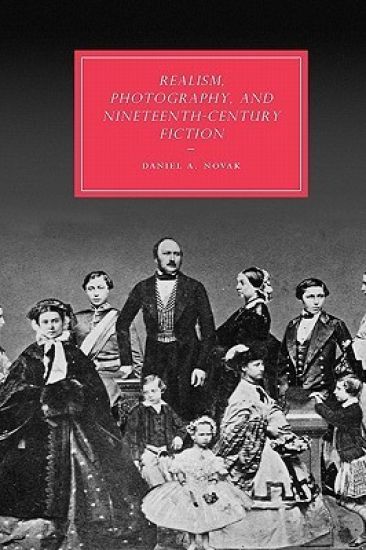
Realism, Photography and Nineteenth-Century Fiction

Realism, Photography and Nineteenth-Century Fiction

Daniel A. Novak

Cambridge University Press
2008
sidottu
This fascinating account of the relationship between photography and literary realism in Victorian Britain draws on detailed readings of photographs, writings about photography, and fiction by Charles Dickens, George Eliot and Oscar Wilde. While other critics have argued that photography defined what would be 'real' for literary fiction, Daniel A. Novak demonstrates that photography itself was associated with the unreal - with fiction and the literary imagination. Once we acknowledge that manipulation was essential rather than incidental to the project of nineteenth-century realism, our understanding of the relationship between photography and fiction changes in important ways. Novak argues that while realism may seem to make claims to particularity and individuality, both in fiction and in photography, it relies much more on typicality than on perfect reproduction. Illustrated with many photographs, this book represents an important contribution to current debates on the nature of Victorian realism.
The Post-Mortem Vindication of Jesus in the Sayings Gospel Q
13:34-35, the Jerusalem Logion, aligns the rejection of the speaker by Jerusalem both with the abandonment of Jerusalem's house and with the future invisibility and return of the speaker: you will not see me until you say, Blessed is the Coming One in the name of the Lord' (13:35b). The coincidence of not seeing language with a reference to a future coming is reminiscent of the connection, in Jewish literature especially, between the assumption and eschatological function. The book proposes that this reference to Jesus' assumption is a clue to how Q conceives of the post-mortem vindication of Jesus, since numerous Q sayings presuppose a knowledge of Jesus' death. In support of this, the book argues that in Hellenistic Jewish writings assumption was not always considered to be an escape from death (as in the biblical instances of Enoch and Elijah), but could happen at or after death, as was more clearly the case in Greek thought. Such a strategy of vindication is necessary for Q because it evidences a belief in Jesus' ongoing existence and future return as the Son of Man, and because resurrection though a feature of Q's eschatology is not individually applied to Jesus. A similar view is presupposed by the pre-Markan empty tomb tradition, which describes the disappearance of Jesus' body but narrates neither the resurrection itself nor an appearance of the risen Jesus. The book also draws out implications of the thesis for the place of the Sayings Gospel Q within the early Christian movements, particularly vis-vis the vindication of Jesus.
Slightly OFF

Slightly OFF

Daniel A Reynolds

iUniverse
2002
pokkari
This book is for those who want enlightenment, but can¡¯t afford the plane ticket to Tibet. If you can¡¯t afford this book, that¡¯s not a problem either. The secret to enlightenment can be found in the introduction of the book, thereby bypassing hours of needless reading. Of course, once you¡¯re enlightened, there¡¯s not much left to do in life, so you might as well finish the book. And this is no ordinary book! It¡¯s a collection of Daniel Reynolds¡¯ cult column, Slightly OFF, a column where you never know what to expect. Slightly OFF skips all the bashing and mudslinging of other commentary columns and simply forces its readers to look at popular culture through psycho-colored glasses, dressing familiar things in new clothes to see how ridiculous they looked in the old ones. Fifty of the best Slightly OFFs are here, ranging in topics from politics to sex to Pepsi to religion to beauty to mustard. And when you combine religion and mustard, it¡¯s never pretty. This collection includes: -¡°A Fish Named God:¡± A theology based on a goldfish; no LSD required. -¡°Wanted by the FBI:¡± The nation¡¯s most wanted felons, including Santa Claus. -¡°Sex and the Oklahoma City:¡± Cutting through the ¡°latex curtain¡± in the Midwest. -¡°Tales from the ER:¡± The dark side of medicine has nothing to do with malpractice. It has to do with shampoo bottles. -¡°Parenting:¡± Five children, five adults and a three bedroom house. ¡®Nuff said. When all is said and done, you may not be enlightened, but you¡¯ll probably feel a little unbalanced. And that¡¯s close enough.
The Poetry of David T. Mason

The Poetry of David T. Mason

Daniel A Metraux

iUniverse
2002
pokkari
David T. Mason (1943-1997) was a critical and enigmatic philosopher and poet who challenges his readers to look beyond the hypocrisy and foibles of the modern era to create a better and more humane world. Mason, a devoted professor of political philosophy at Mary Baldwin College and other institutions, left us an anthology of poetry that will amuse, stimulate and perhaps even enrage the thoughtful reader.
What's Wrong With Management

What's Wrong With Management

Daniel A Carver

iUniverse
2005
pokkari
There is a new spin being put on management. This book, "What's Wrong With Management," is a new idea and learning tool for current and soon to be managers. This book will not preach like a textbook, nor will it be a success story that no one can relate to. What this book is, is a relatable tool that uses real life experiences in order to show the errors and successes in management. This book will not definitively answer the question that it's title proposes. However, it will give the vast assortment of readers a glimpse and means to look at their own situation and groom themselves and others into more productive employees. Too many books are focused on top management, production level employees, or management theory alone, this book is not one of those. This book is not only useful for top management and production level employees, it is also useful for the vast majority of employees left out, the so called 'middle management."
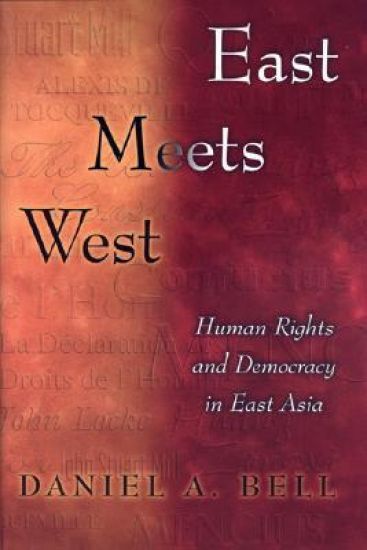
East Meets West

East Meets West

Daniel A. Bell

Princeton University Press
2000
pokkari
Is liberal democracy a universal ideal? Proponents of "Asian values" argue that it is a distinctive product of the Western experience and that Western powers shouldn't try to push human rights and democracy onto Asian states. Liberal democrats in the West typically counter by questioning the motives of Asian critics, arguing that Asian leaders are merely trying to rationalize human-rights violations and authoritarian rule. In this book--written as a dialogue between an American democrat named Demo and three East Asian critics--Daniel A. Bell attempts to chart a middle ground between the extremes of the international debate on human rights and democracy. Bell criticizes the use of "Asian values" to justify oppression, but also draws on East Asian cultural traditions and contributions by contemporary intellectuals in East Asia to identify some powerful challenges to Western-style liberal democracy. In the first part of the book, Bell makes use of colorful stories and examples to show that there is a need to take into account East Asian perspectives on human rights and democracy. The second part--a fictitious dialogue between Demo and Asian senior statesman Lee Kuan Yew--examines the pros and cons of implementing Western-style democracy in Singapore. The third part of the book is an argument for an as-yet-unrealized Confucian political institution that justifiably differs from Western-style liberal democracy. This is a thought-provoking defense of distinctively East Asian challenges to Western-style liberal democracy that will stimulate interest and debate among students of political theory, Asian studies, and international human rights.
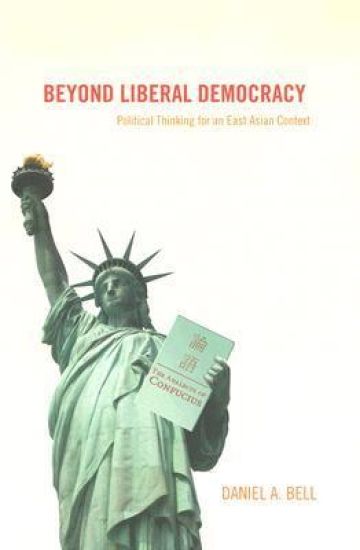
Beyond Liberal Democracy

Beyond Liberal Democracy

Daniel A. Bell

Princeton University Press
2006
pokkari
Is liberal democracy appropriate for East Asia? In this provocative book, Daniel Bell argues for morally legitimate alternatives to Western-style liberal democracy in the region. Beyond Liberal Democracy, which continues the author's influential earlier work, is divided into three parts that correspond to the three main hallmarks of liberal democracy--human rights, democracy, and capitalism. These features have been modified substantially during their transmission to East Asian societies that have been shaped by nonliberal practices and values. Bell points to the dangers of implementing Western-style models and proposes alternative justifications and practices that may be more appropriate for East Asian societies. If human rights, democracy, and capitalism are to take root and produce beneficial outcomes in East Asia, Bell argues, they must be adjusted to contemporary East Asian political and economic realities and to the values of nonliberal East Asian political traditions such as Confucianism and Legalism. Local knowledge is therefore essential for realistic and morally informed contributions to debates on political reform in the region, as well as for mutual learning and enrichment of political theories. Beyond Liberal Democracy is indispensable reading for students and scholars of political theory, Asian studies, and human rights, as well as anyone concerned about China's political and economic future and how Western governments and organizations should engage with China.
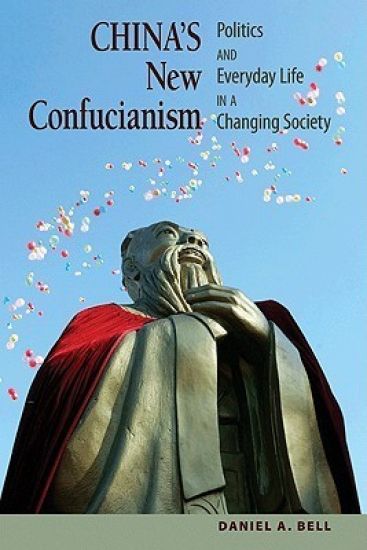
China's New Confucianism

China's New Confucianism

Daniel A. Bell

Princeton University Press
2010
pokkari
What is it like to be a Westerner teaching political philosophy in an officially Marxist state? Why do Chinese sex workers sing karaoke with their customers? And why do some Communist Party cadres get promoted if they care for their elderly parents? In this entertaining and illuminating book, one of the few Westerners to teach at a Chinese university draws on his personal experiences to paint an unexpected portrait of a society undergoing faster and more sweeping changes than anywhere else on earth. With a storyteller's eye for detail, Daniel Bell observes the rituals, routines, and tensions of daily life in China. China's New Confucianism makes the case that as the nation retreats from communism, it is embracing a new Confucianism that offers a compelling alternative to Western liberalism. Bell provides an insider's account of Chinese culture and, along the way, debunks a variety of stereotypes. He presents the startling argument that Confucian social hierarchy can actually contribute to economic equality in China. He covers such diverse social topics as sex, sports, and the treatment of domestic workers. He considers the 2008 Olympics in Beijing, wondering whether Chinese overcompetitiveness might be tempered by Confucian civility. And he looks at education in China, showing the ways Confucianism impacts his role as a political theorist and teacher. By examining the challenges that arise as China adapts ancient values to contemporary society, China's New Confucianism enriches the dialogue of possibilities available to this rapidly evolving nation. In a new preface, Bell discusses the challenges of promoting Confucianism in China and the West.
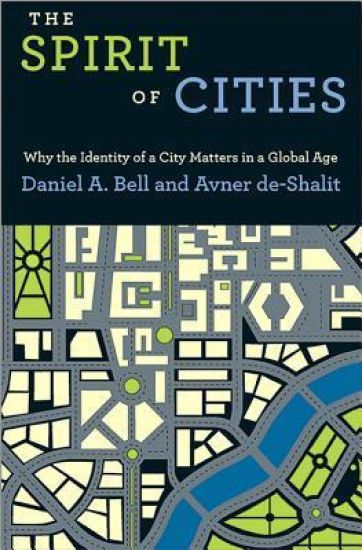
The Spirit of Cities

The Spirit of Cities

Daniel A. Bell; Avner De-Shalit

Princeton University Press
2011
sidottu
Cities shape the lives and outlooks of billions of people, yet they have been overshadowed in contemporary political thought by nation-states, identity groups, and concepts like justice and freedom. The Spirit of Cities revives the classical idea that a city expresses its own distinctive ethos or values. In the ancient world, Athens was synonymous with democracy and Sparta represented military discipline. In this original and engaging book, Daniel Bell and Avner de-Shalit explore how this classical idea can be applied to today's cities, and they explain why philosophy and the social sciences need to rediscover the spirit of cities. Bell and de-Shalit look at nine modern cities and the prevailing ethos that distinguishes each one. The cities are Jerusalem (religion), Montreal (language), Singapore (nation building), Hong Kong (materialism), Beijing (political power), Oxford (learning), Berlin (tolerance and intolerance), Paris (romance), and New York (ambition). Bell and de-Shalit draw upon the richly varied histories of each city, as well as novels, poems, biographies, tourist guides, architectural landmarks, and the authors' own personal reflections and insights. They show how the ethos of each city is expressed in political, cultural, and economic life, and also how pride in a city's ethos can oppose the homogenizing tendencies of globalization and curb the excesses of nationalism. The Spirit of Cities is unreservedly impressionistic. Combining strolling and storytelling with cutting-edge theory, the book encourages debate and opens up new avenues of inquiry in philosophy and the social sciences. It is a must-read for lovers of cities everywhere.