
Kirjahaku
Etsi kirjoja tekijän nimen, kirjan nimen tai ISBN:n perusteella.
1000 tulosta hakusanalla Daniel B. Levin

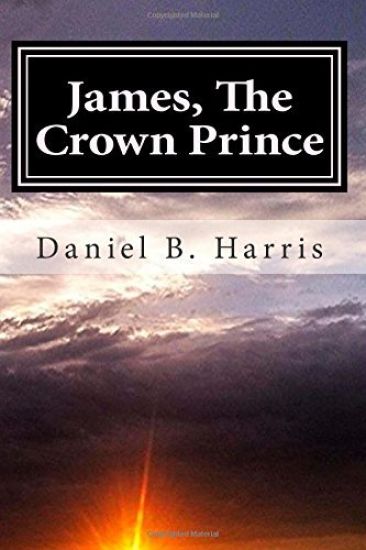
James, The Crown Prince: Generations of Eredwynn
Daniel B. Harris
Createspace Independent Publishing Platform
2014
nidottu
The Generations of Eredwynn are a continuation of the Wizard's series. They are stories of the children of David and their lives, families, and adventures. They have come of age for their own lives and for adult fun also. This is the story of James, The Crown Prince. He is the son of King David and Queen Isabel. As the first born he will someday take over as the King of Eredwynn. Before that happens he hopes to get away from it all for a while. He leaves the comforts of home looking to make his own mark. When he returns home he learns that there are forces in the world that he would have never imagined. YA- Adult content
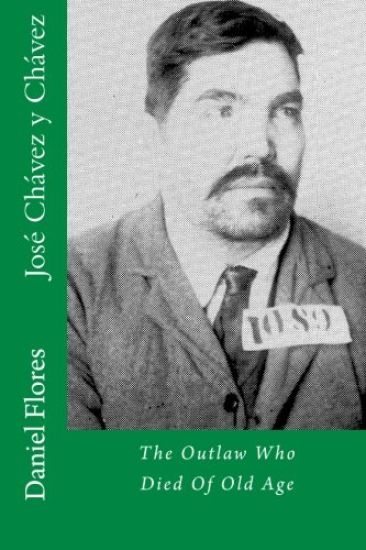
José Chávez y Chávez: The Outlaw Who Died Of Old Age
Daniel B. Flores
Createspace Independent Publishing Platform
2014
nidottu
Jos Ch vez y Ch vez is probably one of the most interesting characters of New Mexico's wild and wooly days. He was active in both the Pecos River area of New Mexico and the Rio Grande. His haunts ranged from Lincoln to Las Vegas. He eventually wound up in the western Guadalupe county village of Milagro where he lived out his life. He was a contemporary and friends with two of New Mexico's most notorious outlaws---Billy the Kid and Vicente Silva. He was also known to Pat Garrett and Elfego Baca, two of New Mexico's most famous lawmen. He probably also met and worked with Bob Ford, who had gained his notoriety as the slayer of Jesse James. Ch vez y Ch vez straddled the line between being an outlaw and being a lawman. His activities caught the attention of several governors of the territory of New Mexico beginning with Lew Wallace. Ch vez y Ch vez was a Lincoln county Regulator during the time period the former Civil War general was New Mexico's territorial governor. Governor Miguel Otero refused to sign a death order for him and instead commuted his sentence to life in prison. He was paroled by Governor George Curry in 1909. Born in the early days of the Territory of New Mexico, he died of natural causes in 1923 eleven years after New Mexico became a state. His death was completely unlike the deaths of most other Wild West desperadoes who died with their boots on. He is buried in an unmarked grave in an obscure and forgotten cemetery in the extreme western part of Guadalupe County, just south of Interstate 40. His unusual repetitive surname was a result of his taking both his father's and his mother's surnames. It was a common practice in New Mexico's territorial times to do that to differentiate from others who may have had the same first name and surname. In his case, both Jos and Ch vez are quite common Hispanic, Spanish or Mexican, surnames (very similar to a John Smith with the non-Hispanic culture). Having the surname Ch vez y Ch vez distinguished him from the countless other Nuevo Mexicanos named Jos Ch vez.

Davie the Mage: Generations of Eredwynn
Daniel B. Harris
Createspace Independent Publishing Platform
2014
nidottu
The story of Afro-Brazilian percussionist Naná Vasconcelos stitches together histories of 1960s-1980s jazz, psychedelia, world music, experimentalism and post-punk. Based in Recife, Rio de Janeiro, New York City and Paris, Naná played with musicians as varied as Egberto Gismonti, Don Cherry, Pat Metheny, Ralph Towner, Arto Lindsay, Talking Heads, Laurie Anderson, Paul Simon, Jon Hassell, Brian Eno, Os Mutantes, and Milton Nascimento.This book traces the 15 years (1964-1979) leading up to Naná's Saudades (1979, ECM), an album evoking his sonic memories of Brazil that he recorded while in Germany. Saudades features berimbau, a one-stringed instrument that looks like a bow and arrow, alongside onomatopoetic vocals and the strings of the Radio Symphony Stuttgart. Daniel B. Sharp hears Naná's playing as a counterargument against dishonest notions of the primitive just as world music emerged as a genre. With a gourd, a stick, a wire, a wicker basket, and a stone, Naná made music as complex and contemporary as the ARP synthesizers in vogue at the time.
The story of Afro-Brazilian percussionist Naná Vasconcelos stitches together histories of 1960s-1980s jazz, psychedelia, world music, experimentalism and post-punk. Based in Recife, Rio de Janeiro, New York City and Paris, Naná played with musicians as varied as Egberto Gismonti, Don Cherry, Pat Metheny, Ralph Towner, Arto Lindsay, Talking Heads, Laurie Anderson, Paul Simon, Jon Hassell, Brian Eno, Os Mutantes, and Milton Nascimento.This book traces the 15 years (1964-1979) leading up to Naná's Saudades (1979, ECM), an album evoking his sonic memories of Brazil that he recorded while in Germany. Saudades features berimbau, a one-stringed instrument that looks like a bow and arrow, alongside onomatopoetic vocals and the strings of the Radio Symphony Stuttgart. Daniel B. Sharp hears Naná's playing as a counterargument against dishonest notions of the primitive just as world music emerged as a genre. With a gourd, a stick, a wire, a wicker basket, and a stone, Naná made music as complex and contemporary as the ARP synthesizers in vogue at the time.
God, Tsar, and People
Daniel B. Rowland; Russell E. Martin
Northern Illinois University Press
2020
sidottu
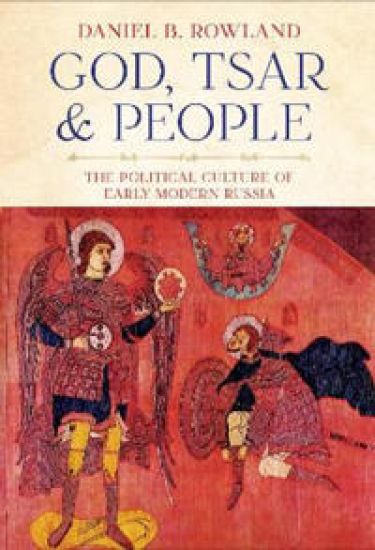
God, Tsar, and People brings together in one volume essays written over a period of fifty years, using a wide variety of evidence—texts, icons, architecture, and ritual—to reveal how early modern Russians (1450–1700) imagined their rapidly changing political world. This volume presents a more nuanced picture of Russian political thought during the two centuries before Peter the Great came to power than is typically available. The state was expanding at a dizzying rate, and atop Russia's traditional political structure sat a ruler who supposedly reflected God's will. The problem facing Russians was that actual rulers seldom—or never—exhibited the required perfection. Daniel Rowland argues that this contradictory set of ideas was far less autocratic in both theory and practice than modern stereotypes would have us believe. In comparing and contrasting Russian history with that of Western European states, Rowland is also questioning the notion that Russia has always been, and always viewed itself as, an authoritarian country. God, Tsar, and People explores how the Russian state in this period kept its vast lands and diverse subjects united in a common view of a Christian polity, defending its long frontier against powerful enemies from the East and from the West.
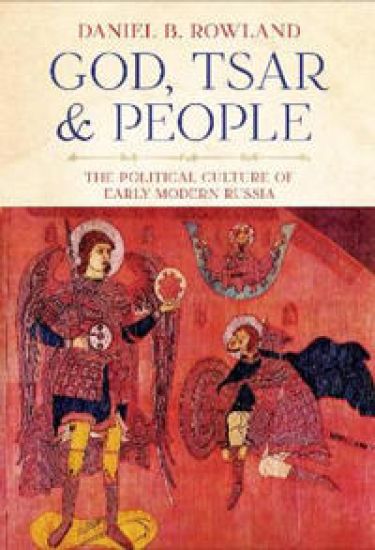
God, Tsar, and People
Daniel B. Rowland; Russell E. Martin
Northern Illinois University Press
2020
pokkari
God, Tsar, and People brings together in one volume essays written over a period of fifty years, using a wide variety of evidence—texts, icons, architecture, and ritual—to reveal how early modern Russians (1450–1700) imagined their rapidly changing political world. This volume presents a more nuanced picture of Russian political thought during the two centuries before Peter the Great came to power than is typically available. The state was expanding at a dizzying rate, and atop Russia's traditional political structure sat a ruler who supposedly reflected God's will. The problem facing Russians was that actual rulers seldom—or never—exhibited the required perfection. Daniel Rowland argues that this contradictory set of ideas was far less autocratic in both theory and practice than modern stereotypes would have us believe. In comparing and contrasting Russian history with that of Western European states, Rowland is also questioning the notion that Russia has always been, and always viewed itself as, an authoritarian country. God, Tsar, and People explores how the Russian state in this period kept its vast lands and diverse subjects united in a common view of a Christian polity, defending its long frontier against powerful enemies from the East and from the West.
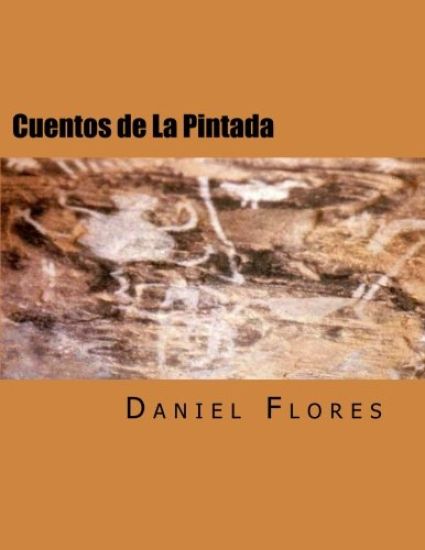
Cuentos de La Pintada: Stories of a Guadalupe County Village
Daniel B. Flores
Createspace Independent Publishing Platform
2014
nidottu
Pintada, known by locals as "La Pintada," is located in the west central part of Guadalupe County, 8 miles south of I-40 and 24 miles west of Santa Rosa, on the north side of Ca on de La Piedra Pintada. During its heyday it had mercantile stores, a saloon, a church, and an elementary school. At one time was a farming and ranching community. Today it remains a ranching community and has also been discovered as a home to retirees. Early maps of the area show it as "El Ca on de la Piedra Pintada," literally the "Canyon of the Painted Rock." The Pintada canyon flows from an area south of Clines Corners towards the Pecos River at Agua Negra, a distance of some sixty miles. The name makes reference to the many Indian petroglyphs that are found among sandstone boulders all along the canyon. Several Pueblo Indian ruins lie in the area. Some of the mounds, the ruins of former Anasazi pueblos, are within the central part of the historic village of Pintada. They are located near where the La Sagrada Familia, Holy Family, Catholic church is located. Cuentos de La Pintada contains a series of cuentos, vignettes, that each tells a story about the rich and colorful past of La Pintada. Photographs are also used to help illustrate the cuentos. Though the main language for Cuentos de La Pintada is English, I have also included several Spanish articles from period newspapers, especially articles about enlaces, marriages, and defunciones, deaths. I believe they are important in helping to describe the local color of the area, especially since the early inhabitants of Pintada were all native Spanish-speakers.
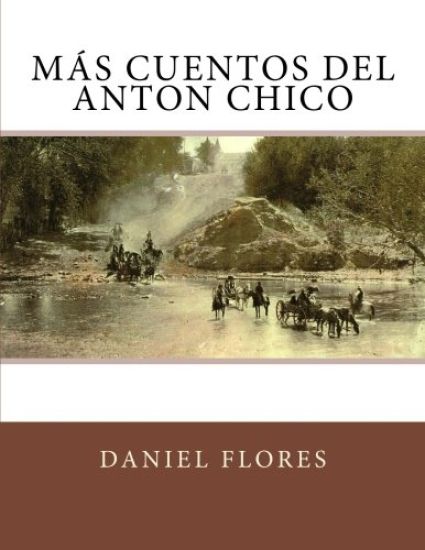
Más Cuentos del Anton Chico
Daniel B. Flores
Createspace Independent Publishing Platform
2014
nidottu
M s Cuentos del Anton Chico is being written as a follow up to Cuentos del Anton Chico. It includes more cuentos, stories or vignettes, about the rich and colorful past of the Anton Chico area. Many of the vignettes include old articles taken from early New Mexico newspapers. At one time there were many Spanish language news papers in the Las Vegas and Santa Fe areas. The style and they used were a lot different, certainly more colorful and descriptive than the language used today. Many of the words and idiomatic experessions used have long since fallen out of use in everyday Spanish. I have decided to incorporate some of those articles in their entirety as they would have lost much of their original local color if they had been translated into English. Bilingualism was and continues to be important. M s Cuentos includes a section on military heroes from Anton Chico. That section includes stories about three soldiers who made the Supreme sacrifice for their country and never returned home. One of them is buried in the Anton Chico cemetery, one in the Santa Fe National Cemetery and the last one was lost at sea when his ship, a Japanese "Hell Ship," was sunk by friendly fire. Photographs of the heroes' mothers, Gold Star mothers, are included. There is also a section on Anton Chico Civil War veterans and a WWI section. The Civil War section includes a table with the names of Anton Chico area veterans from an 1890 special census. The WWI section includes photos of five of the veterans and biographical information about them. There are also an additional five that have biographical information, but no photos. There is also a section on enlaces, weddings, of couples from the Anton Chico area and a defunciones, deaths. The defunciones consists of obituaries that were published in newspapers. There are several biographical sketches of Anton Chico area personages from the last half of the 19th century and the first quarter of the 20trh century. Included are two Catholic priests, John H. Mink, Anders Nelson, Eduardo Martinez, and several others.
Mount Pleasant Cemetery Burial Index: Big Reedy, Edmonson County, KY
Daniel B. Durbin
Createspace Independent Publishing Platform
2014
nidottu
Mount Pleasant Cemetery is located in the northwest corner of Edmonson County, Kentucky near the borders of Grayson and Butler counties. The cemetery is adjacent to Mt. Pleasant Cumberland Presbyterian Church. The surrounding area is known as Big Reedy. Big Reedy is approximately 25 miles (40 km) due north of Bowling Green, or 13 miles south of Caneyville. Mt. Pleasant C. P. Church was established in 1887 and the first community schoolhouse was built in 1896. The schoolhouse still stands, unused since 1940. The cemetery was in use much earlier, during the settlement years. The oldest legible death date in the cemetery is 1848. Some of the 70+ field rocks serving as headstones no doubt pre-date this "earliest date" to the late 1700's and very early 1800's. There are 650 marked graves in Mt. Pleasant, 578 of which have legible tombstones. No doubt many original markers have been lost due to the ravages of time. There are at least 75 possible gravesites in the original old section (A) of the cemetery that are not marked. The wrought-iron fence and entry portal to Mount Pleasant Cemetery are gone. However the serenity and beauty of the hillside cemetery have not lessened. This index is a composite of a 1979 pen & paper survey and a 2014 photo survey. The 2014 survey assigned a Section, Row, and Plot number to each burial. This was done in an effort to assist in finding the individual grave of an ancestor.
Cuentos del Cuervo: Tales of a Guadalupe County Village
Daniel B. Flores
Createspace Independent Publishing Platform
2014
nidottu
Cuentos del Puerto de Luna
Daniel B. Flores
Createspace Independent Publishing Platform
2014
nidottu
Cuentos del Puerto de Luna relates many old cuentos, stories, and lore about the historic Guadalupe county village of Puerto de Luna. Puerto de Luna, founded in 1862, is rich in history and lore. The cuentos are presented as vignettes that each tell a story about an event or a happening in Puerto de Luna. Many are old newspaper articles that date back to the 1870s. Each helps preserve a part of the village's rich and colorful past. Some are also illustrated with period photographs. Included are sections on Defunciones and Enlasos, Deaths and Marriages. The defunciones and enlasos include many newspaper notices about funerals and marriages from area newspapers. During that period of time Spanish was the main spoken language in Puerto de Luna. Those news items, when written in Spanish, are presented in their original Spanish. The Spanish of the time was full of local color and translating the items into English would not have preserved that flavor. The notices are also full of Catholic religion connotations, Catholicism being the prevalent religion in the Puerto de Luna and northern New Mexico. Several vignettes provide an insight into the lore of the area. The beliefs, often based on superstition, were important in the everyday life of rural New Mexicans in that period of time. The area lore was also rich in religious beliefs such as the Corpus Christi celebration, the los pastores Christmas presentation and other religious fiestas. Two corridos, ballads, one about Billy the Kid and the second lamenting a marriage tragedy are included, both in Spanish. Several recreational activities such as la corrida del gallo and a game called tejas are included in Cuentos. Cuentos vignettes also include stories about some of the leading citizens during that period of time, people such as Lorenzo Labadie, James Madison Giddings, Juan Patr n, Billy the Kid, Celso Baca, and Paco Baca.
Santa Rosa in the Nation's Limelight
Daniel B. Flores
Createspace Independent Publishing Platform
2014
nidottu

Seth, A Naiad's Son: Generations of Eredwynn
Daniel B. Harris
Createspace Independent Publishing Platform
2014
nidottu
"Yes mother, I'm awake," I replied to the soft knocking on my door. It had happened every morning of my life, so I knew who was there and that my day had been planned. "Five new novices have been accepted and are moving into the dorm. You can go down there and help with that, but don't stay in the room with them alone. Appearance of propriety is very important. Two instructors are taking them to the range to give them a rundown on the basics. Lia will be there in case of accidents, but you could give pointers, like your brother James. Watch their magic and see what they're doing right or wrong." "I'll be right there. I'm just cleaning up a few things in here." "Don't be too long or everything will be moved without your help." And that started another typical day for me.

Mount Pleasant Cemetery at Big Reedy: Volume I Color A thru N
Daniel B. Durbin
Createspace Independent Publishing Platform
2015
nidottu

Mount Pleasant Cemetery at Big Reedy: Volume II Color O thru Z
Daniel B. Durbin
Createspace Independent Publishing Platform
2015
nidottu