

Kirjahaku
Etsi kirjoja tekijän nimen, kirjan nimen tai ISBN:n perusteella.
1000 tulosta hakusanalla Daniela Irrera






Growing Mentally Tough Teens (Teacher Manual)
Daniela Falecki; Suzy Green
Positivity Institute
2019
pokkari

Growing Mentally Tough Teens (Student Workbook)
Daniela Falecki; Suzy Green
Positivity Institute
2019
pokkari
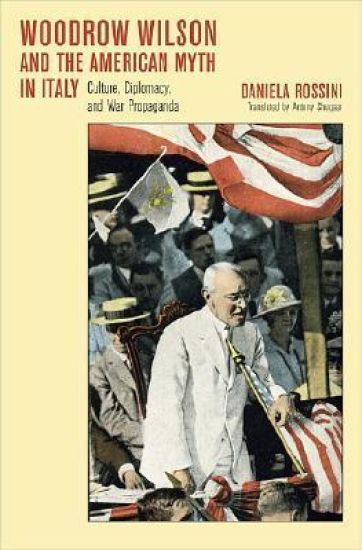
In 1918, Woodrow Wilson’s image as leader of the free world and the image of America as dispenser of democracy spread throughout Italy, filling an ideological void after the rout of Caporetto and diverting attention from a hapless ruling class. Wilson’s popularity depended not only on the modernity of his democratic message, but also on a massive propaganda campaign he conducted across Italy, using as conduits the American Red Cross, the YMCA, and the Committee on Public Information.American popularity, though, did not ensure mutual understanding. The Paris peace negotiations revealed the limits of policies on both sides, illustrated most clearly in Wilson’s disastrous direct appeal to the Italian public. The estranged countries pulled inward, the Americans headed toward isolationism, the Italians toward fascism.Rossini sets the Italian-American political confrontation within the full context of the two countries’ cultural perceptions of each other, different war experiences, and ideas about participatory democracy and peace. A stellar example of the new international history, this timely book highlights the impact of American ideology and sense of mission in the world.
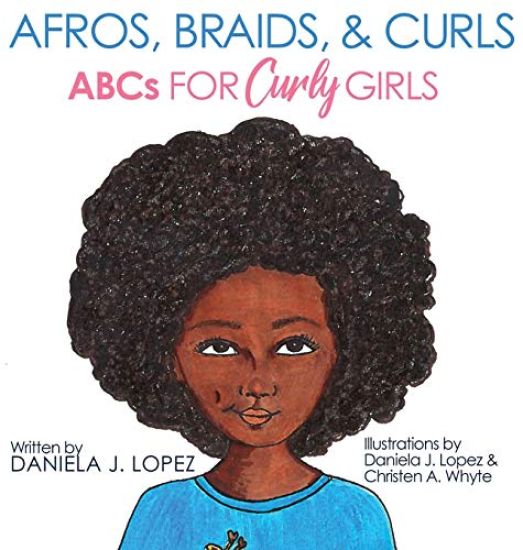
Afros, Braids, & Curls: ABCs for Curly Girls, is an alphabet book written and illustrated to promote self-love and pride in girls with naturally curly and textured hair. With a colorful and unique illustration for each and every letter, this rhyming alphabet book is a must-read for girls with natural curls. A beautiful variety of styles, textures, and hair care basics makes ABCs for Curly Girls a library staple for girls of all ages.

Big Mouth Big Dreams: Your Guide to Speaking Big Dreams Into Existence
Daniela Gabrielle
Motique Media
2014
nidottu

Economic and social difficulties at the beginning of the 20th century caused many Japanese to emigrate to Brazil. The situation was reversed in the 1980s as a result of economic downturn in Brazil and labour shortages in Japan. This book examines the construction and reconstruction of the ethnic identities of people of Japanese descent, firstly in the process of emigration to Brazil up to the 1980s, and secondly in the process of return migration to Japan in the 1990s. The closed nature of Japan's social history means that the effect of return migration' can clearly be seen. Japan is to some extent a unique sociological specimen owing to the absence of any tradition of receiving immigrants. This book is first of all about migration, but also covers the important related issues of ethnic identity and the construction of ethnic communities. It addresses the issues from the dual perspective of Japan and Brazil. The findings suggest that mutual contact has led neither to a state of conflict nor to one of peaceful coexistence, but rather to an assertion of difference. It is argued that the Nikkeijin consent strategically to the social definitions imposed upon their identities and that the issue of the Nikkeijin presence is closely related to the emerging diversity of Japanese society.
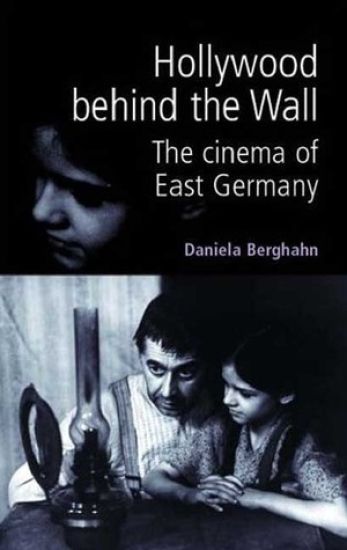
This book is a representative history of East German film culture from 1946 to the present, examining both DEFA's celebrated classics and the most acclaimed post-unification feature films by East German directors.'Hollywood behind the wall' demonstrates that East German cinema occupies an ambivalent position between German national cinema on the one hand and East European and Soviet cinema on the other. It includes a wide-ranging exploration of post-unification cinema from East Germany, including cult films such as 'Sun Alley' and 'Goodbye, Lenin!' and provides contextualised, close readings of twenty significant films, referencing one hundred and ninety East German films in total, along with numerous West German and East European classics.The book's scope and its critical consideration of archival materials and scholarly literature make it an authoritative compendium for students and scholars of film studies, German studies and modern European history.

Beckett's Dantes: Intertextuality in the fiction and criticism is the first study in English on the literary relationship between Beckett and Dante. It is an innovative reading of Samuel Beckett and Dante's works and a critical engagement with contemporary theories of intertextuality. The volume interprets Dante in the original Italian (as it appears in Beckett), translating into English all Italian quotations. It benefits from a multilingual approach based on Beckett's published works in English and French, and on manuscripts (which use English, French, German and Italian).The book is aimed at the scholarly communities interested in literatures in English, literary and critical theory, comparative literature and theory, French literature and theory and Italian studies. Its jargon-free style will also attract third-year or advanced undergraduate students, and postgraduate students, as well as those readers interested in the unusual relationship between one of the greatest writers of the twentieth century and the medieval author who stands for the very idea of the Western canon.
Beckett's Dantes: Intertextuality in the Fiction and Criticism is the first study in English on the literary relation between Beckett and Dante. It is an innovative reading of Samuel Beckett and Dante's works and a critical engagement with contemporary theories of intertextuality. It is an informative intertextual reading of Beckett's work, detecting previously unknown quotations, allusions to, and parodies of Dante in Beckett's fiction and criticism. The volume interprets Dante in the original Italian (as it appears in Beckett), translating into English all Italian quotations. It benefits from a multilingual approach based on Beckett's published works in English and French, and on manuscripts (which use English, French, German and Italian). Through a close reading of Beckett's fiction and criticism, the book will argue that Dante is both assumed as an external source of literary and cultural authority in Beckett's work, and also participates in Beckett's texts' sceptical undermining of authority. Moreover, the book demonstrates that the many references to various 'Dantes' produce 'Mr Beckett' as the figure of the author responsible for such a remarkably interconnected oeuvre. The book is aimed at the scholarly communities interested in literatures in English, literary and critical theory, comparative literature and theory, French literature and theory and Italian studies. Its jargon-free style will also attract third-year or advanced undergraduate students, and postgraduate students, as well as those readers interested in the unusual relationship between one of the greatest writers of the twentieth century and the medieval author who stands for the very idea of the Western canon.

In the age of globalisation, diasporic and other types of transnational family are increasingly represented across the film spectrum in works such as Bend It Like Beckham, The Namesake, Boys 'n the Hood, Dilwale Dulhania Le Jayenge (The Brave Heart Will Take the Bride) and My Big Fat Greek Wedding. While there is a significant body of scholarship on the representation of the family in Hollywood cinema, an analysis of the depiction of the diasporic family in cinema from a comparative transnational angle has yet to be attempted. This book fills this gap and provides an essential resource for academics and researchers with an interest in cinematic representations of the family and transnational cinema.The work will answer the following key questions: 1. Why is diasporic cinema characterised by a preponderance of family narratives?2. How does the diasporic family as constructed in cinema relate to or differ from models of family life in dominant social groups?3. What role does authorship play in the depiction of the diasporic family?4. How does diasporic cinema negotiate the aesthetic and generic conventions of film genres commonly associated with the representation of the family?Key featureso In-depth thematic study in the field of transnational film studieso Truly international coverage, including traditions of non-Western film cultureso Interdisciplinary approach offering an original and innovative model to encourage further researcho Planned companion website with a searchable database of relevant films, bibliographical references and an interactive discussion forum on key issues and themes (if AHRC funding application is successful, the website will also include podcasts of interviews with a number of filmmakers and other industry professionals).
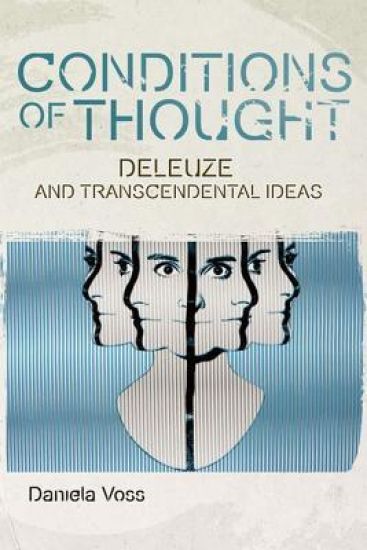
This title analyses Deleuze's notion of transcendental and genetic Ideas as conditions of creative thought. From his early work in Nietzsche and Philosophy to Difference and Repetition, Deleuze develops a unique notion of transcendental philosophy. It comprises a radical critique of the illusions of representation and a genetic model of thought. Engaging with questions of representation, Ideas and the transcendental, Daniela Voss offers a sophisticated treatment of the Kantian aspects of Deleuze's thought, taking account of Leibniz, Maimon, Lautman and Nietzsche along the way. It demonstrates that Deleuze's early philosophy is transcendental. It puts forward a new understanding of the transcendental conditions of thought. It gives insight into how Deleuze's thought developed along the lines of thinkers such as Leibniz, Kant, Maimon, Bergson, Nietzsche and Klossowski.

This is an in-depth critical exploration of cinematic representations of the family in transnational cinema. In the age of globalisation, diasporic and other types of transnational family are increasingly represented across the film spectrum in works such as Bend It Like Beckham, The Namesake, Boys 'n the Hood, Dilwale Dulhania Le Jayenge (The Brave Heart Will Take the Bride) and My Big Fat Greek Wedding. While there is a significant body of scholarship on the representation of the family in Hollywood cinema, an analysis of the depiction of the diasporic family in cinema from a comparative transnational angle has yet to be attempted. Far-Flung Families in Film fills this gap and provides an essential resource for academics and researchers with an interest in cinematic representations of the family and transnational cinema. The work will answer the following key questions: Why is diasporic cinema characterised by a preponderance of family narratives?; How does the diasporic family as constructed in cinema relate to or differ from models of family life in dominant social groups?; What role does authorship play in the depiction of the diasporic family?; How does diasporic cinema negotiate the aesthetic and generic conventions of film genres commonly associated with the representation of the family?. It takes a theme-centred approach, examining journeys of migration, family memories, gender identities, romance and weddings. It includes 15 detailed case studies of diasporic family films.