The King of FU is a magically realistic poetic memoir about growing up in America in the nineties on the cusp of the age of the internet. It is a voyage that navigates through family tribalism, supervisors, white-gloved Sheriffs, bullies, sex, suicide, dead prisoners, drugs, porn, middle school, and Jesus; all in search of answering one of life's greatest mysteries: what is the point of adults? This artistic masterpiece comes from the mind of author Benjamin Davis with illustrations by Russian artist Nikita Klimov.Note from the publisher: Please do not purchase the hardcover edition, it is not the same product and has printing errors.
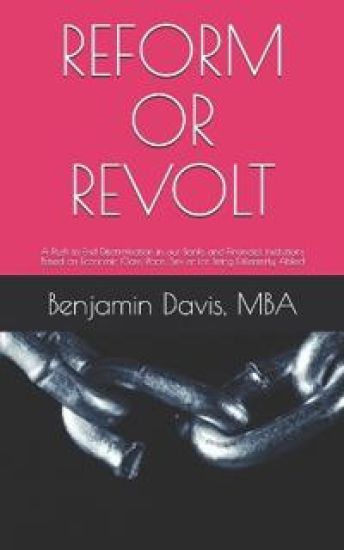
Banks and financial institutions discriminate against their customers daily based on economic class, race, sex and for being differently abled. This discrimination harms individuals, businesses, and the U.S. economy. In this book I identify and explain discriminatory financial processes, provide detailed examples, and explain the costs of inaction. I recommend ways for banks to resolve their discriminatory practices - reform. I also recommend ways for customers to encourage banks to change - revolt. By ending discriminatory practices, our economy can grow, businesses can thrive, banks can become more profitable, and individuals can thrive. It is time for Reform or Revolt.Benjamin Davis gained the knowledge to write this financial reform book both through his education and work experience. He holds an MBA and worked in banking and finance for nearly two decades as a manager, financial advisor, business owner, teacher, and as a vice president with one of the largest banks in the world.
Alyssa might be the Girl of Destiny. But is it her destiny to destroy evil forever or to end all that is good in Aislin? This book introduces readers to the wondrous world of Aislin where Alyssa and her classmates are on different sides of a strange war in a fantastic land. Aislin: Girl of Destiny is the first in a young adult epic adventure trilogy.
The term "gender" was first distinguished from "sex" in the 1950s when psychologists began to discuss the idea of "gender roles," behaviors and responsibilities given to people by a society rather than flowing from their biology. Since then, leaders across disciplines have sought to better understand the roles of biology, psychology, and culture on gender. New language has emerged alongside rich scientific inquiry and research. Increased visibility of transgender and nonbinary communities has brought awareness to a range of gender diverse experiences, while legal battles, wage disparities, and health inequities continue to prove gender's relevancy in today's world. In this book, Laura Erickson-Schroth and Benjamin Davis guide readers through the knowns and unknowns of gender, asking questions such as: What is the difference between sex, gender identity, and gender expression? Were ancient societies matriarchal? How different are male and female brains, really? What role does language play in the ways we think about gender? What do we know about sex and gender in non-human species? What are the current frontiers in gender equality? Gender: What Everyone Needs to Know® is an easy-to-read guide that takes readers on a much-needed tour of perspectives on gender and identity in the 21st century. The book is written in a question-and-answer format, and Erickson-Schroth and Davis cover topics such as current definitions; the history of gender as concept; the role of biology, psychology, and culture on gender; and gender norms over time and across the globe.
The term "gender" was first distinguished from "sex" in the 1950s when psychologists began to discuss the idea of "gender roles," behaviors and responsibilities given to people by a society rather than flowing from their biology. Since then, leaders across disciplines have sought to better understand the roles of biology, psychology, and culture on gender. New language has emerged alongside rich scientific inquiry and research. Increased visibility of transgender and nonbinary communities has brought awareness to a range of gender diverse experiences, while legal battles, wage disparities, and health inequities continue to prove gender's relevancy in today's world. In this book, Laura Erickson-Schroth and Benjamin Davis guide readers through the knowns and unknowns of gender, asking questions such as: What is the difference between sex, gender identity, and gender expression? Were ancient societies matriarchal? How different are male and female brains, really? What role does language play in the ways we think about gender? What do we know about sex and gender in non-human species? What are the current frontiers in gender equality? Gender: What Everyone Needs to Know® is an easy-to-read guide that takes readers on a much-needed tour of perspectives on gender and identity in the 21st century.The book is written in a question-and-answer format, and Erickson-Schroth and Davis cover topics such as current definitions; the history of gender as concept; therole of biology, psychology, and culture on gender; and gender norms over time and across the globe.
This volume discusses the significance of human rights approaches to food and the way it relates to gender considerations, addressing links between hunger and the HIV/AIDS pandemic, agricultural productivity and the environment.
This volume discusses the significance of human rights approaches to food and the way it relates to gender considerations, addressing links between hunger and the HIV/AIDS pandemic, agricultural productivity and the environment.
The first black to graduate from West Point in the twentieth century, Davis led the all-black Tuskeegee Airmen in World War II and retired a three-star general. His autobiography both chronicles the life of a great American and provides an incisive account of race relations in the segregated and desegrated military.
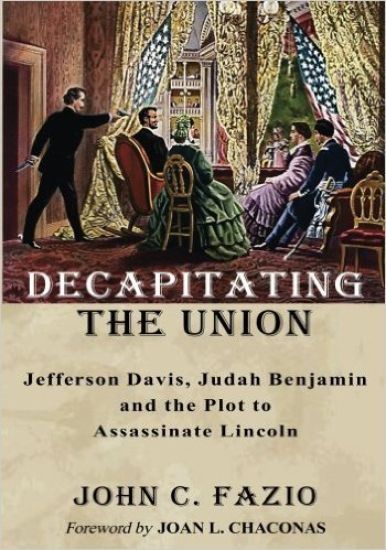
More than a hundred books have been written about the assassination of Abraham Lincoln, yet one of the few certainties about his death is that little about it is certain. The literature on the subject is replete with errors, theories and guesswork. This comprehensive work on the assassination and on the attempted assassination of other Northern leaders in the closing days of the Civil War, seeks to correct major and minor errors in the record, reconcile differences of opinion of historians and scholars, offer explanations for great unknowns and make sense of conspiracy theories. After a Foreword by the renowned historian, Joan L. Chaconas, it begins with the background of the conflict, threats and assassination attempts against Lincoln, black flag warfare, the Wistar and Dahlgren-Kilpatrick Raids on Richmond and the Confederate response thereto, and it ends with the incarceration, trial and sentencing of the assassin's action team (except for John H. Surratt, who would be tried separately in 1867, and except that one of those tried was not really a member of Booth's team) and an in-depth analysis of conspiracy. In between are chapters on the underground mosaic; Booth and his co-conspirators; the great kidnapping myth that concealed the planned decapitation of the United States government; the setting for assassination; riddles, conundrums, enigmas and mysteries relating to key players in the drama; carnage in the presidential box; Booth's descent to the stage, declamations, broken leg, exit and escape; attempted decapitation of the government; the death of the President; Edman Spangler's innocence; the pursuit of the fugitives; and the death of Booth. The author rejects the simple conspiracy theory and affirms the Tidwell, Hall and Gaddy thesis of the complicity of the highest levels of the Confederate government and its Secret Service Bureau. The author makes use of hundreds of sources to justify his conclusions and to give greater cohesion to the record of the events of April 14, 1865. The book has received dozens of reviews. Among them: 1. "...a must read for Civil War historians and enthusiasts."--William John Shepherd, America's Civil War. 2. "Everyone should have this one on their Lincoln bookshelf."--Joan Chaconas, The Surratt Society 3. "I found every page an adventure. You cannot come to a decision on who ordered the assassination without reading this book."--Joseph Truglio, Civil War News 4. "...probably the best (book) on the market on the American Civil War."--Amazon Customer 5. "...very strongly recommended..."--Michael J. Carson, Midwest Book Review 6. "A brilliant contribution..."--Frederick Hatch, author of Protecting President Lincoln and other works 7. "Long overdue. John Fazio's lucid narrative puts Booth's plan to decapitate the Union front and center...Decapitating the Union is both educational and entertaining...Give it five stars."--Edward Steers, Jr., author of Blood on the Moon and other works 8. "If you enjoyed Ed Steers's Blood on the Moon, you must read Decapitating the Union..."--Howard G. Anders, Jr. 9. "...perhaps the most (significant) work on this topic ever written."--Amazon Customer
David, den frühen Tod seiner Mutter kaum verwunden, gerät in eine seltsam fremde Welt, die der alltäglichen Realität entlegen scheint. Er verliert sich in verworrenen Bildern des Sterbens und Geborenwerdens, in Dunkelheit und Licht. Vergangenheit und Zukunft werden ihm zur Gegenwart. Sein Vater, schwarzer Vogel, Bote des Todes, seine Mutter, die ein Kind begräbt, Christopher und die Leichen der Frösche - sind sie alle nur Figuren einer Traumwelt, inszeniert von unbekannter Macht? Und sie, Luise, die er liebt, unendlich liebt - ist auch sie nur Vision, bewegtes Bild? Oder lebt sie wie er gefangen an den Orten, die zwischen Licht und Schatten liegen?
Throughout his life Banneker was troubled that all blacks were not free.And so, in 1791, he wrote to Secretary of State Thomas Jefferson, who had signed the Declaration of Independence.Banneker attacked the institution of slavery and dared to call Jefferson a hypocrite for owning slaves.Jefferson responded.This is the story of Benjamin Banneker--his science, his politics, his morals, and his extraordinary correspondence with Thomas Jefferson.
""California Gold Rush Merchant: The Journal Of Stephen Chapin Davis"" is a historical book written by Benjamin B. Richards. It is a detailed account of the life and experiences of Stephen Chapin Davis, a merchant who traveled from the East Coast to California during the Gold Rush era in the mid-1800s. The book is based on Davis's personal journal, which he kept during his journey and time in California.Through Davis's journal entries, readers are taken on a journey that starts in New York City and ends in San Francisco. Along the way, Davis faces many challenges, including harsh weather conditions, dangerous terrain, and encounters with Native Americans. He also documents the excitement and chaos of the Gold Rush, as well as the struggles of daily life in a new and rapidly changing society.The book provides a unique perspective on the Gold Rush era, as it is told through the eyes of a merchant rather than a miner. Davis's journal entries offer insights into the economic and social structures of the time, as well as the daily routines and challenges faced by those who sought their fortunes in California.Overall, ""California Gold Rush Merchant: The Journal Of Stephen Chapin Davis"" is a fascinating and informative read for anyone interested in the history of the American West, the Gold Rush era, or the experiences of early American pioneers.This scarce antiquarian book is a facsimile reprint of the old original and may contain some imperfections such as library marks and notations. Because we believe this work is culturally important, we have made it available as part of our commitment for protecting, preserving, and promoting the world's literature in affordable, high quality, modern editions, that are true to their original work.