Buddhism in the Modern World explores the challenges faced by Buddhism today, the distinctive forms that it has taken and the individuals and movements that have shaped it. Part One discusses the modern history of Buddhism in different geographical regions, from Southeast Asia to North America. Part Two examines key themes including globalization, gender issues, and the ways in which Buddhism has confronted modernity, science, popular culture and national politics. Each chapter is written by a distinguished scholar in the field and includes photographs, summaries, discussion points and suggestions for further reading. The book provides a lively and up-to-date overview that is indispensable for both students and scholars of Buddhism.
Literary scholarship has paid little serious attention to Habermas' philosophy, and, on the other hand, the reception of Habermas has given little attention to the role that literary practice can play in a broader theory of communicative action. David Colclasure's argument sets out to demonstrate that a specific, literary form of rationality inheres in literary practice and the public reception of literary works which provides a unique contribution to the political public sphere.
A compact and readable book will help executives, entrepreneurs, and venture investors learn to search out and plan for those enterprise hazards that reside outside the bell curve, the conventional domain of risk: Uncertainty, where outcomes can be characterized in advance, reliable estimates cannot be made for the likelihood that they will occur; Ambiguity, where the events and outcomes cannot be well characterized, in some cases because we cannot imagine them and in others because characterization depends upon the institutional interests or cultural values of the observer; and, Ignorance, where neither likelihood estimates nor well-characterized events enjoy much credibility.This edited volume emphasizes practical strategies for understanding and managing the hazards of the new venture in light of recent research. It will help corporate innovators, entrepreneurs, and investors employ a wider spectrum of risk management strategies than is now possible.
A compact and readable book will help executives, entrepreneurs, and venture investors learn to search out and plan for those enterprise hazards that reside outside the bell curve, the conventional domain of risk: Uncertainty, where outcomes can be characterized in advance, reliable estimates cannot be made for the likelihood that they will occur; Ambiguity, where the events and outcomes cannot be well characterized, in some cases because we cannot imagine them and in others because characterization depends upon the institutional interests or cultural values of the observer; and, Ignorance, where neither likelihood estimates nor well-characterized events enjoy much credibility.This edited volume emphasizes practical strategies for understanding and managing the hazards of the new venture in light of recent research. It will help corporate innovators, entrepreneurs, and investors employ a wider spectrum of risk management strategies than is now possible.
When people in First World countries think of tourists in the vast expanses of the Third World today, they typically think of pampered westerners, filling up the luxury hotels and imposing their Orientalist gazes on the teeming masses. As David Gladstone shows us in this fascinating and provocative book, such preconceptions are wrong. Coupling incisive and colorful ethnographic accounts of tourism in India and Mexico with sharp analysis, Gladstone demonstrates the amazing complexity of this industry, which now comprises close to ten percent of the world economy. As he also shows, the vast majority of tourists in the Third World are indigenous people with few resources-often making pilgrimages to religious shrines. From Pilgrimage to Package Tour is a fresh and entirely original account that stands tourism studies on its head and proves that this industry is far more complicated than it initially appears.
When people in First World countries think of tourists in the vast expanses of the Third World today, they typically think of pampered westerners, filling up the luxury hotels and imposing their Orientalist gazes on the teeming masses. As David Gladstone shows us in this fascinating and provocative book, such preconceptions are wrong. Coupling incisive and colorful ethnographic accounts of tourism in India and Mexico with sharp analysis, Gladstone demonstrates the amazing complexity of this industry, which now comprises close to ten percent of the world economy. As he also shows, the vast majority of tourists in the Third World are indigenous people with few resources-often making pilgrimages to religious shrines. From Pilgrimage to Package Tour is a fresh and entirely original account that stands tourism studies on its head and proves that this industry is far more complicated than it initially appears.
Literary scholarship has paid little serious attention to Habermas' philosophy, and, on the other hand, the reception of Habermas has given little attention to the role that literary practice can play in a broader theory of communicative action. David Colclasure's argument sets out to demonstrate that a specific, literary form of rationality inheres in literary practice and the public reception of literary works which provides a unique contribution to the political public sphere.
The new edition of the now classic Adam's Outline of Fractures - prepared by authors working in the UK - has been updated to include the latest conservative and surgical approaches to the management of fractures. Suitable for medical undergraduates and trainee surgeons, as well as nurses and physiotherapists working in trauma services, this classic text continues to offer a sound basis for the safe and effective management of musculoskeletal injuries. New edition of highly praised book with an established reputation Well known for its clear writing style and logical classification of fractures Basics of treatment are summarised in a useful appendix for quick reference and revision Provides up-to-date surgical therapies as well as conservative treatment options New author line-up Clear new page format, using two-colour design Extended artwork programme, now including two-colour line artworks, new radiographs, MRI and CT scans Enhanced anatomical classification system Advances in cell biology and molecular genetics New chapter on osteoporosis, including fracture treatment in the elderly
Reinforce your knowledge of neuroanatomy, neuroscience, and common neurologic disorders with this active, engaging, and relaxing review method! Netter’s Neuroscience Coloring Book, 2nd Edition, makes abstract concepts more concrete as you use color and tactile movement to reinforce your memory and understanding of the brain, spinal cord, and peripheral nervous system. It’s a fun and interactive way to learn and review a complex but fascinating subject-whether you’re taking a course in neuroscience, preparing for a neuroscience program, or planning a career in research, science, or medicine and healthcare. More than “just” a coloring book, this unique learning tool offers: More than 145 key topics in neuroscience and neuroanatomy, using bold, clear drawings based on classic Netter art Coloring exercises for visual and tactile learning as you trace pathways and tracts, reinforcing spatial, functional, and clinical concepts in this fascinating field A clear organization with 4 major sections: (1) Overview of the nervous system; (2) regional neuroscience; (3) systemic neuroscience; and (4) global neuroscience Three major components for each topic and accompanying illustrations: What is it and what does it do?; Color the most important structures; and What is the functional and clinical significance? Text revision based on extensive student feedback New coloring exercises on Endogenous Opioid Systems, Insular Cortex, Prefrontal Cortex, Dementias, Alzheimer’s Disease, Posttraumatic Stress, Traumatic Brain Injury (TBI), and Brain Substrates of Addictive Disorders Clinical Notes that bridge basic science with health care and medicine Expanded workbook review questions and bulleted lists throughout to reinforce comprehension and retention
Fiona farts her way to the moon to save her friend Russell, the mythical Man in the Moon, when the moon came under attack from a giant asteroid which threatened to completely destroy it. Can Fiona save the moon and her friend Russell? Read the story to find out if she is successful.
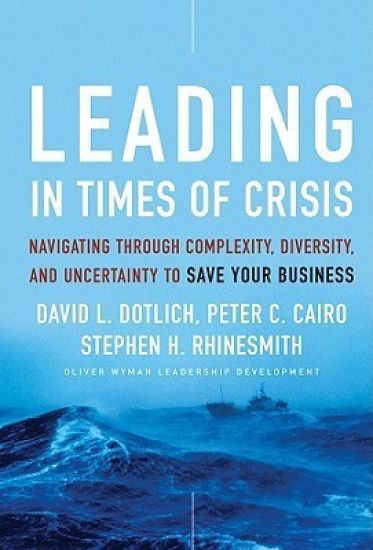
LEADERS TODAY ARE GRAPPLING with complex choices, diverse customers and employees, and unprecedented uncertainty in the economic environment. Business models are becoming obsolete, cost and performance pressures are growing, regulatory requirements are changing, and trust in institutions is declining. Tackling these and other growing demands requires every leader to radically rethink what constitutes effective leadership. Leading in Times of Crisis presents a new approach and concrete steps to compete in this complex, diverse, and uncertain marketplace. Drawing on compelling research and more than twenty interviews with CEOs and top-level executives, former executives and professors David Dotlich, Peter Cairo, and Stephen Rhinesmith highlight the growing urgency to evolve from a traditional, one-dimensional leadership model to what they term "whole leadership." Whole leadership allows leaders to act in three ways that are important now but absolutely essential to their business in the future: RETHINK YOUR BUSINESSCONNECT WITH STAKEHOLDERSLIVE YOUR VALUES In an accessible, no-nonsense style, the authors provide new and experienced leaders with specific action steps for facing difficult choices, engaging diverse customers and employees, and acting in the face of uncertainty to deliver results and move companies forward in a turbulent, demanding, and resource-constrained world. Leading in Times of Crisis will help you become a "whole leader" by aligning your purpose, skills, and decisions with the outcomes your business requires. Read it and find out how every leader has the potential to make a difference in this new world.
"Cohen and Bradford give both leaders and followers the tangible tools they need to create high performance. Their transformational leadership system is both sophisticated enough to capture the realities of life in today's organizations and simple enough to be immediately useful to managers in any part of the world. This book will be read, re-read, and sent to bosses everywhere."Rosabeth Moss Kanter, author of Rosabeth Moss Kanter on the Frontiers of Management "In Power Up, Bradford and Cohen not only convincingly argue the benefits of leading by building a shared responsibility team, they also describe in detail how to do it. Loaded with many powerful examples and detailed cases that bring their concepts to life, this book will inspire any leader."Jerry Porras, coauthor of Built to Last and Lane Professor of Organizational Behavior and Change, Stanford Business School "Traditional assumptions about the roles of managers and subordinates are barriers to long-range success . . . Bradford and Cohen provide practical insights into how to transform the leadership systems of modern business organizations, and these insights should be shared among employees and managers at all levels."Yotaro Kobayashi Chairman and CEO, Fuji-Xerox "Post-heroic leadership and shared responsibility teams have made a big difference in how we operate at Autodesk. Power Up is critical reading for every manager in high-tech." Carol Bartz President and CEO, Autodesk "Power Up's message is clear: in today's business arena, global players must rely on shared leadership, not a single voice. Post-heroic leaders place responsibility where the knowledge is: at every level. Siemens is committed to this new way of working."Dr. Heinrich von Pierer President and CEO, Siemens Countless articles and books have called for an end to "heroic," command-and-control management. In principle, at least, business has heeded that call. Acknowledging the need for employee leadership and shared responsibility, companies worldwide have invested heavily in every variety of employee-empowerment program. Yet, such reform efforts seldom have any lasting effect, and managers and subordinates quickly slip back into old follow-the-leader patterns of thinking and behaving. Does this mean that the skeptics were right all along? Are participative management, self-directed work teams, and other popular empowerment programs just part of a futile effort to change "human nature"? Not at all, say David L. Bradford and Allan R. Cohen in this practical follow-up to their international bestsellers Managing for Excellence and Influence Without Authority. They show conclusively that to believe this grossly underestimates human capabilities and sacrifices any chance for success in today's fiercely competitive global marketplace. Drawing upon close observation of successful leaders and followers, Bradford and Cohen reconceptualize shared leadership to show how it requires tough and decisive behavior from managers and those who report to them. The authors provide a blueprint for making it work personally and in your organization, whatever your position or formal power. Exercising their critically acclaimed talent for translating complex concepts into actionable advice and guidance, they show how to create a dynamic, supercharged organizational culture of shared responsibility. Using many real-life examples and vignettes, the authors reveal the mind-traps that keep organizations locked into outmoded concepts of leadership. A pathbreaking contribution to the new leadership from two pioneers in the field, Power Up arms managers with the concepts and tools to release the potential of employees for greater heights of productivity and performance.
"Managing for Excellence is above all usable. Its helpful, down-to-earth advice can transform any leader from merely good to positively outstanding. These are the ideas managers can not only admire but act on as wellthe highest compliment for a manager's guidebook." Rosabeth Moss Kanter Author of The Change Masters The bestseller that revolutionized management's vision of itself In the mid-1980s, the notion that the most successful managers are no longer heroic, but share power and responsibility, was so revolutionary that it bordered on heresy. But the ideas championed by David Bradford and Allan Cohen in Managing for Excellence proved so effective that, virtually overnight, thousands of skeptical upper-level managers became true believers. Managing for Excellence isn't just for CEOs, presidents, and veepsthe battle-tested methods laid out in this book help middle managers turn the strategic designs of upper management into reality. Bradford and Cohen reveal how great managers succeed by bringing out the best in their employees. They show managers how to: *Develop a cohesive team that jointly owns critical management issues *Deal with difficult problems head-on and make core decisions through consensus *Encourage healthy competition against objective standards of excellence *Be decisive leaders while encouraging input from team members *Manage daily procedures, adapt to change, and maintain a vision of the future simultaneously
In order to take full advantage of the myriad investment opportunities afforded by the Web, you need a solid, well-informed, up-to-date primer. This book is it. Cowritten by the CEO of Telescan, the leader in Internet-investing technology, and the President of CyberInvest.com, one of the leading online investment guides, it shows you how to seamlessly find and effectively use the vast array of online resources so you can make smart, sound financial decisions. Providing practical guidance to help you find your cyber-bearings, Getting Started in Online Investing walks you through the various stages of the investing process while highlighting the full range of tools for each. Covering everything from finding investment ideas to managing your portfolio to keeping up with the market, it gives you the lowdown on brokers, online trading, stocks, bonds, mutual funds, and futures, as well as the best sites for news, portfolio management, education, research, and much more.
When Computers Went to Sea explores the history of the United States Navy's secret development of code-breaking computers and their adaptation to solve a critical fleet radar data handling problem in the Navy's first seaborne digital computer system - that went to sea in 1962. This is the only book written on the United States Navy's initial application of shipboard digital computers to naval warfare. Considered one of the most successful projects ever undertaken by the US Navy, the Naval Tactical Data System (NTDS) was the subject of numerous studies attempting to pinpoint the reason for the systems inordinate success in the face of seemingly impossible technical challenges and stiff resistance from some in the military. The system's success precipitated a digital revolution in naval warfare systems. Dave Boslaugh details the innovations developed by the NTDS project managers including: project management techniques, modular digital hardware for ship systems, top-down modular computer programming techniques, innovative computer program documentation, and other novel real-time computer system concepts. Automated military systems users and developers, real-time process control systems designers, automated system project managers, and digital technology history students will find this account of a United States military organization's initial foray into computerization interesting and thought provoking.
The 90% Solution is about understanding the most important factors impacting today’s stock market, how they influence performance—and how they can be used to produce higher returns. In it, author David Rogers challenges traditional investment strategies, then points the way to new and alternative investment methods that can help you rise above the “expectations for mediocrity” that seem to dominate conventional investment thinking.
The resonance transfer of energy between molecules, or between sites within a large molecule, plays a central role in many areas of modern chemistry and physics. In biophysics, for example, this process defines the migration of excitation energy within photosynthetic systems (commonly the Frster mechanism). Another important area is in crystals, laser and other laser materials. Resonance Energy Transfer contains a large amount of cutting-edge research which has never before appeared in book form. It is the first comprehensive modern survey of the field, offering a broad, yet detailed view of the mechanisms of energy transfer. The broad range of applications of fluorescence and fluorescence energy transfer to studies in molecular biology and biotechnology ensures that resonance energy transfer will be a vital component of the new science and technology of the next millenium. This book is written for those working with materials, both experimentally and theoretically, as well as for biophysicists and biochemists interested in studying protein structure and dynamics.
In the early 1990s, scholars voiced skepticism about the capacity of Eastern Europe's new democracies to manage simultaneous political and economic reform. They argued that the surge of popular participation following democratization would thwart efforts by successor governments to enact market reforms that imposed high costs on major elements of post-Communist society. David Bartlett challenges the conventional wisdom regarding the hazards of "dual transformations": far from hindering marketization, democratization facilitated it. Bartlett argues that the transition to democracy in East Central Europe lowered the political barriers to market reforms by weakening the ability of actors most vulnerable to marketization to manipulate the existing institutional structure to stop or slow down the process.Although the analysis focuses on Hungary, whose long history of market reforms makes it an ideal vehicle for assessing the impact of institutional change on reform policy, the author shows how his findings call into question the use of "shock therapy" and arguments, based on the experience in East Asia, that economic development and democratization are incompatible.This book will appeal to economists, political scientists, and others interested in transition problems in formerly communist countries, democratic transitions, and the politics of stabilization and adjustment. David L. Bartlett is Assistant Professor of Political Science, Vanderbilt University.
Traditional approaches to understanding sublimity and skepticism have often asserted the primacy and importance of one concept over the other. However, in Sublimity and Skepticism in Montaigne and Milton, David L. Sedley argues that literary and philosophical notions of skepticism and sublimity simultaneously developed and influenced one another. By exposing the twin origins of skepticism and sublimity, Sedley contributes to ongoing discussions of the origins of modernity and genealogies of modern habits of criticism.Sedley uses the juxtaposition of Montaigne and Milton to argue that two seminal early modern phenomena, the rise of the sublime as an aesthetic category and the emergence of skepticism as a philosophical problem, are interrelated. The comparison of these two Renaissance writers highlights the traditions that have canonized them and also complicates the canonical views: Sedley's perspective reveals how Montaigne cultivated his famous skepticism in order to produce sublimity, while Milton forged his renowned sublimity through his encounter with skepticism. Sedley's first argument is that sublimity motivated skepticism: the sense that a force existed outside the aesthetic categories conventional in the Renaissance drove authors into a skeptical frame of mind. His second argument is that skepticism created sublimity: the skeptical mind-set offered alternative resources of aesthetic power and enabled authors to fashion a sublime style. These claims revise standard views of skepticism and sublimity, suggesting a mandate for an enriched aesthetics behind late-Renaissance loss of belief and exposing the Renaissance impulse behind modern notions of sublimity."Sedley's work takes seriously our ongoing engagement with doubt. It is a brisk and brilliant guide to the disparate pathways through which early modern skepticism made its way to the sublime."-Eileen Reeves, Associate Professor of Comparative Literature, Princeton University"Sublimity and Skepticism in Montaigne and Milton is a powerful piece of revisionist intellectual history. By demonstrating the close links between the rise of skepticism and the power of the sublime, Sedley offers a welcome antidote to the heavily ideological tenor of much recent cultural studies. With clarity and elegance Sedley shows that two of the greatest writers of the late Renaissance, Montaigne and Milton, are haunted by a crisis of authority, which is accompanied by the irruption of the sublime, by an inchoate sense of being overwhelmed by the phenomenal world. Through deft and intelligent readings Sedley shows how key moments in the works of these two great authors are structured by the intersection of the sublime and the skeptical. This book should be of great interest to literary scholars, aestheticians, and intellectual historians working in several languages. It is a very fine piece of work."-Tim Hampton, Professor of French, UC Berkeley"A refreshingly modern and elegant understanding of Montaigne and Milton as inaugurating the sublime possibilities of the fragmentary and incomprehensible. Sedley reinserts these writers into a history of the transformation of admiration into awe, and makes us revisit the beginnings and the justifications of our own esthetics of the sublime."-Ullrich Langer, Professor of French and Italian, University of Wisconsin