Kirjojen hintavertailu. Mukana 12 445 898 kirjaa ja 12 kauppaa.

Kirjahaku

Etsi kirjoja tekijän nimen, kirjan nimen tai ISBN:n perusteella.

1000 tulosta hakusanalla David Peace

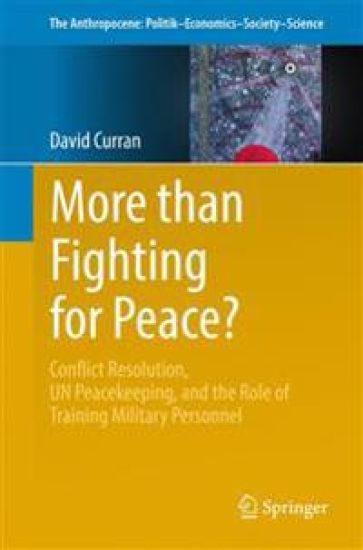
More than Fighting for Peace?

More than Fighting for Peace?

David Curran

Springer International Publishing AG
2016
nidottu
This book provides a contemporary account of the linkages between the academic field of conflict resolution and the practice of military peacekeeping, through the lens of pre-deployment training for military personnel about to embark on UN peacekeeping operations. Military personnel serving on United Nations peacekeeping operations are deployed into highly challenging post-conflict environments, where the likelihood of violence remains high. Moreover, these personnel are deployed part of a wider peace process, and are thus situated as an anchor point in a transition from war to peace. This dimension of their work therefore means that a range of skills and techniques are relied upon, which come not from traditional military training, but from other, non-traditional fields. It is into this gap where the academic field of conflict resolution has made a valuable contribution to understanding international peacekeeping. Since the 1970’s, studies have sought to understand internationalpeacekeeping as a necessary stage in conflict de-escalation, and ultimately transformation. From this, there is a history of engagement including studies which seek to understand the skills peacekeepers may need to assist them in their day to day activities, and the role that international peacekeeping plays in wider projects of conflict transformation.

The Shire Horse in Peace and War (Edition1)
A treatise on the esculent funguses of England containing an account of their classical history, uses, characters, development, structure, nutritious properties, modes of cooking and preserving, etc., a classical book, has been considered important throughout the human history, and so that this work is never forgotten we at Alpha Editions have made efforts in its preservation by republishing this book in a modern format for present and future generations. This whole book has been reformatted, retyped and designed. These books are not made of scanned copies of their original work and hence the text is clear and readable.
Peace, Value, and Wisdom

Peace, Value, and Wisdom

George David Miller

BRILL
2002
nidottu
This book introduces readers to the Buddhist-based philosophy of education of Daisaku Ikeda. Ikeda's philosophy of education offers human revolution, value creation, and dialogue as counterweights to the violence lurking in today's classrooms. Where education becomes wisdom-based, it transforms learners into keen assessors of their inner lives and establishes a foundation for global citizenship.
The Great League of Peace and Power

The Great League of Peace and Power

David C. Hendrickson

UNIVERSITY PRESS OF KANSAS
2026
sidottu
An authoritative history of American foreign policy—published for the nation’s 250th anniversary—from a veteran scholar and teacher. The Great League of Peace and Power provides a lucid history of American foreign policy and international affairs from the Declaration of Independence in 1776 to its 250th anniversary in 2026. In this concise overview, David C. Hendrickson explores the principal ideas, debates, and strategic challenges that continue to shape today’s wars, alliances, and global commitments. Hendrickson rejects the idea that America’s traditional policy of independence was “isolationist,” as it had internationalist elements from the beginning. The Founders wanted a new order in North America that would be the antitype of the European system of venomous rivalry among states. Twentieth-century leaders built a system of collective defense that, after the end of the Cold War, morphed into a universal empire, often with disastrous results. At the heart of this story are fierce domestic debates over power and principle. Hendrickson brings to life the enduring ideas that have guided and divided Americans for generations: neutrality and intervention, diplomacy and war, restraint and dominance. From the early republic to the age of Trump, he shows how these arguments never disappeared but instead resurfaced whenever the nation faced crisis abroad. Clear, authoritative, and deeply relevant, The Great League of Peace and Power speaks directly to today’s readers who are questioning America’s role on the global stage. Hendrickson ultimately argues that older American diplomatic traditions—grounded in peace, reciprocity, and limits on power—offer the best way forward in an era of global overstretch and rising needs at home. As the United States reflects on its 250th anniversary, this timely book offers a bracing reassessment of America’s past and a compelling lens for understanding its uncertain future.
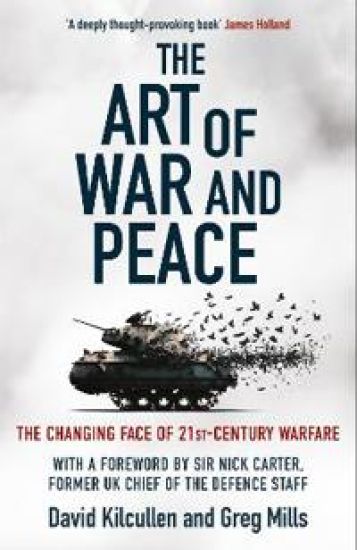
The Art of War and Peace

The Art of War and Peace

David Kilcullen; Greg Mills

BONNIER BOOKS LTD
2026
nidottu
FOREWORD BY SIR NICK CARTER, FORMER UK CHIEF OF DEFENCE STAFF The world is becoming a more dangerous place. Since the fall of Kabul and Russia's invasion of Ukraine, the US-led liberal international order is giving way to a more chaotic and contested world system. Western credibility and deterrence are diminishing in the face of wars in Europe and the Middle East, tensions across the Taiwan Strait, and rising populism and terrorism around the world. Can peace, mutual respect and democracy survive, or are we destined to a permanent chaos in which authoritarians and populists thrive? Using decades of experience as policy advisors in conflicts in Iraq and across Africa, and on recent fieldwork in Israel and Taiwan, the authors analyse the nature of modern war, considering state-on-state and intra-state conflicts. They investigate how technology can be a leveller for small powers against larger aggressors and the role of leadership, diplomacy and economic assistance. The Art of War and Peace explores how wars can be won on the battlefield and how that success can be translated into a stable and enduring peace.
Olivi's Peaceable Kingdom

Olivi's Peaceable Kingdom

Burr David

UNIVERSITY OF PENNSYLVANIA PRESS
1993
sidottu
Everyone who knows anything at all about Petrus Iohannis Olivi knows that his Apocalypse commentary was censured; yet opinions on that condemnation vary. The basic facts are clear. After Olivi's death in 1298, his writings were suppressed by the Franciscan order, yet his tomb at Narbonne became such a popular pilgrimage site that by the second decade of the fourteenth century the crowds were said to rival those a the Porziuncula in Assisi. In 1318 Olivi's body was unobtrusively exhumed and removed to an undisclosed location. The attacks on Olivi had come to concentrate on this Revelation commentary, and with good reason. The spirituals found it increasingly relevant to their situation. By 1318 John had ordered an investigation which led to the report of an eight-man commission in 1319. He then submitted particular passages from Oivi's commentary to individual theologians before he himself condemned it in 1326. Those are the facts. In this book David Burr reconsiders their significance.
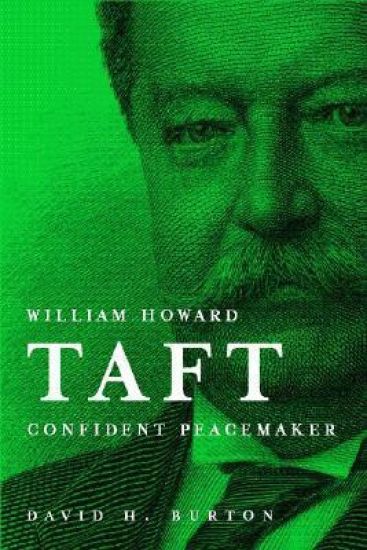
William Howard Taft: Confident Peacemaker

William Howard Taft: Confident Peacemaker

David H. Burton

Fordham University Press
2004
pokkari
This book is a study of the internationalism of William Howard Taft. In the months after war broke out in 1914, Taft was second only to Woodrow Wilson in his awareness of the need to preserve the peace of the world through a new version of international organization. Built upon a synthetic interpretation of Taft's foreign policy ideas and initiatives, the book encompasses the whole of his public career as a statesman, from his years as civil governor of the Philippines through his tenure as chief justice of the Supreme Court. During those years, he moved from a basic belief in the theory and practice of balance of power to the application of dollar diplomacy. In response to the calamity of World War I, Taft came to recognize that world peace must be based upon a combination of idealism and realism, of high-minded principles placed and kept in effect by force, deliberately chosen and carefully applied.
Convair B-36 Peacemaker

Convair B-36 Peacemaker

David Baker

J H Haynes Co Ltd
2020
sidottu
Unofficially named the 'Peacemaker', the Convair B-36 is a legend of the Cold War. With six powerful radial engines and four turbojets paired in pods, the B-36 was America's 'Big Stick' that could subdue would-be aggressors with unrestrained nuclear retribution at a level unmatched by any other aircraft or air force of the time., Built initially from a requirement to bomb Nazi-occupied Europe from the United States, the B-36 entered service with the US Air Force in 1948 as the world's first operational nuclear bomber with hemispheric range, while at the same time becoming the largest American aircraft to enter volume production. It was later adapted as a long-range reconnaissance aircraft equipped with the most powerful cameras ever carried in the air., Author: David Baker offers an unrivalled insight into this behemoth that held the line against the growing Soviet threat during the opening decade of the Cold War. He lifts the lid on the 'Peacemaker', bringing together several decades of research and investigation into an aircraft that bridges the piston-engine era and the age of the all-jet bomber. With the aid of more than 300 photographs and detailed performance charts, he describes the design, development, structure and systems of the B-36 and its service with the US Air Force's Strategic Air Command at a crucial point in post-war history.
The New Law of Peaceful Protest

The New Law of Peaceful Protest

David Mead

Hart Publishing
2010
nidottu
The right to demonstrate is considered fundamental to any democratic system of government, yet in recent years it has received little academic attention. However, events following the recent G20 protests in April 2009 make this a particularly timely work. Setting out and explaining in detail the domestic legal framework that surrounds the right of peaceful protest, the book provides the first extensive analysis of the Strasbourg jurisprudence under Articles 10 and 11 of the European Convention on Human Rights, offering a critical look at recent cases such as Ollinger, Vajnai, Bukta, Oya Ataman, Patyi and Ziliberberg, as well as the older cases that form its bedrock. The principles drawn from this case-law are then synthesised into the remainder of the book to see how the right of protest enshrined in the Human Rights Act 1998 now operates. The five central chapters show how the right is defined: the restrictions on the choice of location of a protest; the constraints imposed on peaceful, persuasive protest; the near total intolerance of any form of obstructive or disruptive protest; the scope of preventive action by the police; and the extent to which commercial targets can avail themselves of private law remedies. This contemporary landscape is highlighted by critical analysis of the principles and case law -- including the leading decisions in Laporte, Austin, Jones and Lloyd and Kay. The book also highlights and develops themes that are currently under-theorised or ignored, including the interplay of the public and the private in regulating protest; the pivotal role played by land ownership rules; and the disjuncture between the law in the books and the law in action. While the book will appeal primarily to scholars, students and practitioners of law - as well as to campaigners and interest groups - it also offers political and socio-legal insights, which will be of interest equally to non-specialists.
Twelve Habits for Peacemakers

Twelve Habits for Peacemakers

David Ford; Gregory Ryan; Robert Leigh; Sarah Snyder

CANTERBURY PRESS NORWICH
2026
nidottu
How can Christians become agents of reconciliation in a divided world and Church? Twelve Habits for Peacemakers brings together leading theologians and experienced peacebuilders to explore Christian Biblical Reasoning – a fresh way of reading Scripture that nurtures the habits essential for peace making. Miroslav Volf, David F. Ford, John Swinton, Tom Greggs, Maggi Dawn and practitioners from the Rose Castle Foundation explore twelve transformative habits – including Lament, Forgiveness, Hospitality, and Empathy – drawn from real-world reconciliation work. Designed for ministers, church leaders, and peacemakers at every level, they offer clear, real-life applications alongside theological depth. Blending academic insight with hands-on wisdom, Twelve Habits for Peacemakers is a vital resource for anyone seeking to bridge divides and live out the gospel of peace.
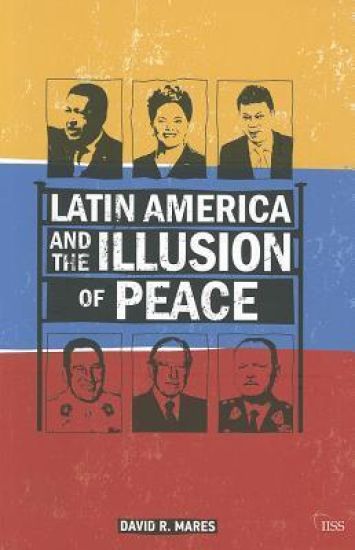
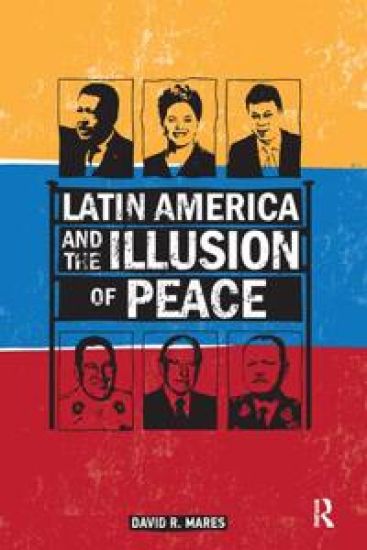
Latin America and the Illusion of Peace
This book explores interstate conflict and its dynamics in the context of Latin America’s contemporary conflict management experience. The myth of Latin America as a region of peace means that each time the use of force rises to the level of global attention (e.g., Ecuador-Peru 1995 or Colombia-Ecuador 2008) analysts and the press ask, "how could that happen here?" Yet the official uses of military force in interstate relations are significantly more prevalent than most analysts within and outside the region understand, and the region is facing new and potentially destabilizing challenges. It is the contention of this book that mitigating the threat raised by militarized interstate relations requires understanding the various ways in which military force can be employed short of war; this in turn requires illuminating the decision making process that produces militarization of a disagreement, considering options for dissuading the decision makers from choosing to militarize and limiting escalations when militarization does occur.
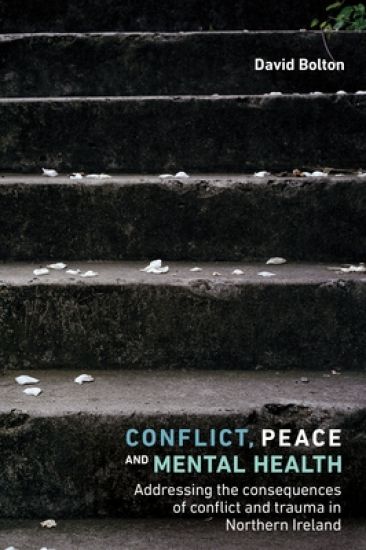
Conflict, Peace and Mental Health

Conflict, Peace and Mental Health

David Bolton

Manchester University Press
2017
sidottu
What are the human consequences of conflict and what are the appropriate service responses? This book seeks to provide an answer to these important questions, drawing on over twenty-five years of work by the author in Northern Ireland and elsewhere. Focusing on the work undertaken following the Omagh bombing, the book describes how needs were assessed and understood, how evidence-based services were put in place, and the training and education programmes that were developed to assist first those communities affected by the bombing and later the wider population affected by the years of conflict. The author places the mental-health needs of affected communities at the heart of the political and peace processes that follow. This is a practical book and will be of particular interest to those planning for and responding to conflict-related disasters, policy makers, service commissioners and providers, politicians, civil servants and peace makers.
They Marched Into Sunlight: War and Peace Vietnam and America October 1967
David Maraniss tells the epic story of Vietnam and the sixties through the events of a few gripping, passionate days of war and peace in October 1967. With meticulous and captivating detail, They Marched Into Sunlight brings that catastrophic time back to life while examining questions about the meaning of dissent and the official manipulation of truth--issues that are as relevant today as they were decades ago. In a seamless narrative, Maraniss weaves together the stories of three very different worlds: the death and heroism of soldiers in Vietnam, the anger and anxiety of antiwar students back home, and the confusion and obfuscating behavior of officials in Washington. To understand what happens to the people in these interconnected stories is to understand America's anguish. Based on thousands of primary documents and 180 on-the-record interviews, the book describes the battles that evoked cultural and political conflicts that still reverberate.
Latin America and the Illusion of Peace
This book explores interstate conflict and its dynamics in the context of Latin America‘s contemporary conflict management experience. The myth of Latin America as a region of peace means that each time the use of force rises to the level of global attention (e.g., Ecuador-Peru 1995 or Colombia-Ecuador 2008) analysts and the press ask, "how could that happen here?" Yet the official uses of military force in interstate relations are significantly more prevalent than most analysts within and outside the region understand, and the region is facing new and potentially destabilizing challenges. It is the contention of this book that mitigating the threat raised by militarized interstate relations requires understanding the various ways in which military force can be employed short of war; this in turn requires illuminating the decision making process that produces militarization of a disagreement, considering options for dissuading the decision makers from choosing to militarize and limiting escalations when militarization does occur.