

Kirjahaku
Etsi kirjoja tekijän nimen, kirjan nimen tai ISBN:n perusteella.
1000 tulosta hakusanalla Deepak






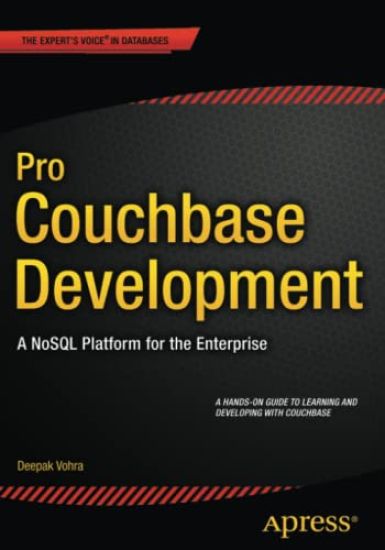
Pro Couchbase Development: A NoSQL Platform for the Enterprise discusses programming for Couchbase using Java and scripting languages, querying and searching, handling migration, and integrating Couchbase with Hadoop, HDFS, and JSON. It also discusses migration from other NoSQL databases like MongoDB. This book is for big data developers who use Couchbase NoSQL database or want to use Couchbase for their web applications as well as for those migrating from other NoSQL databases like MongoDB and Cassandra. For example, a reason to migrate from Cassandra is that it is not based on the JSON document model with support for a flexible schema without having to define columns and supercolumns. The target audience is largely Java developers but the book also supports PHP and Ruby developers who want to learn about Couchbase. The author supplies examples in Java, PHP, Ruby, and JavaScript.After reading and using this hands-on guide for developing with Couchbase, you'll be able to build complex enterprise, database and cloud applications that leverage this powerful platform.
Pro MongoDB Development is about MongoDB, a NoSQL database based on the BSON (binary JSON) document model. The book discusses all aspects of using MongoDB in web applications: Java, PHP, Ruby, JavaScript are the most commonly used programming/scripting languages and the book discusses accessing MongoDB database with these languages. The book also discusses using Java EE frameworks Kundera and Spring Data with MongoDB. As NoSQL databases are commonly used with the Hadoop ecosystem the book also discusses using MongoDB with Apache Hive. Migration from other NoSQL databases (Apache Cassandra and Couchbase) and from relational databases (Oracle Database) is also discussed. What You'll Learn:How to use a Java client and MongoDB shellHow to use MongoDB with PHP, Ruby, and Node.js as wellHow to migrate Apache Cassandra tables to MongoDB documents; Couchbase to MongoDB; and transferring data between Oracle and MongoDBHow to use Kundera, Spring Data, and Spring XD with MongoDBHow to load MongoDB data into Oracle Database and integrating MongoDB with Oracle Database in Oracle Data IntegratorAudience:The target audience of the book is NoSQL database developers. Target audience includes Java, PHP and Ruby developers. The book is suitable for an intermediate level course in NoSQL database.
In this fast-paced book on the Docker open standards platform for developing, packaging and running portable distributed applications, Deepak Vorhadiscusses how to build, ship and run applications on any platform such as a PC, the cloud, data center or a virtual machine. He describes how to install and create Docker images. and the advantages of Docker containers.The remainder of the book is devoted to discussing using Docker with important software solutions. He begins by discussing using Docker with a traditional RDBMS using Oracle and MySQL. Next he moves on to NoSQL with chapter on MongoDB Cassandra, and Couchbase. Then he addresses the use of Docker in the Hadoop ecosystem with complete chapters on utilizing not only Hadoop, but Hive, HBase, Sqoop, Kafka, Solr and Spark. What You Will LearnHow to install a Docker imageHow to create a Docker containerHow to run an Application in a Docker ContainerUse Docker with Apache Hadoop EcosystemUse Docker with NoSQL DatabasesUse Docker with RDBMSWho This Book Is ForApache Hadoop Developers. Database developers. NoSQL Developers.
Start using Kubernetes in complex big data and enterprise applications, including Docker containers. Starting with installing Kubernetes on a single node, the book introduces Kubernetes with a simple Hello example and discusses using environment variables in Kubernetes. Next, Kubernetes Microservices with Docker discusses using Kubernetes with all major groups of technologies such as relational databases, NoSQL databases, and in the Apache Hadoop ecosystem.The book concludes with using multi container pods and installing Kubernetes on a multi node cluster. "a concise but clear introduction to containers, Docker and Kubernetes, using simple real-world examples to pass on the core concepts, via repetition, and is a very useful enabler." 10/10Dave Hay MBCS CITP: review for BCS, The Chartered Institute for IT (http://www.bcs.org/content/conWebDoc/58512)What You Will LearnInstall Kubernetes on a single nodeSet environment variablesCreate multi-container pods using DockerUse volumesUse Kubernetes with the Apache Hadoop ecosystem, NoSQL databases, and RDBMSsInstall Kubernetes on a multi-node clusterWho This Book Is ForApplication developers including Apache Hadoop developers, database developers and NoSQL developers.
Learn how to use the Apache Hadoop projects, including MapReduce, HDFS, Apache Hive, Apache HBase, Apache Kafka, Apache Mahout, and Apache Solr. From setting up the environment to running sample applications each chapter in this book is a practical tutorial on using an Apache Hadoop ecosystem project.While several books on Apache Hadoop are available, most are based on the main projects, MapReduce and HDFS, and none discusses the other Apache Hadoop ecosystem projects and how they all work together as a cohesive big data development platform.What You Will Learn:Set up the environment in Linux for Hadoop projects using Cloudera Hadoop Distribution CDH 5Run a MapReduce jobStore data with Apache Hive, and Apache HBaseIndex data in HDFS with Apache SolrDevelop a Kafka messaging systemStream Logs to HDFS with Apache FlumeTransfer data from MySQL database to Hive, HDFS, and HBase with SqoopCreate a Hive table over Apache SolrDevelop a Mahout User Recommender SystemWho This Book Is For:Apache Hadoop developers. Pre-requisite knowledge of Linux and some knowledge of Hadoop is required.
Learn the fundamental foundations and concepts of the Apache HBase (NoSQL) open source database. It covers the HBase data model, architecture, schema design, API, and administration.Apache HBase is the database for the Apache Hadoop framework. HBase is a column family based NoSQL database that provides a flexible schema model. What You'll LearnWork with the core concepts of HBaseDiscover the HBase data model, schema design, and architectureUse the HBase API and administrationWho This Book Is ForApache HBase (NoSQL) database users, designers, developers, and admins.
Take container cluster management to the next level; learn how to administer and configure Kubernetes on CoreOS; and apply suitable management design patterns such as Configmaps, Autoscaling, elastic resource usage, and high availability. Some of the other features discussed are logging, scheduling, rolling updates, volumes, service types, and multiple cloud provider zones. The atomic unit of modular container service in Kubernetes is a Pod, which is a group of containers with a common filesystem and networking. The Kubernetes Pod abstraction enables design patterns for containerized applications similar to object-oriented design patterns. Containers provide some of the same benefits as software objects such as modularity or packaging, abstraction, and reuse.CoreOS Linux is used in the majority of the chapters and other platforms discussed are CentOS with OpenShift, Debian 8 (jessie) on AWS, and Debian 7 for Google Container Engine. CoreOS is the main focus becayse Docker is pre-installed on CoreOS out-of-the-box. CoreOS: Supports most cloud providers (including Amazon AWS EC2 and Google Cloud Platform) and virtualization platforms (such as VMWare and VirtualBox)Provides Cloud-Config for declaratively configuring for OS items such as network configuration (flannel), storage (etcd), and user accounts Provides a production-level infrastructure for containerized applications including automation, security, and scalabilityLeads the drive for container industry standards and founded appc Provides the most advanced container registry, Quay Docker was made available as open source in March 2013 and has become the most commonly used containerization platform. Kubernetes was open-sourced in June 2014 and has become the most widely used container cluster manager. The first stable version of CoreOS Linux was made available in July 2014 and since has become one of the most commonly used operating system for containers. What You'll LearnUse Kubernetes with DockerCreate a Kubernetes cluster on CoreOS on AWSApply cluster management design patternsUse multiple cloud provider zonesWork with Kubernetes and tools like AnsibleDiscover the Kubernetes-based PaaS platform OpenShiftCreate a high availability websiteBuild a high availability Kubernetes master clusterUse volumes, configmaps, services, autoscaling, and rolling updatesManage compute resourcesConfigure logging and schedulingWho This Book Is ForLinux admins, CoreOS admins, applicationdevelopers, and container as a service (CAAS) developers. Some pre-requisite knowledge of Linux and Docker is required. Introductory knowledge of Kubernetes is required such as creating a cluster, creating a Pod, creating a service, and creating and scaling a replication controller. For introductory Docker and Kubernetes information, refer to Pro Docker (Apress) and Kubernetes Microservices with Docker (Apress). Some pre-requisite knowledge about using Amazon Web Services (AWS) EC2, CloudFormation, and VPC is also required.
Learn ES6 best practices for code optimization and organization and walk through practical, common examples of how to implement complete components of your applications. While this book covers the basic concepts of modern JavaScript, it primarily focuses on the new syntax, data-types, functionalities, and everything else that's new in ES6, the latest standard of JavaScript. You'll examine how to use ES6 in functional programming and explore the new more modular and object-oriented approach to JavaScript. This book will help you sharpen and upgrade your JavaScript language skills so you to easily explore modern ES6 based frameworks or libraries such as ReactJS, ReactNative, Angular4 and Vue.js.ES6 for Humans is a complete guide to writing ES6 and will enable you to start taking advantage of this exciting new version of JavaScript. WhatYou'll LearnUse all the new features added to JavaScriptCompare ES5 and ES6 in varied situationsRefresh your core JavaScript fundamentalsUnderstand the modular and object-oriented approach to JavaScriptWho this Book Is ForAny Javascript developer who wants to fully understand and dive into the new features of ES6/ES2015. Developers with some background in programming, preferably in JavaScript. A basic understanding of coding concepts and exposure to object-oriented programming is expected.
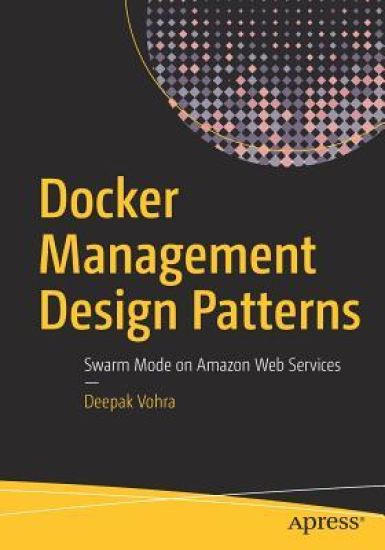
Master every aspect of orchestrating/managing Docker including creating a Swarm, creating services, using mounts, scheduling, scaling, resource management, rolling updates, load balancing, high availability, logging and monitoring, using multiple zones, and networking. This book also discusses the managed services for Docker Swarm: Docker for AWS and Docker Cloud Swarm mode.Docker Management Design Patterns explains how to use Docker Swarm mode with Docker Engine to create a distributed Docker container cluster and how to scale a cluster of containers, schedule containers on specific nodes, and mount a volume. This book is based on the latest version of Docker (17.0x).You will learn to provision a Swarm on production-ready AWS EC2 nodes, and to link Docker Cloud to Docker for AWS to provision a new Swarm or connect to an existing Swarm. Finally, you will learn to deploy a Docker Stack on Docker Swarm with Docker Compose.What You'll LearnApply Docker management design patternsUse Docker Swarm mode and other new featuresCreate and scale a Docker serviceUse mounts including volumesConfigure scheduling, load balancing, high availability, logging and monitoring, rolling updates, resource management, and networkingUse Docker for AWS managed services including a multi-zone SwarmBuild Docker Cloud managed services in Swarm modeWho This Book Is ForDocker admins, Docker application developers, and container as a service (CAAS) developers. Some prerequisite knowledge of Linux and Docker is required. Apress Pro Docker is recommended as a companion to this book.
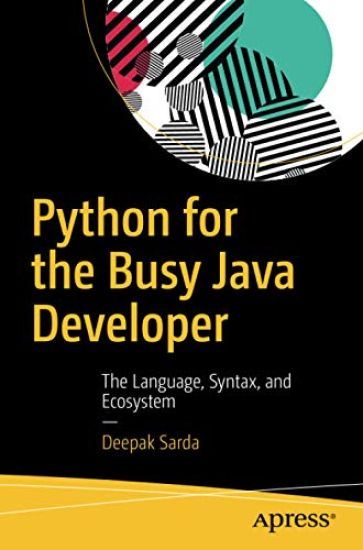
Are you a seasoned Java developer who wishes to learn Python? Perhaps you’ve just joined a project where a chunk of system integration code is written in Python. Or maybe you need to implement a report generation module in the next sprint and your colleague mentioned that Python would be the perfect tool for the job. In any case, if you are in a situation where you have to pick up the Python programming language overnight, this book is just for you! Hit the ground running and gain a fast-paced overview of what the Python language is all about, the syntax that it uses and the ecosystem of libraries and tools that surround the language. This concise book doesn’t spend time on details from an introductory programming course or document every single Python feature. Instead, Python for the Busy Java Developer is designed for experienced Java developers to obtain sufficient familiarity with the language and dive into coding, quickly. What You'll LearnDiscover the fundamentals of the core Python language and how they compare to JavaUnderstand Python syntax and the differences between Python 2.x and 3.xExplore the Python ecosystem, its standard libraries, and how to implement themWho This Book Is ForWorking programmers who are comfortable with Java or another object-oriented programming language such as C#

Thunder Rumbles in Preeti's House
Deepak Shimkhada
Createspace Independent Publishing Platform
2013
nidottu
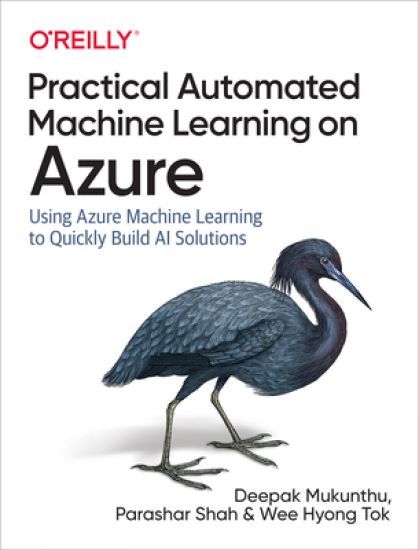
Practical Automated Machine Learning on Azure
Deepak Mukunthu; Parashar Shah; Wee Hyong Tok
O'Reilly Media, Inc, USA
2019
nidottu
Develop smart applications without spending days and weeks building machine-learning models. With this practical book, you’ll learn how to apply Automated Machine Learning, a process that uses machine learning to help people build machine learning models. Deepak Mukunthu, Parashar Shah, and Wee Hyong Tok provide a mix of technical depth, hands-on examples, and case studies that show how customers are solving real-world problems with this technology. Building machine learning models is an iterative and time-consuming process. Even those who know how to create these models may be limited in how much they can explore. Once you complete this book, you’ll understand how to apply Automated Machine Learning to your data right away. Learn how companies in different industries are benefiting from Automated Machine Learning Get started with Automated Machine Learning using Azure Explore aspects such as algorithm selection, auto featurization, and hyperparameter tuning Understand how data analysts, BI professionals, and developers can use Automated Machine Learning in their familiar tools and experiences Learn how to get started using Automated Machine Learning for use cases including classification and regression.
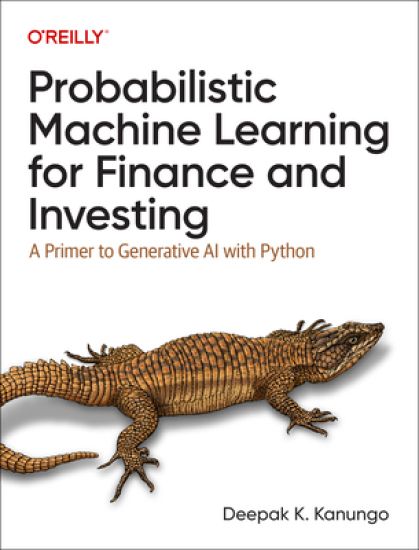
Probabilistic Machine Learning for Finance and Investing
Deepak K. Kanungo
O'Reilly Media
2023
nidottu
Whether based on academic theories or machine learning strategies, all financial models are at the mercy of modeling errors that can be mitigated but not eliminated. Probabilistic ML technologies are based on a simple and intuitive definition of probability and the rigorous calculus of probability theory. These systems treat uncertainties and errors of financial and investing systems as features, not bugs. And they quantify uncertainty generated from inexact inputs and outputs as probability distributions, not point estimates. This makes for realistic financial inferences and predictions that are useful for decision-making and risk management. These systems are capable of warning us when their inferences and predictions are no longer useful in the current market environment. Probabilistic ML is the next generation ML framework and technology for AI-powered financial and investing systems for many reasons. By moving away from flawed statistical methodologies (and a restrictive conventional view of probability as a limiting frequency), you'll move toward an intuitive view of probability as a mathematically rigorous statistical framework that quantifies uncertainty holistically and successfully. This book shows you how.