This touching story reveals how the good Princess Jenny, ruler of her peaceful country called Placida, meets a crisis when the wicked queen who rules the country next to hers stirs up trouble by sending a spy to steal Jenny's beloved puppy. Children will love how this story unfolds, with adventure, animals, intrigue, and a love story besides "Princess Jenny and the Stolen Puppy" aspires to be the most charming and gentle way ever to introduce children to the harsh realities of international conflict.
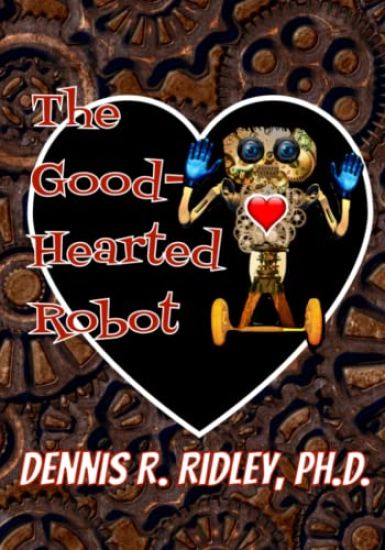
The Good-Hearted Robot is a book for children that adults will love to read also because of its timeless, mind-blowing message. The story shows how God, the Creator of everything, so loved a brilliant but lonely inventor named Joseph that He gave him the ability to create a talking robot but showed him that this ingenious invention could never take his loneliness away. Learn how God rewarded Joseph after he turned towards Him and how He satisfied Joseph's curiosity about the wonders that the greatest inventor of all had fashioned.
"Phoebe" is the name Eunice Huberta Tobie gave herself in this 1938 novel about her early life. Phoebe, who must feel her way, test her footing, and endlessly search her heart, is the story's main character. Unlike her sister Helen, who took what she wanted in life, Phoebe was tortured by attacks of conscience, indecision, and feelings of futility. She recognized these negations of character and allowed them to harass her, but she accepted them, too, as part of herself and would not have traded lives with anyone.
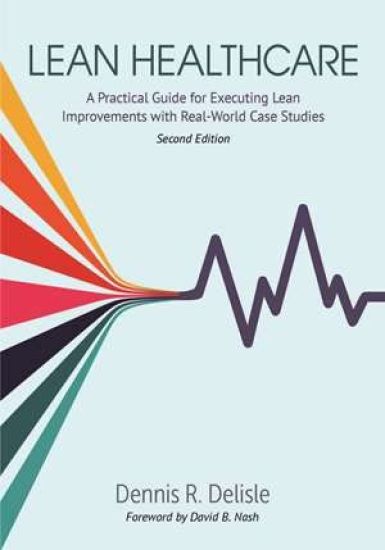
Lean healthcare is not about being better, but rather becoming the best at getting better. Today's challenge in the healthcare environment is your ability to improve at a greater rate than surrounding competitors. This book focuses on the model, strategy, and lessons learned in implementing lean thinking in a practical way. Using real-world case studies, the book provides approaches and tools to facilitate rapid improvements, along with a bonus section on pandemic preparedness. By following this accessible, user-friendly guide, you can achieve meaningful results right away. Dr. Dennis R. Delisle currently serves as the Executive Director for The Ohio State University Wexner Medical Center's flagship University Hospital. Through the Thomas Jefferson University College of Population Health, Dennis founded and oversees the Master of Science degree program in Operational Excellence, one of the first of its kind in the nation. He is the author of two books about streamlining and transforming healthcare.
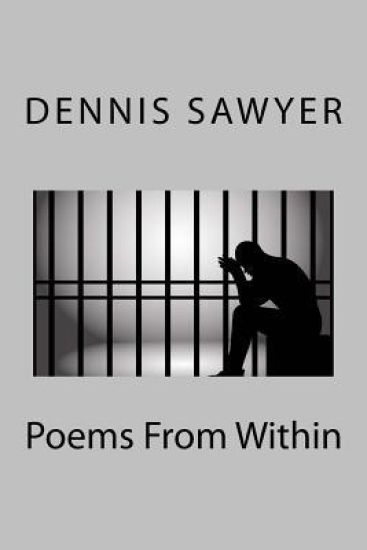
These poems were written by Dennis Sawyer. He was incarcerated from 2000 - 2017. Growing in the Lord and learning to choose to do the perfect will of God, everyday, remains the same - in or out- of jail. Many of his life experiences will make you recall where you were in your own walk with the Lord. Dennis' journey may feel very familiar. While in prison, Dennis lost many family members. His father, two brothers, a sister, and a son passed away. He was released March 1st, 2017. Today, he enjoys time with his son and two daughters. Dennis R. Sawyer was born on February 13th, 1947. He grew up in the Saxon Mill Village. After school, he served in the Navy for six years. After which, his civilian employment, involved setting up newly purchased mobile homes. Dennis recalls his life events. "While I was adjusting to civilian employment I laid out of church for three consecutive Sundays. It was then I became misdirected and committed a crime. I was sentenced to twenty years. I served almost seventeen of those years. "While in prison I rededicated my life to Jesus and began writing poems to express all that was within my heart; both good and bad experiences and my thankfulness for God's love. The Lord protected me and kept me safe while in prison. "I took three Bible Courses and have a diploma for each. I took a forty-two week Bible Study, while still in prison, call the Jump Start Program, in 2012. I was released March 1st, 2017. Today I attend church and I am involved with the Jump Start Program. I plan to use these compiled poems to minister to prisoners. "Hope, prayer, and faith changes the heart and mind. Come boldly to the Throne of Grace (poem named His Amazing Grace). The pure love you find in God will build freedom from within the heart all the way to the mansion in Heaven; which is prepared by Jesus, for you." (John 14: 6)
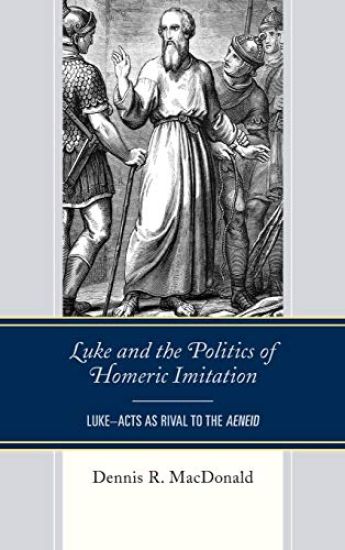
Luke and the Politics of Homeric Imitation: Luke–Acts as Rival to the Aeneid argues that the author of Luke–Acts composed not a history but a foundation mythology to rival Vergil’s Aeneid by adopting and ethically emulating the cultural capital of classical Greek poetry, especially Homer’s Iliad and Odyssey and Euripides's Bacchae. For example, Vergil and, more than a century later, Luke both imitated Homer’s account of Zeus’s lying dream to Agamemnon, Priam’s escape from Achilles, and Odysseus’s shipwreck and visit to the netherworld. Both Vergil and Luke, as well as many other intellectuals in the Roman Empire, engaged the great poetry of the Greeks to root new social or political realities in the soil of ancient Hellas, but they also rivaled Homer’s gods and heroes to create new ones that were more moral, powerful, or compassionate. One might say that the genre of Luke–Acts is an oxymoron: a prose epic. If this assessment is correct, it holds enormous importance for understanding Christian origins, in part because one may no longer appeal to the Acts of the Apostles for reliable historical information. Luke was not a historian any more than Vergil was, and, as the Latin bard had done for the Augustine age, he wrote a fictional portrayal of the kingdom of God and its heroes, especially Jesus and Paul, who were more powerful, more ethical, and more compassionate than the gods and heroes of Homer and Euripides or those of Vergil’s Aeneid.
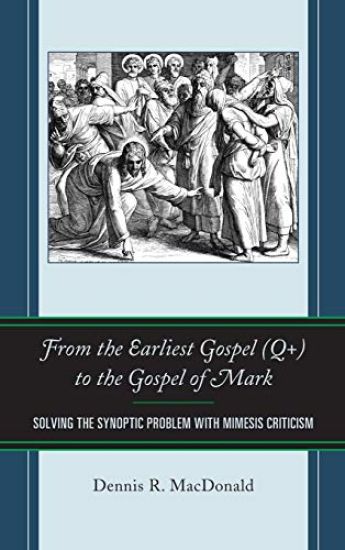
From the Earliest Gospel (Q+) to the Gospel of Mark focuses on the remarkable overlaps between Jesus’s teachings in the lost Gospel Q and Mark. Dennis R. MacDonald argues Synoptic intertextuality is best explained not as the redaction of sources but more flexibly as the imitation of literary models. Part One applies the criteria of mimesis criticism in a running commentary on Q+ to demonstrate that it polemically imitated Deuteronomy. Part Two argues that Mark in turn tendentiously imitated Logoi. The Conclusion proposes that Matthew and Luke in turn brilliantly and freely imitated both Logoi and Mark and by doing so created scores of duplicate sayings and episodes (doublets).
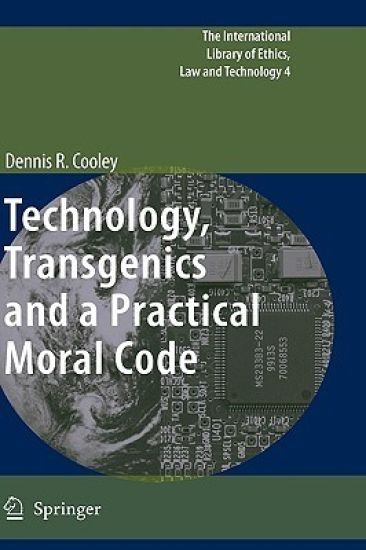
Most philosophers still like to feel that they have a special subject matter, well insulated from anything that the social scientists, and scientists in general, have to tell them. That is not healthy for philosophy; and it is all too likely to lead to an ethics that continues, as of old, to plead for its ultimates-the fact that one is totally ineffectual being decently concealed by an impressive terminology. (Stevenson 1963, pp. 114–5) Many so-called moral theories do not even attempt to explain or justify common morality but are used to generate guides to conduct intended to replace common morality. These p- posed moral guides, those generated by all of the standard consequentialist, contractarian, and deontological theories, are far simpler than the common moral system and sometimes yield totally unacceptable answers to moral problems. Since these philosophers who put forward these theories have usually dismissed common morality as confused, they are c- pletely unaware of the complexity involved in making moral decisions and judgments. It is not surprising that many who take morality seriously and try to apply it to real problems faced by actual people are so critical of moral theory. (Bernard Gert 1998, p. 6) As both Stevenson and Gert note, ethics requires social and other sciences for by its very nature, ethics is a practical enterprise.
Most philosophers still like to feel that they have a special subject matter, well insulated from anything that the social scientists, and scientists in general, have to tell them. That is not healthy for philosophy; and it is all too likely to lead to an ethics that continues, as of old, to plead for its ultimates-the fact that one is totally ineffectual being decently concealed by an impressive terminology. (Stevenson 1963, pp. 114–5) Many so-called moral theories do not even attempt to explain or justify common morality but are used to generate guides to conduct intended to replace common morality. These p- posed moral guides, those generated by all of the standard consequentialist, contractarian, and deontological theories, are far simpler than the common moral system and sometimes yield totally unacceptable answers to moral problems. Since these philosophers who put forward these theories have usually dismissed common morality as confused, they are c- pletely unaware of the complexity involved in making moral decisions and judgments. It is not surprising that many who take morality seriously and try to apply it to real problems faced by actual people are so critical of moral theory. (Bernard Gert 1998, p. 6) As both Stevenson and Gert note, ethics requires social and other sciences for by its very nature, ethics is a practical enterprise.
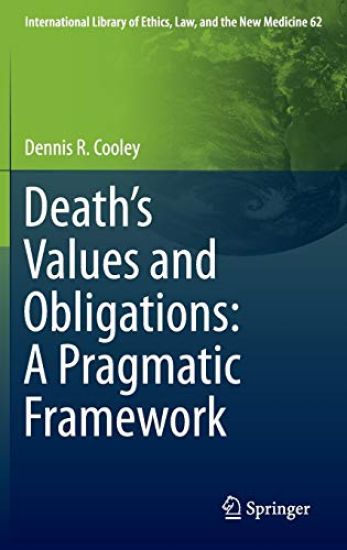
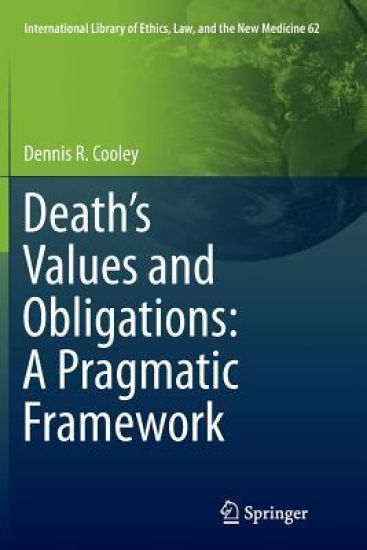
This book brings together the relevant interdisciplinary and method elements needed to form a conceptual framework that is both pragmatic and rigorous. By using the best and often the latest, work in thanatology, psychology, neuroscience, sociology, physics, philosophy and ethics, it develops a framework for understanding both what death is – which requires a great deal of time spent developing definitions of the various types of identity-in-the-moment and identity-over-time – and the values involved in death. This pragmatic framework answers questions about why death is a form of loss; why we experience the emotional reactions, feelings and desires that we do; which of these reactions, feelings and desires are justified and which are not; if we can survive death and how; whether our deaths can harm us; and why and how we should prepare for death. Thanks to the pragmatic framework employed, the answers to the various questions are more likely to be accurate and acceptable than those with less rigorous scholarly underpinnings or which deal with utopian worlds.
This book brings together the relevant interdisciplinary and method elements needed to form a conceptual framework that is both pragmatic and rigorous. By using the best and often the latest, work in thanatology, psychology, neuroscience, sociology, physics, philosophy and ethics, it develops a framework for understanding both what death is – which requires a great deal of time spent developing definitions of the various types of identity-in-the-moment and identity-over-time – and the values involved in death. This pragmatic framework answers questions about why death is a form of loss; why we experience the emotional reactions, feelings and desires that we do; which of these reactions, feelings and desires are justified and which are not; if we can survive death and how; whether our deaths can harm us; and why and how we should prepare for death. Thanks to the pragmatic framework employed, the answers to the various questions are more likely to be accurate and acceptable than those with less rigorous scholarly underpinnings or which deal with utopian worlds.
Varikkokamut vauhdissa!Helppolukuinen ja hauska tarina Salama McQueenin ystäville!Edessä on jännittävä kilpailu. Kuinka käy autokaverusten kisan temmellyksessä?