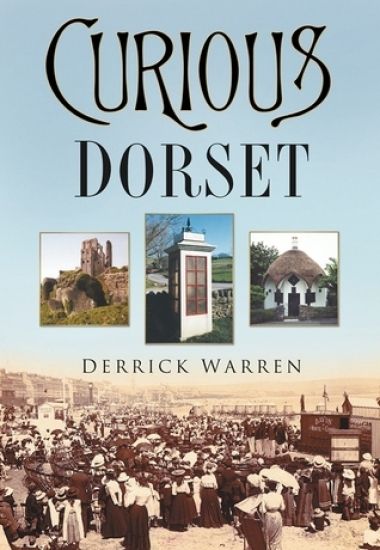
Dorset may well be the least spoilt county in England; a great many curious and unusual buildings, objects and landscape features have survived the centuries. This book is a guide to about 80 of these remarkable sights, together with some of the eccentrics who have lived here.
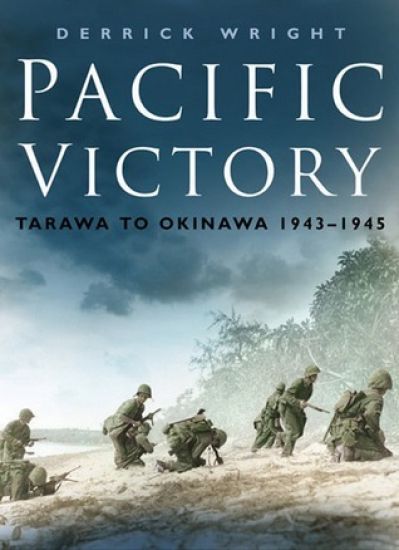
The American 'island-hopping' campaign in the Pacific during the Second World War was a crucial factor in the eventual defeat of Japan in 1945. The assault and capture of these islands meant US bombers and their fighter escorts could now reach mainland Japan, disrupting and eventually crippling its war economy. The battles on Tarawa, the Marshall Islands, the Marianas group, Peleliu, Iwo Jima and Okinawa were all characterised by savage fighting and heavy casulaties on both sides. Japanese garrisons often fought to the death and kamikaze air attacks posed a grave threat to the opposing US forces. Employing archive colour and black and white photographs, maps and first-hand accounts, the author relates these pivotal battles to the wider struggle against the Japanese in the Pacific.
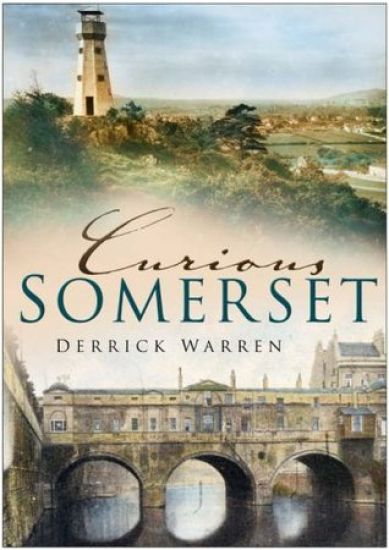
Somerset is a varied county, with its five ranges of hills to the levels and moors - not forgetting its sandy beaches and coastal resorts, as well as England's smallest city. In Curious Somerset Derrick Warren examines over 80 of these sights.
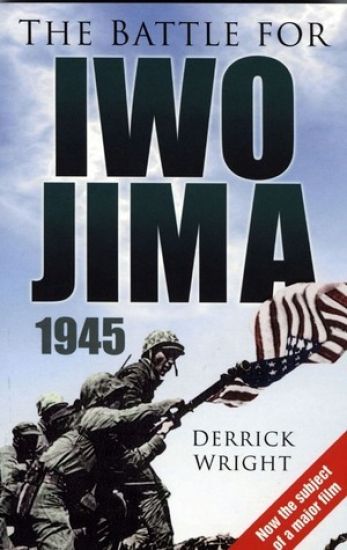
Iwo Jima was the United States Marine Corps' toughest ever battle and a turning point in the Pacific War. In February 1945, three Marine Divisions stormed the island's shores in what was supposed to be a ten-day battle, but they had reckoned without General Tadamichi Kuribayashi, the enemy commander.
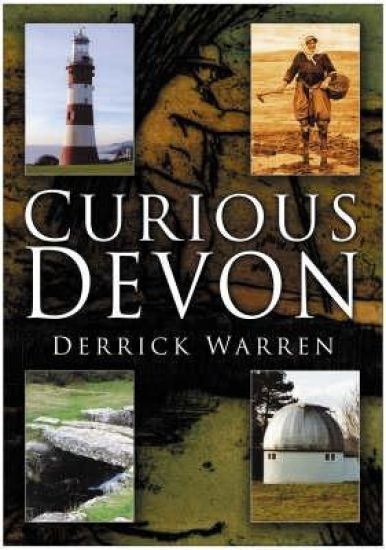
Devon is a varied county, rich in history and heritage and justly popular with tens of thousands of visitors every year. A great many curious and unusual buildings, objects and landscape features have survived the centuries here. This book is a guide to over 130 of these remarkable sights in the heart of the West Country, including a 'stink pipe' at Bovey Tracey, the Coffin House at Brixham, the cliff railway at Lynmouth, the Devil's Stone at Shebbear, the narrowest street in the world at Exeter and a pillory at Hemyock Castle, as well as curious pub names, an epitaph to a cat and a memorial to a pig, among many others. Numerous illustrations are included, together with a map and location details.
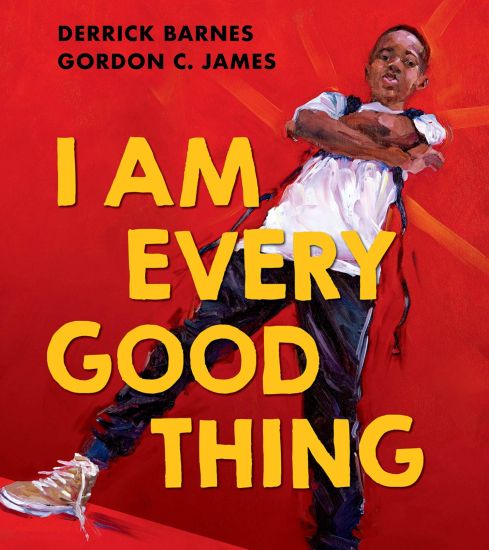
Selected by Oprah Magazine as one of its 'essential books for discussing racism with kids'. I am a non-stop ball of energy. Powerful and full of light. I am a go-getter. A difference-maker. A leader. Step inside the mind of the confident narrator of this book. He is proud of everything that makes him who he is. He's got big plans, and will see them through. He's creative, adventurous, smart, funny. A good friend. A superhero. Sometimes he falls, but he always gets back up. And other times he's afraid, because he's often misunderstood. So, slow down, look and listen as he shows you who he really is … Featured in the Booktrust Great Books Guide 2021 Observer Children’s Picture Book of the Month Perfect for fans of Dapo Adeola’s Hey You! ‘Pitch-perfect… Gordon C James’s painted portraits brim with spirit and dignity. The result is a truly special book by an American author-illustrator duo at the top of their game’ – Imogen Carter, Observer ‘A poetic paean to the brilliance of black boys, its energetic pages filled with courage, joy and vivid, dynamic illustrations’ – Guardian ‘A powerful celebration of Black boyhood’ – Booklist, starred review ‘A much-needed book for Black children when society demonstrates otherwise’ – Kirkus Reviews, starred review ‘This beautiful and necessary book that affirms Black boys and their right to thrive’ – Horn Book, starred review ‘An empowering ode to Black boy joy’ – Publishers Weekly, starred review ‘Page after page of empowering text speaks to energetic children everywhere’ – School Library Journal, starred review
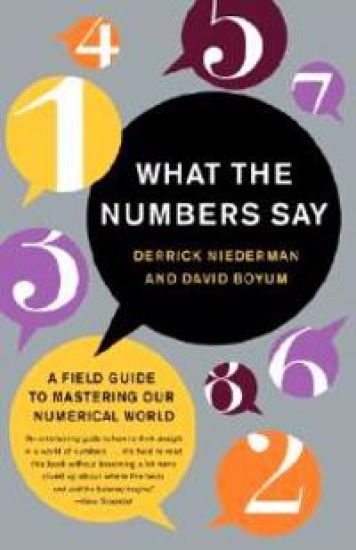
Offers a series of clear, comprehensible techniques to help readers understand, process, and calculate their way through the vast amount of quantitative data that exists, presenting a series of real-world situations, ranging from stock market probability and interest rate percentages to political polls and sports scoring. Reprint.
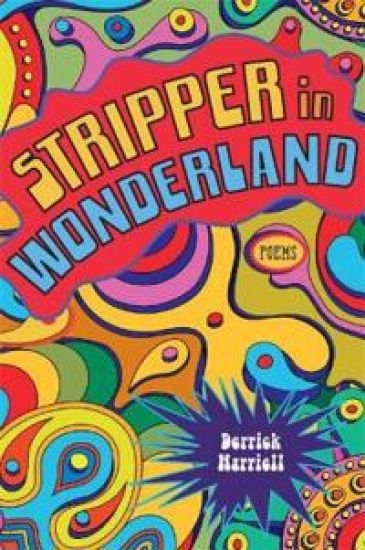
The percussive poems of Stripper in Wonderland move from birth to death, funk to hip-hop, and racism to religion as Derrick Harriell explores the life of a modern black man transplanted from the American Midwest to the Deep South.Harriell summons the ghosts of the past as he deals with the realities of the present. He carefully winds images and words together to produce powerful, often graphic, poems that inform our view of one another as they punch through our assumptions.
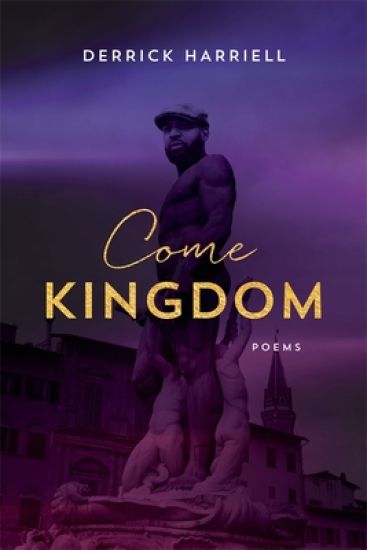
Derrick Harriell's new book, Come Kingdom, chronicles a Black man's journey toward an ever-elusive American Dream with poems anchored in the trenches of personal crossroads ranging from child conception to substance abuse and racism. The collection follows a male speaker as he and his partner family plan, hoping to provide their son with a sibling. Their troubles burst through in bold poems that incorporate both medical and mental hurdles. At the same time, it pays homage to Black musical icons such as Marvin Gaye, Whitney Houston, Tupac Shakur, and Nipsey Hussle. With spirited vulnerability and gritty lyricism, Harriell reveals the stakes and hauntings of relentless generational traumas. A tour de force of outcry and courage, Come Kingdom confronts shifting social, political, and musical climates. On a more intimate level, it also follows a couple's desperate attempts to become parents again.
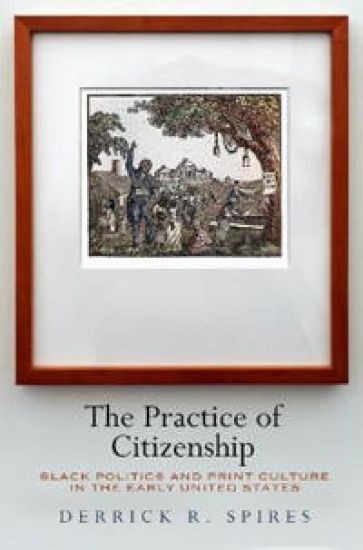
In the years between the American Revolution and the U.S. Civil War, as legal and cultural understandings of citizenship became more racially restrictive, black writers articulated an expansive, practice-based theory of citizenship. Grounded in political participation, mutual aid, critique and revolution, and the myriad daily interactions between people living in the same spaces, citizenship, they argued, is not defined by who one is but, rather, by what one does. In The Practice of Citizenship, Derrick R. Spires examines the parallel development of early black print culture and legal and cultural understandings of U.S. citizenship, beginning in 1787, with the framing of the federal Constitution and the founding of the Free African Society by Absalom Jones and Richard Allen, and ending in 1861, with the onset of the Civil War. Between these two points he recovers understudied figures such as William J. Wilson, whose 1859 "Afric-American Picture Gallery" appeared in seven installments in The Anglo-African Magazine, and the physician, abolitionist, and essayist James McCune Smith. He places texts such as the proceedings of black state conventions alongside considerations of canonical figures such as Frances Ellen Watkins Harper and Frederick Douglass. Reading black print culture as a space where citizenship was both theorized and practiced, Spires reveals the degree to which concepts of black citizenship emerged through a highly creative and diverse community of letters, not easily reducible to representative figures or genres. From petitions to Congress to Frances Harper's parlor fiction, black writers framed citizenship both explicitly and implicitly, the book demonstrates, not simply as a response to white supremacy but as a matter of course in the shaping of their own communities and in meeting their own political, social, and cultural needs.
Is there too much violence in hip-hop music? What’s the difference between Kimberly Jones and the artist Lil' Kim? Is hip-hop culture a "black" thing? Is it okay for N.W.A. to call themselves niggaz and for Dave Chappelle to call everybody bitches? These witty, provocative essays ponder these and other thorny questions, linking the searing cultural issues implicit ? and often explicit ? in hip-hop to the weighty matters examined by the great philosophers of the past. The book shows that rap classics by Lauryn Hill, OutKast, and the Notorious B.I.G. can help uncover the meanings of love articulated in Plato's Symposium; that Rakim, 2Pac, and Nas can shed light on the conception of God's essence expressed in St. Thomas Aquinas's Summa Theologica; and explores the connection between Run-D.M.C., Snoop Dogg, and Hegel. Hip-Hop and Philosophy proves that rhyme and reason, far from being incompatible, can be mixed and mastered to contemplate life's most profound mysteries.
The Challenge of Blackness examines the history and legacy of the Institute of the Black World (IBW), one of the most important Black Freedom Struggle organisations to emerge in the aftermath of the assassination of Dr. Martin Luther King Jr. A think tank based in Atlanta, the IBW sought to answer King's question ""Where do we go from here?"" Its solution was to organise a broad array of leading Black activists, scholars, and intellectuals to find ways to combine the emerging academic discipline of Black Studies with the Black political agenda. Throughout the 1970s, debates over race and class in the Unites States grew increasingly hostile, and the IBW's approach was ultimately unable to challenge the growing conservatism. By using the IBW as the lens through which to view these turbulent years, Derrick White provides an exciting new interpretation of the immediate post-civil rights years in America.
The Challenge of Blackness examines the history and legacy of the Institute of the Black World (IBW), one of the most important Black Freedom Struggle organisations to emerge in the aftermath of the assassination of Dr. Martin Luther King Jr. A think tank based in Atlanta, the IBW sought to answer King's question ""Where do we go from here?"" Its solution was to organize a broad array of leading Black activists, scholars, and intellectuals to find ways to combine the emerging academic discipline of Black Studies with the Black political agenda. Throughout the 1970s, debates over race and class in the Unites States grew increasingly hostile, and the IBW's approach was ultimately unable to challenge the growing conservatism. By using the IBW as the lens through which to view these turbulent years, Derrick White provides an exciting new interpretation of the immediate post-civil rights years in America.
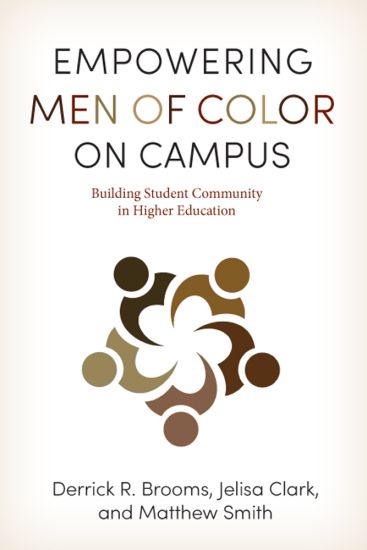
While recruitment efforts toward men of color have increased at many colleges and universities, their retention and graduation rates still lag behind those of their white peers. Men of color, particularly black and Latino men, face a number of unique challenges in their educational careers that often impact their presence on campus and inhibit their collegiate success. Empowering Men of Color on Campus examines how men of color negotiate college through their engagement in Brothers for United Success (B4US), an institutionally-based male-centered program at a Hispanic Serving Institution. Derrick R. Brooms, Jelisa Clark, and Matthew Smith introduce the concept of educational agency, which is harbored in cultural wealth and demonstrates how ongoing B4US engagement empowers the men’s efforts and abilities to persist in college. They found that the cultural wealth(s) of the community enhanced the students’ educational agency, which bolstered their academic aspirations, academic and social engagement, and personal development. The authors demonstrate how educational agency and cultural wealth can be developed and refined given salient and meaningful immersions, experiences, engagements, and communal connections.
While recruitment efforts toward men of color have increased at many colleges and universities, their retention and graduation rates still lag behind those of their white peers. Men of color, particularly black and Latino men, face a number of unique challenges in their educational careers that often impact their presence on campus and inhibit their collegiate success. Empowering Men of Color on Campus examines how men of color negotiate college through their engagement in Brothers for United Success (B4US), an institutionally-based male-centered program at a Hispanic Serving Institution. Derrick R. Brooms, Jelisa Clark, and Matthew Smith introduce the concept of educational agency, which is harbored in cultural wealth and demonstrates how ongoing B4US engagement empowers the men’s efforts and abilities to persist in college. They found that the cultural wealth(s) of the community enhanced the students’ educational agency, which bolstered their academic aspirations, academic and social engagement, and personal development. The authors demonstrate how educational agency and cultural wealth can be developed and refined given salient and meaningful immersions, experiences, engagements, and communal connections.
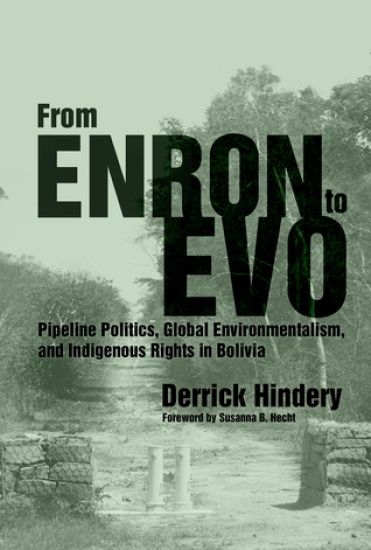
Throughout the Americas, a boom in oil, gas, and mining development has pushed the extractive frontier deeper into indigenous territories. Centering on a long-term study of Enron and Shell's Cuiabá pipeline, From Enron to Evo traces the struggles of Bolivia's indigenous peoples for self-determination over their lives and territories. In his analysis of their response to this encroaching development, author Derrick Hindery also sheds light on surprising similarities between neoliberal reform and the policies of the nation's first indigenous president, Evo Morales.Drawing upon extensive interviews and document analysis, Hindery argues that many of the structural conditions created by neoliberal policies—including partial privatization of the oil and gas sector—still persist under Morales. Tactics employed by both Morales and his neoliberal predecessors utilize the rhetoric of environmental protection and indigenous rights to justify oil, gas, mining, and road development in indigenous territories and sensitive ecoregions. Indigenous peoples, while mindful of gains made during Morales's tenure, are increasingly dissatisfied with the administration's development model, particularly when it infringes upon their right to self-determination. From Enron to Evo demonstrates their dynamic and pragmatic strategies to cope with development and adversity, while also advancing their own aims.Offering a critique of both free-market piracy and the dilemmas of resource nationalism, this is a groundbreaking book for scholars, policymakers, and advocates concerned with indigenous politics, social movements, environmental justice, and resistance in an era of expanding resource development.