Kirjojen hintavertailu. Mukana 11 518 949 kirjaa ja 12 kauppaa.

Kirjahaku

Etsi kirjoja tekijän nimen, kirjan nimen tai ISBN:n perusteella.

1000 tulosta hakusanalla Dimitris Margetas

International Organizations and Legal Sanctions Against Governments
This book examines the relationship between governments and international organizations under international law. After surveying the policing powers of international organizations under international law, it illustrates some normative aspects of law that distinguish regulation from enforcement via study of recent legal cases before international judicial bodies. According to Dimitris Liakopoulos’s expert analysis, if the two provisions codify the same general rule, the peculiarities of the relationship between an international organization and individual governments mean that sanctions decline when measured against the hypothesis that the latter facilitate an organization’s violation of its obligations to all. The book concludes with peculiarities in the enforcement of international law by international organizations.

International Organizations and Reparations

International Organizations and Reparations

Dimitris Liakopoulos

Academica Press
2020
sidottu
In the first part of this book, noted legal scholar Dimtris Liakopoulos deals with reconstructing the legal regulatory framework governing human rights violations in the activities of organizations. After identifying rules that are generally applicable to organizations’ offenses and govern the profile of reparations, this study assesses primary rules that guarantee the right to an effective remedy. Liakopoulos then moves on to how this works in practice, examining the reparations obtainable by an individual in disputes between states and organizations. This includes, for example, damages caused by the United Nations in the context of force operations and requests for the cancellation or modification of sanctions unjustly imposed by the UN’s Sanctions Committee. The author then assesses enforcement practices, highlighting the limits of diplomatic protection from the perspective of protecting individual interests and enhancing some recent tendencies of “humanizing” institutions in question.
Debtor Protection in American and European Union Bankruptcy Law
In Debtor Protection in American and European Union Bankruptcy Law, international law scholar Dimitris Liakopulos raises a delicate issue at the foundations of the modern banking system by analyzing US bankruptcy law with a focus on the concept of automatic stay. His work identifies legal sources and authorities having repercussions in terms of operational protection. It then examines their functional profiles, with specific regard to procedure. The book then examines criminal exposure in US bankruptcy law, paying particular attention to crime figures closer to those contained in American bankruptcy law.The book’s third part assesses the lack of a discipline in these areas, a cumbersome gap observable at both the international and regional levels. The financial crisis of 2008 recalled the necessity and importance of a coordinated and usable crisis resolution mechanism for large financial conglomerates. The lack of discipline in the field of cross-border insolvency, and especially in the banking sector, stands out among studies and legislative instruments that have attempted to address questions of private international law, and of procedural law or of substantive law.
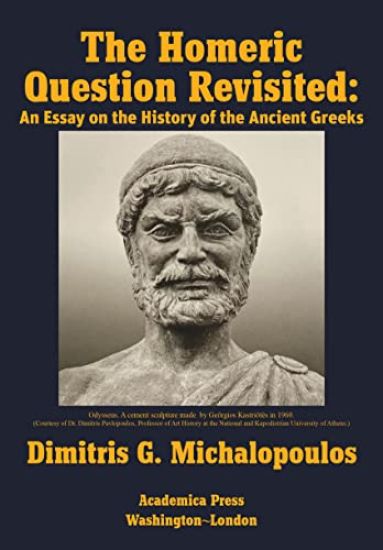
The Homeric Question Revisited

The Homeric Question Revisited

Dimitris G. Michalopoulos

ACADEMICA PRESS
2022
sidottu
How did Socrates and Plato know that our planet is shaped like a ball? How were they aware that the earth has twelve tectonic plates? Were the Persians conquered at the naval battle of Salamis thanks to missiles launched from the nearby Thriasion Plain? How can Theocritus's accurate knowledge of the American continent and Plutarch's awareness of the Sargasso Sea be explained? Who was the real victor of the Trojan War, the Greeks or the Trojans? Can the aftermath of that legendary war in Anatolia be regarded as proof that the Greeks were conquered by the Trojans and not vice-versa? In point of fact, almost the whole of ancient Greek civilization is still an enigma. This book, taking as its starting point the assurance of Strabo, the famous geographer of the age of Pax Romana, that Odysseus's peregrinations took place in the Atlantic Ocean, provides evidence for the veracity of this statement.
America, Russia, and the Birth of Modern Greece

America, Russia, and the Birth of Modern Greece

Dimitris Michalopoulos

Academica Press
2020
sidottu
In 1806 an anonymous Greek book called for a republican government, patterned upon that of the young United States, to be established in Greece, then long the rule of the Ottoman Empire. The “Americanization” of Greece presupposed independence. The book’s author, Count John Capo d'Istria, was carried away by his own version of the “American Dream,” but was also in touch with another inspirational power, Russia, which made him its foreign minister despite his attraction to the ideas of revolutionaries, Russia’s Decembrists, who wanted democratic government in their country.Capo d’Istria was only identified as the early author of calls for a Greek Republic in the 2010s. In this revelatory new book, Dimitris Michalopoulos follows his career and that of Alexander Hypsilantis, a Greek who became a general of the Russian army and tried to attract Russia’s interest in a democratic revolution for Greece.
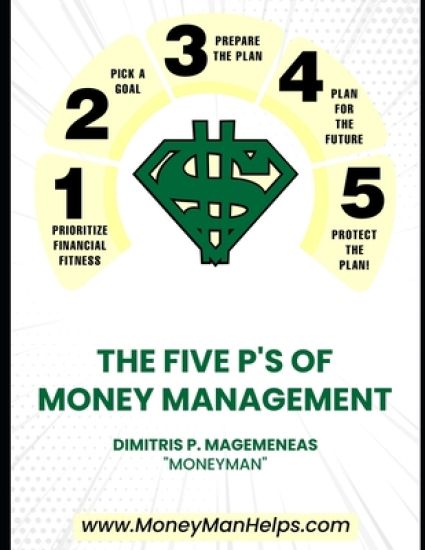
The Five P's of Money Management

The Five P's of Money Management

Dimitris P. Magemeneas

Independently Published
2019
nidottu
CREATE YOUR OWN FINANCIAL PLAN, WITHOUT PAYING $2,000 You can manage your own money, even with no prior financial training.This comprehensive edition contains ALL the information you'll ever need How to create a spending plan without making a budget10 money rules to live byThe right investments for the right timeframes16 ways to increase income, no matter your current age14 ways to reduce spending, no matter your current income10 ideas to save money on your taxesHow to raise money-smart kids that won't drain your finances5 steps to hire the right financial professional (if needed)7 steps to put death to rest (estate planning tips)"NEVER FEAR, MONEYMAN IS HERE "
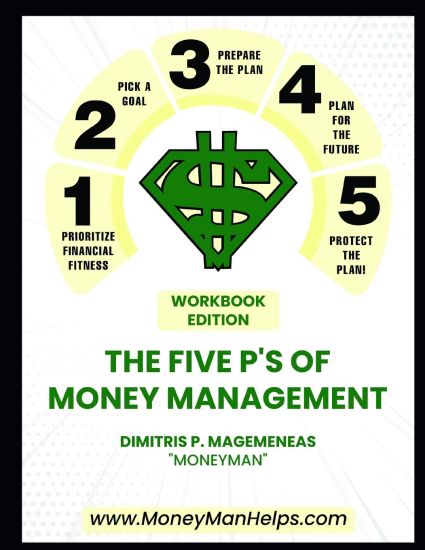
The 5 P's of Money Management: Workbook Edition

The 5 P's of Money Management: Workbook Edition

Dimitris Petros Magemeneas

Independently Published
2019
nidottu
CREATE A $2,500 FINANCIAL PLAN FOR ONLY $40 - BUY THIS BOOK Money Man has invented the world's first, simple, step-by-step system (see below) that ANYONE can use to reach financial success; and it's the ONLY system you'll ever need for a lifetime of setting and achieving your financial goals 5 SMART STEPS TO MONEY SUCCESS: 1) DOCUMENT CASH FLOW (Income/Expenses)- Take inventory of your current, actual income and expenses.Are you running a monthly surplus or deficit?Are you saving money every month?Are you aware of how you're spending your money?Do you understand the impact of taxes on income? 2) DOCUMENT NET WORTH (Assets/Liabilities)- Take inventory of your current assets and liabilities.The higher your net worth, the more financial freedom you have.Do you understand Short-Term (ST) vs. Long-Term (LT) financial accounts?Can you differentiate between "good debt" and "bad debt"?Are you investing systematically?Do you have too much bad debt? 3) DETERMINE S.T. & L.T. GOALS (Make them S.M.A.R.T. )- Ensure your goal is Specific, Measurable, Attainable, Relevant and TimeboundAnalyze cash flow and net worth to create appropriate SMART goal(s).You should create and update SMART goal(s) on an annual basis.Short-term goals are to be achieved within 12 months.Long-term goals take over 5 years to achieve.(ask me how to make it even S.M.A.R.T.E.R. ) 4) DECIDE SPENDING PLAN- Review current expenses, and decide your plan for next 12 monthsAnalyze 3 expense categories and SMART goal(s) to plan spending.Monthly plan should also include how much to put into savings.Ideally, Income should be at least 120% of Expenses. 5) DESIGN INVESTING PLAN- Review financial accounts and decide investing strategy for each oneBank accounts are best used only for short-term savings (under 12 months**) **Especially in these low-interest-rate times ]Tax-advantaged accounts & trust (or TOD) accounts are best for long-term investing.Each investing account should incorporate a pre-determined strategy. REMEMBER, YOU CAN ALWAYS BE SMARTER WITH YOUR MONEY, MAN
Demystifying Project Control

Demystifying Project Control

Dimitris Antoniadis

Independently Published
2018
nidottu
Whether you are working in project control or indeed any other discipline, on a small or mega project, in any industry or type of organisation, in this book you will read almost everything you need to know about project control. You will be told about truths and issues that are not readily discussed and be given a large number of examples that are not always easily accessible. All this and more will be uncovered through:  Explaining what is Project Control.  Describing how the department should be structured, within projects or organisations.  Explaining how to go about setting up the processes, at project or organisational level.  Handling of interfaces with other disciplines and departments.  Looking at the support it should provide at all levels.  Describing the software systems used and how these are to be integrated.  Supporting the Knowledge Management process.  Talking about the expected outputs, how these should be delivered and the issues to be addressed.  Explaining the effects of complexity on the function as well as on one of its major outputs - reporting.
Lex (Greek Edition)

Lex (Greek Edition)

Dimitris Chatzilias

Createspace Independent Publishing Platform
2018
nidottu
Lex decides to enter the forest for the first time and discover all the secrets that are hidden in it. Apart from new places, events and creatures, Lex, accompanied by his oak tree friend, explores personal limitations, causes of behaviors, interactions with the environment and people around him, the value of respect in these interactions and, most importantly, the meaning of freedom, which is the central subject of the book. Their roaming is a course towards adulthood and independence through questioning, healthy disobedience and critical thinking. Although the story gives the chance for a deeper level of interpretation for older children, it remains a fun and adventurous read for all ages. Without being heavy or instructional, the book's main goal is to trigger critical thought and constructive conversations; to let Lex's discoveries during his roaming be perceived in a free and personal way by each reader. To inspire children who are just taking their first steps in life with the joy of spreading their own wings and taking their future into their own hands, and also to remind older readers of the excitement of constant exploration, one of the most important ingredients in a joyful life.
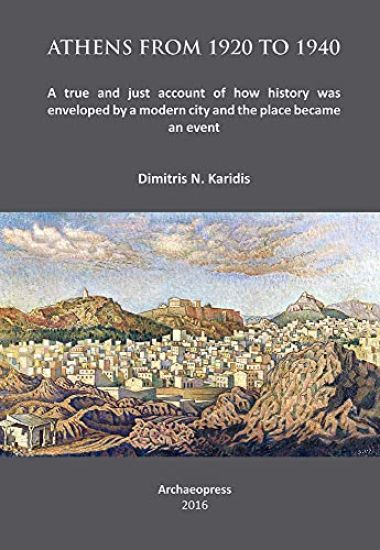
Athens from 1920 to 1940

Athens from 1920 to 1940

Dimitris N. Karidis

Archaeopress
2016
nidottu
During the short interwar period of the early 20th century, Athens entered into a process of meteoric urban transformation which gave her a unique place among European capital cities of the time. The implementation of a settlement programme for hundreds of thousands of refugees, following the 1922 Smyrna catastrophe, effected social and economic metamorphoses, which, in their early steps, were not devoid of patterns of social and spatial segregation. During the 1930s, notwithstanding manifold adversities, the capital city encountered modernity, but she did so on her own terms. On the ideological level, the place acquired a world-wide reputation for two reasons. First, by the ambitious venture of unearthing antiquities in the ancient agora and revealing the glory of ancient Greece, even if a whole neighbourhood standing on the spot, which for centuries had teemed with social exchange and commercial transactions, had to be erased for that purpose. Second, by imprinting her name on the ‘Charter of Athens’, the document concluding the results of the 4th Congress of Modern Architecture which she hosted, intrinsically linking her with the avant-garde architectural theory and practice of the time. Furthermore, state/governmental involvement in the production of the built environment, occasionally supporting the private sector and landowners in particular in their speculative intentions, provided Athens with the infrastructure she demanded for exercising her role as the capital city of Greece. The Marathon Dam, the underground railway, the steam-powered electric plants, and many other projects, implied advances through which the average man and woman in the street could rejoice that modernization had taken deep roots within Athenian daily life. Yet, it seems Athens walked alongside modernism not within it. Very much like Narcissus, the handsome young man from Boeotia, it might be that Athens looked at her beautiful face mirrored as if in the still water of a lake; overwhelmed by a strong feeling of exaltation and delight, she stood there until she died.
Merleau-Ponty’s Phenomenology of Language

Merleau-Ponty’s Phenomenology of Language

Dimitris Apostolopoulos

Rowman Littlefield International
2019
sidottu
Merleau-Ponty’s status as a philosopher of perception is well-established, but his distinctive contributions to the philosophy and phenomenology of language have yet to be fully appreciated. Through detailed, clear, and accessible analyses of Merleau-Ponty’s views of linguistic meaning, expression, and understanding, and by tracing the evolution and development of these views throughout the course of his philosophical career, Merleau-Ponty’s Phenomenology of Language offers a global and comprehensive picture of his engagement with the philosophy of language. This book demonstrates that the phenomenology of language is essential for grasping the meaning and motivations behind some of Merleau-Ponty’s most celebrated philosophical contributions. It argues that his philosophy of language should take on a central role in our appraisal of the development and basic goals of his thought. And it suggests that the success of phenomenology’s return to the ‘things themselves’ must be judged not only by the evidence of intuition, but also by the labour of expression.
A=-A

A=-A

Dimitris Anastasiou

Vintage Publishing
2021
sidottu
A=-A is a beautiful, dark and surreal story, about a man called Alpha whose world is quite literally turned upside down for a day. And if we stop craving certainty - and entertain doubt - what new possibilities become available to us?'Gloriously odd, deeply moving .
Grow Your Business with Online Courses: How Experts and Small Business Owners Use Their Online Courses to Get More Clients, Increase Revenue Per Clien
"This manual should be read by any expert or small business owner who is looking for a way to get more clients, generate more profit per client and make existing clients return more often. Dimitris managed to break down the process of creating and using short online courses to increase profits, cut marketing expenses and build loyalty. Brilliant." -Anthony HeineckeThere is one thing that you get when you manage a 22 Million dollars company with online business and marketing courses that reached tens of thousands of experts and business owners: insight on what works and what doesn't.Dimitris Bronowski, in this manual, summarizes how any expert or small business owner can package in a few days valuable information in an online course, and then use this course to increase profits while reducing marketing expenses. Although most online course creators focus on selling the courses, this is only a limited, yet lucrative, use of those resourcesAs Dimitris explains, if you create the courses the right way, you can easilyIncrease the number of repeat clientsIncrease the revenue per clientIncrease the number of new clientsDecrease your marketing expenses.Your online courses can be your tool to win prospective clients trust in your services, and the base of your referral marketing strategy. You can use them to educate clients about your other offers, and increase the frequency with which they request your services. However, to do that, your courses need to be created based on effective marketing principles.In this book you will learn: How to use online courses to increase the number of repeat clients, the revenue per client and the number of new clientsHow to design your course so that it does the marketing for youHow to optimize the information you package based on powerful marketing techniques so that viewers become clientsHow to create, record, edit and publish your online course (alone or by outsourcing it).Dimitris' experience comes from being the CEO of Open Circles Academy, the fastest growing business training company in the Netherlands. Open Circles Academy, based on one of the country's most prominent newspapers, has benefited the Dutch economy by creating an additional of 250 Million Euros of revenue for its clients.Dimitris took over during the time the company was transitioning from physical events to offering all the training material using online courses. This manual was created based on the insight he gained during that transition while marketing online courses to tens of thousands of clients and supporting experts and small business owners in creating their own online courses.
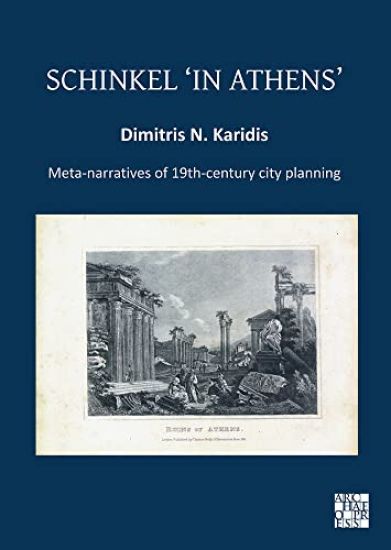
Schinkel ‘in Athens’: Meta-Narratives of 19th-Century City Planning
Schinkel ‘in Athens’: Meta-Narratives of 19th-Century City Planning proposes a fresh appraisal of Karl Friedrich Schinkel’s urban design legacy and his involvement in the design of modern Athens in the 1830s. From the 1830s onwards, the incompatibility between Schinkel’s position as a civil servant and his vocation as a scholar inspired by Fichte led him along a transcendental path of life. Transcendentalism set its own terms and conditions under which Schinkel’s project of a palace atop the Acropolis of Athens (1834) might be understood. The ‘contextual analysis’ of Schinkel’s work in this book challenges the view of this proposal as a utopian scheme, detached from the realities of nineteenth-century Greece. On the other hand, the first plan of Athens, supposedly the work of two of his former Bauakademie students, ratified a year earlier, in 1833, proposed the location of the royal residence in the new town at a few hundred metres north of the Acropolis. But, though the two options for Otto’s palace were topographically dissimilar they did retain a common strong, topological significance – which, along with other factors analysed in this book, provides ample evidence for re-thinking the authorship of the new plan of the capital city of Greece. Schinkel ‘in Athens’, by all means!
The Island of the Pope

The Island of the Pope

Dimitris Kousouris

BERGHAHN BOOKS
2025
sidottu
For the Aegean island of Syros, the Greek Revolution (1821-1832) marked a significant turning point. Known as “the island of the Pope”, due to its Catholic majority, Syros transformed into a major commercial hub, seemingly triggering the withdrawal of its indigenous Latin community. Juxtaposing the view from the Archipelago with that from Istanbul, the Peloponnese, Rome, Paris and Vienna, this volume revisits the island’s history. From early encounters between native inhabitants and groups from across the Ottoman Levant, to how the Latin community navigated conflict and change during the Greek War of Independence, this book offers new insights into the political, cultural and social history of the region.
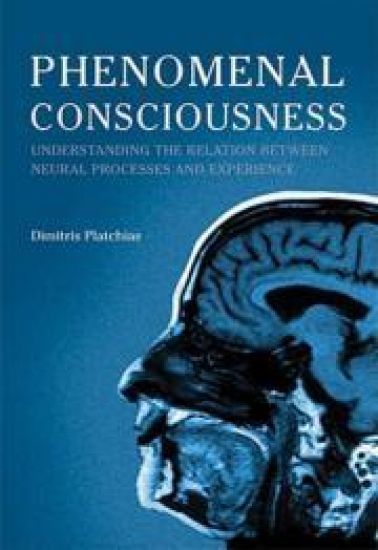
Phenomenal Consciousness

Phenomenal Consciousness

Dimitris Platchias

Acumen Publishing Ltd
2010
nidottu
How can the fine-grained phenomenology of conscious experience arise from neural processes in the brain? How does a set of action potentials (nerve impulses) become like the feeling of pain in one's experience? Contemporary neuroscience is teaching us that our mental states correlate with neural processes in the brain. However, although we know that experience arises from a physical basis, we don't have a good explanation of why and how it so arises. The problem of how physical processes give rise to experience is called the 'hard problem' of consciousness and it is the contemporary manifestation of the mind-body problem. This book explains the key concepts that surround the issue as well as the nature of the hard problem and the several approaches to it. It gives a comprehensive treatment of the phenomenon incorporating its main metaphysical and epistemic aspects, as well as recent empirical findings, such as the phenomenon of blindsight, change blindness, visual-form agnosia and optic ataraxia, mirror recognition in other primates, split-brain cases and synaesthesia.