Kirjojen hintavertailu. Mukana 12 100 776 kirjaa ja 12 kauppaa.

Kirjahaku

Etsi kirjoja tekijän nimen, kirjan nimen tai ISBN:n perusteella.

1000 tulosta hakusanalla Don Halstead

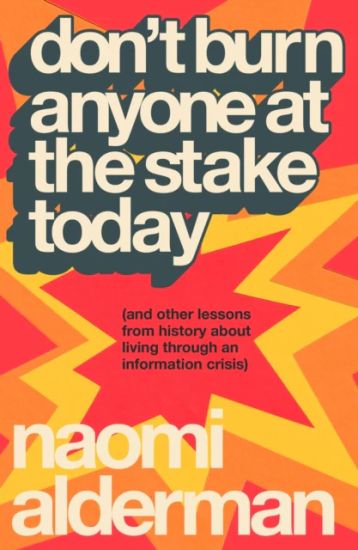
Don’t Burn Anyone at the Stake Today

Don’t Burn Anyone at the Stake Today

Naomi Alderman

PENGUIN BOOKS LTD
2025
sidottu
An electrifying, thought-provoking exploration of how the digital era is reshaping our world, by bestselling, Women's Prize-winning writer Naomi AldermanFrom the award-winning, bestselling author of The PowerWhat’s the most useful thing you could know about your own life?In this era-defining book, developed from her ground-breaking Radio 4 essay series, Naomi Alderman turns her boundless curiosity and incisive thinking to a question that affects us all – how do we understand, and navigate, the epoch we’re living through? She calls this epoch the Information Crisis.The internet has flooded us with more knowledge, opinions, ideas, opportunities, as well as verbal attacks and misinformation than ever before. It lets us learn more quickly and also spread falsehood more quickly, it brings us together and also divides us in new ways, it is now the lens through which we perceive and understand the world. There is no going back. But we have been here before. In fact, this is humanity's third information crisis.The first, the invention of writing 5,000 years ago and the second, the invention of the printing press, 600 years ago, drastically reshaped our perceptions, interactions and mental landscapes in ways that feel acutely familiar. Overwhelmed by information, people become afraid and angry, unsettled and distressed as well as more knowledgeable, educated and curious. By looking at those previous information crises, both the turmoil and the advances, Alderman asks what we can learn from the past to better understand, and navigate, our present and our future.Drawing on the work of philosophers and historians, Don’t Burn Anyone at the Stake Today explores how new technology opens up new ways of being and helps us chart a way forward (once again), through the turbulent seas of information overload.
Don't Call It Art

Don't Call It Art

Austin Kleon

PENGUIN BOOKS LTD
2026
sidottu
What do you do when you've lost touch with your creative spirit? Don’t call it art – just make stuff! In every creative person's life, there are times when you lose the energy, joy, and freedom you had when you were first starting out. It can feel as if everything you've worked so hard to learn until this point is more of a hinderance than a help. From the recent art school graduate to the retiree searching for their creative third act, we all need help returning to the excitement, the sense of discovery and the raw creativity of a child at play. In Don’t Call It Art, best-selling author Austin Kleon shares ten rejuvenating lessons he learned from being a studio assistant to the artists closest to his heart: his two young sons. This is a creative liberation handbook for looking at the world with fresh eyes, unlearning what you've learned and making new leaps in your life and work.
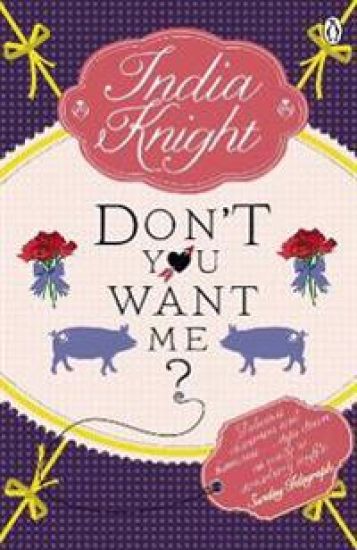
Don't You Want Me?

Don't You Want Me?

India Knight

Penguin Books Ltd
2011
pokkari
Don't You Want Me? is the second novel by bestselling author India Knight.Sex - there's a lot of it about. So why isn't Stella getting her fair share?Admittedly she's got a few handicaps: she's the wrong side of thirty-five and a single mum (to the adorable Honey), while her hot-blooded Frenchness turns English men pale. Mind you, the men she meets are either perma-tanned show-offs or poorly socialized podgers. On lot have shockingly shiny white teeth; the other lot have, well, wives. What's a girl to do?Dividing her time between London's most PC playgroup (most popular kids' names: Ichabod and Perdita) and lessons on the art of pulling from her cheeky housemate Frank (shame he's got ginger hair everywhere), Stella is seriously starting to wonder if she'll ever have sex again.'Miles funnier and ruder than anything else of its kind' Evening Standard'Fabulously funny . . . ace' Heat'Delicious cleverness and funniness . . . slips down as easily as strawberry soufflé' Sunday TelegraphIndia Knight is the author of four novels: My Life on a Plate, Don't You Want Me, Comfort and Joy and Mutton. Her non-fiction books include The Shops, the bestselling diet book Neris and India's Idiot-Proof Diet, the accompanying bestselling cookbook Neris and India's Idiot-Proof Diet Cookbook and The Thrift Book. India is a columnist for the Sunday Times and lives in London with her three children.Follow India on Twitter @indiaknight or on her blog at http://indiaknight.tumblr.com.
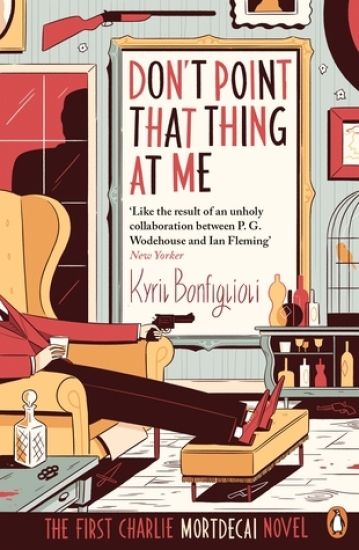
Don't Point That Thing at Me

Don't Point That Thing at Me

Kyril Bonfiglioli

Penguin
2014
pokkari
Charlie Mortdecai, art dealer, aristocrat and assassin, in the first of the Mortdecai novels Portly art dealer and seasoned epicurean Charlie Mortdecai comes into possesion of a stolen Goya, the disappearance of which is causing a diplomatic ruction between Spain and its allies.
Don't Tell Alfred

Don't Tell Alfred

Nancy Mitford

Penguin Books Ltd
2015
pokkari
Don't Tell Alfred is the wickedly funny sequel to Nancy Mitford's The Pursuit of Love, which is now a major BBC series and Prime Video series directed by Emily Mortimer starring Lily James, Andrew Scott and Dominic West, and Love in a Cold Climate'I believe it would have been normal for me to have paid a visit to the outgoing ambassadress. However the said ambassadress had set up such an uninhibited wail when she knew she was to leave, proclaiming her misery to all and sundry and refusing so furiously to look on the bright side, that it was felt she might not be very nice to me.'Fanny is married to absent-minded Oxford don Alfred and content with her role as a plain, tweedy housewife. But overnight her life changes when Alfred is appointed English Ambassador to Paris. In the blink of an eye, Fanny's mixing with royalty, Rothschilds and Dior-clad wives, throwing cocktail parties and having every indiscreet remark printed in tomorrow's papers.But with the love lives of her new friends to organize, an aristocratic squatter who won't budge and the antics of her maverick sons to thwart, Fanny's far too busy to worry about the diplomatic crisis looming on the horizon . . .*****'Peerless' Zoe Heller'A comic genius' Independent on Sunday'Deliciously funny' Evelyn Waugh
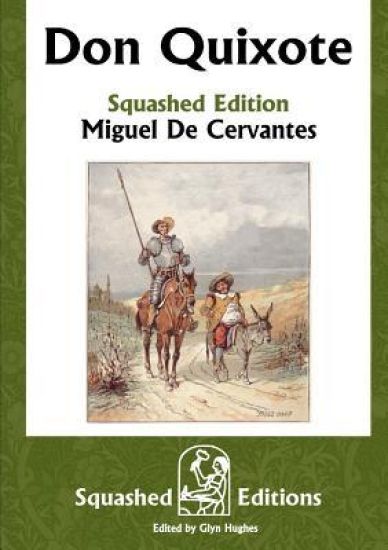
Don Quixote (Squashed Edition)
The Squashed edition of Don Quixote by Miguel De Cervantes. Abridged from the original text to read in an hour or so. Squashed editions are precise abridgements - the original ideas, in their own words, the full beam of the book, the quotable quotes and all the famous lines, but neatly honed down to the length of a readable short story. ""Like reading the bible without all the begats"" - Prof. Jim Curtis
Don't Speak, Shout.

Don't Speak, Shout.

Megan Lewis

Lulu.com
2019
pokkari
Don't speak, shout is a collection of poems that take you through a journey of reclaiming one's story. Victim shaming is a lonely road to be on as you begin to let others speak on your experiences and pain. Don't speak, shout is about a survivor tearing off the tape and finding peace. Let a survivor be the voice of their trauma.
Don't Say Crazy

Don't Say Crazy

Bella Privat-Nazaire

Lulu.com
2018
sidottu
Personality disorders are probably more common than we think, and yet it does come as quite a shock when someone you are interacting with turns out to be affected.Going beyond the socially acceptable, just to shed a light on what a budding intimacy is like with someone so many would be quick to label "crazy".Is there any hope that love could actually help ?This is a special edition of my recently published ebook. This Lulu Edition features new cover artwork and a revised formatting of the text for a better e-reading experience...
Don't Give Up the Ship!

Don't Give Up the Ship!

Donald R. Hickey; Donald E Graves

University of Illinois Press
2007
nidottu
No longer willing to accept naval blockades, the impressment of American seamen, and seizures of American ships and cargos, the United States declared war on Great Britain. The aim was to frighten Britain into concessions and, if that failed, to bring the war to a swift conclusion with a quick strike at Canada. But the British refused to cave in to American demands, the Canadian campaign ended in disaster, and the U.S. government had to flee Washington, D.C., when it was invaded and burned by a British army. By all objective measures, the War of 1812 was a debacle for the young republic, and yet it was celebrated as a great military triumph. The American people believed they had won the war and expelled the invader. Oliver H. Perry became a military hero, Francis Scott Key composed what became the national anthem and commenced a national reverence for the flag, and the U.S.S. Constitution, "Old Ironsides," became a symbol of American invincibility. Every aspect of the war, from its causes to its conclusion, was refashioned to heighten the successes, obscure the mistakes, and blur embarrassing distinctions, long before there were mass media or public relations officers in the Pentagon. In this entertaining and meticulously researched book by America's leading authority on the War of 1812, Donald R. Hickey dispels the many misconcep-tions that distort our view of America's second war with Great Britain. Embracing military, naval, political, economic, and diplomatic analyses, Hickey looks carefully at how the war was fought between 1812 and 1815, and how it was remembered thereafter. Was the original declaration of war a bluff? What were the real roles of Canadian traitor Joseph Willcocks, Mohawk leader John Norton, pirate Jean Laffite, and American naval hero Lucy Baker? Who killed the Shawnee chief Tecumseh and who shot the British general Isaac Brock? Who actually won the war, and what is its lasting legacy? Hickey peels away fantasies and embellishments to explore why cer-tain myths gained currency and how they contributed to the way that the United States and Canada view themselves and each other.
Don't Give Your Heart to a Rambler

Don't Give Your Heart to a Rambler

Barbara Martin Stephens

University of Illinois Press
2017
nidottu
As charismatic and gifted as he was volatile, Jimmy Martin recorded dozens of bluegrass classics and co-invented the high lonesome sound. Barbara Martin Stephens became involved with the King of Bluegrass at age seventeen. Don't Give your Heart to a Rambler tells the story of their often tumultuous life together. Barbara bore his children and took on a crucial job as his booking agent when the agent he was using failed to obtain show dates for the group. Female booking agents were non-existent at that time but she persevered and went on to become the first female booking agent on Music Row. She also endured years of physical and emotional abuse at Martin's hands. With courage and candor, Barbara tells of the suffering and traces the hard-won personal growth she found inside motherhood and her work. Her vivid account of Martin's explosive personality and torment over his exclusion from the Grand Ole Opry fill in the missing details on a career renowned for being stormy. Barbara also shares her own journey, one of good humor and proud achievements, and filled with fond and funny recollections of the music legends and ordinary people she met, befriended, and represented along the way.Straightforward and honest, Don't Give your Heart to a Rambler is a woman's story of the world of bluegrass and one of its most colorful, conflicted artists.
Don't Make No Waves...Don't Back No Losers

Don't Make No Waves...Don't Back No Losers

Milton L. Rakove

Indiana University Press
1976
pokkari
Tis is simply the best book that has been written about politics in Chicago. In the words of Andrew M. Greeley, "It is a very astute and dispassionate analysis of Chicago political life—far and away the best I have ever seen. Rakove is without illusions about either the right or the left." Rakove brings to his study an intimate knowledge of Chicago and the Daley machine, a practitioner's understanding of street-level politics, and a scholar's background in political theory. Blending anecdote with theory and description in a lively style, Rakove has bridged the gap between scholar and layman in a work that will appeal to both.
Don't Think for Yourself

Don't Think for Yourself

Peter Adamson

UNIVERSITY OF NOTRE DAME PRESS
2022
sidottu
How do we judge whether we should be willing to follow the views of experts or whether we ought to try to come to our own, independent views? This book seeks the answer in medieval philosophical thought. In this engaging study into the history of philosophy and epistemology, Peter Adamson provides an answer to a question as relevant today as it was in the medieval period: how and when should we turn to the authoritative expertise of other people in forming our own beliefs? He challenges us to reconsider our approach to this question through a constructive recovery of the intellectual and cultural traditions of the Islamic world, the Byzantine Empire, and Latin Christendom. Adamson begins by foregrounding the distinction in Islamic philosophy between taqlid, or the uncritical acceptance of authority, and ijtihad, or judgment based on independent effort, the latter of which was particularly prized in Islamic law, theology, and philosophy during the medieval period. He then demonstrates how the Islamic tradition paves the way for the development of what he calls a "justified taqlid," according to which one develops the skills necessary to critically and selectively follow an authority based on their reliability. The book proceeds to reconfigure our understanding of the relation between authority and independent thought in the medieval world by illuminating how women found spaces to assert their own intellectual authority, how medieval writers evaluated the authoritative status of Plato and Aristotle, and how independent reasoning was deployed to defend one Abrahamic faith against the other. This clear and eloquently written book will interest scholars in and enthusiasts of medieval philosophy, Islamic studies, Byzantine studies, and the history of thought.
Don't Think for Yourself

Don't Think for Yourself

Peter Adamson

UNIVERSITY OF NOTRE DAME PRESS
2024
nidottu
How do we judge whether we should be willing to follow the views of experts or whether we ought to try to come to our own, independent views? This book seeks the answer in medieval philosophical thought. In this engaging study into the history of philosophy and epistemology, Peter Adamson provides an answer to a question as relevant today as it was in the medieval period: how and when should we turn to the authoritative expertise of other people in forming our own beliefs? He challenges us to reconsider our approach to this question through a constructive recovery of the intellectual and cultural traditions of the Islamic world, the Byzantine Empire, and Latin Christendom. Adamson begins by foregrounding the distinction in Islamic philosophy between taqlid, or the uncritical acceptance of authority, and ijtihad, or judgment based on independent effort, the latter of which was particularly prized in Islamic law, theology, and philosophy during the medieval period. He then demonstrates how the Islamic tradition paves the way for the development of what he calls a "justified taqlid," according to which one develops the skills necessary to critically and selectively follow an authority based on their reliability. The book proceeds to reconfigure our understanding of the relation between authority and independent thought in the medieval world by illuminating how women found spaces to assert their own intellectual authority, how medieval writers evaluated the authoritative status of Plato and Aristotle, and how independent reasoning was deployed to defend one Abrahamic faith against the other. This clear and eloquently written book will interest scholars in and enthusiasts of medieval philosophy, Islamic studies, Byzantine studies, and the history of thought.
Don Juan and the Point of Honor

Don Juan and the Point of Honor

Mandrell James

Pennsylvania State University Press
1992
sidottu
In Don Juan and the Point of Honor, James Mandrell undertakes a systematic examination of the many questions surrounding the legendary character. On the one hand, it might be argued that Don Juan threatens society, since he is supposedly an agent of social anarchy. On the other hand, given his intriguing sexual accomplishments, he could be viewed as a positive expression of life itself. James Mandrell shows what is at stake in the asking of such questions and, moreover, what is at stake in representations and considerations of Don Juan.After a discussion of the ways that Don Juan’s seductive powers infiltrate and influence the interpretations of texts of which he is a part, Mandrell continues with close readings of key Spanish literary works ranging from the seventeenth to the twentieth centuries. All of these works involve interrelated issues as regards Don Juan: the worldly uses and abuses of language; the power of literature to engender and embody other literary texts; seduction and its psychological and social subtexts; and society in relation to Don Juan as well as Don Juan’s role in society. Ultimately, these notions are tied into the concept of honor as it works in literature and society. Mandrell concludes with a study of modern adaptations of Don Juan and his story in various theories of culture, society, and economic organizations. What emerges is a view of Don Juan as a positive social force in patriarchal society and culture—as well as a force operative at the level of desire as it is made manifest in language. Mandrell shows that Don Juan should not be treated as an innocent or outmoded cultural artifact. Instead, he is a character whose story and vicissitudes are still significant in the context of our twenty-first-century world.