Kirjojen hintavertailu. Mukana 12 355 919 kirjaa ja 12 kauppaa.

Kirjahaku

Etsi kirjoja tekijän nimen, kirjan nimen tai ISBN:n perusteella.

1000 tulosta hakusanalla Donald Rayfield

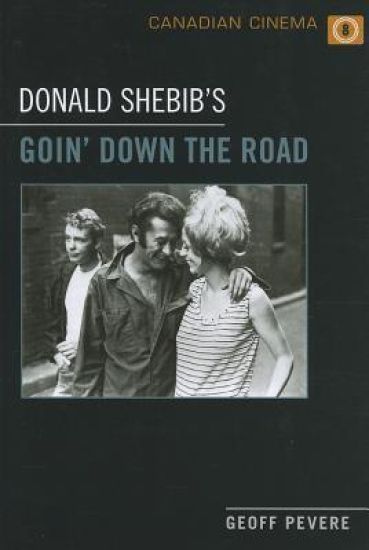
Donald Shebib's 'Goin' Down the Road'

Donald Shebib's 'Goin' Down the Road'

Geoff Pevere

University of Toronto Press
2012
pokkari
Since its release in July 1970, Donald Shebib’s low-budget road movie about displaced Maritimers in Toronto has become one of the most celebrated Canadian movies ever made. In this study of Goin’ Down the Road, renowned film critic Geoff Pevere provides an engaging account of how a film produced under largely improvised circumstances became the most influential Canadian movie of its day as well as an enduring cultural touchstone. Featuring extensive interviews with the film’s key participants, Pevere provides behind-the-scenes history and explores how the movie’s meaning and interpretation have changed over time. He gives special attention to the question of why the film’s creative mix of documentary techniques, road movie tropes, and social commentary have proven so popular and influential in Canadian filmmaking for decades.
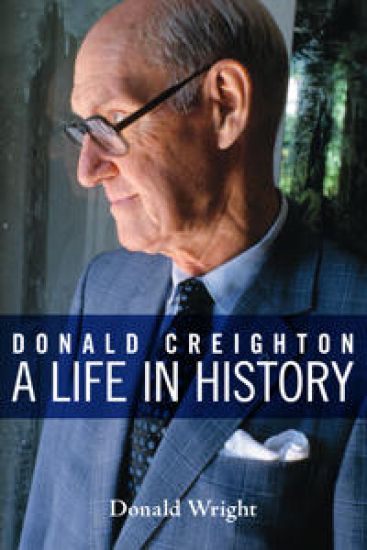
Donald Creighton

Donald Creighton

Donald Wright

University of Toronto Press
2015
pokkari
A member of the same intellectual generation as Harold Innis, Northrop Frye, and George Grant, Donald Creighton (1902–1979) was English Canada’s first great historian. The author of eleven books, including The Commercial Empire of the St. Lawrence and a two-volume biography of John A. Macdonald, Creighton wrote history as if it “had happened,” he said, “the day before yesterday.” And as a public intellectual, he advised the prime minister of Canada, the premier of Ontario, and – at least on one occasion – the British government. Yet he was, as Donald Wright shows, also profoundly out of step with his times. As the nation was re-imagined along bilingual and later multicultural lines in the 1960s and 1970s, Creighton defended a British definition of Canada at the same time as he began to fear that he would be remembered only “as a pessimist, a bigot, and a violent Tory partisan.” Through his virtuoso research into Creighton’s own voluminous papers, Wright paints a sensitive portrait of a brilliant but difficult man. Ultimately, Donald Creighton captures the twentieth-century transformation of English Canada through the life and times of one of its leading intellectuals.
Donald Shebib's 'Goin' Down the Road'

Donald Shebib's 'Goin' Down the Road'

Geoff Pevere

University of Toronto Press
2012
sidottu
Since its release in July 1970, Donald Shebib’s low-budget road movie about displaced Maritimers in Toronto has become one of the most celebrated Canadian movies ever made. In this study of Goin’ Down the Road, renowned film critic Geoff Pevere provides an engaging account of how a film produced under largely improvised circumstances became the most influential Canadian movie of its day as well as an enduring cultural touchstone. Featuring extensive interviews with the film’s key participants, Pevere provides behind-the-scenes history and explores how the movie’s meaning and interpretation have changed over time. He gives special attention to the question of why the film’s creative mix of documentary techniques, road movie tropes, and social commentary have proven so popular and influential in Canadian filmmaking for decades.

Donald Creighton

Donald Creighton

Donald Wright

University of Toronto Press
2015
sidottu
A member of the same intellectual generation as Harold Innis, Northrop Frye, and George Grant, Donald Creighton (1902–1979) was English Canada’s first great historian. The author of eleven books, including The Commercial Empire of the St. Lawrence and a two-volume biography of John A. Macdonald, Creighton wrote history as if it “had happened,” he said, “the day before yesterday.” And as a public intellectual, he advised the prime minister of Canada, the premier of Ontario, and – at least on one occasion – the British government. Yet he was, as Donald Wright shows, also profoundly out of step with his times. As the nation was re-imagined along bilingual and later multicultural lines in the 1960s and 1970s, Creighton defended a British definition of Canada at the same time as he began to fear that he would be remembered only “as a pessimist, a bigot, and a violent Tory partisan.” Through his virtuoso research into Creighton’s own voluminous papers, Wright paints a sensitive portrait of a brilliant but difficult man. Ultimately, Donald Creighton captures the twentieth-century transformation of English Canada through the life and times of one of its leading intellectuals.
The Risk Profession by Donald E. Westlake, Science Fiction, Adventure, Space Opera, Mystery & Detective
WAS DONALD E. WESTLAKE A SCIENCE FICTION WRITER?Everyone knows him as the mystery writer who published books like The Hook (2000), Bad News 2001, and Put a Lid on It (2002) under his own name, Donald E. Westlake, and of course that he was also Richard Stark and a number of other favorite authors. But a science fiction writer? -- Really? -- You bet he was, early on in his career. (He even wrote one SF novel -- Anarchaos, in 1966, as "Curt Clark.")He also wrote quite a bit of short SF, like this weird little SF mystery that first graced the pages of Amazing in 1963.It's an engaging little tale, set in a asteroid-belt colony: our hero is an investigator for an interplanetary insurance company, ferreting out the truth behind suspicious (and sometimes, uhm, otherworldly) insurance claims. . . .
Donald Trump and American Populism

Donald Trump and American Populism

Richard S. Conley

Edinburgh University Press
2020
sidottu
Dissecting the populist leadership style of President Donald TrumpPlaces Trump's presidential leadership style within a comparatively historical and political development theoretical framework Considers Trump's use of social media as a form of public politics that represents an adaptation of presidential communication style to new technology while rebuffing the traditional bully pulpitAssesses the impact of Trump's negative rhetoric and efforts to challenge if not delegitimize other national institutions (Courts, Congress), question media truthfulness, and his personalization of political opponents Employs case studies to weigh Trump's political strategy, from mobilizing grassroots support to foreign diplomacy This book evaluates the presidency of Donald Trump from a comparative, historical approach to connect his populist style to his predecessors. Trump's method of communication through social media obviously differs from previous candidates and presidents with populist platforms, but his themes - a disdain for elites, grassroots support, majoritarianism, anti-intellectual discourse, and nativism-borrow variably from such figures as Andrew Jackson, Huey Long, Barry Goldwater, and Ross Perot. As such, Trump's approach to governance falls within a long tradition of populism dating to the 19th Century.
Donald Trump and American Populism

Donald Trump and American Populism

Richard S. Conley

EDINBURGH UNIVERSITY PRESS
2022
nidottu
This book evaluates the presidency of Donald Trump from a comparative, historical approach to connect his populist style to his predecessors. Trump's method of communication through social media obviously differs from previous candidates and presidents with populist platforms, but his themes - a disdain for elites, grassroots support, majoritarianism, anti-intellectual discourse, and nativism borrow variably from such figures as Andrew Jackson, Huey Long, Barry Goldwater, and Ross Perot. As such, Trump's approach to governance falls within a long tradition of populism dating to the 19th Century.Richard S. Conley assesses various aspects of Trump's career, including the nature of his presidential campaign; his post-campaign rallies; his style of governance and reliance on executive unilateralism; and his longstanding core themes, in order to develop a theoretical framework to explicate Trump's singular style of populism.
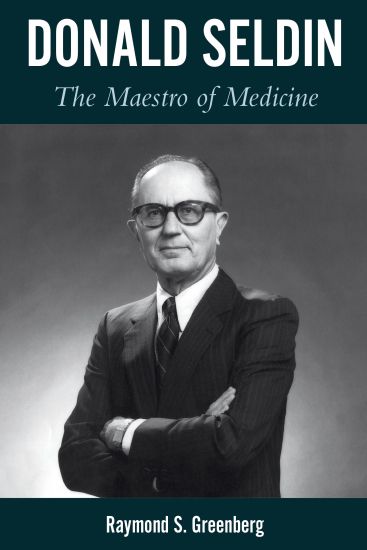
Donald Seldin

Donald Seldin

Raymond S. Greenberg

University of Texas Press
2020
sidottu
No one would have blamed Donald Seldin for running away. When he arrived at Southwestern Medical College in 1951, it was a collection of hastily repurposed military shacks creaking in the wind. On practically day one he became chair of the department of medicine-when the only other full-time professors departed.By the time he stepped down thirty-six years later, Seldin had transformed a sleepy medical college into the University of Texas Southwestern Medical Center-a powerhouse of research and patient care and an anchor of the city of Dallas. Raymond Greenberg, a physician-scholar, tells Seldin's story of perseverance and intellectual triumph. Drawing on interviews with Seldin's trainees and colleagues-and on Seldin's own words-Greenberg chronicles the life of the Brooklyn boy who became one of Texas's foremost citizens and taught decades of men and women to heal. A pioneering nephrologist, Seldin devoted his career to developing the specialty; educating students, residents, and fellows; caring for patients; and nurturing basic research.Seldin was a wildcatter in the best sense. He declined the comfortable prestige of Harvard and Yale and instead embraced a worthy challenge with an unflagging sense of mission. Graceful and richly detailed, The Maestro of Medicine captures an inspiring life of achievement and service.