Kirjojen hintavertailu. Mukana 11 342 296 kirjaa ja 12 kauppaa.

Kirjahaku

Etsi kirjoja tekijän nimen, kirjan nimen tai ISBN:n perusteella.

1000 tulosta hakusanalla ELDRIDGE JIM

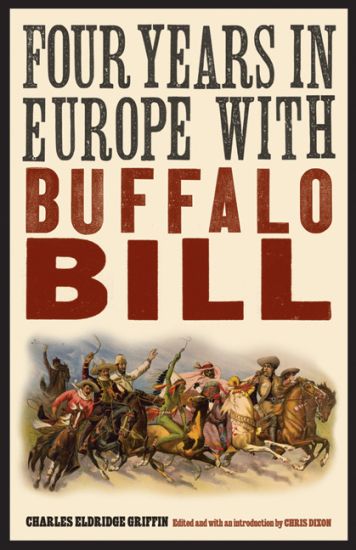
Four Years in Europe with Buffalo Bill

Four Years in Europe with Buffalo Bill

Charles Eldridge Griffin

University of Nebraska Press
2010
sidottu
William F. "Buffalo Bill" Cody was the entertainment industry's first international celebrity, achieving worldwide stardom with his traveling Wild West show. For three decades he operated and appeared in various incarnations of "the western world's greatest traveling attraction," enthralling audiences around the globe. When the show reached Europe it was a sensation, igniting "Wild West fever" by offering what purported to be a genuine experience of the American frontier. By any standard Charles Eldridge Griffin (1859–1914), manager of the Wild West's European tour, was a remarkable man. Known by the stage names of Monsieur F. Le Costro, Professor Griffin, and the Yankee Yogi, he was an author, comedian, conjurer, contortionist, dancer, fire-eater, hypnotist, illusionist, lecturer, magician, newspaper owner, publisher, sword swallower, and yogi. His account of life on the road with the Wild West show, published here for the first time since its release in 1908, opens a window on a vanished world. In addition to line drawings and photographs from the original book, Chris Dixon provides an introduction and annotations for historical context. Griffin's story of traveling with Buffalo Bill in Europe from 1903 to 1906 presents a fascinating picture of a quintessentially American character. At the same time it offers a vision of the nation on the verge of nationalism, imperialism, and an emerging global mass culture.
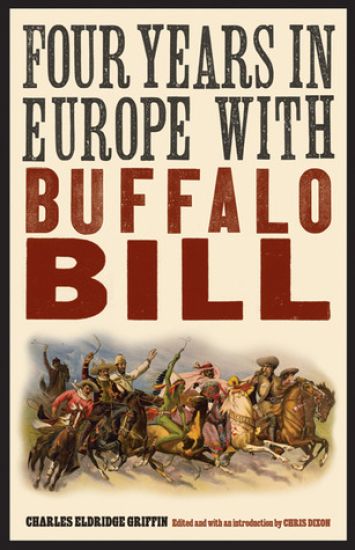
Four Years in Europe with Buffalo Bill

Four Years in Europe with Buffalo Bill

Charles Eldridge Griffin

Bison Books
2010
pokkari
William F. "Buffalo Bill" Cody was the entertainment industry's first international celebrity, achieving worldwide stardom with his traveling Wild West show. For three decades he operated and appeared in various incarnations of "the western world's greatest traveling attraction," enthralling audiences around the globe. When the show reached Europe it was a sensation, igniting "Wild West fever" by offering what purported to be a genuine experience of the American frontier. By any standard Charles Eldridge Griffin (1859–1914), manager of the Wild West's European tour, was a remarkable man. Known by the stage names of Monsieur F. Le Costro, Professor Griffin, and the Yankee Yogi, he was an author, comedian, conjurer, contortionist, dancer, fire-eater, hypnotist, illusionist, lecturer, magician, newspaper owner, publisher, sword swallower, and yogi. His account of life on the road with the Wild West show, published here for the first time since its release in 1908, opens a window on a vanished world. In addition to line drawings and photographs from the original book, Chris Dixon provides an introduction and annotations for historical context. Griffin's story of traveling with Buffalo Bill in Europe from 1903 to 1906 presents a fascinating picture of a quintessentially American character. At the same time it offers a vision of the nation on the verge of nationalism, imperialism, and an emerging global mass culture.
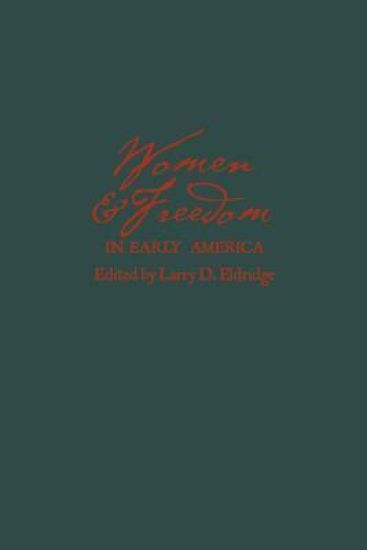
Women and Freedom in Early America

Women and Freedom in Early America

Larry Eldridge

New York University Press
1997
sidottu
It is virtually impossible to generalize about the degree to which women in early America were free. What, if anything, did enslaved black women in the South have in common with powerful female leaders in Iroquois society? Were female tavern keepers in the backcountry of North Carolina any more free than nuns and sisters in New France religious orders? Were the restrictions placed on widows and abandoned wives at all comparable to those experienced by autonomous women or spinsters? Bringing to light the enormous diversity of women's experience, Women and Freedom in Early America centers variously on European-American, African-American, and Native American women from 1400 to 1800. Spanning almost half a millenium, the book ranges the colonial terrain, from New France and the Iroquois Nations down through the mainland British-American colonies. By drawing on a wide array of sources, including church and court records, correspondence, journals, poetry, and newspapers, these essays examine Puritan political writings, white perceptions of Indian women, Quaker spinsterhood, and African and Iroquois mythology, among many other topics.
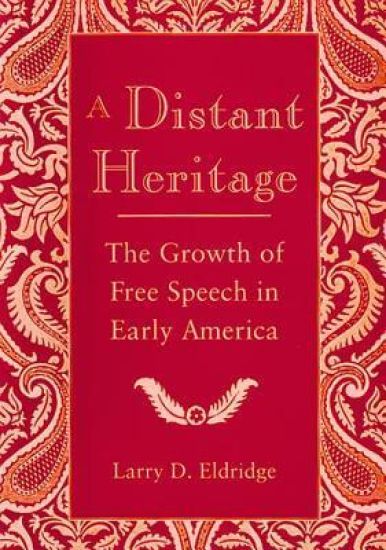
A Distant Heritage

A Distant Heritage

Larry Eldridge

New York University Press
1995
pokkari
Historians often rely on a handful of unusual cases to illustrate the absence of free speech in the colonies—such as that of Richard Barnes, who had his arms broken and a hole bored through his tongue for seditious words against the governor of Virginia. In this definitive and accessible work, Larry Eldridge convincingly debunks this view by revealing surprising evidence of free speech in early America. Using the court records of every American colony that existed before 1700 and an analysis of over 1,200 seditious speech cases sifted from those records, A Distant Heritage shows how colonists experienced a dramatic expansion during the seventeenth century of their freedom to criticize government and its officials. Exploring important changes in the roles of juries and appeals, the nature of prosecution and punishment, and the pattern of growing leniency, Eldridge also shows us why this expansion occurred when it did. He concludes that the ironic combination of tumult and destabilization on the one hand, and steady growth and development on the other, made colonists more willing to criticize authority openly and officials less able to prevent it. That, in turn, established a foundation for the more celebrated flowering of colonial dissent against English authority in the eighteenth century. Steeped in primary sources and richly narrated, this is an invaluable addition to the library of anyone interested in legal history, colonial America, or the birth of free speech in the United States.
Women and Freedom in Early America

Women and Freedom in Early America

Larry Eldridge

New York University Press
1997
pokkari
It is virtually impossible to generalize about the degree to which women in early America were free. What, if anything, did enslaved black women in the South have in common with powerful female leaders in Iroquois society? Were female tavern keepers in the backcountry of North Carolina any more free than nuns and sisters in New France religious orders? Were the restrictions placed on widows and abandoned wives at all comparable to those experienced by autonomous women or spinsters? Bringing to light the enormous diversity of women's experience, Women and Freedom in Early America centers variously on European-American, African-American, and Native American women from 1400 to 1800. Spanning almost half a millenium, the book ranges the colonial terrain, from New France and the Iroquois Nations down through the mainland British-American colonies. By drawing on a wide array of sources, including church and court records, correspondence, journals, poetry, and newspapers, these essays examine Puritan political writings, white perceptions of Indian women, Quaker spinsterhood, and African and Iroquois mythology, among many other topics.
Jingles and Me

Jingles and Me

Margaret Eldridge

Minh Hien Pty Ltd
2022
sidottu
Jingles and Me contains a collection of jingles written by Margaret Eldridge over many years to celebrate friendships and to raise funds for various causes. There are jingles to raise funds for the Dogs' Homes of Tasmania as dogs are an important part of Margaret's life. There are jingles to raise funds for Motor Neurone Disease research in Tasmania, a cause that is dear to Margaret's heart. There are jingles for friends and family to make them laugh as Margaret loves to see smiles on their faces. There are jingles to celebrate friendships, communities, birthdays, marriage, well-being, healthy living and farewells. By publishing these jingles, after much persuasion, Margaret shares her life with us.
The Gas Fitter's Guide

The Gas Fitter's Guide

John Eldridge

Hutson Street Press
2025
sidottu
"The Gas Fitter's Guide" by John Eldridge, originally published in 1891, offers a detailed look into the principles and practices of lighting with coal gas. This comprehensive guide provides insights into the fittings suitable for illuminating dwelling houses during the late 19th century. A valuable resource for understanding the technology of the era, the book explains the mechanical aspects of gas lighting. For historians, engineers, and anyone interested in the history of technology and domestic life, this guide offers a fascinating glimpse into a pivotal era of innovation. This work has been selected by scholars as being culturally important, and is part of the knowledge base of civilization as we know it. This work was reproduced from the original artifact, and remains as true to the original work as possible. Therefore, you will see the original copyright references, library stamps (as most of these works have been housed in our most important libraries around the world), and other notations in the work. This work is in the public domain in the United States of America, and possibly other nations. Within the United States, you may freely copy and distribute this work, as no entity (individual or corporate) has a copyright on the body of the work. As a reproduction of a historical artifact, this work may contain missing or blurred pages, poor pictures, errant marks, etc. Scholars believe, and we concur, that this work is important enough to be preserved, reproduced, and made generally available to the public. We appreciate your support of the preservation process, and thank you for being an important part of keeping this knowledge alive and relevant.
The Gas Fitter's Guide

The Gas Fitter's Guide

John Eldridge

Hutson Street Press
2025
nidottu
"The Gas Fitter's Guide" by John Eldridge, originally published in 1891, offers a detailed look into the principles and practices of lighting with coal gas. This comprehensive guide provides insights into the fittings suitable for illuminating dwelling houses during the late 19th century. A valuable resource for understanding the technology of the era, the book explains the mechanical aspects of gas lighting. For historians, engineers, and anyone interested in the history of technology and domestic life, this guide offers a fascinating glimpse into a pivotal era of innovation. This work has been selected by scholars as being culturally important, and is part of the knowledge base of civilization as we know it. This work was reproduced from the original artifact, and remains as true to the original work as possible. Therefore, you will see the original copyright references, library stamps (as most of these works have been housed in our most important libraries around the world), and other notations in the work. This work is in the public domain in the United States of America, and possibly other nations. Within the United States, you may freely copy and distribute this work, as no entity (individual or corporate) has a copyright on the body of the work. As a reproduction of a historical artifact, this work may contain missing or blurred pages, poor pictures, errant marks, etc. Scholars believe, and we concur, that this work is important enough to be preserved, reproduced, and made generally available to the public. We appreciate your support of the preservation process, and thank you for being an important part of keeping this knowledge alive and relevant.