Kirjojen hintavertailu. Mukana 11 424 844 kirjaa ja 12 kauppaa.

Kirjahaku

Etsi kirjoja tekijän nimen, kirjan nimen tai ISBN:n perusteella.

1000 tulosta hakusanalla ERASMUS WILSON

Zoonomia; or, the Laws of Organic Life. ... By Erasmus Darwin, ... The Second Edition, Corrected. of 2; Volume 1
The 18th century was a wealth of knowledge, exploration and rapidly growing technology and expanding record-keeping made possible by advances in the printing press. In its determination to preserve the century of revolution, Gale initiated a revolution of its own: digitization of epic proportions to preserve these invaluable works in the largest archive of its kind. Now for the first time these high-quality digital copies of original 18th century manuscripts are available in print, making them highly accessible to libraries, undergraduate students, and independent scholars.Medical theory and practice of the 1700s developed rapidly, as is evidenced by the extensive collection, which includes descriptions of diseases, their conditions, and treatments. Books on science and technology, agriculture, military technology, natural philosophy, even cookbooks, are all contained here.++++The below data was compiled from various identification fields in the bibliographic record of this title. This data is provided as an additional tool in helping to insure edition identification: ++++British LibraryT127815London: printed for J. Johnson, 1796. 2v., plates; 4
Zoonomia; or, the Laws of Organic Life. ... By Erasmus Darwin, ... The Second Edition, Corrected. of 2; Volume 2
The 18th century was a wealth of knowledge, exploration and rapidly growing technology and expanding record-keeping made possible by advances in the printing press. In its determination to preserve the century of revolution, Gale initiated a revolution of its own: digitization of epic proportions to preserve these invaluable works in the largest archive of its kind. Now for the first time these high-quality digital copies of original 18th century manuscripts are available in print, making them highly accessible to libraries, undergraduate students, and independent scholars.Medical theory and practice of the 1700s developed rapidly, as is evidenced by the extensive collection, which includes descriptions of diseases, their conditions, and treatments. Books on science and technology, agriculture, military technology, natural philosophy, even cookbooks, are all contained here.++++The below data was compiled from various identification fields in the bibliographic record of this title. This data is provided as an additional tool in helping to insure edition identification: ++++British LibraryT127815London: printed for J. Johnson, 1796. 2v., plates; 4
A Plan for the Conduct of Female Education, in Boarding Schools. By Erasmus Darwin,
The 18th century was a wealth of knowledge, exploration and rapidly growing technology and expanding record-keeping made possible by advances in the printing press. In its determination to preserve the century of revolution, Gale initiated a revolution of its own: digitization of epic proportions to preserve these invaluable works in the largest archive of its kind. Now for the first time these high-quality digital copies of original 18th century manuscripts are available in print, making them highly accessible to libraries, undergraduate students, and independent scholars.Delve into what it was like to live during the eighteenth century by reading the first-hand accounts of everyday people, including city dwellers and farmers, businessmen and bankers, artisans and merchants, artists and their patrons, politicians and their constituents. Original texts make the American, French, and Industrial revolutions vividly contemporary.++++The below data was compiled from various identification fields in the bibliographic record of this title. This data is provided as an additional tool in helping to insure edition identification: ++++British LibraryT110944With a half-title.Derby: printed by J. Drewry; for J. Johnson, London, 1797. 128p., plate; 4
Phytologia; Or the Philosophy of Agriculture and Gardening. with the Theory of Draining Morasses, and with an Improved Construction of the Drill Plough. by Erasmus Darwin, M.D. F.R.S. Author of Zoonomia, and of the Botanic Garden
The 18th century was a wealth of knowledge, exploration and rapidly growing technology and expanding record-keeping made possible by advances in the printing press. In its determination to preserve the century of revolution, Gale initiated a revolution of its own: digitization of epic proportions to preserve these invaluable works in the largest archive of its kind. Now for the first time these high-quality digital copies of original 18th century manuscripts are available in print, making them highly accessible to libraries, undergraduate students, and independent scholars.Medical theory and practice of the 1700s developed rapidly, as is evidenced by the extensive collection, which includes descriptions of diseases, their conditions, and treatments. Books on science and technology, agriculture, military technology, natural philosophy, even cookbooks, are all contained here.++++The below data was compiled from various identification fields in the bibliographic record of this title. This data is provided as an additional tool in helping to insure edition identification: ++++British LibraryT132420Plates I-IX are each preceded by an explanatory letterpress leaf, not included in the pagination or register.London: printed for J. Johnson, St. Paul's Church-Yard; by T. Bensley, Bolt Court, Fleet Street, 1800. viii, 612 i.e. 630], 12] p., XII plates; 4
Zoonomia; or, the Laws of Organic Life. ... By Erasmus Darwin, ... of 2; Volume 2
The 18th century was a wealth of knowledge, exploration and rapidly growing technology and expanding record-keeping made possible by advances in the printing press. In its determination to preserve the century of revolution, Gale initiated a revolution of its own: digitization of epic proportions to preserve these invaluable works in the largest archive of its kind. Now for the first time these high-quality digital copies of original 18th century manuscripts are available in print, making them highly accessible to libraries, undergraduate students, and independent scholars.Medical theory and practice of the 1700s developed rapidly, as is evidenced by the extensive collection, which includes descriptions of diseases, their conditions, and treatments. Books on science and technology, agriculture, military technology, natural philosophy, even cookbooks, are all contained here.++++The below data was compiled from various identification fields in the bibliographic record of this title. This data is provided as an additional tool in helping to insure edition identification: ++++Countway Library of MedicineN014339Vol.1 is dated: 1800; vol.2 bears the imprint: printed for P. Byrne, and W. Jones, 1796.Dublin: printed for P. Byrne, 1796-1800. 2v., plates; 8
Zoonomia; or, the Laws of Organic Life. By Erasmus Darwin, ... of 2; Volume 1
The 18th century was a wealth of knowledge, exploration and rapidly growing technology and expanding record-keeping made possible by advances in the printing press. In its determination to preserve the century of revolution, Gale initiated a revolution of its own: digitization of epic proportions to preserve these invaluable works in the largest archive of its kind. Now for the first time these high-quality digital copies of original 18th century manuscripts are available in print, making them highly accessible to libraries, undergraduate students, and independent scholars.Medical theory and practice of the 1700s developed rapidly, as is evidenced by the extensive collection, which includes descriptions of diseases, their conditions, and treatments. Books on science and technology, agriculture, military technology, natural philosophy, even cookbooks, are all contained here.++++The below data was compiled from various identification fields in the bibliographic record of this title. This data is provided as an additional tool in helping to insure edition identification: ++++John Rylands University Library of ManchesterT177795Dublin: printed for P. Byrne, and W. Jones, 1794-96. 2v., plates; 8
Erasmus in Praise of Folly, From the Latin Into English, and Illustrated With Above Fifty Curious Cuts, Designed, Drawn and Etched by Hans Holbein's [sic], ... To Which is Added, an Account of all the Pictures
The 18th century was a wealth of knowledge, exploration and rapidly growing technology and expanding record-keeping made possible by advances in the printing press. In its determination to preserve the century of revolution, Gale initiated a revolution of its own: digitization of epic proportions to preserve these invaluable works in the largest archive of its kind. Now for the first time these high-quality digital copies of original 18th century manuscripts are available in print, making them highly accessible to libraries, undergraduate students, and independent scholars.Western literary study flows out of eighteenth-century works by Alexander Pope, Daniel Defoe, Henry Fielding, Frances Burney, Denis Diderot, Johann Gottfried Herder, Johann Wolfgang von Goethe, and others. Experience the birth of the modern novel, or compare the development of language using dictionaries and grammar discourses. ++++The below data was compiled from various identification fields in the bibliographic record of this title. This data is provided as an additional tool in helping to insure edition identification: ++++British LibraryT138067Also available with coloured plates.London: printed for and sold by George Bickham, 1745?]. xii, 12],167, 1]p., plates: ports.; 12
Erasmus As a Translator of the Classics

Erasmus As a Translator of the Classics

Erika Rummel

University of Toronto Press
1985
pokkari
This first full-length study of Erasmus’ translations of classical literature examines his approach to translation and, more generally, his role as a transmitter of the classics. It traces in chronological order the progress of his Greek studies and the publication history of his translations from Greek into Latin; these included selections from the works of Libanius, Euripides, Plutarch, Lucian, Galen, Isocrates and Xenophon. It also illustrates Erasmus’ methods with appropriate examples from his own texts and from those of his predecessors and contemporaries. In so doing it provides an overview of the state of Greek literature in the Renaissance. Erasmus shifted from literal translation to a more liberal approach – a change in attitude that was accompanied by a redefinition of his role as translator. In his early work he had pursued private goals, regarding his versions from secular authors as private pieces for his magnum opus, the New Testament. In later years his approach became more reader-oriented. He saw his work in terms of a service to scholarship – making Greek literature accessible to Latin readers and acting as their guide to classical thought. He was concerned not only with the mechanics of conveying the factual contents and literary qualities of the original, but also with the applicability of its moral content to Christian philosophy. This book includes a chapter on Erasmus’ New Testament version; by allowing a fuller evaluation of Erasmus’ contribution to philology, this subject adds an important dimension to the book. Erasmus’ translations of Greek texts reflect two concerns that dominated his life. As an educator he wanted to see classical philology firmly established in the curriculum of schools; as a Christian humanist he wanted to convince biblical scholars that it was an indispensable tool of their profession.
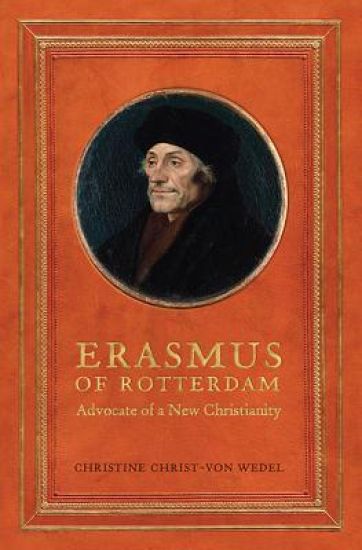
Erasmus of Rotterdam

Erasmus of Rotterdam

Christine Christ von-Wedel

University of Toronto Press
2013
sidottu
This book provides the first analysis of the development of Erasmus’ historical methodology and its impact on Roman Catholic and Protestant theologians. Combining a biography of Erasmus with the larger theological debates and the intellectual history of his time, Christine Christ-von Wedel reveals many of previously unexplored influences on Erasmus, as well as his influences on his contemporaries. Erasmus of Rotterdam is a revised and considerably enlarged translation of Christ-von Wedel’s well-received 2003 study, originally published in German. Observing the influence of classical, biblical, patristic, scholastic, and late medieval vernacular and popular sources on Erasmus’ writing, the author provides comparisons with theologians Agrippa, Lefèvre d’Étaples, Eck, Luther, and Zwingli to demonstrate not only the singularity of Erasmus’ intellect, but also the enormous impact he had on the Reformation. The result is a lively picture of the man and his time, in which Erasmus emerges as both a devout Christian and a critical seeker of truth who conceded the ambiguities that he could not resolve.
Erasmus and Calvin on the Foolishness of God

Erasmus and Calvin on the Foolishness of God

Kirk Essary

University of Toronto Press
2017
sidottu
What did Paul mean when he wrote that the foolishness of God is wiser than human wisdom? Through close analysis of the sixteenth-century reception of Paul's discourses of folly, this book examines the role of the New Testament in the development of what Erasmus and John Calvin refer to as the "Christian philosophy." Erasmus and Calvin on the Foolishness of God reveals the importance of Pauline rhetoric in the development of humanist critiques of scholasticism while charting the formation of a specifically affective approach to religious epistemology and theological method. As the first book-length examination of Calvin's indebtedness to Erasmus, which also considers the participation of Bullinger, Pellikan, and Melanchthon in an Erasmian exegetical milieu, it is a case study in the complicated cross-confessional exchange of ideas in the sixteenth century. Kirk Essary examines assumptions about the very nature of theology in the sixteenth century, how it was understood by leading humanist reformers, and how ideas about philosophy and rhetoric were received, appropriated, and shared in a complex intellectual and religious context.
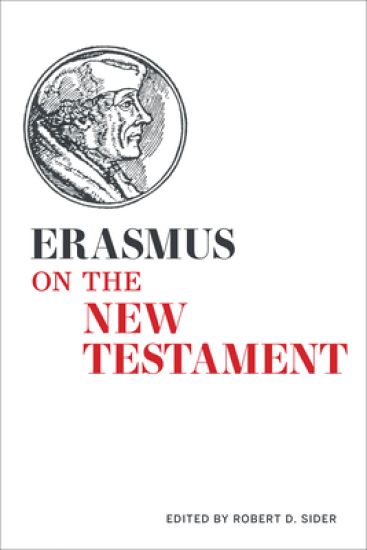
Erasmus on the New Testament

Erasmus on the New Testament

University of Toronto Press
2020
sidottu
When Erasmus, at Cambridge in 1512, began to mark up his copy of the Vulgate Bible with a few alternative Latin translations and a biting comment here and there in Latin, he could not have guessed that his work would grow over the next twenty-three years into the twenty volumes currently being produced as annotated translations in The Collected Works of Erasmus. His Paraphrases vastly expanded the text of the New Testament books, and brought dynamic and controversial interpretations to the traditional reading of the Latin texts. A new translation based on the Greek text, the first ever to be published by a printing firm, became the basis for ever-expanding notes that explained the Greek, measured the contemporary church against the truth revealed by the Greek, taunted critics and opponents, and revealed the mind of a humanist at work on the Scriptures. The sheer vastness of the work that finally accumulated is almost beyond the reach of a single individual. Through excerpts chosen over the entire extent of Erasmus’ New Testament work, this book hopes to reduce that immensity to manageable size, and bring the rich, virtually unlimited treasure of the Erasmian mind on the Scriptures within the comfortable reach of every interested individual.
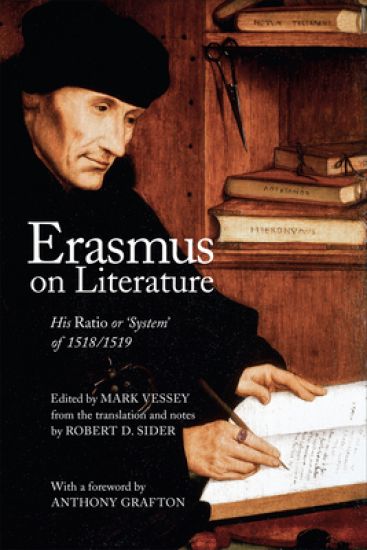
Erasmus on Literature

Erasmus on Literature

Anthony Grafton

University of Toronto Press
2021
pokkari
None of the works included among Erasmus’ ‘Literary and Educational Writings’ in the Collected Works of Erasmus captures his most adventurous thinking about how texts signify in – and thereby make or remake – worlds of thought, feeling, and action. The one that comes closest to doing so, the Ratio verae theologiae (‘A System of True Theology’), was first published separately in 1518 and 1519, then appeared in the preliminaries to the New Testament in Erasmus’ (revised) 1519 edition. This handy Ratio or compendious ‘System’ gave advice on how to interpret complex texts and develop persuasive arguments based upon them. Its lessons were applied to the canonical Scriptures as source, and to everyday Christian theology as target discourse. They unfold in response to the special difficulties and incitements of the biblical text in Latin and Greek, within a framework provided by classical grammar and rhetoric, adjusted to the examples of the Church Fathers as exemplary interpreters of the Bible. At every turn, the Ratio reveals the instincts and intuitions of an exceptional theorist and practitioner of the cognitive, social, and political arts of written language. This student edition, the first of its kind in any language, is based on the translation and notes by Robert D. Sider in the Collected Works of Erasmus Volume 41. It is designed to make it easier to estimate the long-term value of this particular work and of Erasmus’ works more generally, and to allow for a multidisciplinary understanding of the lives of human beings as symbol-using creatures in worlds constructed partly by texts.
Erasmus on the New Testament

Erasmus on the New Testament

University of Toronto Press
2020
pokkari
When Erasmus, at Cambridge in 1512, began to mark up his copy of the Vulgate Bible with a few alternative Latin translations and a biting comment here and there in Latin, he could not have guessed that his work would grow over the next twenty-three years into the twenty volumes currently being produced as annotated translations in The Collected Works of Erasmus. His Paraphrases vastly expanded the text of the New Testament books, and brought dynamic and controversial interpretations to the traditional reading of the Latin texts. A new translation based on the Greek text, the first ever to be published by a printing firm, became the basis for ever-expanding notes that explained the Greek, measured the contemporary church against the truth revealed by the Greek, taunted critics and opponents, and revealed the mind of a humanist at work on the Scriptures. The sheer vastness of the work that finally accumulated is almost beyond the reach of a single individual. Through excerpts chosen over the entire extent of Erasmus’ New Testament work, this book hopes to reduce that immensity to manageable size, and bring the rich, virtually unlimited treasure of the Erasmian mind on the Scriptures within the comfortable reach of every interested individual.
Erasmus' Annotations on the New Testament

Erasmus' Annotations on the New Testament

Erika Rummel

University of Toronto Press
1986
pokkari
Without the notes, Erasmus said, the texts of the Scripture were 'naked and defenceless,' open to criticism by uncomprehending readers and corruption by careless printers. The Annotations represent not only Erasmus' defence of the New Testament against such abuss, but also a reflection of his own philosophy, objectives, and working methods. In establishing the text and defending it against his opponents, Erasmus drew on manuscript sources, classical literature, patristic writings, scholastic exegesis, and the work of his immediate forerunners, Valla and Lefevre. He did not hesitate to point out the errors of illustrious writers like Jerome and established medieval authorities like Peter Lombard. In general he was appreciative of the early church Fathers and contemptuous of medieval commentators. As well as discussing the contents and aims of the Annotations, Erika Rummel investigates Erasmus' development from philologist to theologian and traces the prepublication history of the New Testament. She examines the critical reaction of conservative theologians to Erasmus' work and his replies, incorporated in later editions of the Annotations. The book ends by suggesting a wider field of research: the relationship between the Annotations and the corpus of Erasmian apologetic works.