Kirjojen hintavertailu. Mukana 12 548 754 kirjaa ja 12 kauppaa.

Kirjahaku

Etsi kirjoja tekijän nimen, kirjan nimen tai ISBN:n perusteella.

1000 tulosta hakusanalla Eb Corbin

Automazione HMI-PLC per il controllo di pressione e portata negli oleodotti

Automazione HMI-PLC per il controllo di pressione e portata negli oleodotti

E B Priyanka; C Maheswari; S Thangavel

Edizioni Sapienza
2023
pokkari
Una delle principali fonti di prodotti petroliferi proviene dal mare. Questi prodotti petroliferi vengono trasportati utilizzando i moderni sistemi di trasporto in oleodotti. Il trasporto del petrolio o dei prodotti petroliferi dalla regione del Mare di Mezzo alle industrie di raffinazione avviene tramite il trasporto in oleodotti. Gli oleodotti vengono scelti in base a diversi criteri, come il lungo ciclo di vita, l'esposizione continua al sale, all'acqua di mare e ai raggi solari, le strategie economiche come la velocit della pompa, la pressione, la portata, la temperatura, il punto di infiammabilit , ecc. Per questo motivo, il monitoraggio e il controllo della pressione e del flusso tramite PLC in questi sistemi di trasporto in oleodotti diventa molto importante. Il lavoro di ricerca proposto mira a sviluppare una tecnologia di controllo avanzata applicata al monitoraggio e al controllo della pressione e del flusso negli oleodotti e nelle unit di pompaggio di trasferimento.

Automação HMI-PLC para controlo de pressão e caudal em oleodutos

Automação HMI-PLC para controlo de pressão e caudal em oleodutos

E B Priyanka; C Maheswari; S Thangavel

Edicoes Nosso Conhecimento
2023
pokkari
Uma das principais fontes de produtos petrol feros obtida a partir do mar. Estes produtos petrol feros s o transportados utilizando sistemas contempor neos de transporte por oleoduto. H muitos procedimentos envolvidos no transporte do petr leo ou dos produtos petrol feros da regi o do mar m dio para as ind strias de refina o, o que conseguido eficazmente atrav s do transporte por oleoduto. Os oleodutos s o seleccionados com base em v rios crit rios, como o longo ciclo de vida, a exposi o cont nua ao sal, gua do mar e aos raios solares, as estrat gias econ micas, como a velocidade da bomba, a press o, o caudal, a temperatura, o ponto de inflama o, etc. Se ocorrer uma falha no oleoduto, o transporte do l quido pode constituir um perigo grave para as pessoas na vizinhan a imediata do local da fuga. Por isso, a monitoriza o e o controlo da press o e do caudal por meio de um aut mato no sistema de transporte por oleoduto torna-se extremamente importante. O trabalho de investiga o proposto visa desenvolver uma tecnologia de controlo avan ada aplicada monitoriza o e ao controlo da press o e do caudal em oleodutos e unidades de transfer ncia de bombas.
E.B. Wilson Medal

E.B. Wilson Medal

VDM Publishing House
2010
nidottu
Observera att förlaget som ger ut denna produkt baserar innehållet i sina produkter på fria källor som Wikipedia. Boken är med stor sannolikhet endast ett utdrag ur dessa informationskällor, alltså inte en vanlig bok i den bemärkelsen.
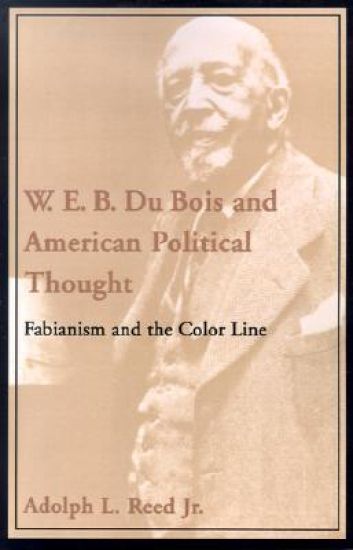
W.E.B. DuBois and American Political Thought

W.E.B. DuBois and American Political Thought

Adolph L. Reed

Oxford University Press Inc
1997
sidottu
This groundbreaking study of W.E.B. DuBois simultaneously analyses the political thought of one of the leading black American intellectuals and activists of this century, provides a model for the study of the history of political thought, and by examining recent DuBois scholarship, offers a penetrating interpretation of contemporary black thought. The book departs from existing DuBois scholarship by locating the sources of DuBois's thinking in the cauldron of reform-oriented American intellectual life at the end of the nineteenth century, and follows through the course of his career the ways that his early commitments persisted in his basic views regarding such pivotal issues as the relation of science and progress, social stratification among black Americans and in general, and rational social organization. While DuBois's substantive political programmes changed over time, for example in his support for defensive organizing behind the walls of segregation during the 1930s and his rapprochement with the Communist left in his last two decades, Reed argues that those changes do not reflect fundamental shifts in the structure of his thinking but were pragmatic responses to concrete political circumstances. When situated within their own constitutive contexts, these changing responses reveal their compatibility, if not coherence, with DuBois's basic, essentially Fabian socialist world view as first elaborated in The Philadelphia Negro. W.E.B. DuBois and American Political Thought's interpretation of DuBois is also an argument about the fundamental connections between Afro-American political debate and broader patterns of political discourse. This argument is linked to a path-breaking critique of dominant tendencies in Afro-American intellectual historiography and their ideological foundations, as well as to a sophisticated argument in support of an alternative, historically generativist approach to the study of the history of political thought.
W.E.B. DuBois and American Political Thought

W.E.B. DuBois and American Political Thought

Adolph L. Reed

Oxford University Press Inc
1999
nidottu
This groundbreaking study of W.E.B. DuBois simultaneously analyses the political thought of one of the leading black American intellectuals and activists of this century, provides a model for the study of the history of political thought, and by examining recent DuBois scholarship, offers a penetrating interpretation of contemporary black thought. The book departs from existing DuBois scholarship by locating the sources of DuBois's thinking in the cauldron of reform-oriented American intellectual life at the end of the nineteenth century, and follows through the course of his career the ways that his early commitments persisted in his basic views regarding such pivotal issues as the relation of science and progress, social stratification among black Americans and in general, and rational social organization. While DuBois's substantive political programmes changed over time, for example in his support for defensive organizing behind the walls of segregation during the 1930s and his rapprochement with the Communist left in his last two decades, Reed argues that those changes do not reflect fundamental shifts in the structure of his thinking but were pragmatic responses to concrete political circumstances. When situated within their own constitutive contexts, these changing responses reveal their compatibility, if not coherence, with DuBois's basic, essentially Fabian socialist world view as first elaborated in The Philadelphia Negro. W.E.B. DuBois and American Political Thought's interpretation of DuBois is also an argument about the fundamental connections between Afro-American political debate and broader patterns of political discourse. This argument is linked to a path-breaking critique of dominant tendencies in Afro-American intellectual historiography and their ideological foundations, as well as to a sophisticated argument in support of an alternative, historically generativist approach to the study of the history of political thought.
W.E.B. Du Bois

W.E.B. Du Bois

Greenwood Press
2001
sidottu
Comprises an encyclopedia of the important people, concepts, events, organizations, and philosophies with which historian, journalist, and political activist W.E.B. DuBois was involved during his 95-year lifetime.
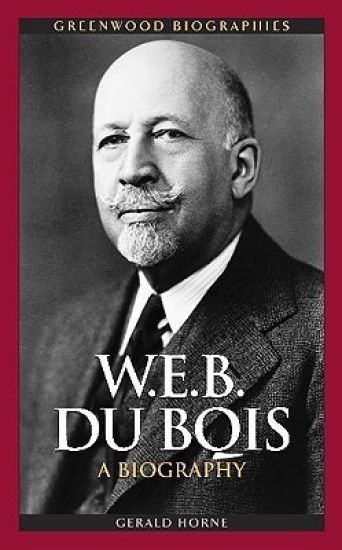
W.E.B. Du Bois

W.E.B. Du Bois

Gerald Horne

Greenwood Press
2009
sidottu
This biography of W.E.B. Du Bois gives full measure to his entire life, including his controversial final decades.This revealing biography captures the full life of W.E.B. Du Bois—historian, sociologist, author, editor—a leader in the fight to bring African Americans more fully into the American landscape as well as forceful proponent of them leaving America altogether and returning to Africa.Drawing on extensive research, Gerald Horne, a leading authority on Du Bois and a versatile and prolific scholar in his own right, offers a fully rounded portrait of this accomplished and controversial figure, including the often overlooked final decades without which no portrait of Du Bois could be complete. The book also highlights Du Bois's relationships with and influence upon other leading civil rights activists both during, and subsequent to, his extraordinarily long life, including Booker T. Washington, Frederick Douglas, Marcus Garvey, Martin Luther King, Malcolm X, and Jesse Jackson.Includes extensive use of original materials, including Du Bois’ correspondence and writingsOffers a chronology of key personal and historic events during Du Bois’ life (1868-1963)
W.E.B. Du Bois

W.E.B. Du Bois

Zhang Juguo

Routledge
2015
nidottu
Based on careful reading of Du Bois' writings and with a combination of analytical and narrative approaches, the author probes the reasons and dynamics behind the changes of Du Bois strategies concerning the solution to the American race problem.
W.E.B. Du Bois on Race and Culture

W.E.B. Du Bois on Race and Culture

Bernard W. Bell; Emily R. Grosholz; James B. Stewart

Routledge
1997
nidottu
Interpreting Du Bois' thoughts on race and culture in a broadly philosophical sense, this volume assembles original essays by some of today's leading scholars in a critical dialogue on different important theoretical and practical issues that concerned him throughout his long career: the conundrum of race, the issue of gender equality, and the perplexities of pan-Africanism.
W.E.B. Du Bois

W.E.B. Du Bois

Zhang Juguo

Routledge
2002
sidottu
Based on careful reading of Du Bois' writings and with a combination of analytical and narrative approaches, the author probes the reasons and dynamics behind the changes of Du Bois strategies concerning the solution to the American race problem.
W. E. B. Du Bois: Selections from His Writings

W. E. B. Du Bois: Selections from His Writings

W.E.B. Du Bois

Dover Publications Inc.
2014
nidottu
These essays by the prolific historian and civil rights activist W. E. B. Du Bois focus on some of the African-American author's lesser-known writings. They include "Strivings of the Negro People," "A Negro Schoolmaster in the New South," "The Talented Tenth," "Address to the Nation: The Niagara Movement Speech," "Evolution of the Race Problem," and more.
W.E.B. Griffin Zero Option

W.E.B. Griffin Zero Option

Peter Kirsanow

Penguin Putnam Inc
2025
nidottu
Dick Canidy races to stop an assassin from disrupting a vital conference that will shape the course of World War II in the latest electrifying entry in W.E.B. Griffin's New York Times bestselling Men at War series. November 1943. Stalin is pressing the Allies to open a second front in Europe in order to ease the pressure on the bloody grinding war in the East. Roosevelt and Churchill agree to meet the Soviet premier in Tehran. Wild Bill Donovan, the charismatic leader of the OSS, has intelligence that someone is planning to assassinate either or both of the Western leaders at the conference. He sends his best agent, Dick Canidy, to thwart the plan, but how can he do that when he doesn't even know if the killer is a Nazi or an Ally?
W.E.B. Du Bois and the Problems of the Twenty-First Century
W. E. B. Du Bois and the Problems of the Twenty-First Century utilizes Du Bois's thought and texts to develop an informed critical theory of contemporary society. This book broadens the base of critical theory, making it more multicultural, transethnic, transgender, and non-Western European philosophy focused by placing it in dialogue with theory and phenomena that had been heretofore woefully neglected. Taking the preeminent black intellectual of the twentieth century as his primary point of departure, Reiland Rabaka identifies and analyzes several key contributions that Du Bois and the black racial tradition offer to those interested in redeveloping and racially revising contemporary critical social theory. With chapters on critical race theory, postcolonial theory, feminism, and Marxism, this volume builds bridges from Africana Studies to disparate discursive communities, accessibly demonstrating Du Bois's, and the black radical tradition's, contributions to, and the potential impact on, a wide-range of new social scientific research and radical political struggles.
W.E.B. Du Bois and the Problems of the Twenty-First Century
W. E. B. Du Bois and the Problems of the Twenty-First Century utilizes Du Bois's thought and texts to develop an informed critical theory of contemporary society. This book broadens the base of critical theory, making it more multicultural, transethnic, transgender, and non-Western European philosophy focused by placing it in dialogue with theory and phenomena that had been heretofore woefully neglected. Taking the preeminent black intellectual of the twentieth century as his primary point of departure, Reiland Rabaka identifies and analyzes several key contributions that Du Bois and the black racial tradition offer to those interested in redeveloping and racially revising contemporary critical social theory. With chapters on critical race theory, postcolonial theory, feminism, and Marxism, this volume builds bridges from Africana Studies to disparate discursive communities, accessibly demonstrating Du Bois's, and the black radical tradition's, contributions to, and the potential impact on, a wide-range of new social scientific research and radical political struggles.
W.E.B. Du Bois

W.E.B. Du Bois

Brian L. Johnson

Rowman Littlefield Publishers
2008
sidottu
Brian L. Johnson's remarkable biography of W.E.B. Du Bois describes the evolution of religious views from Du Bois's birth until his resignation as editor of Crisis magazine in 1934. W.E.B. Du Bois: Toward Agnosticism, 1868-1934 traces Du Bois's mounting skepticism through his earliest church experiences to his sociological training in Berlin culminating with his writings in Crisis magazine. Johnson argues that despite Du Bois's frequent use of Protestant religious rhetoric, the mature Du Bois was a critic of African American religious organizations and their leaders, and a scientifically oriented agnostic who did not adhere to any religious orthodoxy.
W.E.B. Du Bois

W.E.B. Du Bois

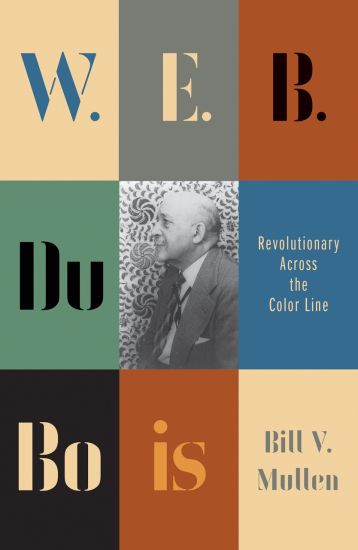
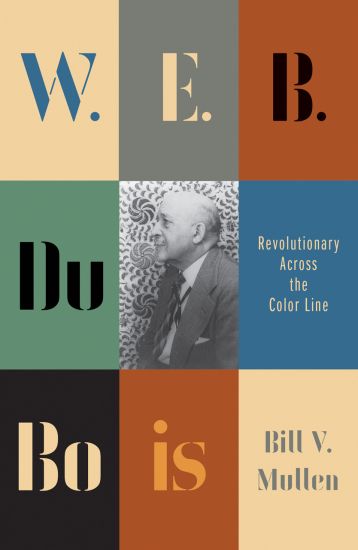
Bill V. Mullen

Pluto Press
2016
pokkari
On the 27th August, 1963, the day before Martin Luther King electrified the world from the steps of the Lincoln Memorial with the immortal words, 'I Have a Dream', the life of another giant of the Civil Rights movement quietly drew to a close in Accra, Ghana: W.E.B. DuBois. In this new biography, Bill V. Mullen interprets the seismic political developments of the Twentieth Century through Du Bois’s revolutionary life. Du Bois was born in Massachusetts in 1868, just three years after formal emancipation of America’s slaves. In his extraordinarily long and active political life, he would emerge as the first black man to earn a PhD from Harvard; surpass Booker T. Washington as the leading advocate for African American rights; co-found the NAACP, and involve himself in anti-imperialist and anti-colonial struggles across Asia and Africa. Beyond his Civil Rights work, Mullen also examines Du Bois's attitudes towards socialism, the USSR, China’s Communist Revolution, and the intersectional relationship between capitalism, poverty and racism. An accessible introduction to a towering figure of American Civil Rights, perfect for anyone wanting to engage with Du Bois’s life and work.
W.E.B. Du Bois

W.E.B. Du Bois

Bill V. Mullen

Pluto Press
2016
sidottu
On the 27th August, 1963, the day before Martin Luther King electrified the world from the steps of the Lincoln Memorial with the immortal words, 'I Have a Dream', the life of another giant of the Civil Rights movement quietly drew to a close in Accra, Ghana: W.E.B. DuBois. In this new biography, Bill V. Mullen interprets the seismic political developments of the Twentieth Century through Du Bois’s revolutionary life. Du Bois was born in Massachusetts in 1868, just three years after formal emancipation of America’s slaves. In his extraordinarily long and active political life, he would emerge as the first black man to earn a PhD from Harvard; surpass Booker T. Washington as the leading advocate for African American rights; co-found the NAACP, and involve himself in anti-imperialist and anti-colonial struggles across Asia and Africa. Beyond his Civil Rights work, Mullen also examines Du Bois's attitudes towards socialism, the USSR, China’s Communist Revolution, and the intersectional relationship between capitalism, poverty and racism. An accessible introduction to a towering figure of American Civil Rights, perfect for anyone wanting to engage with Du Bois’s life and work.