Kirjojen hintavertailu. Mukana 12 363 183 kirjaa ja 12 kauppaa.

Kirjahaku

Etsi kirjoja tekijän nimen, kirjan nimen tai ISBN:n perusteella.

1000 tulosta hakusanalla Edvard Holm

Edvard Grieg

Edvard Grieg

VDM Publishing House
2010
nidottu
Observera att förlaget som ger ut denna produkt baserar innehållet i sina produkter på fria källor som Wikipedia. Boken är med stor sannolikhet endast ett utdrag ur dessa informationskällor, alltså inte en vanlig bok i den bemärkelsen.
Edvard Munch
Edvard Munchs kunst er først og fremst kjent for å ha utforsket menneskelige følelser. I løpet av karrieren hans spilte imidlertid fasinasjonen for naturen og landskapet en kanskje like viktig rolle som interessen for eksistensens psykologiske dimensjoner. Edvard Munch. Jordsvingninger er den første omfattende presentasjon av en grundig undersøkelse av Munchs naturskildringer, samtidig som prosjektet utfordrer etablerte oppfatninger om kunstnerskapet. Den prisvinnende skotske forfatteren Ali Smith har lenge vært inspirert av Edvard Munch og i sin tekst i Jordsvingninger anlegger hun et humoristisk og originalt blikk på naturskildringene hans.
Edvard Munch

Edvard Munch

Patricia G. Berman; Melania Mazzucco; Hanne Ørstavik; Lasse Jacobsen; Emil Leth Meilvang

Munch Museum
2024
sidottu
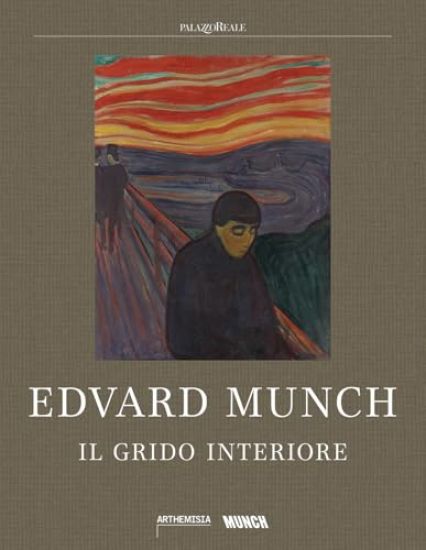
The jarring emptiness following the loss of a loved one, the expansive out-of-body sensation of sensual touch, the lassitude of melancholy and the ecstatic receptivity to sunshine. His ability to capture and convey sensation and feelings through the materials of art, places the Norwegian artist Edvard Munch (1863–1944) at the forefront of European art at the turn of the last century. Interestingly, Munch’s artistic exploration of perception, and his persistent questioning of the objectivity of vision, intersect with ideas that matured within the fields of psychology and experimental optics at the time. Edvard Munch: Il Grido Interiore examines these connections, demonstrating his continuing exploration of the conditions of sight. The essays in this catalogue examine this phenomenon while also probing a lesser-known aspect of the artist’s work: Munch’s relationship to Italy. The first essay, Lasse Jacobsen’s ‘Edvard Munch. Italian Impressions’, explores this connection explicitly, as part of a general overview of Munch’s life and work. The second text, ‘Reflections in Munch’s Inner Eye’ by Patricia G. Berman, charts the art historical context of Munch’s exploration of experience’s subjective dimension. Emil Leth Meilvang’s ‘Seeing without Sight. Munch’s Vision’, on its part, explores the relationship between Munch’s artistic development and simultaneous developments within the perceptual sciences. Edvard Munch:Il Grido Interiore includes essayistic pieces by authors Melania G. Mazzucco and Hanne Ørstavik: ‘I am a Romantic’ and ‘Who Am I’. Each demonstrates Munch’s continuing ability to light the inner fires of other artists. Text in Italian.
Edvard Munch: The Modern Eye

Edvard Munch: The Modern Eye

Angela Lampe

Tate Publishing
2012
nidottu
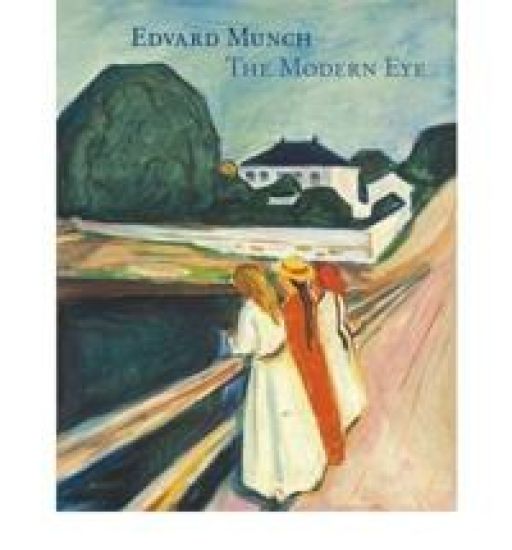
Norwegian painter Edvard Munch (1863-1944) is best known for his painting "The Scream", painted in 1893, which has become one of the most iconic images in the modern world. Munch was clear about his own mission in exploring the portrayal of extreme human emotion. "Just as Leonardo da Vinci studied anatomy and dissected corpses", he wrote, "so I try to dissect souls". Perhaps because of the subsequent notoriety of "The Scream" and other works from his intensely productive early period, Munch is often presented as a 19th century figure, an inspiration for and precursor of the modern artists who succeeded him. In contrast, this important new survey, accompanying a major, touring exhibition, shows him to have been fully engaged with modernity, particularly by tracing his involvement with its key methods of representation: photography, cinematography and the theatrical mise-en-scene. In addition to a large number of instantly recognisable masterpieces, this lavishly illustrated book reproduces many lesser-known works, as well as a wide selection of Munch's photographs and sketches. Munch's photographs in particular will be a revelation to many; his moody and atmospheric self-portraits and the studio shots of models that are placed alongside finished paintings reveal the way one medium fed into another. With essays by an international selection of authorities, extracts of previously untranslated writings by the artist, a chronology and bibliography, this is the most comprehensive and revealing survey of Munch's work yet published.
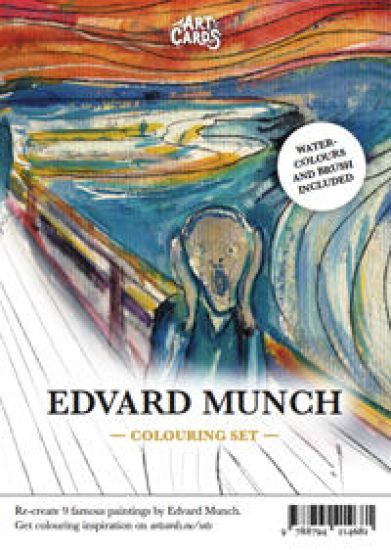
ArtCards: Edvard Munch
Har du någonsin drömt om att återskapa stora konstverk, men inte vetat hur du ska börja?Detta färgläggningsset innehåller allt du behöver för att återskapa9 berömda målningar av Edvard Munch. Så kan du hitta ditt inre kreativa geni och imponera alla med dina färdigheter.Med den här produkten får du:Pensel i storlek 19 skisser, tryckta på elfenbenspapper av hög kvalitetMinipalett med 6 färger, livliga, giftfria och biologiskt nedbrytbaraRäcker det med 6 färger?Ja, absolut! De 6 färgerna är utvalda för att ge dig en bred färgskala när du kombinerar dem. Faktiskt gjordes det visade exemplet med samma 6 färger som du kommer att få!Så fukta penseln, snurra din favoritfärg och skapa akvarellmagi!
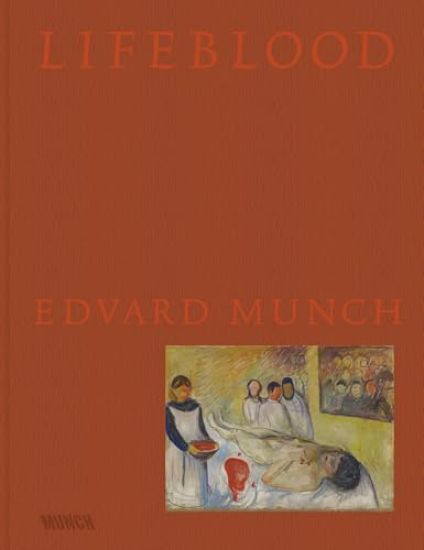
Lifeblood – Edvard Munch
Over the course of Edvard Munch’s lifetime, discoveries such as X-rays, germ theory, antibiotics and contraception transformed our understanding of the body forever. The exhibition Lifeblood – Edvard Munch places the Norwegian artist at the heart of this dramatic development, juxtaposing his works with skeletons, scalpels, sputum bottles and a range of other objects from the history of modern healthcare. In this book, these objects are given voice and presence through a diverse selection of texts written by art and medical historians, healthcare workers, activists, museum professionals, artists and writers. Each contribution takes works or objects from the exhibition as its point of departure, using them as an entryway into the complex terrain of care. The maps they draw are not the same – and that is precisely the point: medical experience is never uniform, but shaped by each individual’s circumstances and identities. Richly illustrated, with contributions by exhibition curator Allison Morehead and by Fatema Abdoolcarim, Patricia G. Berman, Gemma Blackshaw, Alice Butler, Alison W. Chang, Hege Duckert, Jacalyn Duffin, Signe Endresen, Ute Kuhlemann Falck, Jan Grue, Johanna Hedva, Nora Heidorn, Aurora Hoel, Mary Hunter, Cathrine Knudsen, Cathrine Krøger, Olivia Laing, Ageliki Lefkaditou, Phil Loring, Olaug Nilssen, Kaveh Rashidi, Natasha Ruiz-Gómez, Thorvald Steen, Sara Stridsberg, Espen Stueland and Ingvard Wilhelmsen.
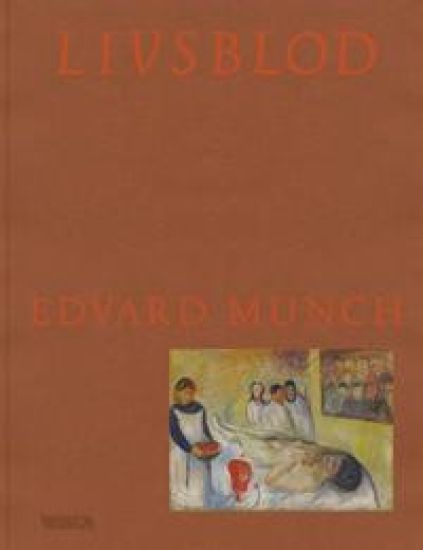
Livsblod - Edvard Munch
I løpet av Edvard Munchs liv endret oppdagelser som røntgen, kimteorien, antibiotika og prevensjon vår forståelse av kroppen for alltid. Utstillingen Livsblod – Edvard Munch plasserer den norske kunstneren midt i denne dramatiske utviklingen, ved å sammenstille verkene hans med skjeletter, skalpeller, spytteflasker og en rekke andre gjenstander fra det moderne helsevesenets historie. I boken får disse objektene stemmer og nærvær i et mangfoldig utvalg tekster skrevet av kunstog medisinhistorikere, helsefagarbeidere, aktivister, museumsansatte, kunstnere og forfattere. Hver av tekstene tar utgangspunkt i verk eller gjenstander fra utstillingen, og bruker dem som inngang til omsorgens komplekse landskap. Kartene de tegner er ikke like, og nettopp dét er poenget: Den medisinske erfaringen er aldri den samme, men formet av den enkeltes livsforhold og identiteter. Rikt illustrert, med tekster av utstillingskurator Allison Morehead og av Fatema Abdoolcarim, Patricia G. Berman, Gemma Blackshaw, Alice Butler, Alison W. Chang, Hege Duckert, Jacalyn Duffin, Signe Endresen, Ute Kuhlemann Falck, Jan Grue, Johanna Hedva, Nora Heidorn, Aurora Hoel, Mary Hunter, Cathrine Knudsen, Cathrine Krøger, Olivia Laing, Ageliki Lefkaditou, Phil Loring, Olaug Nilssen, Kaveh Rashidi, Natasha Ruiz-Gomez, Thorvald Steen, Sara Stridsberg, Espen Stueland og Ingvard Wilhelmsen.

The Life of Edvard Benes, 1884-1948

The Life of Edvard Benes, 1884-1948

Zbynék Zeman; Antonín Klimek

Clarendon Press
1997
sidottu
Edvard Benes was a key figure in the history of Czechoslovakia in the first three decades of her existence. He helped Thomas Masaryk to found the state in World War I; and in the 1920s he worked on foreign policy and was briefly prime minister before being elected president in 1935. His presidency saw the loss of the Sudetenland at Munich in 1938, followed by the German occupation in 1939, which forced Benes to form a London-based government-in-exile for the duration of the war. He lived to see a brief period of restored independence (1945-48), and died in 1948, in the year when Czechoslovakia became another satellite state in Stalin's Soviet Union. Benes was an awkwardly successful politician, with a controversial reputation at home and abroad. His loyalty to the first Czech President, Masaryk, was absolute. In return, Masaryk supported Benes' political ambitions, and between them, the two men shaped the domestic and foreign policies of the new state and the ways in which it was run. Benes regarded himself as having been supremely successful in World War I and during the peace conference. After such a surfeit of personal and political success, he never again recovered his composure. He was a fair-weather politician, at his best when things were going well for him. Munich was a blow which deeply upset him, though he staged a remarkable come-back for himself and Czechoslovakia in World War II. After the conclusion of the treaty with Moscow in 1943, Benes briefly recovered his self-confident optimism, only to lose it gradually in the subsequent years. President of a country he'd helped to create, Benes was finally broken by the stresses imposed on him by international circumstances in a central Europe dominated first by Hitler and then by Stalin. He died a disappointed, broken man in 1948.
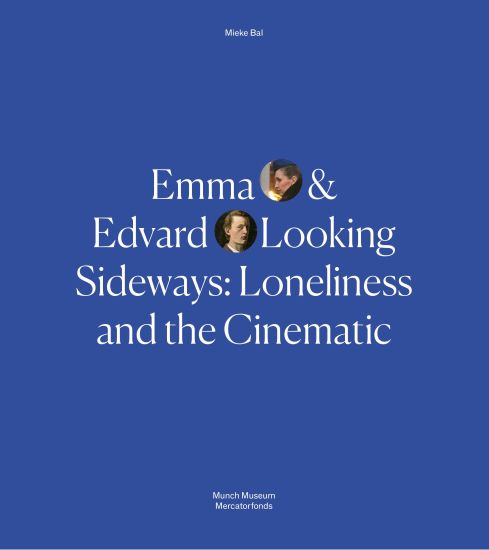
Emma and Edvard Looking Sideways

Emma and Edvard Looking Sideways

Mieke Bal

Yale University Press
2017
pokkari
In this compelling publication, two masters come face-to-face when the works of Edvard Munch are juxtaposed against Gustave Flaubert’s groundbreaking novel Madame Bovary. Munch’s art is presented in stills taken from an elaborate video installation, Madame B (2014), created by Michelle Williams Gamaker and the internationally acclaimed cultural theorist, video artist, and curator Mieke Bal. Emma and Edvard Looking Sideways: Loneliness and the Cinematic explores the filmic aspect of Munch’s art by combining contemporary art theory with Bal’s own idiosyncratic way of looking at art – directly and closely. The reader can reflect upon how we view each other in social situations and question what happens when we are denied visual dialogue. Distributed for MercatorfondsExhibition Schedule:Munch Museum, Oslo (02/04/17–04/17/17)
The Wars of Edvard Shevardnadze
Together with Mikhail Gorbachev and Alexander Yakovlev, Eduard Shevardnadze led the dramatic Soviet about-face in the 1980s that ended the Cold War and transformed the international political climate. While Gorbachev and Yakovlev focused on domestic reform, Shevardnadze redirected foreign policy. This major book is the first to take a critical look at the many battles Shevardnadze has fought at home and abroad throughout his remarkable career. This updated edition further assesses the leadership role he continues to play in the turbulent independent state of Georgia