Title: Index to Collinson's History of Somerset. (By Edwin Pearce.) Edited by the Rev. F. W. Weaver ... and the Rev. E. H. Bates ... Including a supplemental index ... to all the armorial bearings mentioned in the work, contributed by Lt. Col. J. R. Bramble.Publisher: British Library, Historical Print EditionsThe British Library is the national library of the United Kingdom. It is one of the world's largest research libraries holding over 150 million items in all known languages and formats: books, journals, newspapers, sound recordings, patents, maps, stamps, prints and much more. Its collections include around 14 million books, along with substantial additional collections of manuscripts and historical items dating back as far as 300 BC.The GENERAL HISTORICAL collection includes books from the British Library digitised by Microsoft. This varied collection includes material that gives readers a 19th century view of the world. Topics include health, education, economics, agriculture, environment, technology, culture, politics, labour and industry, mining, penal policy, and social order. ++++The below data was compiled from various identification fields in the bibliographic record of this title. This data is provided as an additional tool in helping to insure edition identification: ++++ British Library Anonymous; Bates, Edward Harbin; Bramble, James Roger; 1898. iv. 325 p.; 4 . 10353.e.9.
EDWIN chronicles the story of a loner who finds his place in life and in the process lifts the spirit of a town. EDWIN is a whimsical satire written in alliteration which endeavors to expand kids' vocabulary while entertaining them with the music, rhythm, and magic of the English language. Written by Actress & Author J. Sari (My Pal Pudge) and with vibrant illustration by Emmy Award-winner Ed Ghertner (Producer/Director, Disney's Winnie the Pooh), EDWIN spins a fanciful tale while teaching an important lesson on the value of human kindness and love. This special story will warm your heart. Age Appropriate: K-12th Reading Comprehension Level: 6th-8th grade
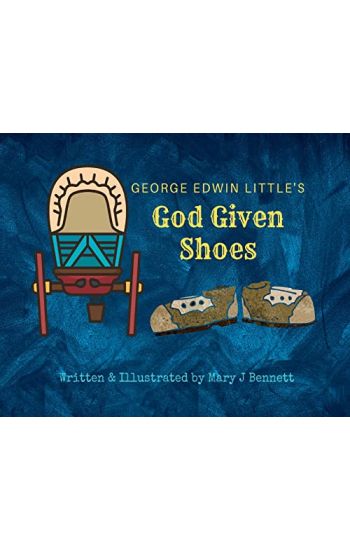
George Edwin Little was born in 1844 in Nauvoo Illinois. This was a time of great unrest for members of the Church of Jesus Christ of Latter-day Saints. When George was 2yrs old, his family was among the many saints who were forced out of Nauvoo. They traveled across the plains with the pioneers to settle in the valley of Salt Lake City. Along this trip, George's father met with atragedy when he fell into an icy river. He became sick and died. Harriet and George finished the trip on their own. After arriving in Salt Lake City, money was very tight. George and his mother had very little money and certainly no money for shoes. George had to make due with his bare feet. But winter was coming. And what about going to church? He seemed to be the only one without shoes at church. After George prayed to God, a miracle happened. There on the old fence post in front of his house sat a brand new pair of shoes. "That day, George Little walked home with a big smile and warm heart, very grateful for his God-given pair of shoes."
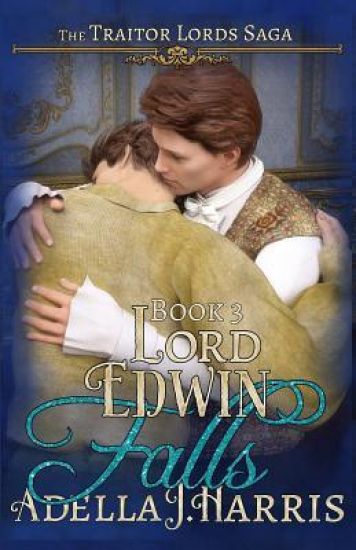
Three traitor lords plotted to kill the king; now their sons must deal with the aftermath.Alan Brideson has almost everything his father wanted for him: a prosperous business he enjoys selling objets d'arts imported from the Far East, a good address in town, and if everything goes according to his plan, he will soon have the last piece--a titled bride and entry into the world of the ton. All he needs is to cultivate a friendship with someone who has influence, who can help him get his vouchers for Almack's famed balls. If only he could understand why he keeps dreaming about a certain dockworker he hired. Surely it was only because the man was an interesting puzzle who could read the languages that passed through the office daily.Lord Edwin Gilford, younger son of the Earl of Martford, was studying Eastern languages at Oxford when his father and older brother participated in the plan to kill the king, and when they ran from agents of the Crown, so he wasn't a suspect, and he wasn't there when all of the Martford property was seized. Unable to find a position as a clerk because of his father's treason, he takes any job he can get on the docks, where no one asks about Ed Martin's past. At least until he gets a job at the Brideson Warehouse and accidentally reveals that he can read the foreign words on the crates. When Mr. Brideson offers him a position as clerk, he knows he should refuse, but the interesting work and promise of a guinea a week is too tempting, almost as tempting as Mr. Brideson's kindness.Working so closely makes it impossible to deny their attraction. But as Alan gets closer to the vouchers and the future he's worked so hard for, Edwin knows he will have to leave. There is no way Edwin can go unnoticed and unrecognized in the world of the ton, and he will not repay Alan's kindness by ruining his chance for a titled bride, and being seen with the son of a traitor lord would surely do that. A gay - M/M romance novel set in the Regency period with a medium heat level
This book is about two gnomes who come to life at night In this book they have a pretty peaceful life in a garden until two bratty grandchildren, come to visit....
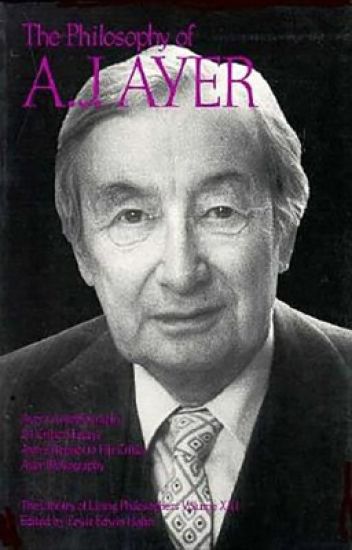
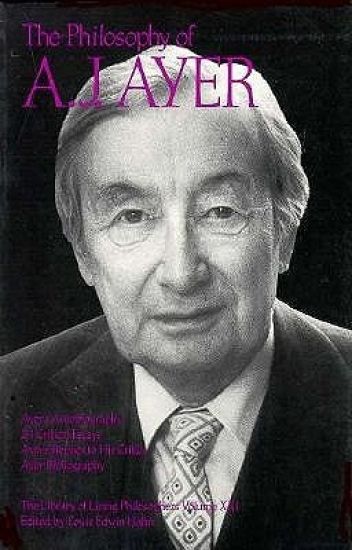
A.J. Ayer burst like a supernova upon the Anglo-American philosophical world in 1936, with "Language, truth and logic", an eloquent, uncompromising manifesto for logical positivism which transformed the thinking of a generation. Inside a few years, philosophers were retreating from the position set forth in "Language truth and logic" with Ayer himself leading the retreat. The ensuing vogue for "ordinary language" philosohpy was not admired by Ayer who became one of its most telling critics. In his subsequent writings he displayed a rare capacity for self-criticis, manifested in a readiness to admit that his earlier arguments had been inadequate. He modified his position on many issues, but remained to the end what he had been all along - an empiricist in the demanding tradition of Hume and Russell. Ayers's grace and clarity of style, his lack of pretentiousness, his logical rigor and his gift for penetrating to the heart of a problem are all exemplified in a succession of works, including "Thinking and meaning" (1947), "The problem of knowlegde" (1956), "Probability and evidence" (1973) and "Freedom and morality" (1985). This, the 21st volume in the "Library of living philosophy", is more than Sir Alfred Ayer's final word on the philosophical issues which preoccupied him for 60 years. The list of contributors is a roll-call of some of the greatest living figures in philosophy, each addressing a key problem arising from Ayer's work. Most of the critical papers are answered directly and in detail by Sir Alfred - he completed his replies to 20 of the 24 papers before his death.
A.J. Ayer burst like a supernova upon the Anglo-American philosophical world in 1936, with "Language, Truth and Logic", an eloquent, uncompromising manifesto for logical positivism which transformed the thinking of a generation. Inside a few years, philosophers were retreating from the position set forth in "Language Truth and Logic" with Ayer himself leading the retreat. The ensuing vogue for "ordinary language" philosophy was not admired by Ayer who became one of its most telling critics. In his subsequent writings he displayed a rare capacity for self-criticism, manifested in a readiness to admit that his earlier arguments had been inadequate. He modified his position on many issues, but remained to the end what he had been all along - an empiricist in the demanding tradition of Hume and Russell. Ayers's grace and clarity of style, his lack of pretentiousness, his logical rigour and his gift for penetrating to the heart of a problem are all exemplified in a succession of works, including "Thinking and Meaning" (1947), "The Problem of Knowlegde" (1956), "Probability and Evidence" (1973) and "Freedom and Morality" (1985). This, the 21st volume in the "Library of Living Philosophy", is more than Sir Alfred Ayer's final word on the philosophical issues which preoccupied him for 60 years. The list of contributors is a roll-call of some of the greatest living figures in philosophy, each addressing a key problem arising from Ayer's work. Most of the critical papers are answered directly and in detail by Sir Alfred - he completed his replies to 20 of the 24 papers before his death.
Title: Paradise transplanted and restored, in a most artfull and lively representation of the several creatures, plants, flowers and other vegetables ... Written by J. H., Gent.Publisher: British Library, Historical Print EditionsThe British Library is the national library of the United Kingdom. It is one of the world's largest research libraries holding over 150 million items in all known languages and formats: books, journals, newspapers, sound recordings, patents, maps, stamps, prints and much more. Its collections include around 14 million books, along with substantial additional collections of manuscripts and historical items dating back as far as 300 BC.The GENERAL HISTORICAL collection includes books from the British Library digitised by Microsoft. This varied collection includes material that gives readers a 19th century view of the world. Topics include health, education, economics, agriculture, environment, technology, culture, politics, labour and industry, mining, penal policy, and social order. ++++The below data was compiled from various identification fields in the bibliographic record of this title. This data is provided as an additional tool in helping to insure edition identification: ++++ British Library H., J Gent; Pearson, Edwin; 1871. 8 . 10349.c.20.(4.)