And let's travel back in time to the vacant car junkyard behind the old hotel. No wonder my friends and I loved to play there, as this was where we discovered the big pile of cash. A heaping mound of gleaming pennies, nickels, dimes, and quarters. And some fifty cent pieces, too All hidden under the relic of an old car. Probably the dilapidated, old vehicle toppled over in the junkyard and someone's hidden stash of money spilled out on the ground. What a find My ten year old eyes were as round as saucers It sure looked like a giant fortune to all of my friends and me.We each grabbed a handful of the slippery coins and ran back to the hotel to tell some grown-ups. And in the end we all shared in the reward. We got to visit the nearby candy store and splurged in delight on chocolate bars, jaw breakers, and all-day suckers. All of us kids were glad the cars were so ancient and the former owners could never be found, because then the coins were unclaimed.
Praise for Winnawarra 5 Stars: This is a lovely story, well written and a real page turner. - Pia Moonglow, Goodreads. 5 Stars: The suspense woven through the book kept me on the edge of my seat. - Julene Beer, NetGalley 4 Stars: Winnawarra had a well-developed plot that moved along at a good pace. - The Word Nerd Heart pounding suspense and feel good romance set in the Australian Outback. Emily Perkins is over the moon to learn Jock Macgregor has left her a share in Winnawarra Station in the magnificent Kimberly region of Outback Australia. The bonus comes when she realises, his handsome grandson, Doug is the man of her dreams. She loves working beside him and every day is an adventure. After receiving a letter from Jock, she discovers he was convinced the accident that killed his son and daughter-in-law was actually murder, and he included her in his will to investigate the deaths. When accidents start happening to Emily, and she hears footsteps outside her room at night, she is convinced someone is stalking her. Is she next on the killer's list? Isolated on an Outback cattle ranch, will strong, dependable Doug be able to keep her safe? A murderer is loose at Winnawarra Station, and she must race against time to identify the killer before he strikes again. PUBLISHER NOTE: Australian Rural Romance. A full-length Romantic Suspense novel of 81,372 words.
Earth's Echo is an Artistic Journey through images and prose.A Journey to heal ourselves in the air we breathe, and the land and sea we share.Earth's Echo is the second in the Echo Trilogy.
An Artistic Journey through the stories we live. Our wisdoms. Our mistakes. Our breathtaking moments.Word's Echo is the third journal in the Echo Journal trilogy: Heart's Echo, Earth's Echo, and Word's Echo.
This work has been selected by scholars as being culturally important and is part of the knowledge base of civilization as we know it.This work is in the public domain in the United States of America, and possibly other nations. Within the United States, you may freely copy and distribute this work, as no entity (individual or corporate) has a copyright on the body of the work.Scholars believe, and we concur, that this work is important enough to be preserved, reproduced, and made generally available to the public. To ensure a quality reading experience, this work has been proofread and republished using a format that seamlessly blends the original graphical elements with text in an easy-to-read typeface.We appreciate your support of the preservation process, and thank you for being an important part of keeping this knowledge alive and relevant.
This work has been selected by scholars as being culturally important and is part of the knowledge base of civilization as we know it.This work is in the public domain in the United States of America, and possibly other nations. Within the United States, you may freely copy and distribute this work, as no entity (individual or corporate) has a copyright on the body of the work.Scholars believe, and we concur, that this work is important enough to be preserved, reproduced, and made generally available to the public. To ensure a quality reading experience, this work has been proofread and republished using a format that seamlessly blends the original graphical elements with text in an easy-to-read typeface.We appreciate your support of the preservation process, and thank you for being an important part of keeping this knowledge alive and relevant.
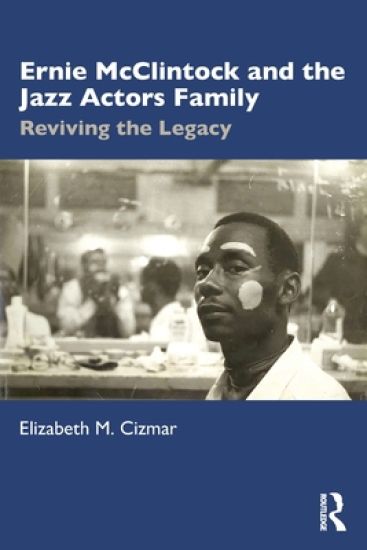
Ernie McClintock and the Jazz Actors Family is a critical biography examining the life and work of Ernie McClintock, the founder of the Jazz Acting Method and 1997 recipient of the Living Legend Award from the National Black Theatre Festival, whose inclusive contributions to acting and actor training have largely remained on the fringes of scholarship and practice.Based on original archival research and interviews with McClintock’s students and peers, this book traces his life from his childhood in Chicago to Harlem in the 1960s at the height of the Black Arts Movement, to Richmond, Virginia in 2003, paying particular attention to his Black Power–influenced, culturally specific acting theory and versatile Black theatrical productions. As a biographical study, this book establishes McClintock as a leading figure of the Black Theatre Movement, proven by the Jazz Acting technique, his critically acclaimed productions, and his leadership positions in organizations such as the Black Theatre Alliance. Ernie McClintock and the Jazz Actors Family explores how the Jazz Acting technique was applied in productions such as N.R. Davidson’s El Hajj Malik, Derek Walcott’s Dream on Monkey Mountain, Cheryl West’s Before It Hits Home, Endesha Mae Holland’s From the Mississippi Delta, and many collectively-authored pieces. The book also investigates why he has been excluded from dominant theatre histories, especially considering how, as a gay Black man, he persistently defied the status quo, questioning practices of administrators of theatres and mainstream theatrical standards.Ernie McClintock and the Jazz Actors Family is situated at the intersection of Black acting theory, Black Arts Movement history, and Black queer studies, and is an illuminating study of an important figure for actors, acting teachers, acting students, and cultural historians. This is an essential resource for readers who are seeking histories and approaches outside of a white, straight, Eurocentric framework.
Ernie McClintock and the Jazz Actors Family is a critical biography examining the life and work of Ernie McClintock, the founder of the Jazz Acting Method and 1997 recipient of the Living Legend Award from the National Black Theatre Festival, whose inclusive contributions to acting and actor training have largely remained on the fringes of scholarship and practice.Based on original archival research and interviews with McClintock’s students and peers, this book traces his life from his childhood in Chicago to Harlem in the 1960s at the height of the Black Arts Movement, to Richmond, Virginia in 2003, paying particular attention to his Black Power–influenced, culturally specific acting theory and versatile Black theatrical productions. As a biographical study, this book establishes McClintock as a leading figure of the Black Theatre Movement, proven by the Jazz Acting technique, his critically acclaimed productions, and his leadership positions in organizations such as the Black Theatre Alliance. Ernie McClintock and the Jazz Actors Family explores how the Jazz Acting technique was applied in productions such as N.R. Davidson’s El Hajj Malik, Derek Walcott’s Dream on Monkey Mountain, Cheryl West’s Before It Hits Home, Endesha Mae Holland’s From the Mississippi Delta, and many collectively-authored pieces. The book also investigates why he has been excluded from dominant theatre histories, especially considering how, as a gay Black man, he persistently defied the status quo, questioning practices of administrators of theatres and mainstream theatrical standards.Ernie McClintock and the Jazz Actors Family is situated at the intersection of Black acting theory, Black Arts Movement history, and Black queer studies, and is an illuminating study of an important figure for actors, acting teachers, acting students, and cultural historians. This is an essential resource for readers who are seeking histories and approaches outside of a white, straight, Eurocentric framework.
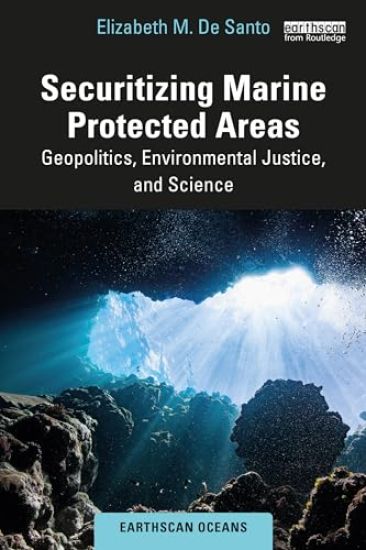
This book presents a novel examination of Marine Protected Areas within a security context, bridging science, policy, and geopolitics, and addressing the often-under-emphasized aspect of environmental justice.The book argues that Marine Protected Areas (MPAs) are not only a critical tool for protecting marine biodiversity in a changing climate, but they also play an important role at the intersection of geopolitics and environmental justice, and they provide a case study of environmental governance at the science-policy interface. The book takes an interdisciplinary and critical approach and builds on the author's two decades of experience working in this field. Geopolitically, it explores the ways in which MPAs provide footprints for influence and access to resources far from home for nations with overseas territories. MPAs also raise important issues connected to equity, environmental justice, and social justice, including access to resources and participation in environmental decision-making processes, key aspects for achieving long-term conservation goals. The book also demonstrates how MPAs are a critical lens for understanding how policy makers cope with scientific uncertainty, and the necessity of well-designed and precautionary science advisory processes. While the ecological contribution of MPAs is paramount, social issues and geopolitical considerations are often less obvious in the discourse underpinning MPAs, and the resulting tensions can undermine long-term conservation objectives. By applying the three lenses of geopolitics, environmental justice and science, this book provides key insights to help the international community moving past the 2030 biodiversity targets and beyond, towards a future of meaningful, equitable, and effective conservation approaches.This book will be of great interest to students and scholars of biodiversity conservation, marine studies, political geography, environmental governance, and science-policy studies. It will also be of interest to marine conservation governance professionals and policymakers.
This book presents a novel examination of Marine Protected Areas within a security context, bridging science, policy, and geopolitics, and addressing the often-under-emphasized aspect of environmental justice.The book argues that Marine Protected Areas (MPAs) are not only a critical tool for protecting marine biodiversity in a changing climate, but they also play an important role at the intersection of geopolitics and environmental justice, and they provide a case study of environmental governance at the science-policy interface. The book takes an interdisciplinary and critical approach and builds on the author's two decades of experience working in this field. Geopolitically, it explores the ways in which MPAs provide footprints for influence and access to resources far from home for nations with overseas territories. MPAs also raise important issues connected to equity, environmental justice, and social justice, including access to resources and participation in environmental decision-making processes, key aspects for achieving long-term conservation goals. The book also demonstrates how MPAs are a critical lens for understanding how policy makers cope with scientific uncertainty, and the necessity of well-designed and precautionary science advisory processes. While the ecological contribution of MPAs is paramount, social issues and geopolitical considerations are often less obvious in the discourse underpinning MPAs, and the resulting tensions can undermine long-term conservation objectives. By applying the three lenses of geopolitics, environmental justice and science, this book provides key insights to help the international community moving past the 2030 biodiversity targets and beyond, towards a future of meaningful, equitable, and effective conservation approaches.This book will be of great interest to students and scholars of biodiversity conservation, marine studies, political geography, environmental governance, and science-policy studies. It will also be of interest to marine conservation governance professionals and policymakers.
For all the work on disability in previous years, there had been surprisingly little done on a subject of central importance – the social and psychological needs of teenagers with disabilities. Originally published in 1982, the purpose of this timely book was both to review the literature and to report an extensive study of the nature of the psychological problems, the quality of social life and the adequacy of the services available to a substantial group of teenagers with disabilities in the last years at school, with a follow-up study of half their number a year later.The authors show that many of these teenagers, including those with a mild disability, are often unhappy, worried and isolated from their peers. While the majority of the teenagers with disabilities, whether in ordinary or special schools, made friends at school, these friendships were rarely sustained outside. After leaving school the degree of social isolation is as great, and often worse. Among these teenagers the incidence of psychological problems was three to four times higher than for a control group, the most common being worry, depression, misery, fearfulness and lack of self-confidence and self-esteem. For the most part, the teenagers with disabilities were likely to be immature and ill-prepared to cope with adult life. These findings underline the need for a counselling service while the teenagers are still at school, and supporting services when they have left. Like other teenagers, those in this study were unprepared for the possibility of not having a job, and had not thought how to organize their lives if a job was not available or feasible. The authors draw attention to the large proportion of people with disabilities without occupation after leaving school, and the high dissatisfaction with day centres. Perhaps their most important finding is the need to rationalize the piecemeal and overlapping provision of help for school-leavers with disabilities. In the meantime, their book provides a wealth of information of direct use to those concerned with teenagers with disabilities and their families, whether in school provision, careers advice, work placement and alternatives to work, social services, counselling, medical services and further education.This book is a re-issue originally published in 1982. The language used is a reflection of its era and no offence is meant by the Publishers to any reader by this re-publication.