
Kirjahaku
Etsi kirjoja tekijän nimen, kirjan nimen tai ISBN:n perusteella.
1000 tulosta hakusanalla Emile Chevalier
Cavalier And Puritan In The Days Of The Stuarts
Anne Emily Newdigate-Newdegate
Kessinger Publishing
2008
pokkari

Brachvogel, A: Der blaue Cavalier Roman in drei Bänden
Albert Emil Brachvogel
Antigonos Verlag
2024
nidottu
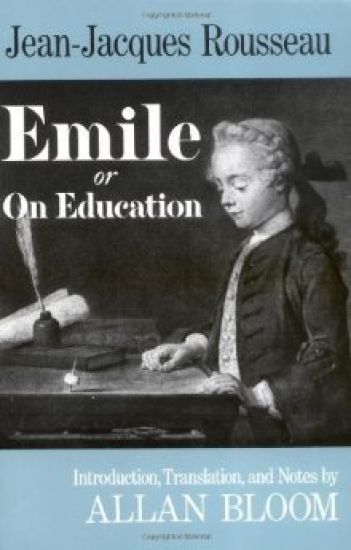
Alan Bloom's new translation of Emile , Rousseau's masterpiece on the education and training of the young, is the first in more than seventy years. In it, Bloom, whose magnificent translation of Plato's Republic has been universally hailed as a virtual rediscovery of that timeless text, again brings together the translator's gift for journeying between two languages and cultures and the philosopher's perception of the true meaning and significance of the issues being examined in the work. The result is a clear, readable, and highly engrossing text that at the same time offers a wholly new sense of the importance and relevance of Rousseau's thought to us.In addition to his translation, Bloom provides a brilliant introduction that relates the structure and themes of the book to the vital preoccupation's of our own age, particularly in the field of education, but also more generally to the current concerns about the limits and possibilities of human nature. Thus in this translation Emile, long a classic in the history of Western thought and educational theory, becomes something more: a prescription, fresh and dazzling, for the bringing up of autonomous, responsible,that is, truly democratic,human beings.

A foundational text of Western education, this 1762 treatise served as a model for a new approach to teaching during the French Revolution. Emile recounts a boy's education, and Rousseau considered it the most important of his writings. With its theories on the retention of innate human goodness and the avoidance of corruption from bourgeois society, the book offers prime examples of the author's philosophy. Rousseau's five-part approach devotes the first three sections to Emile's early education, including the child's interactions with the larger world and the selection of a trade. The fourth part explores the cultivation of sentiment, with particular focus on natural religion. The book concludes with a profile of Emile's prospective bride, Sophie, that emphasizes the role of mothers in educating their children but encourages women to be submissive to their husbands--a view that excited controversy even among Rousseau's contemporaries and helped inspire Mary Wollstonecraft's A Vindication of the Rights of Woman.


Jean-Jacques Rousseau was a French philosopher, novelist and essayist whose ideas in the areas of science, art, nature, morality, among many others, greatly influenced the late eighteenth century's Romantic Naturalism movement. His philosophies explored the virtue of human beings as being good by nature, the corruption of civil society, individual freedom, and in the case of his 1762 treatise on education, "Emile", allowing children to develop naturally and without the constraint of social conditions. Emile is an imaginary student put forth by Rousseau to illustrate his idea of "negative education", in other words, education in harmony with a child's natural capacity through a process of autonomous discovery. Rousseau removes the authoritative, domineering teacher figure, and instead wants mothers to encourage children's natural tendencies, without coddling or spoiling them. The work was controversial in its own time, but later inspired a new national system of education during the French Revolution, and to some has earned Rousseau the title of "father of modern education". This edition is printed on premium acid-free paper and follows the translation of Barbara Foxley.
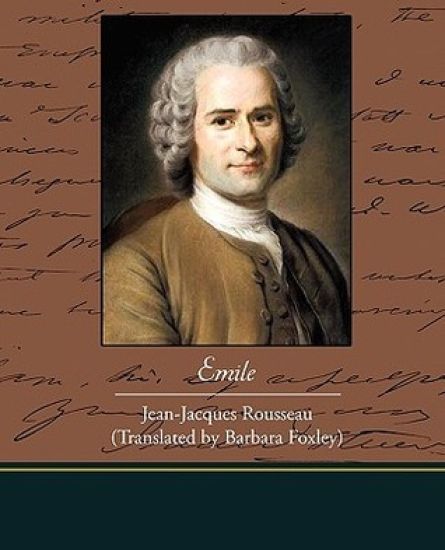
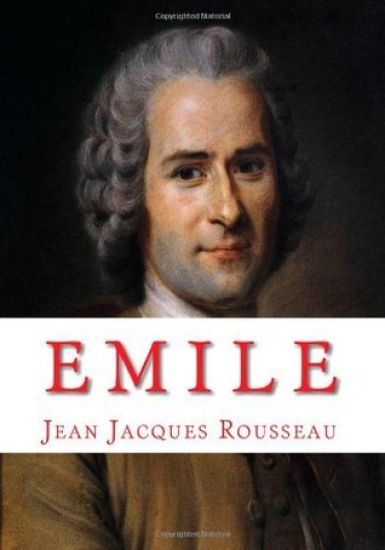
Emile, or On Education or mile, Or Treatise on Education (French: mile, ou De l' ducation) is a treatise on the nature of education and on the nature of man written by Jean-Jacques Rousseau, who considered it to be the "best and most important of all my writings". Due to a section of the book entitled "Profession of Faith of the Savoyard Vicar," Emile was banned in Paris and Geneva and was publicly burned in 1762, the year of its first publication. During the French Revolution, Emile served as the inspiration for what became a new national system of education.


Rousseau's mile is a kind of half treatise, half novel that tells the life story of a fictional man named mile. In it, Rousseau traces the course of mile's development and the education he receives, an education designed to create in him all the virtues of Rousseau's idealized "natural man," uncorrupted by modern society. According to Rousseau, the natural goodness of a man can be nurtured and maintained only according to this highly prescriptive model of education, and Rousseau states that his aim in mile is to outline that model-a model that differed sharply from all accepted forms of the time.