A YOUNG WOMAN DETERMINED TO LIVE FREEFrom the start, Colleen was observant, curious, searching. She had a sparkling glow about her. In her teen years, she yearned to break free from her strict Irish Catholic upbringing, to be independent, to love and be loved. In 1959, she became pregnant at age 16. Only her beloved grandmother stood by her.Colleen was never a "rebel without a cause." She struggled to understand who she was and what Life was all about. She loved learning and expressed herself through music and singing. In the freedom of the 1960s, she created a new life for herself and her daughter. Colleen moved to California, becoming active in the Free Speech Movement, the Peace Movement, and the Human Potential Movement. She was part of the revolutionary changes in personal and social life brought on by the counterculture.But in the late 1960s, the United States took a sharp turn to the right. Many of the advances of "The 60s" did not survive. Colleen left California and returned to New York City.The years in New York were a period of profound difficulty for Colleen. She gradually became discouraged, lost. Those who loved her deeply worried about her. They did not know if Colleen would survive...neither did she.This is her story.
The book is based on the author's travel journal, kept while living in Belfast for three months in late 1992-93. It recounts the time during "The Troubles" with his memorable experiences and the unforgettable people that he met, from Irish patriots who boldly fought to free and unite their divided land and ordinary Irish people just trying to live in peace in a war-torn country.
The book is based on the author's travel journal, kept while living in Belfast for three months in late 1992-93. It recounts the time during "The Troubles" with his memorable experiences and the unforgettable people that he met, from Irish patriots who boldly fought to free and unite their divided land and ordinary Irish people just trying to live in peace in a war-torn country.
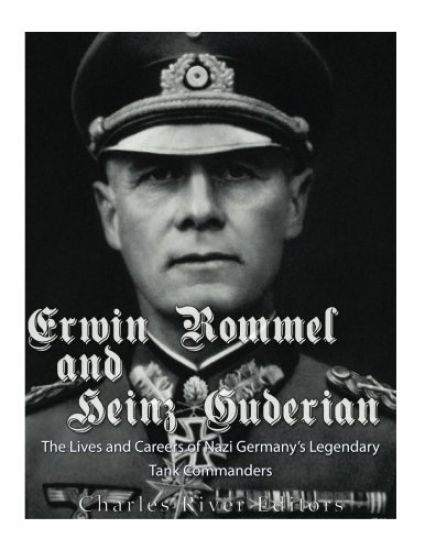
*Includes pictures *Includes accounts of the fighting *Includes online resources and a bibliography for further reading One of his biographers called him "a complex man: a born leader, a brilliant soldier, a devoted husband, a proud father; intelligent, instinctive, brave, compassionate, vain, egotistical, and arrogant." As that description suggests, every account of Erwin Rommel's life must address what appears to be its inherent contradictions. Fittingly, and in the same vein, he remains one of the best remembered generals of World War II and history at large, despite the fact he was on the losing side, and he was defeated at the most famous battle of his career, the decisive Battle of El Alamein. With the Axis forces trying to push through Egypt towards the Suez Canal and the British Mandate of Palestine, American forces landed to their west in North Africa, which ultimately compelled Rommel to try to break through before the Allies could build up and overwhelm them with superior numbers. Given that the combined Allied forces under Bernard Montgomery already had an advantage in manpower, Montgomery also wanted to be aggressive, and the fighting would start in late October 1942 with an Allied attack. At Alamein, 195,000 troops in 11 divisions faced off against 50,000 Germans (four divisions) and 54,000 Italians (eight divisions), where they were able to use their superior numbers and weapons to defeat the Axis troops. Over the next few weeks, the Allies made steady progress and forced Rommel to conduct a fighting retreat to safety until his army linked up with another Axis army in Tunisia, but the fighting at the end of 1942 inevitably compelled all Axis forces to quit the theater, the first time since the beginning of the war that Africa was safe for the Allies. After leaving North Africa, Rommel spent much of the later part of the war strengthening German defenses across the Atlantic in anticipation of an amphibious Allied landing, which would come in June 1944. But the murky role he played in the notorious July 20 plot on Adolf Hitler's life in 1944, the closest an assassination attempt got to killing the Nazi Fuhrer, would bring about the Desert Fox's untimely demise in October 1944, even as the Soviets and Western Allies were tightening the vise on Germany. Compelled to take cyanide by authorities, the Desert Fox insisted he was innocent until his dying day, and his popularity forced the Nazi government to claim his death was brought about by a heart attack or a cerebral embolism. In fact, Rommel was given an official state funeral, and Winston Churchill would go on to praise him, "He also deserves our respect because, although a loyal German soldier, he came to hate Hitler and all his works, and took part in the conspiracy to rescue Germany by displacing the maniac and tyrant. For this, he paid the forfeit of his life. In the sombre wars of modern democracy, chivalry finds no place ... Still, I do not regret or retract the tribute I paid to Rommel, unfashionable though it was judged." While there is a great division when it comes to historical opinion with respect to Rommel's merits as a general as well as the moral choices he made, both historians and the public continue to be intrigued by this man who has been dead for over 70 years. People at large continue to consider Rommel one of the greatest generals of the 20th century, an opinion shared by many of his contemporaries on both sides of World War II. For example, British General Harold Alexander hinted at both his strengths and weaknesses, commenting, "He was a tactician of the greatest ability, with a firm grasp of every detail of the employment of armour in action, and very quick to seize the fleeting opportunity and the critical turning point of a mobile battle. I felt certain doubts, however, about his strategic ability, in particular as to whether he fully understood the importance of a sound administrative plan."
*Includes pictures *Includes accounts of the fighting *Includes online resources and a bibliography for further reading One of his biographers called him "a complex man: a born leader, a brilliant soldier, a devoted husband, a proud father; intelligent, instinctive, brave, compassionate, vain, egotistical, and arrogant." As that description suggests, every account of Erwin Rommel's life must address what appears to be its inherent contradictions. Fittingly, and in the same vein, he remains one of the best remembered generals of World War II and history at large, despite the fact he was on the losing side, and he was defeated at the most famous battle of his career, the decisive Battle of El Alamein. With the Axis forces trying to push through Egypt towards the Suez Canal and the British Mandate of Palestine, American forces landed to their west in North Africa, which ultimately compelled Rommel to try to break through before the Allies could build up and overwhelm them with superior numbers. Given that the combined Allied forces under Bernard Montgomery already had an advantage in manpower, Montgomery also wanted to be aggressive, and the fighting would start in late October 1942 with an Allied attack. At Alamein, 195,000 troops in 11 divisions faced off against 50,000 Germans (four divisions) and 54,000 Italians (eight divisions), where they were able to use their superior numbers and weapons to defeat the Axis troops. Over the next few weeks, the Allies made steady progress and forced Rommel to conduct a fighting retreat to safety until his army linked up with another Axis army in Tunisia, but the fighting at the end of 1942 inevitably compelled all Axis forces to quit the theater, the first time since the beginning of the war that Africa was safe for the Allies. After leaving North Africa, Rommel spent much of the later part of the war strengthening German defenses across the Atlantic in anticipation of an amphibious Allied landing, which would come in June 1944. But the murky role he played in the notorious July 20 plot on Adolf Hitler's life in 1944, the closest an assassination attempt got to killing the Nazi Fuhrer, would bring about the Desert Fox's untimely demise in October 1944, even as the Soviets and Western Allies were tightening the vise on Germany. Compelled to take cyanide by authorities, the Desert Fox insisted he was innocent until his dying day, and his popularity forced the Nazi government to claim his death was brought about by a heart attack or a cerebral embolism. In fact, Rommel was given an official state funeral, and Winston Churchill would go on to praise him, "He also deserves our respect because, although a loyal German soldier, he came to hate Hitler and all his works, and took part in the conspiracy to rescue Germany by displacing the maniac and tyrant. For this, he paid the forfeit of his life. In the sombre wars of modern democracy, chivalry finds no place ... Still, I do not regret or retract the tribute I paid to Rommel, unfashionable though it was judged." While there is a great division when it comes to historical opinion with respect to Rommel's merits as a general as well as the moral choices he made, both historians and the public continue to be intrigued by this man who has been dead for over 70 years. People at large continue to consider Rommel one of the greatest generals of the 20th century, an opinion shared by many of his contemporaries on both sides of World War II. For example, British General Harold Alexander hinted at both his strengths and weaknesses, commenting, "He was a tactician of the greatest ability, with a firm grasp of every detail of the employment of armour in action, and very quick to seize the fleeting opportunity and the critical turning point of a mobile battle. I felt certain doubts, however, about his strategic ability, in particular as to whether he fully understood the importance of a sound administrative plan."
This beautifully illustrated hard-covered book is perfect for the 3-8 aged reader, very simply telling the story of salvation. It speaks of a daddy's Christmas gift to his daughter and her struggle to accept it. The illustrations are bold, bright, and colorful for the young audience and shows how Christ's love is not based on what we do but rather freely given.
Die Schriften aus dem Warburg Archiv umfassen kommentierte Editionen, die auf Material des Warburg Hauses Hamburg sowie des Warburg Instituts London basieren, sowie Tagungsbande.
This book presents the most complete translation to date of Erwin Schrödinger’s work on colorimetry. In his work Schrödinger proposed a projective geometry of color space, rather than a Euclidean line-element. He also proposed new (at the time) colorimetric methods – in detail and at length - which represented a dramatic conceptual shift in colorimetry. Schrödinger shows how the trichromatic (or Young-Helmholtz) theory of color and the opponent-process (or Hering) theory of color are formally the same theory, or at least only trivially different. These translations of Schrödinger’s bold concepts for color space have a fresh resonance and importance for contemporary color theory.
This book presents the most complete translation to date of Erwin Schrödinger’s work on colorimetry. In his work Schrödinger proposed a projective geometry of color space, rather than a Euclidean line-element. He also proposed new (at the time) colorimetric methods – in detail and at length - which represented a dramatic conceptual shift in colorimetry. Schrödinger shows how the trichromatic (or Young-Helmholtz) theory of color and the opponent-process (or Hering) theory of color are formally the same theory, or at least only trivially different. These translations of Schrödinger’s bold concepts for color space have a fresh resonance and importance for contemporary color theory.