"A vivid, balanced and frequently enthralling biography of Rommel, the general and the man. It is must reading for every aficionado of modern military history." -San Francisco ChronicleErwin Rommel's instinct for battle and leadership places him among the great commanders of history. In this definitive biography, David Fraser, an acclaimed biographer and distinguished soldier, looks at Rommel's career and shows how wild and superficially undisciplined Rommel's bold style of leadership could be, and how it inspired the men under his command to attack with ferocity and pursue with tenacity--qualities that served him well in his great battles in the North African desert and throughout his entire military career. Fraser also thoroughly explores the question of Rommel's possible involvement in the plot against Hitler and the reason for his forced suicide, even though there was no criminal evidence against him.Revealing his failings as well as his genius, Knight's Cross is a fascinating biography of a soldier whose distinguished career has become a part of history.
Master erwin DM to deliver robust and precise designs for both operational and analytical projects. Steve and Jeff start from the basics, explaining data modeling concepts and how to get up and running with erwin DM (erwin DM). Through a hands-on approach, business analysts, data professionals, and project managers will learn step-by-step how to build effective conceptual, logical, and physical data models. Complete the stages in identifying essential business requirements, designing the logical data model, transposing those logical modeling objects into physical tables and columns, and even generating the implementation database scripts.This book contains seven parts. Part I provides a foundation in data modeling and Part II a foundation in erwin DM. Part III covers the design layer technique and its application using erwin DM, distinguishing conceptual, logical, physical, and operational data models. Part IV covers entities, domains, attributes, key groups, validation rules, default rules, and subject areas, along with how to implement them using erwin DM. Part V explains the physical data model and how to convert a logical data model to a physical data model in erwin DM. Become confident creating tables, columns, indexes, and views. Part VI reveals advanced features available within erwin DM, including user defined properties, naming standards, forward engineering, reverse engineering, complete compare, report designer, and the bulk editor. Part VII explains several important tools to use in combination with erwin DM, including erwin DM NoSQL, erwin Data Catalog, and erwin Data Literacy.
"Be an example to your men in your duty and in private life. Never spare yourself, and let the troops see that you don't in your endurance of fatigue and privation. Always be tactful and well-mannered, and teach your subordinates to be the same. Avoid excessive sharpness or harshness of voice, which usually indicates the man who has shortcomings of his own to hide." - Erwin Rommel The 20th century was a century full of conflict and strife, not seen before on a global scale. While there were multiple conflicts that spanned over many years, the two World Wars marked the century. During both World Wars, the Germans were found on the losing end, but that is not to say that those armies were void of brilliance, quite to the contrary. The German Army of World War I was one of the most well-rounded and destructive war machines in history, and if anything, the death knell to the German side during the First World War was the fact that the Germans had weak allies and spent considerable resources and time to try to prop up other empires like Austria and the Ottoman Turks. World War II was an entirely different story. The Germans were angry after the First World War, and using public sway and anger, Adolf Hitler took power in the 1930s. Unlike the earlier army, the German Army of the Second World War committed some of the most grotesque and unforgivable atrocities in the history of mankind. This isn't to say that the German commanders and soldiers were all bad, and of all the men who fought for the Reich, the one with the most sterling reputation is Erwin Rommel, the Desert Fox. Rommel rose through the ranks of the German Army in the years preceding the outbreak of World War II, and he proved to be a cunning and insinuative soldier who was one of the most brilliant cavalry commanders in the history of warfare. Eventually, the evil that surrounded him engulfed him, and his pure brilliance went untapped. While there is a great division when it comes to historical opinion with respect to Rommel's merits as a general as well as the moral choices he made, both historians and the public continue to be intrigued by this man who has been dead for over 70 years. People at large continue to consider Rommel one of the greatest generals of the 20th century, an opinion shared by many of his contemporaries on both sides of World War II. For example, British General Harold Alexander hinted at both his strengths and weaknesses, commenting, "He was a tactician of the greatest ability, with a firm grasp of every detail of the employment of armour in action, and very quick to seize the fleeting opportunity and the critical turning point of a mobile battle. I felt certain doubts, however, about his strategic ability, in particular as to whether he fully understood the importance of a sound administrative plan. Happiest while controlling a mobile force directly under his own eyes he was liable to overexploit immediate success without sufficient thought for the future." History in 30: The Life of Erwin Rommel, Nazi Germany's Desert Fox provides a quick but comprehensive look at the life of the general.
"Be an example to your men in your duty and in private life. Never spare yourself, and let the troops see that you don't in your endurance of fatigue and privation. Always be tactful and well-mannered, and teach your subordinates to be the same. Avoid excessive sharpness or harshness of voice, which usually indicates the man who has shortcomings of his own to hide." - Erwin Rommel The 20th century was a century full of conflict and strife, not seen before on a global scale. While there were multiple conflicts that spanned over many years, the two World Wars marked the century. During both World Wars, the Germans were found on the losing end, but that is not to say that those armies were void of brilliance, quite to the contrary. The German Army of World War I was one of the most well-rounded and destructive war machines in history, and if anything, the death knell to the German side during the First World War was the fact that the Germans had weak allies and spent considerable resources and time to try to prop up other empires like Austria and the Ottoman Turks. World War II was an entirely different story. The Germans were angry after the First World War, and using public sway and anger, Adolf Hitler took power in the 1930s. Unlike the earlier army, the German Army of the Second World War committed some of the most grotesque and unforgivable atrocities in the history of mankind. This isn't to say that the German commanders and soldiers were all bad, and of all the men who fought for the Reich, the one with the most sterling reputation is Erwin Rommel, the Desert Fox. Rommel rose through the ranks of the German Army in the years preceding the outbreak of World War II, and he proved to be a cunning and insinuative soldier who was one of the most brilliant cavalry commanders in the history of warfare. Eventually, the evil that surrounded him engulfed him, and his pure brilliance went untapped. While there is a great division when it comes to historical opinion with respect to Rommel's merits as a general as well as the moral choices he made, both historians and the public continue to be intrigued by this man who has been dead for over 70 years. People at large continue to consider Rommel one of the greatest generals of the 20th century, an opinion shared by many of his contemporaries on both sides of World War II. For example, British General Harold Alexander hinted at both his strengths and weaknesses, commenting, "He was a tactician of the greatest ability, with a firm grasp of every detail of the employment of armour in action, and very quick to seize the fleeting opportunity and the critical turning point of a mobile battle. I felt certain doubts, however, about his strategic ability, in particular as to whether he fully understood the importance of a sound administrative plan. Happiest while controlling a mobile force directly under his own eyes he was liable to overexploit immediate success without sufficient thought for the future." History in 30: The Life of Erwin Rommel, Nazi Germany's Desert Fox provides a quick but comprehensive look at the life of the general.
Martin Otto legt mit seinem Buch die erste wissenschaftliche Biographie des Arbeits-, Staats- und Kirchenrechtlers Erwin Jacobi vor. Jacobi gehörte zu den Pionieren der Arbeitsrechtswissenschaft in der Weimarer Republik. Als Staatsrechtler war er gemeinsam mit Carl Schmitt als großzügiger Interpret der Diktaturkompetenz des Reichspräsidenten bekannt geworden ("Schmitt-Jacobische Formel"). Entsprechend vertrat er 1932 gemeinsam mit Carl Schmitt die Regierung von Papen vor dem Staatsgerichtshof für das Deutsche Reich im sogenannten "Preußenschlagverfahren". Auf Jacobis Veröffentlichungen der Weimarer Zeit gehen der bis heute gebräuchliche arbeitsrechtliche Betriebsbegriff und der Terminus "Verfassungsdurchbrechung" zurück. 1933 aus rassischen Gründen von der Universität Leipzig entfernt, gehörte er nach 1945 zu den ersten Professoren der neubegründeten Juristenfakultät. In der DDR als "fortschrittlicher Bürgerlicher" geduldet, versuchte er nach Möglichkeit, die wissenschaftliche Autonomie der Universität zu wahren, durchschaute aber immer mehr die Widersprüchlichkeiten der DDR-Wissenschaftspolitik. Aufgrund seiner Prominenz besaß er eine gewisse Autonomie, die es ihm erlaubte, auch unbequeme Dinge (Wahlrecht und Situation der Kirchen im Ostblock) anzusprechen, auch Westkontakte und - reisen waren ihm möglich. Die Bespitzelung durch die Staatssicherheit und ein teilweises Verbot von Schriften verhinderte dies nicht. Das Buch verbindet die Geschichte des öffentlichen Rechts in Deutschland im 20. Jahrhundert mit der Wissenschaftsgeschichte der DDR.
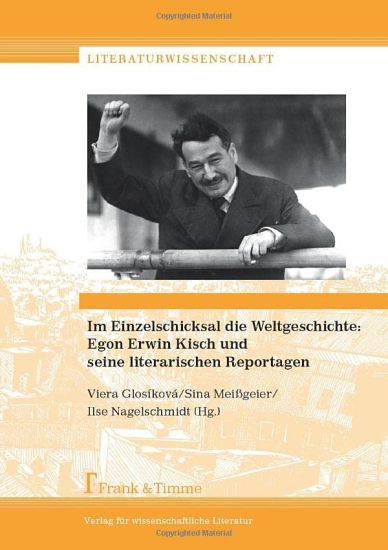
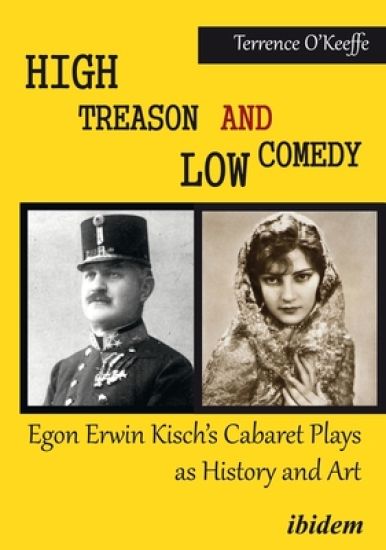
High Treason and Low Comedy is the first in-depth treatment in English of E. E. Kischs work as a playwright, a phase of his life to which he devoted considerable effort during the years 19201925.The translations of his two most successful works for the cabaret stages of Germany, Austria, and Czechoslovakia form the basis of discussions that fit them into several intersecting streams: biographical, historical, and cultural. The plays are Die Hetzjagd, which describes the last day on earth of the infamous traitor, Colonel Alfred Redl, and Die Himmelfahrt der Tonka ibenice (Galgentoni), which presents the comical, coarse, and, at times, pathetic efforts of a Prague prostitute to argue her way into heaven. The plays are a portal into the world of Kischs youth as an enterprising journalist and into his thinking and writing just before he became the raging reporter and the star of international reportage. While they reflect the Prague milieu of his youth during the twilight years of the Austro-Hungarian Empire, they also illustrate Kischs lifelong critical attitude toward the conservative authorities of society, their derelictions of duty, and their indifference to the welfare of the common man and woman. The book also examines the long afterlife of both of these stories as they were re-created by artists in stage, film, novelistic, and television adaptations, illustrating the theme of what happens when historical materials are transformed into art.
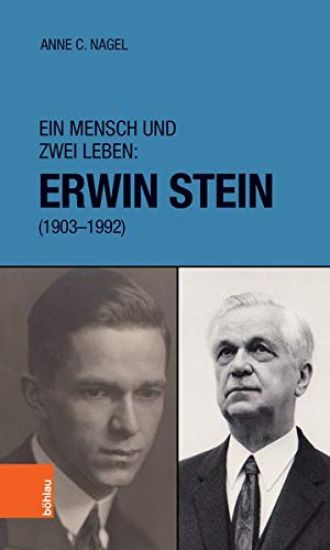
Deutschland im 20. Jahrhundert. Am 7. Marz 1903 wird Erwin Stein in dem Stadtchen Grunberg/Oberhessen als Sohn eines Bahnmeisters geboren. Alles deutet auf ein solides Leben ohne Verwerfungen. Es kommt anders. Die politische Entwicklung in der ersten Jahrhunderthalfte zwingt den Juristen, der mit einer Judin verheiratet ist, zu groater Zuruckhaltung. Nach 1945 beginnt sein zweites Leben. Unter dem Motto 'Es mua alles anders werden' sturzt er sich in die Politik und greift nachdrucklich in die Gestaltung eines demokratischen Deutschland ein.
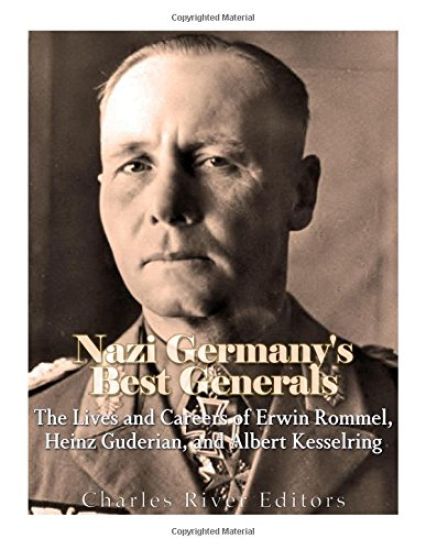
*Includes pictures *Includes accounts of the fighting in the war *Includes online resources and a bibliography for further reading One of his biographers called him "a complex man: a born leader, a brilliant soldier, a devoted husband, a proud father; intelligent, instinctive, brave, compassionate, vain, egotistical, and arrogant." As that description suggests, every account of Erwin Rommel's life must address what appears to be its inherent contradictions. Fittingly, and in the same vein, he remains one of the best remembered generals of World War II and history at large, despite the fact he was on the losing side, and he was defeated at the most famous battle of his career, the decisive Battle of El Alamein. While there is a great division when it comes to historical opinion with respect to Rommel's merits as a general as well as the moral choices he made, both historians and the public continue to be intrigued by this man who has been dead for over 70 years. People at large continue to consider Rommel one of the greatest generals of the 20th century, an opinion shared by many of his contemporaries on both sides of World War II. For example, British General Harold Alexander hinted at both his strengths and weaknesses, commenting, "He was a tactician of the greatest ability, with a firm grasp of every detail of the employment of armour in action, and very quick to seize the fleeting opportunity and the critical turning point of a mobile battle. I felt certain doubts, however, about his strategic ability, in particular as to whether he fully understood the importance of a sound administrative plan. Happiest while controlling a mobile force directly under his own eyes he was liable to overexploit immediate success without sufficient thought for the future." Heinz Wilhelm Guderian was one of the most respected commanders and theoreticians of World War II. An innovative tank commander, he was a pioneer of German Blitzkrieg tactics and therefore, a hugely influential figure in the way the war was fought. Guderian's profile was not always what might have been expected for a man of his abilities and influence warrant due to the shape of his career. The reasons for Guderian's time out of command are tied to the reason for his lower profile; he was a traditional German career officer rather than an ideologically driven Nazi, willing to challenge Adolf Hitler's opinions on military matters. This, together with his outspoken attitude, led to his loss of favor and dismissal from command. At the same time, being a career military man rather than a Nazi officer also meant Guderian was not as directly involved in the atrocities of the war, and he did not gained the infamy of his SS contemporaries, which ensured the ongoing fame of men far less deserving of recognition. Albert Kesselring holds a strange place in the history of World War II. A commander in the Luftwaffe, he is remembered as much for the skill with which he oversaw the German armies as for his mastery of the air fleets. Called "Uncle Albert" by many of his men and "Smiling Albert" by the Allies, he was widely respected by men on both sides of the war and loved by many of his troops, yet he was responsible for massacres in occupied Italy for which he was condemned to death during the post-war trials. Ultimately, his sentence was commuted to one of life imprisonment, making him one of the few top Nazi leaders to pen memoirs after the war, but it goes without saying that Kesselring's time was marked by controversy. Kesselring had the skills of a politician and a diplomat, as well as those of a soldier, which carried his career through both World War I and World War II, and during the Second World War, he served in almost every theater of the fighting in Europe. He was undoubtedly a gifted commander, but one who served at a time when the German military was tainted with the evils of Nazism.
*Includes pictures *Includes accounts of the fighting in the war *Includes online resources and a bibliography for further reading One of his biographers called him "a complex man: a born leader, a brilliant soldier, a devoted husband, a proud father; intelligent, instinctive, brave, compassionate, vain, egotistical, and arrogant." As that description suggests, every account of Erwin Rommel's life must address what appears to be its inherent contradictions. Fittingly, and in the same vein, he remains one of the best remembered generals of World War II and history at large, despite the fact he was on the losing side, and he was defeated at the most famous battle of his career, the decisive Battle of El Alamein. While there is a great division when it comes to historical opinion with respect to Rommel's merits as a general as well as the moral choices he made, both historians and the public continue to be intrigued by this man who has been dead for over 70 years. People at large continue to consider Rommel one of the greatest generals of the 20th century, an opinion shared by many of his contemporaries on both sides of World War II. For example, British General Harold Alexander hinted at both his strengths and weaknesses, commenting, "He was a tactician of the greatest ability, with a firm grasp of every detail of the employment of armour in action, and very quick to seize the fleeting opportunity and the critical turning point of a mobile battle. I felt certain doubts, however, about his strategic ability, in particular as to whether he fully understood the importance of a sound administrative plan. Happiest while controlling a mobile force directly under his own eyes he was liable to overexploit immediate success without sufficient thought for the future." Heinz Wilhelm Guderian was one of the most respected commanders and theoreticians of World War II. An innovative tank commander, he was a pioneer of German Blitzkrieg tactics and therefore, a hugely influential figure in the way the war was fought. Guderian's profile was not always what might have been expected for a man of his abilities and influence warrant due to the shape of his career. The reasons for Guderian's time out of command are tied to the reason for his lower profile; he was a traditional German career officer rather than an ideologically driven Nazi, willing to challenge Adolf Hitler's opinions on military matters. This, together with his outspoken attitude, led to his loss of favor and dismissal from command. At the same time, being a career military man rather than a Nazi officer also meant Guderian was not as directly involved in the atrocities of the war, and he did not gained the infamy of his SS contemporaries, which ensured the ongoing fame of men far less deserving of recognition. Albert Kesselring holds a strange place in the history of World War II. A commander in the Luftwaffe, he is remembered as much for the skill with which he oversaw the German armies as for his mastery of the air fleets. Called "Uncle Albert" by many of his men and "Smiling Albert" by the Allies, he was widely respected by men on both sides of the war and loved by many of his troops, yet he was responsible for massacres in occupied Italy for which he was condemned to death during the post-war trials. Ultimately, his sentence was commuted to one of life imprisonment, making him one of the few top Nazi leaders to pen memoirs after the war, but it goes without saying that Kesselring's time was marked by controversy. Kesselring had the skills of a politician and a diplomat, as well as those of a soldier, which carried his career through both World War I and World War II, and during the Second World War, he served in almost every theater of the fighting in Europe. He was undoubtedly a gifted commander, but one who served at a time when the German military was tainted with the evils of Nazism.
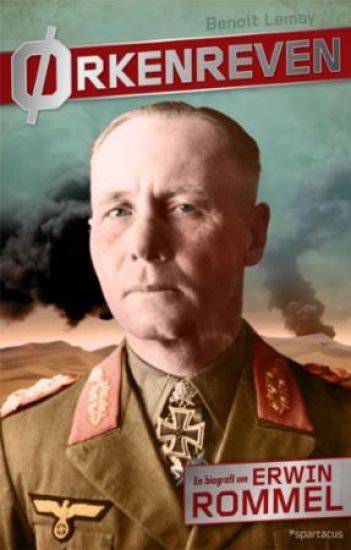
Erwin Rommel var den mest respekterte og fryktede av de tyske generalene under den andre verdenskrig. Han er kjent som en særdeles dyktig strateg og kriger - en improvisasjonens mester som evnet å gripe en situasjon, endre den og gå til motangrep. Goebbels brukte Rommels status for alt den var verdt. Generalen ble fremstilt som nasjonens håp, arketypen på den ariske kriger. Faktisk var han Hitlers yndlingsgeneral helt frem til det mislykkede attentatet sommeren 1944. Også de allierte respekterte Rommel, og fryktet ham. Rommel har vært kjent som en mann med høy integritet, som alltid var skeptisk til naziregimet. Denne boken viser at dette er en myte: Rommel var fra første stund en svoren tilhenger av der Fu.hrer. Biografien bygger på et rikt og verdifullt kildemateriale. Rommel skrev for eksempel daglig brev til sin kone hjemme i Tyskland. Ørkenreven gir et spennende bilde av mennesket Rommel, samtidig som vi følger hans helt spesielle militære karriere.