Kirjojen hintavertailu. Mukana 12 442 684 kirjaa ja 12 kauppaa.

Kirjahaku

Etsi kirjoja tekijän nimen, kirjan nimen tai ISBN:n perusteella.

1000 tulosta hakusanalla Felicity Ashbee

Challenging Cases in Palliative Care

Challenging Cases in Palliative Care

Felicity Dewhurst; Polly Edmonds; Suzie Gillon; Amy Hawkins; Mary Miller; Sarah Yardley

Oxford University Press
2024
nidottu
Palliative care has evolved rapidly in recent years. Not only is the field dealing with an increasingly elderly and multi-morbid population, it is also addressing a wider variety of complex diagnoses such as heart failure, renal failure, advanced lung disease, frailty, and dementia. Challenging Cases in Palliative Care is unique, as it uses examples of real-world cases from palliative care practices. It also includes expert commentary to support modern clinicians in managing the 'messiness' of clinical care, as well as the increasingly complex needs of patients today. As part of our Challenging Cases series, the cases in this book not only cover a range of physical and psychosocial problems seen in palliative care, they also reflect the core curriculum for UK speciality trainees. Each case brings together expert interpretation of the available evidence, management strategies, guidelines and best practice, while discussing complexities in clinical decision-making and controversies in approach.
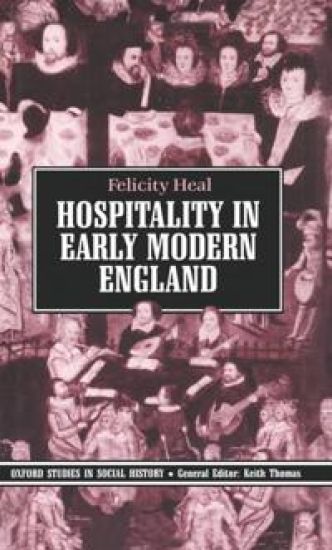
Hospitality in Early Modern England

Hospitality in Early Modern England

Felicity Heal

Clarendon Press
1990
sidottu
This book is the first study of the ideal and practice of hospitality in England between the fifteenth and seventeenth centuries. In early modern England, hospitality was believed to be a vital social virtue, comparable in significance to the maintenance of honesty or the proper pursuit of honour, and seen as one of the foundations of the moral economy. It was a Christian and moral duty to keep a good house: to be open and generous in entertainment of both rich and poor, neighbour and stranger. Hospitality is now regarded very differently, and our changed attitudes hamper our approach to the history of this period. Felicity Heal's study restores the hospitable ideal to its central place in early modern culture. She examines the manner in which it changed between 1400 and 1700, and its relationship to social realities, and demonstrates the significance of the forms and rituals attached to it. Hospitality in Early Modern England is a comprehensive analysis of beliefs and practices relating to hospitality at different social levels and in various settings. Dr Heal examines not only the nobility and gentry, the group on whom the duty of hospitality was most incumbent, but also the clergy, the urban magistracy and the yeomanry. Her comprehensive investigation of this neglected topic is a major contribution to our understanding of society and culture in early modern England.
Reformation in Britain and Ireland

Reformation in Britain and Ireland

Felicity Heal

Oxford University Press
2003
sidottu
The study of the Reformation in England and Wales, Ireland and Scotland has usually been treated by historians as a series of discrete national stories. Reformation in Britain and Ireland draws upon the growing genre of writing about British History to construct an innovative narrative of religious change in the four countries/three kingdoms. The text uses a broadly chronological framework to consider the strengths and weaknesses of the pre-Reformation churches; the political crises of the break with Rome; the development of Protestantism and changes in popular religious culture. The tools of conversion - the Bible, preaching and catechising - are accorded specific attention, as is doctrinal change. It is argued that political calculations did most to determine the success or failure of reformation, though the ideological commitment of a clerical elite was also of central significance.
Excommunication in Thirteenth-Century England

Excommunication in Thirteenth-Century England

Felicity Hill

Oxford University Press
2022
sidottu
Excommunication was the medieval churchs most severe sanction, used against people at all levels of society. It was a spiritual, social, and legal penalty. Excommunication in Thirteenth-Century England offers a fresh perspective on medieval excommunication by taking a multi-dimensional approach to discussion of the sanction. Using England as a case study, Felicity Hill analyzes the intentions behind excommunication; how it was perceived and received, at both national and local level; the effects it had upon individuals and society. The study is structured thematically to argue that our understanding of excommunication should be shaped by how it was received within the community as well as the intentions of canon law and clerics. Challenging past assumptions about the inefficacy of excommunication, Hill argues that the sanction remained a useful weapon for the clerical elite: bringing into dialogue a wide range of source material allows effectiveness to be judged within a broader context. The complexity of political communication and action are revealed through public, conflicting, accepted and rejected excommunications. Excommunication could be manipulated to great effect in political conflicts and was an important means by which political events were communicated down the social strata of medieval society. Through its exploration of excommunication, the book reveals much about medieval cursing, pastoral care, fears about the afterlife, social ostracism, shame and reputation, and mass communication.
Reformation in Britain and Ireland

Reformation in Britain and Ireland

Felicity Heal

Oxford University Press
2005
nidottu
The study of the Reformation in England and Wales, Ireland and Scotland has usually been treated by historians as a series of discrete national stories. Reformation in Britain and Ireland draws upon the growing genre of writing about British History to construct an innovative narrative of religious change in the four countries/three kingdoms. The text uses a broadly chronological framework to consider the strengths and weaknesses of the pre-Reformation churches; the political crises of the break with Rome; the development of Protestantism and changes in popular religious culture. The tools of conversion - the Bible, preaching and catechising - are accorded specific attention, as is doctrinal change. It is argued that political calculations did most to determine the success or failure of reformation, though the ideological commitment of a clerical elite was also of central significance.
The Power of Gifts

The Power of Gifts

Felicity Heal

Oxford University Press
2014
sidottu
Gifts are always with us: we use them positively to display affection and show gratitude for favours; we suspect that others give and accept them as douceurs and bribes. The gift also performed these roles in early modern English culture: and assumed a more significant role because networks of informal support and patronage were central to social and political behaviour. Favours, and their proper acknowledgement, were preoccupations of the age of Erasmus, Shakespeare, and Hobbes. As in modern society, giving and receiving was complex and full of the potential for social damage. 'Almost nothing', men of the Renaissance learned from that great classical guide to morality, Lucius Annaeus Seneca, 'is more disgraceful than the fact that we do not know how either to give or receive benefits'. The Power of Gifts is about those gifts and benefits - what they were, and how they were offered and received in the sixteenth and seventeenth centuries. It shows that the mode of giving, as well as what was given, was crucial to social bonding and political success. The volume moves from a general consideration of the nature of the gift to an exploration of the politics of giving. In the latter chapters some of the well-known rituals of English court life - the New Year ceremony, royal progresses, diplomatic missions - are viewed through the prism of gift-exchange. Gifts to monarchs or their ministers could focus attention on the donor, those from the crown could offer some assurance of favour. These fundamentals remained the same throughout the century and a half before the Civil War, but the attitude of individual monarchs altered specific behaviour. Elizabeth expected to be wooed with gifts and dispensed benefits largely for service rendered, James I modelled giving as the largesse of the Renaissance prince, Charles I's gift-exchanges focused on the art collecting of his coterie. And always in both politics and the law courts there was the danger that gifts would be corroded, morphing from acceptable behaviour into bribes and corruption. The Power of Gifts explores prescriptive literature, pamphlets, correspondence, legal cases and financial records, to illuminate social attitudes and behaviour through a rich series of examples and case-studies.
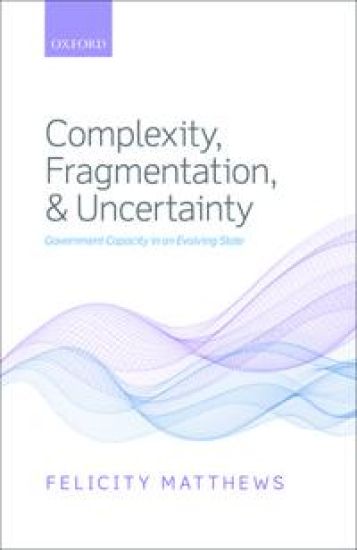
Complexity, Fragmentation, and Uncertainty

Complexity, Fragmentation, and Uncertainty

Felicity Matthews

Oxford University Press
2013
sidottu
In posing challenging questions about the relationship between state and society, theories of governance have promoted fierce debate regarding the capacity of government in an increasingly crowded policy terrain. Presenting for the first time the results of an extensive programme of original research, this book analyses the ways in which national governments have responded to the raft of challenges to capacity associated with the governance debate. In doing so, it considers the impact of new policy challenges such as the earth's changing climate, and the increasing necessity of securing individual behavioural change. To illuminate these issues, the book focuses on the Labour Government's attempts to steer the British state, offering the first in-depth analysis of the Public Service Agreement framework - a target-based delivery instrument, underpinned by the principles of centralised steering and accountability, cross-Whitehall collaboration, and operational autonomy - as a critical tool of strategic governance. As the story of Labour's approach to governing through the Public Service Agreement framework unfolds, a range of important themes emerge regarding the extent to which an increasingly crowded policy arena has engendered complexity and fragmentation at all stages of the policy process; and in turn, the extent to which a recognition of such challenges permeated the political, cultural, and institutional norms of government. Yet, despite the picture of a hollow state painted in many accounts of governance, the book reveals how the unique resource advantages and democratic legitimacy afforded to central governments equip them with the potential to redefine their role and preserve their centrality.
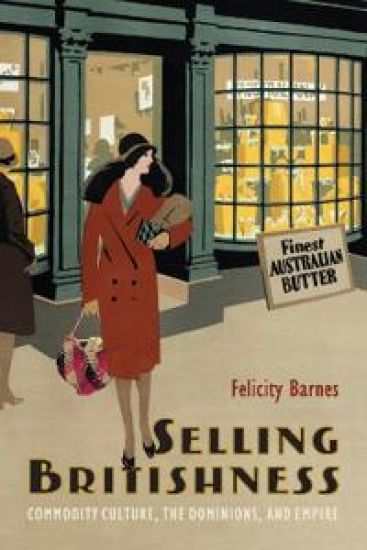
Selling Britishness

Selling Britishness

Felicity Barnes

MCGILL-QUEEN'S UNIVERSITY PRESS
2022
sidottu
From the 1920s until the outbreak of the Second World War, Australia, Canada, and New Zealand filled British shop windows, newspaper columns, and cinema screens with “British to the core” Canadian apples, “British to the backbone” New Zealand lamb, and “All British” Australian butter. In remarkable yet forgotten advertising campaigns, prime ministers, touring cricketers, “lady demonstrators,” and even boxing kangaroos were pressed into service to sell more Dominion produce to British shoppers. But as they sold apples and butter, these campaigns also sold a Dominion-styled British identity.Selling Britishness explores the role of commodity marketing in creating Britishness. Dominion settlers considered themselves British and marketed their commodities accordingly. Meanwhile, ambitious Dominion advertising agencies set up shop in London to bring British goods, like Ovaltine, back to the dominions and persuade their fellow citizens to buy British. Conventionally nationalist narratives have posited the growth of independent national identities during the interwar period, though some have suggested imperial sentiment endured. Felicity Barnes takes a new approach, arguing that far from shaking off or relying on any lasting sense of Britishness, Dominion marketing produced it. Selling Britishness shows that when constructing Britishness, advertisers employed imperial hierarchies of race, class, and gender. Consumption worked to bolster colonialism, and advertising extended imperial power into the everyday.Drawing on extensive new archives, Selling Britishness explores a shared British identity constructed by marketers and advertisers during advertising’s golden age.
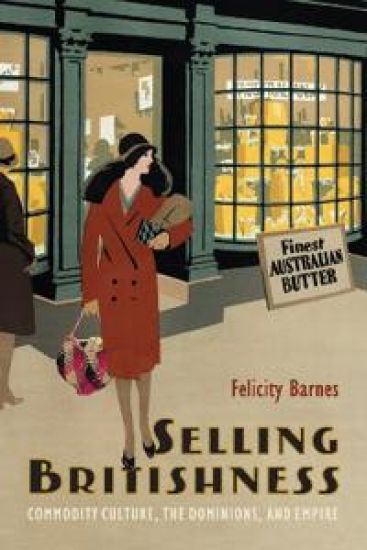
Selling Britishness

Selling Britishness

Felicity Barnes

MCGILL-QUEEN'S UNIVERSITY PRESS
2022
nidottu
From the 1920s until the outbreak of the Second World War, Australia, Canada, and New Zealand filled British shop windows, newspaper columns, and cinema screens with “British to the core” Canadian apples, “British to the backbone” New Zealand lamb, and “All British” Australian butter. In remarkable yet forgotten advertising campaigns, prime ministers, touring cricketers, “lady demonstrators,” and even boxing kangaroos were pressed into service to sell more Dominion produce to British shoppers. But as they sold apples and butter, these campaigns also sold a Dominion-styled British identity.Selling Britishness explores the role of commodity marketing in creating Britishness. Dominion settlers considered themselves British and marketed their commodities accordingly. Meanwhile, ambitious Dominion advertising agencies set up shop in London to bring British goods, like Ovaltine, back to the dominions and persuade their fellow citizens to buy British. Conventionally nationalist narratives have posited the growth of independent national identities during the interwar period, though some have suggested imperial sentiment endured. Felicity Barnes takes a new approach, arguing that far from shaking off or relying on any lasting sense of Britishness, Dominion marketing produced it. Selling Britishness shows that when constructing Britishness, advertisers employed imperial hierarchies of race, class, and gender. Consumption worked to bolster colonialism, and advertising extended imperial power into the everyday.Drawing on extensive new archives, Selling Britishness explores a shared British identity constructed by marketers and advertisers during advertising’s golden age.
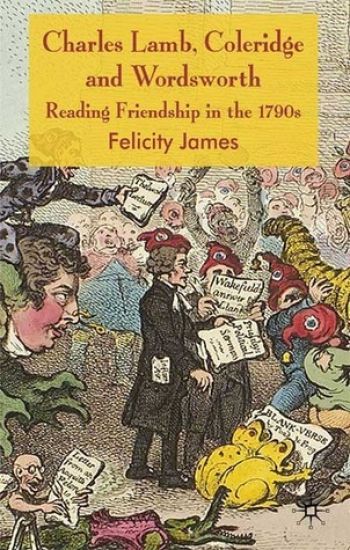
Charles Lamb, Coleridge and Wordsworth

Charles Lamb, Coleridge and Wordsworth

Felicity James

Palgrave Macmillan
2008
sidottu
This book makes the case for a re-placing of Lamb as reader, writer and friend in the midst of the lively political and literary scene of the 1790s. Reading his little-known early works alongside others by the likes of Coleridge and Wordsworth, it allows a revealing insight into the creative dynamics of early Romanticism.
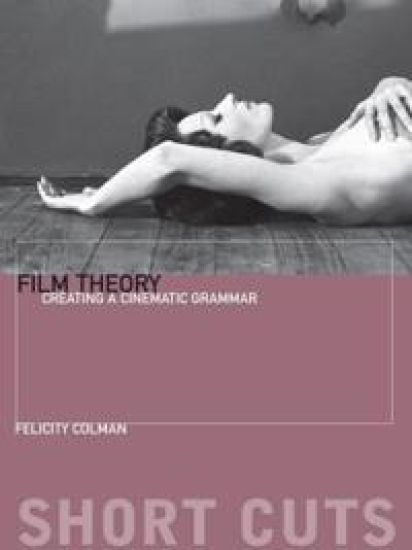
Film Theory

Film Theory

Felicity Colman

Wallflower Press
2014
pokkari
Film Theory addresses the core concepts and arguments created or used by academics, critical film theorists, and filmmakers, including the work of Dudley Andrew, Raymond Bellour, Mary Ann Doane, Miriam Hansen, bell hooks, Siegfried Kracauer, Raul Ruiz, P. Adams Sitney, Bernard Stiegler, and Pier Paolo Pasolini. This volume takes the position that film theory is a form of writing that produces a unique cinematic grammar; and like all grammars, it forms part of the system of rules that govern a language, and is thus applicable to wider range of media forms. In their creation of authorial trends, identification of the technology of cinema as a creative force, and production of films as aesthetic markers, film theories contribute an epistemological resource that connects the technologies of filmmaking and film composition. This book explores these connections through film theorisations of processes of the diagrammatisation (the systems, methodologies, concepts, histories) of cinematic matters of the filmic world.
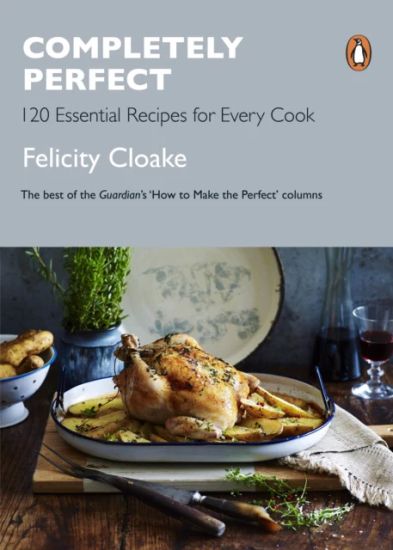
Completely Perfect

Completely Perfect

Felicity Cloake

Fig Tree
2018
nidottu
'A gift for anyone who is learning to cook' Diana Henry, Sunday TelegraphHow can I make deliciously squidgy chocolate brownies? Is there a fool-proof way to poach an egg? Does washing mushrooms really spoil them? What's the secret of perfect pastry? Could a glass of milk turn a good bolognese into a great one? Felicity Cloake has rigorously tried and tested recipes from all the greats - from Nigella Lawson and Delia Smith to Nigel Slater and Heston Blumenthal - to create the perfect version of hundreds of classic dishes. Completely Perfect pulls together the best of those essential recipes, from the perfect beef wellington to the perfect poached egg. Never again will you have to rifle through countless different books to find your perfect roast chicken recipe, mayonnaise method or that incredible tomato sauce - it's all here in this book, based on Felicity's popular Guardian columns, along with dozens of invaluable prepping and cooking tips that no discerning cook should live without.'Completely Perfect is aptly named!' Nigella Lawson'A classic. Long may Felicity Cloake test 12 versions of one recipe so we can have one good one' Rachel Roddy'The nation's taster-in-chief title belongs unequivocally to Felicity Cloake' Daily Mail
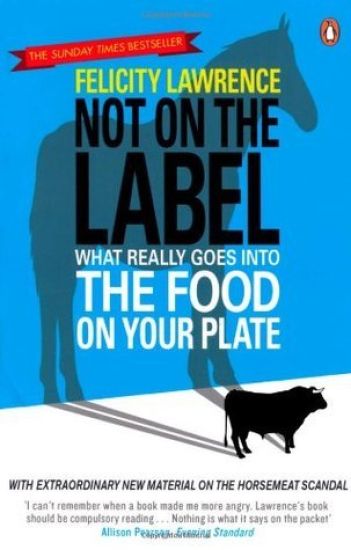
Not On the Label

Not On the Label

Felicity Lawrence

Penguin Books Ltd
2013
pokkari
THE SUNDAY TIMES BESTSELLER THAT SHOWED US WHAT WAS REALLY IN OUR FOODIn 2004 Felicity Lawrence published her ground-breaking book, Not on the Label, where, in a series of undercover investigations she provided a shocking account of what really goes into the food we eat. She discovered why beef waste ends up in chicken, why a single lettuce might be sprayed six times with chemicals before it ends up in our salad, why bread is full of water.And she showed how obesity, the appalling conditions of migrant workers, ravaged fields in Europe and the supermarket on our high street are all intimately connected. And, when the horsemeat scandal hit the headlines in 2013, she uncovered how the great British public ended up eating horses.Her discoveries would change the way we thought about the UK food industry for ever.*****'A brave examination of the calamities caused by a policy laughingly called one of 'cheap food'' Jeremy Paxman, Observer 'Book of the Year''Challenges each and every one of us to think again about what we buy and eat. It's almost like uncovering a secret state within the state' Andrew Marr, BBC Radio 4's Start The Week'A thorough, complex and shocking insight into the food we eat in the twenty-first century . . . Perhaps this should be sold as the most effective diet book ever written' Daily Mail
The Pocket Enterprise Any-Three-Year Planner
An any-3-year diary and planner for micro-entrepreneurs to project manage, record, and assess their business on a daily basis. Prompts and templates for consistently keeping track and making sense of the data. In paperback form for ease of storage and use, it can later be read as a personal story full of milestones and meaning.
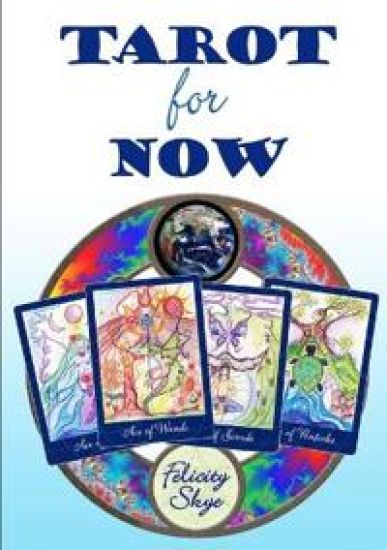
Tarot for Now

Tarot for Now

Felicity Skye

Lulu.com
2017
pokkari
This Tarot book is about seeing into the Now and using that to create and manifest your Future. This will teach you how to do readings, offering the meanings of the cards, spreads to access different information and rituals to assist in manifesting positive outcomes. We no longer need to be the victims of our unconscious programming. This book is for professional readers as well as those just starting out. It will teach you a whole new way of using the tarot as a tool of insight and magic.
Alexander Pope

Alexander Pope

Felicity Rosslyn

Palgrave Macmillan
1990
nidottu
Part of a series which follows the outline of writers' working lives, aiming to trace the professional, publishing and social contexts which shaped their writing. This is a sympathetic portrait of the poet who overcame the obscurity of his origins to become the uncrowned Laureate of his age.
The Gentry in England and Wales, 1500-1700

The Gentry in England and Wales, 1500-1700

Felicity Heal; Clive Holmes

Red Globe Press
1994
nidottu
The book is the first full analysis of the gentry in the early modern period since G.E.Mingay The Gentry: the Rise and Fall of a Ruling Class (1976). It offers a synthesis of the recent specialist work on this key social and political group, but will also provide a distinctive approach to its subjects through the use of the texts and artefacts by which the gentry sought to fashion themselves.
Disability, Human Rights And Education

Disability, Human Rights And Education

Felicity Armstrong; Len Barton

Open University Press
1999
nidottu
This book recognizes the importance of an informed cross-cultural understanding of the policies and practices of different societies within the field of disability, human rights and education. It represents an attempt to critically engage with issues arising from the historical and contemporary domination of portrayals of 'the western' as advanced, democratic and exemplary, in contrast to the construction of the 'rest of the world' as backward, primitive and inferior in these fundamental areas. How human rights are understood in different contexts is a key theme in this book. Importantly, some contributors raise questions about the value of a 'human rights' model across all societies. Other contributors see the struggle for human rights as at the heart of the struggle for an inclusive society. The implications for education arising from this debate are identified, and a series of questions are raised by each author for further reflection and discussion as well as providing a stimulus for developing future research.Disability, Human Rights and Education is recommended reading for students and researchers interested in Disability Studies, inclusive education and social policy. It is also directly relevant to professionals and policy makers in the field seeking a greater understanding of cross-cultural perspectives.