

Kirjahaku
Etsi kirjoja tekijän nimen, kirjan nimen tai ISBN:n perusteella.
1000 tulosta hakusanalla Flint Whitlock

The Flint Water Crisis: Systemic Racism Through the Eyes of Flint
Michigan Civil Rights Commission
Createspace Independent Publishing Platform
2017
nidottu


James/Flint/Thrall Family Letters
Harold A. Henderson
2021
pokkari
What would you give to spend a day with your great-grandparents? Or with a great-great grandmother? See them pinching pennies, sharing chores, managing money, traveling by buggy and railroad, dealing with diseases and doctors, supporting and joking with one another? We can't exactly do that, but we do have perhaps the next best thing: 106 letters and fragments written by various members of the Flint and Thrall families of southern Illinois―most of them to or from Edith (Flint) Thrall (1845-1898) and her husband Rev. Leonidas Thrall (1850-1918), their five children, and a few others, between 1870 and 1898. She was the first woman to graduate from the college after attending classes there. Four of their five children became active Methodists; the fifth became a well-loved professor of English literature at the University of North Carolina.
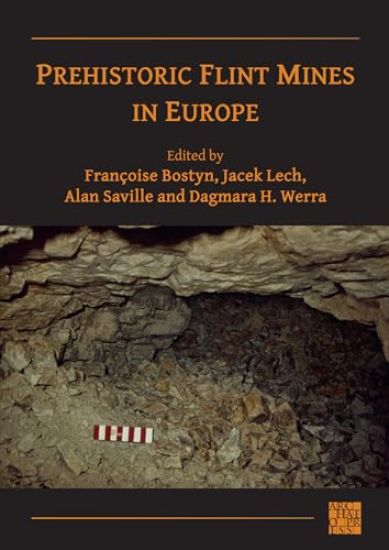
Prehistoric Flint Mines in Europe
Archaeopress
2023
nidottu
Prehistoric Flint Mines in Europe presents the results of the UISPP Commission, Flint Mining in Pre- and Protohistoric Europe. It offers a review of major flint mines dating from the Neolithic to the Bronze Age. The eighteen articles were contributed by archaeologists from ten countries – Belgium, France, Germany, Great Britain, Hungary, Italy, the Netherlands, Poland, Spain and Sweden – using the same framework in order to propose a uniform view of the mining phenomenon. At the same time the book reflects various research methods and traditions. Each article deals successively with the geographical and geological context, mining zone topography, research history, methods of exploitation of raw material, dating of archaeological features and structures, characteristics of lithic production, organization of labour, miners' settlements, distribution of products and symbolic aspects of mining activity. Part I includes the well-known flint mines at Spiennes in Belgium, Grime’s Graves in England and Rijckholt-Sint Geertruid in the Netherlands, as well as the equally fascinating Defensola mine from Italy. Part II contains presentations of other European flint mines. The book is abundantly illustrated with large, colour photographs and drawings, and is aimed not only at archaeologists, who will find valuable data and further literature, but also at any reader seeking up-to-date information on prehistoric flint mining communities in Europe.

John Barnard, leading merchant at a Norfolk port, is a pillar of nineteenth-century rectitude. Though stern and aloof with his indolent, tippling wife and watchful children, he is undermined by helpless love for his pretty, cold-hearted daughter Mary.THE FLINT ANCHOR subverts the rules of the historical novel and shows how family history is made- which stories can be trusted, whose voices hold influence and whose are forgotten. Wit, charm and intelligence illuminate several decades of family life and the events of small town society in this tragi-comedy of manners, the last of the author's seven novels.
'Are these the bone communities'A Flint Incentive collects the majority of Richard Skelton's writing since 2015-over one hundred and forty texts from numerous small press pamphlets, poem cards, books and editions. Works include Ferae Naturae (2015), The Not Fire (2015), On Ruin (2018), Chemical Memories (2019), Moraine (2020) and Notes on the Landscape, II (2020).A significant portion of the book comprises an overview of The Cult Revived, an ongoing literary archaeology of archival sources begun in 2015. At its core, the work contends that echoes of archaic oral cultures can be found in the textual residues of the present. It therefore amasses a 'word moraine' by randomly intermingling elements from a range of subjects, including archaeology, ecology, geology, toponymy, mythology, religion and folklore. This material then becomes the site for a series of poetic excavations.The book also contains Skelton's long poem, Dark Hollow Dark (2019)-a 'chant in seven parts' that absorbs textual spolia from various archaic sources to explore other-than-human voices. In addition to his poetry, A Flint Incentive contains excerpts from his two works of fiction, The Look Away (2018) and And Then Gone (2020). The collection is completed by a new sequence of twenty-five poems, entitled The Second Chamber, written during the late summer, autumn and early winter of 2019.
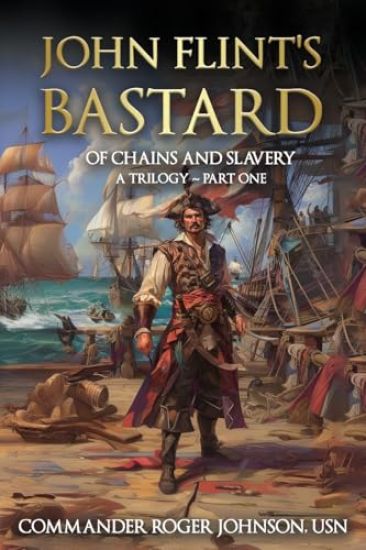
Welcome to the world of Joshua Smoot-the bastard son of Treasure Island's John Flint. From the first page of John Flint's Bastard to the last, you will experience the full spectrum of love versus hate, loyalty versus betrayal, freedom versus slavery, and the extremes of mankind's goodness and evil toward one another. The old pirate Captain John Flint-the evil benefactor of Savannah-finally spawns a manchild by one of his concubines. To fulfill the last wish of the lad's mother, Flint promises to raise Joshua as a gentleman rather than make him a pirate, and to accomplish this task, he delivers the eight-year-old lad to the Wakehurst Place Estate in southern England where Joshua's stubborn spirit forces him into an ultimatum that tests his will and eventually earns him two King's warrants for his head.During his run from the King, Joshua meets and falls in love with Rebecca Keyes-a young girl with a stronger will than his own. Their rocky relationship culminates with Rebecca being forced to make a life-and-death decision that will affect Joshua's course for the rest of his life.If you like fast-paced, white-knuckled, edge-of-seat pirate adventure novels, then take your seat at the literary dining table, pick up your knife and fork, and open to chapter one of this delicious banquet called John Flint's Bastard. And when you finish, you'll want to go back to that same bookseller and buy the second in the Of Chains and Slavery trilogy, Slavery and Revenge.
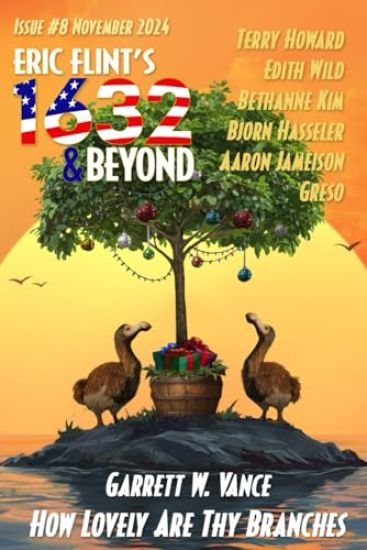
Eric Flint's 1632 & Beyond Issue #8
Bethanne Kim; Terry Howard; Bjorn Hasseler
Flint's Shards
2024
nidottu
Get ready for a wild ride of ongoing adventures in this issue Four familiar faces return while two new ones make their debut in these six thrilling tales. Once we finish a story, our characters lives continue. Four stories bring back old friends while two are new ones you'll see again.In the romantic "How Lovely Are Thy Branches" (Garrett W. Vance), we find a Christmas tree on The Wonderland Isles, while ripples from prom lead to a new business in "Stilettos, Part 2" (Bethanne Kim). For Reed and Kathy Sue Burroughs, their romantic escapades continue in "A Week Together" (Bjorn Hasseler) as they savor time together between wars. But not all adventures are loving ones, as seen in "Rites of Passage" (Edith Wild) where Amalia von Herbert and Maggie Vogel face the aftermath of a cliffhanger from Issue 4. In "Emancipation and Education," Terry Howard tells the unexpected and heart-wrenching tale of a boy fighting to stay in school against his father's wishes. Finally, in Aaron Jamieson Greso's first 1632 story, "The Diablo Is In The Details," a simple task of buying compasses and selling a donkey turns into a bigger challenge than expected for a Portuguese merchant and a knight. Don't miss out on these gripping tales of ongoing adventures. If you enjoyed similar books like "The Hunger Games" and "Divergent," you won't be able to put this one down. Buy your copy now

Eric Flint's 1632 & Beyond Special Issue #2
Eric Flint; Iver P Cooper; Edith Wild
Flint's Shards
2024
pokkari
This is a reissue of the second half of A 1632 Christmas, . The first half is Special Issue 1 from November 2024. Jackie Britton Lopatin's "Grantville's Secret Santa" tells how Grantville changed one woman's once-bleak future to fulfillment. In Chuck Thompson's "The Gift," Inez Wiley convinces her down-time friends not to leave her. Mark Huston's "At Christmas Time" follows a simple letter and its impact. Sarah Hay's "No Proper Carol" follows a search for hard to find up-time music. Edith Wild's "A Christmas Stollen" tells more of Amalia's story. Leaving Grantville, John Deakin's tale "At the Schickelmans'" follows their first Christmas celebration in the New World. In "Santa's Lapp" by George Haberberger, a man tells his people what he learned of their future up-time. "Natala" by Iver Cooper sees a Christmas play in Califonia. "One Night Only" by Michael Lockwood tells of a special performance at the Magdeburg Opera House. "Sad Spectacles" by Eric Flint and Lucille Robbins shows how new ideas can blow up even the most entrenched paths. The final tale addresses one of the key questions of modern Christmas: Is Die Hard a Christmas movie? Spoiler: yes, it is.
A rich and fascinating collection of haiku poetry. Thoughts on love, nature and spirituality are explored through alluring imagery in this diverse selection of poems. Traditional style haiku, written with a modern perspective.

Maple-Creek-Reihe, Band 1: Meet Me in Maple Creek (der SPIEGEL-Bestseller-Erfolg von Alexandra Flint)
Alexandra Flint
Ravensburger Verlag
2022
nidottu
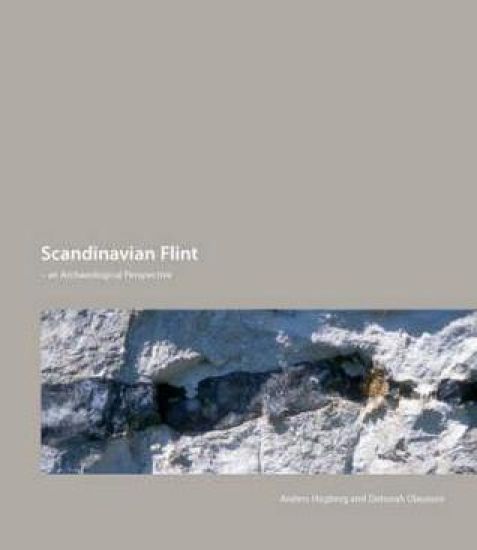
In Scandinavia as elsewhere, cryptocrystalline rocks such as flint were an integral part of peoples' lives during prehistory. Knowledge about flint, its properties, its uses, and its many names, was no doubt transmitted through the generations as part of everyday life. As archaeologists, we are interested in how prehistoric people dealt with flint and what they might have seen as the strengths and weaknesses of the various kinds of flint available. But in order to answer such questions it is necessary that we are able to talk to each other about flint in an informed and informative manner. Scandinavian Flint proposes a classification into 17 types for use by archaeologists. Flint types are described and evaluated in terms of knappability, limitations posed by nodule size, and prehistoric availability, rather than in terms of morphogenesis or chemical composition. Flint formation, geographic distribution of flint sources in Scandinavia, provenience studies, and patination are discussed in detail. Scandinavian Flint is a useful guide for archaeologists working with flint.
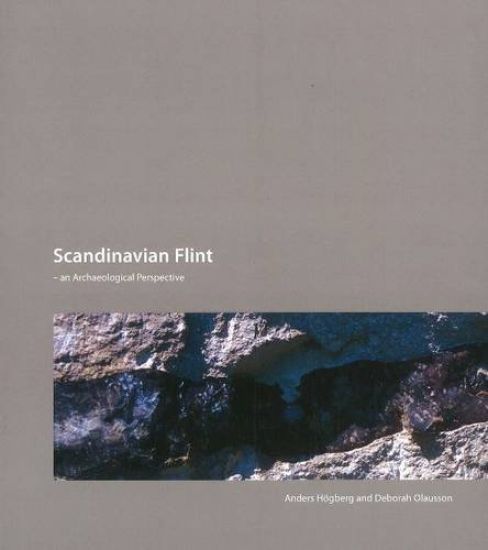
Scandinavian Flint
Aarhus University Press
2011
nidottu
In Scandinavia as elsewhere, cryptocrystalline rocks such as flint were an integral part of peoples lives during prehistory. Knowledge about flint, its properties, its uses, and its many names, was no doubt transmitted through the generations as part of everyday life. As archaeologists, we are interested in how prehistoric people dealt with flint and what they might have seen as the strengths and weaknesses of the various kinds of flint available. But in order to answer such questions it is necessary that we are able to talk to each other about flint in an informed and informative manner. Scandinavian Flint proposes a classification into 17 types for use by archaeologists. Flint types are described and evaluated in terms of knappability, limitations posed by nodule size, and prehistoric availability, rather than in terms of morphogenesis or chemical composition. Flint formation, geographic distribution of flint sources in Scandinavia, provenience studies, and patination are discussed in detail. Scandinavian Flint is a useful guide for archaeologists working with flint.
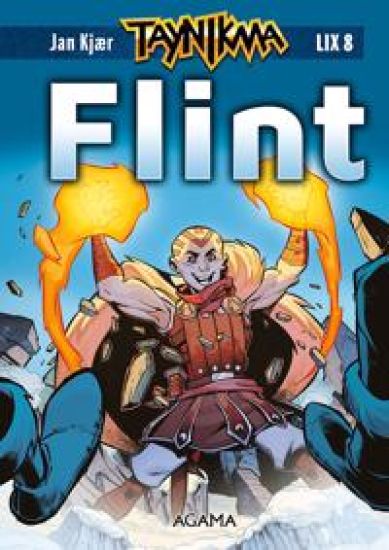
Den populære forfatter Jan Kjær har udviklet denne serie af letlæste tegneserier. De fleste børn elsker tegneseriens billedsprog pa° grund af dynamikken, ansigts- udtrykkene og de mange tegninger. Jan Kjærs lix 8-tegneserier indeholder sa°ledes 2-3 gange sa° mange illustrationer som en almindelig letlæsningsbog. Disse nytænkte tegneserier er velegnede til de helt nye læsere. Teksten er let at læse, og tegneseriemediet gør dem ba°de appellerende og særdeles læsestøttende.
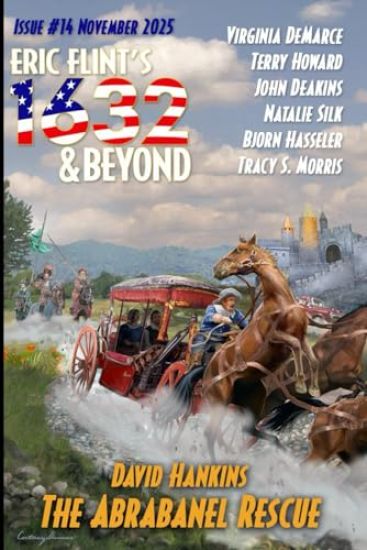
Eric Flint's 1632 & Beyond Issue #14
David Hankins; Virginia Demarce; Terry Howard
Flint's Shards
2025
pokkari
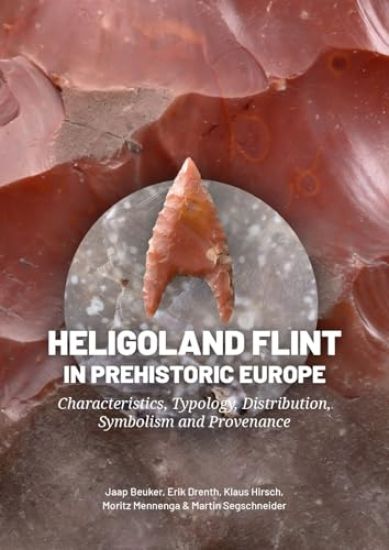
Heligoland Flint in Prehistoric Europe
Jaap Beuker; Erik Drenth; Klaus Hirsch; Moritz Mennenga; Martin Segschneider
SIDESTONE PRESS
2025
sidottu
During a considerable part of prehistory stone tools were indispensable. Flint in particular had properties that made it very suitable for making razor-sharp implements and could often, but not always, be collected locally. Hunters, gatherers and fishers mostly used small tools but with the transition to an agricultural way of living this situation changed, as larger implements became necessary, to cut down trees and work wood for instance. The raw material suitable for this was often not available locally, so was imported from areas where good raw material was available. It was sometimes extracted on an almost industrial scale and even by underground mining. There are many known places in Europe where this extraction took place thousands of years ago. In the first half of the 1980s it became clear that the island of Heligoland also played a role as a large-scale supplier of flint. Prehistoric tools made from red Heligoland flint and also from tabular Heligoland flint have been found in Denmark, Germany and the Netherlands, sometimes at a distance of more than 300 km from Heligoland. In this book we will describe the research undertaken on various aspects of the use of this flint. The characteristics of the different types, as distinct from flint that does not come from Heligoland, will be discussed. Furthermore, the tools that were made from it, their dating, their possible social and symbolic meanings, and the transport that took place partly by sea, more than 5000 years ago, will be described. This book is intended for archaeologists, archaeological curators but also for anybody else who has an interest in the story of a fascinating prehistoric flint source.