Kirjojen hintavertailu. Mukana 11 383 855 kirjaa ja 12 kauppaa.

Kirjahaku

Etsi kirjoja tekijän nimen, kirjan nimen tai ISBN:n perusteella.

1000 tulosta hakusanalla Franchesca Collins

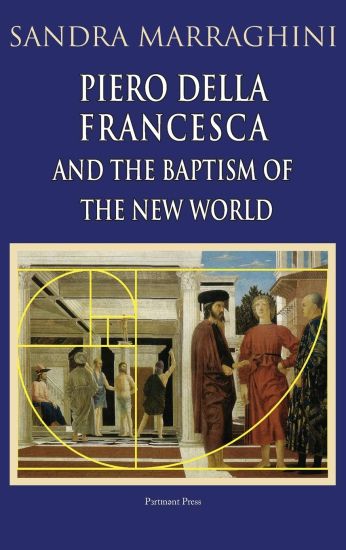
Piero della Francesca and the Baptism of the New World
Piero della Francesca and the Baptism of the New World reveals that heliocentrism, the modern day planetary system and the existence of the American continent is referred to in Piero's work. As a new age was dawning for humankind, these revolutionary ideas were suspected before their official discoveries and were kept secret due to them confuting the dogma and beliefs of the Church and the powerful. Indeed, as late ast the 17th century, Galileo was jailed for his heliocentric ideas... Professor Sandra Marraghini's deductions lead us along the same path that Piero della Francesca started 600 years ago to transfer his knowledge to those who could receive it and could pass it on to future generations. Through the study of symbols, syllogisms and characters, the analysis of the elements of geometrical and mathematical balance and the observation of starry skies, we finally find the key to the messages hidden in the works of Piero della Francesca. The author's research and findings raise questions as to certain facts and dates of history, particularly the discovery of America. Analysing the writings of Piero's disciple, mathematician Luca Pacioli, Professor Marraghini concludes that Piero's death coinciding with the discovery of America (12 October 1492) is almost certainly fake news. With the altered date of Piero's death, his contemporaries probably intended to hide and protect the truth that he was trying to convey: the route to America was known in the first half of Renaissance (by Piero himself), so much earlier than the voyages of Columbus.
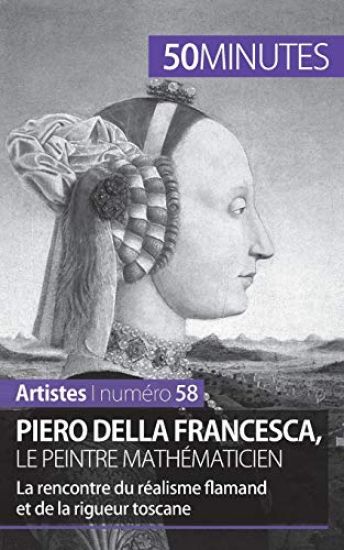
Piero Della Francesca, le peintre mathématicien
D cryptez l'art de Piero Della Francesca en moins d'une heure Acteur majeur du Quattrocento italien, Piero Della Francesca est un artiste aux multiples talents. Peintre rudit et passionn de g om trie, il n'a de cesse, toute sa vie durant, de chercher concilier les math matiques et l'art, afin de r inventer l'iconographie religieuse traditionnelle. Son chef d'oeuvre incontest , La Flagellation du Christ, avec ses proportions divines et la perfection de sa perspective, r sume merveille son projet. Il va m me plus loin en donnant la post rit trois trait s scientifiques qui auront un impact majeur sur ses successeurs, parmi lesquels L onard de Vinci et Rapha l. Ce livre vous permettra d'en savoir plus sur: - Le contexte culturel dans lequel Piero Della Francesca s'inscrit - La vie de l'artiste et son parcours - Les caract ristiques et sp cificit s de son art - Une s lection d'oeuvres-cl s de Piero Della Francesca - Son impact dans l'histoire de l'art Le mot de l' diteur: Dans ce num ro de la s rie 50MINUTES Artistes, Delphine Gervais de Lafond se penche sur le si cle, la vie et l'oeuvre de celui que l'on consid re comme le ma tre de la perspective: Piero Della Francesca. De ses influences ses plus grands chefs-d'oeuvre, l'essentiel est l . Soucieuse de montrer l'originalit de cet artiste-math maticien, l'auteure propose d'analyser quelques-uns de ses tableaux les plus embl matiques, dont La Flagellation du Christ et le Diptyque des ducs d'Urbin. St phanie Felten PROPOS DE LA S RIE 50MINUTES ArtistesLa s rie Artistes de la collection 50MINUTES aborde plus de cinquante artistes qui ont profond ment marqu l'histoire de l'art, du Moyen ge nos jours. Chaque livre a t con u la fois pour les passio
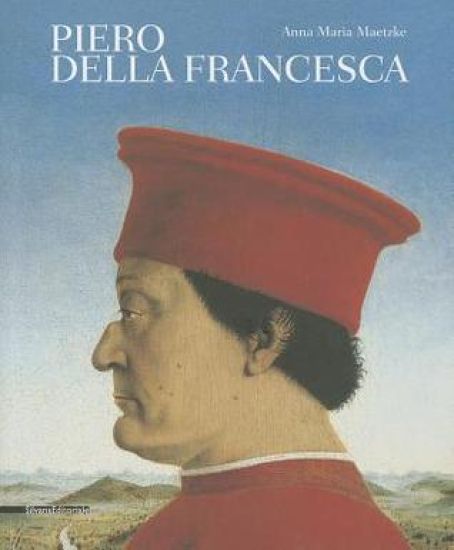
Piero della Francesca

Piero della Francesca

Anna Maria Maetzke

Silvana
2018
sidottu
A guide to one of the greatest artists of all time; compact and up to date. These pages are intended as a compact up-to-date guide for readers wishing to find out more about one of the greatest artistic geniuses of all times, an artist epitomising the highest ideals of the age of Humanism whose complex personality challenges even the experts in this field of studies.
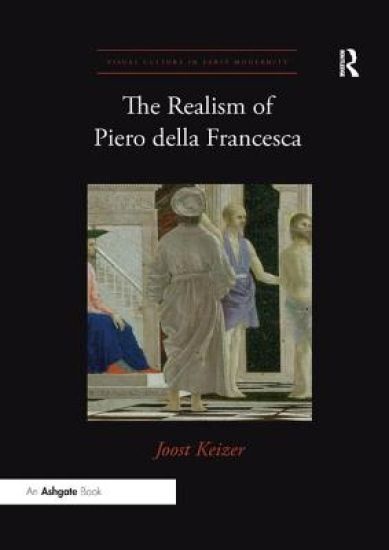
The Realism of Piero della Francesca
The fifteenth-century Italian artist Piero della Francesca painted a familiar world. Roads wind through hilly landscapes, run past farms, sheds, barns, and villages. This is the world in which Piero lived. At the same time, Piero’s paintings depict a world that is distant. The subjects of his pictures are often Christian and that means that their setting is the Holy Land, a place Piero had never visited. The Realism of Piero della Francesca studies this paradoxical aspect of Piero’s art. It tells the story of an artist who could think of the local churches, palaces, and landscapes in and around his hometown of Sansepolcro as miraculously built replicas of the monuments of Jerusalem. Piero’s application of perspective, to which he devoted a long treatise, was meant to convince his contemporaries that his paintings report on things that Piero actually observed. Piero’s methodical way of painting seems to have offered no room for his own fantasy. His art looks deliberately styleless. This book uncovers a world in which painting needed to validate itself by cultivating the illusion that it reported on things observed instead of things imagined by the artist. Piero’s painting claimed truth in a world of increasing uncertainties.
The Cambridge Companion to Piero della Francesca
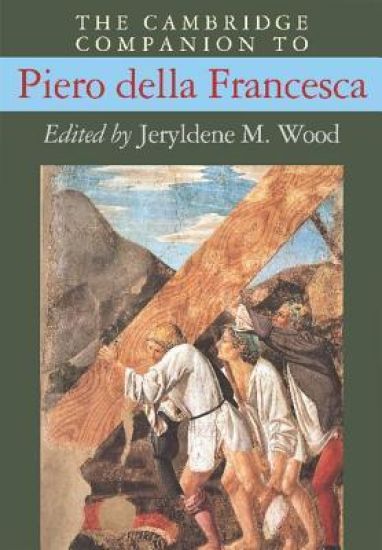
A great master of the early Renaissance, Piero della Francesca created paintings for ecclesiastics, confraternities, and illustrious nobles throughout the Italian peninsula. Since the early twentieth century, the rational space, abstract designs, lucid illumination and naturalistic details of his pictures have attracted a wide audience. Piero's treatises on mathematics and perspective also fascinate scholars in a wide range of disciplines. This 2002 Companion brings together essays that offer a synthesis and overview of Piero's life and accomplishments as a painter and theoretician. They explore a variety of themes associated with the artist's career, including the historical and religious circumstances surrounding Piero's altarpieces and frescoes; the politics underlying his portraits; the significance of clothing in his paintings; the influence of his theories on perspective and mathematics; and the artist's enduring fascination for modern painters and writers.
The Cambridge Companion to Piero della Francesca
A great master of the early Renaissance, Piero della Francesca created paintings for ecclesiastics, confraternities, and illustrious nobles throughout the Italian peninsula. Since the early twentieth century, the rational space, abstract designs, lucid illumination and naturalistic details of his pictures have attracted a wide audience. Piero's treatises on mathematics and perspective also fascinate scholars in a wide range of disciplines. This 2002 Companion brings together essays that offer a synthesis and overview of Piero's life and accomplishments as a painter and theoretician. They explore a variety of themes associated with the artist's career, including the historical and religious circumstances surrounding Piero's altarpieces and frescoes; the politics underlying his portraits; the significance of clothing in his paintings; the influence of his theories on perspective and mathematics; and the artist's enduring fascination for modern painters and writers.
A Childhood Memory by Piero Della Francesca

A Childhood Memory by Piero Della Francesca

Hubert Damisch

Stanford University Press
2007
sidottu
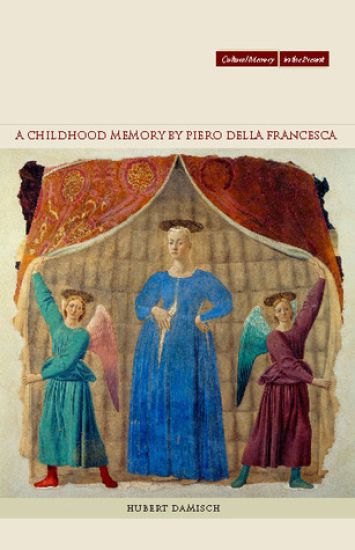
Piero della Francesca's Madonna del Parto, a celebrated fifteenth-century Tuscan fresco in which the Virgin gestures to her partially open dress and her pregnant womb, is highly unusual in its iconography. Hubert Damisch undertakes an anthropological and historical analysis of an artwork he constructs as a childhood dream of one of humanity's oldest preoccupations, the mysteries of our origins, of our conception and birth. At once parodying and paying homage to Freud's seminal essay on Leonardo da Vinci, Damisch uses Piero's enigmatic painting to narrate our archaic memories. He shows that we must return to Freud because work in psychoanalysis and art has not solved the problem of what is being analyzed: in the triangle of author, work, and audience, where is the psychoanalytic component located?
A Childhood Memory by Piero Della Francesca

A Childhood Memory by Piero Della Francesca

Hubert Damisch

Stanford University Press
2007
pokkari
Piero della Francesca's Madonna del Parto, a celebrated fifteenth-century Tuscan fresco in which the Virgin gestures to her partially open dress and her pregnant womb, is highly unusual in its iconography. Hubert Damisch undertakes an anthropological and historical analysis of an artwork he constructs as a childhood dream of one of humanity's oldest preoccupations, the mysteries of our origins, of our conception and birth. At once parodying and paying homage to Freud's seminal essay on Leonardo da Vinci, Damisch uses Piero's enigmatic painting to narrate our archaic memories. He shows that we must return to Freud because work in psychoanalysis and art has not solved the problem of what is being analyzed: in the triangle of author, work, and audience, where is the psychoanalytic component located?