Kirjojen hintavertailu. Mukana 11 244 527 kirjaa ja 12 kauppaa.

Kirjahaku

Etsi kirjoja tekijän nimen, kirjan nimen tai ISBN:n perusteella.

1000 tulosta hakusanalla Francis Alua

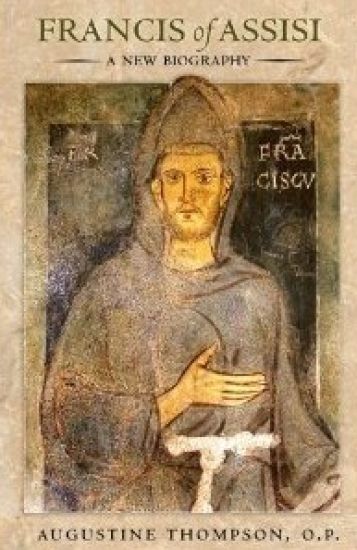
Francis of Assisi

Francis of Assisi

Augustine Thompson

Cornell University Press
2012
sidottu
"I recommend this book strongly to anyone serious about understanding Francis of Assisi. I admire the clarity and brevity of the writing. With decisiveness, Thompson cuts through the conflicting medieval accounts of each event in Francis' life, adjusts for the hagiographers' spin and creates a credible chronology out of the blurry dates. His knowledge of medieval Italy allows him to provide insightful explanations of the legal, liturgical, and ecclesiastical practices of the time."—Paul Moses, America Among the most beloved saints in the Catholic tradition, Francis of Assisi (c. 1181–1226) is popularly remembered for his dedication to poverty, his love of animals and nature, and his desire to follow perfectly the teachings and example of Christ. During his lifetime and after his death, followers collected, for their own purposes, numerous stories, anecdotes, and reports about Francis. As a result, the man himself and his own concerns became lost in legend. In this authoritative and engaging new biography, Augustine Thompson, O.P., sifts through the surviving evidence for the life of Francis using modern historical methods. The result is a complex yet sympathetic portrait of the man and the saint. Francis emerges from this account as very much a typical thirteenth-century Italian layman, but one who, when faced with unexpected crises in his personal life, made decisions so radical that they challenge his own society-and ours. Unlike the saint of legend, this Francis never had a unique divine inspiration to provide him with rules for following the teachings of Jesus. Rather, he spent his life reacting to unexpected challenges, before which he often found himself unprepared and uncertain. The Francis who emerges here is both more complex and more conflicted than that of older biographies. His famed devotion to poverty is found to be more nuanced than expected, perhaps not even his principal spiritual concern. Thompson revisits events small and large in Francis's life, including his troubled relations with his father, his contacts with Clare of Assisi, his encounter with the Muslim sultan, and his receiving the Stigmata, to uncover the man behind the legends and popular images. A tour de force of historical research and biographical writing, Francis of Assisi: A New Biography is divided into two complementary parts-a stand alone biographical narrative and a close, annotated examination of the historical sources about Francis. Taken together, the narrative and the survey of the sources provide a much-needed fresh perspective on this iconic figure. "As I have worked on this biography," Thompson writes, "my respect for Francis and his vision has increased, and I hope that this book will speak to modern people, believers and unbelievers alike, and that the Francis I have come to know will have something to say to them today."
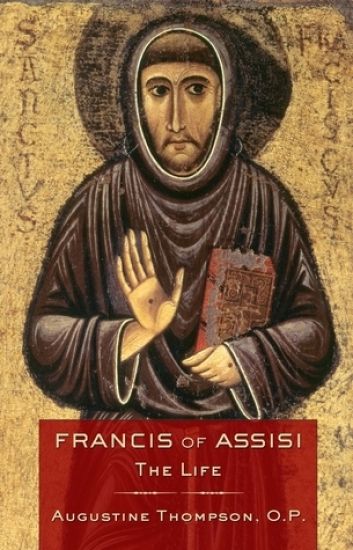
Francis of Assisi

Francis of Assisi

Augustine Thompson

Cornell University Press
2013
pokkari
This elegant and accessible biography of one of Catholicism's most beloved saints was originally published as Part 1 of Francis of Assisi: A New Biography by Augustine Thompson, O.P. It stands alone as a richly informed portrait of a man whose complex faith and commitment continue to inspire today. An introduction by Thompson places his biography in the context of continuing discussions about Francis's legacy, particularly the new Pope's decision to adopt the saint's name.
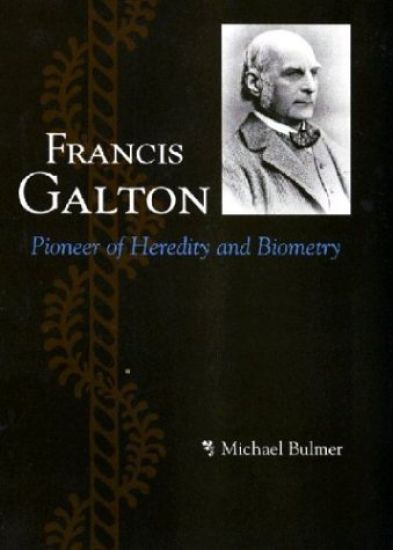
Francis Galton

Francis Galton

Michael Bulmer

Johns Hopkins University Press
2004
sidottu
If not for the work of his half cousin Francis Galton, Charles Darwin's evolutionary theory might have met a somewhat different fate. In particular, with no direct evidence of natural selection and no convincing theory of heredity to explain it, Darwin needed a mathematical explanation of variability and heredity. Galton's work in biometry-the application of statistical methods to the biological sciences-laid the foundations for precisely that. This book offers readers a compelling portrait of Galton as the "father of biometry," tracing the development of his ideas and his accomplishments, and placing them in their scientific context. Though Michael Bulmer introduces readers to the curious facts of Galton's life-as an explorer, as a polymath and member of the Victorian intellectual aristocracy, and as a proponent of eugenics-his chief concern is with Galton's pioneering studies of heredity, in the course of which he invented the statistical tools of regression and correlation. Bulmer describes Galton's early ambitions and experiments-his investigations of problems of evolutionary importance (such as the evolution of gregariousness and the function of sex), and his movement from the development of a physiological theory to a purely statistical theory of heredity, based on the properties of the normal distribution. This work, culminating in the law of ancestral heredity, also put Galton at the heart of the bitter conflict between the "ancestrians" and the "Mendelians" after the rediscovery of Mendelism in 1900. A graceful writer and an expert biometrician, Bulmer details the eventual triumph of biometrical methods in the history of quantitative genetics based on Mendelian principles, which underpins our understanding of evolution today.
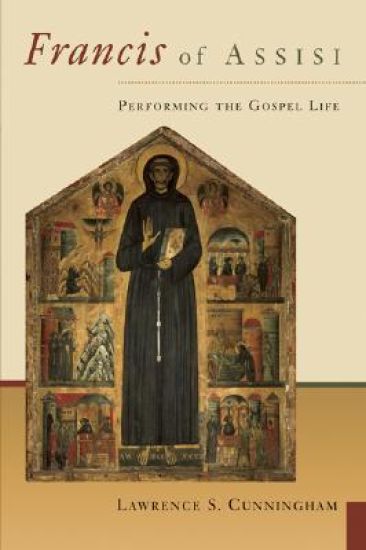
Francis of Assisi

Francis of Assisi

Lawrence Cunningham

William B Eerdmans Publishing Co
2004
nidottu
Francis of Assisi is counted among the most important personalities of history. The life and ideals of this humble, semiliterate medieval friar have had a shaping influence on the Christian church that has spilled over into Western culture at large. This biography by Lawrence Cunningham looks anew at Francis's life and legacy, seeking to counter efforts to romanticize him yet without diminishing his deep piety or abiding significance.Pursuing a realistic view of the saint, Cunningham argues against common stereotypes that sentimentalize Francis as a -blesser of animals, - as a -church rebel, - or as a precursor of the -spirituality- movement. According to Cunningham, really seeing Francis requires the lens of theology rather than the lens of quaint spirituality so often used. Francis was a devotedly orthodox Catholic whose life must be understood as a response to reforming elements abroad in the church of his day. Francis's originality derived from his success in articulating the -ideal gospel life-: his message and actions were a kind of -acting out- of the scriptures.Imbued with peerless scholarship, this book is also charmingly written. Cunningham is a master storyteller as well as a brilliant biographer -- qualities that his Francis of Assisi fully displays. It will at once inform and delight anyone interested in the fascinating life of Francis or his impact on church history.
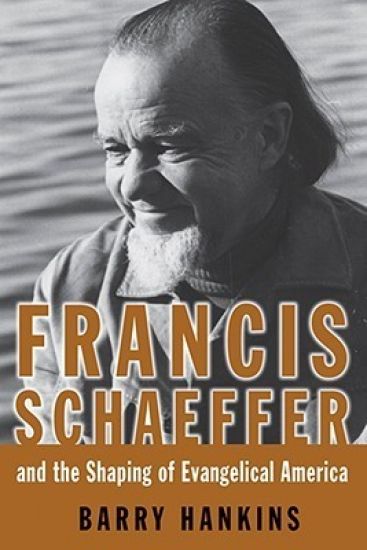
Francis Schaeffer and the Shaping of Evangelical America

Francis Schaeffer and the Shaping of Evangelical America

Barry Hankins

William B Eerdmans Publishing Co
2008
nidottu
Francis Schaeffer (1912-1984) was probably the single greatest intellectual influence on young evangelicals of the 1960s and '70s. He was cultural critic, popular mentor, political activist, Christian apologist, founder of L'Abri, and the author of over twenty books and two important films. It is impossible to understand the intellectual world of contemporary evangelicalism apart from Francis Schaeffer.Barry Hankins has written a critical but appreciative biography that explains how Schaeffer was shaped by the contexts of his life -- from young fundamentalist pastor in America, to greatly admired mentor, to lecturer and activist who encouraged world-wary evangelicals to engage the culture around them. Drawing extensively from primary sources, including personal interviews, Hankins paints a picture of a complex, sometimes flawed, but ultimately prophetic figure in American evangelicalism and beyond.
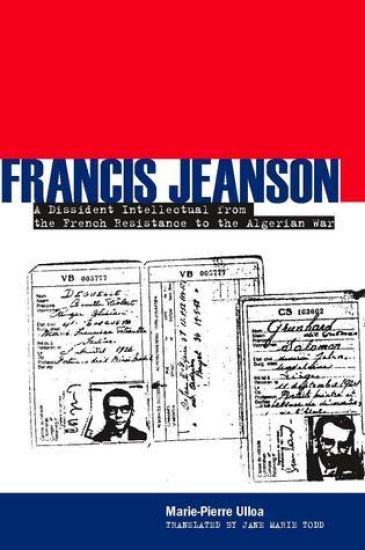
Francis Jeanson

Francis Jeanson

Marie-Pierre Ulloa

Stanford University Press
2008
sidottu
This new biography of Francis Jeanson follows the existential philosopher and political activist from his birth in 1922 to his participation in a government "cultural action" program in the late 1960s and '70s. As a young man, Jeanson escaped German-occupied France and joined the Resistance army in Africa. After the war, he pursued a career in France as a writer, philosopher (he was the "chosen disciple" of Jean-Paul Sartre), and editor at the Editions du Seuil. During the French-Algerian War, Jeanson founded the Jeanson Network, which collected and transported funds to support the Algerian side in the conflict. He and members of his network were tried and convicted of breaching the security of the state, but Jeanson was eventually reintegrated into French society. His participation in that historical moment and in controversies both philosophical and political that continue to rage today make for a compelling and pertinent read.
Francis Pavy

Francis Pavy

Alexandre Leupin

Louisiana State University Press
2018
sidottu
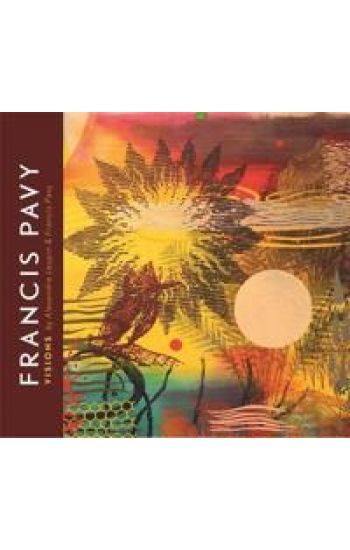
Visions was born out of interviews Alexandre Leupin had with Francis X. Pavy, a significant painter of Southern culture with a career spanning five decades. This three-part book begins with a general introduction situating Pavy in the history of painting, and underscoring his radical authenticity and originality, as well as a universality paradoxically stemming from his deep regional connection. The second part reproduces Leupin and Pavy's interviews over the years, where Pavy's artistic beginnings, his technique, his vision, and the origins of his creations are discussed. In the third section, entitled Pavicons, Pavy presents the sources of his artistic inspiration and the recurrent themes that run through his body of work through a large sample of his iconographic elements.
Francis W. Pickens and the Politics of Destruction

Francis W. Pickens and the Politics of Destruction

The University of North Carolina Press
2011
nidottu
Pickens (1807-69) was the first Civil War governor of South Carolina, the most difficult governorship in the nation's history. He led that state during the secession, prepared for and went to war, urged sister southern states to secede, and embarked on a novel experiment in government. Edmunds shows Pickens as always seeking higher political position, only to be trapped by his own ambitions, flawed personality, and self-generated animosities.Originally published in 1986.A UNC Press Enduring Edition -- UNC Press Enduring Editions use the latest in digital technology to make available again books from our distinguished backlist that were previously out of print. These editions are published unaltered from the original, and are presented in affordable paperback formats, bringing readers both historical and cultural value.
Francis and Clare

Francis and Clare

Paulist Press International,U.S.
1986
nidottu
"...clearly a must for all libraries...and for all readers interested in spirituality." Religious Studies Review Francis and Clare: The Complete Works translation and introduction by Regis J. Armstrong, O.F.M. Cap. and Ignatius C. Brady O.F.M. preface by John Vaughn, O.F.M. "Praised be You, my Lord, with all Your creatures, especially Sir Brother Sun, Who is the day through whom You give us light." Francis of Assisi (c. 1182-1226) Francis (c. 1182-1226), "The Little Poor Man" of Assisi, and Clare (c.1193-1254), "The Clear One," the woman who lived out his vision with heroic simplicity, together shaped the spirituality of early thirteenth-century Europe. Each gathered communities of like-minded persons to live out a radical commitment to the Gospel message of poverty and in the process left a legacy that has captured the imagination of both believer and nonbeliever throughout the ages. Here for the first time in English the complete writings of both Francis and Clare have been brought together in one volume. The book represents the first English translation based on the critical texts of the writings of Francis assembled by Kajetan Esser in his 1976 Opuscula des Heiligen Franziskus von Assisi, and the critical texts of Clare's writings done by Ignatio Omaechevarria. Writing in the preface to this volume, John Vaughn, Minister General of the Friars minor, sums up the relevance of Francis's and Clare's vision for today: "[It] Calls us to revitalizes our lives and those of others, and indeed to renew the very life of the Church in these times of crisis." †
Francis de Sales, Jane de Chantal

Francis de Sales, Jane de Chantal

Paulist Press International,U.S.
1988
nidottu
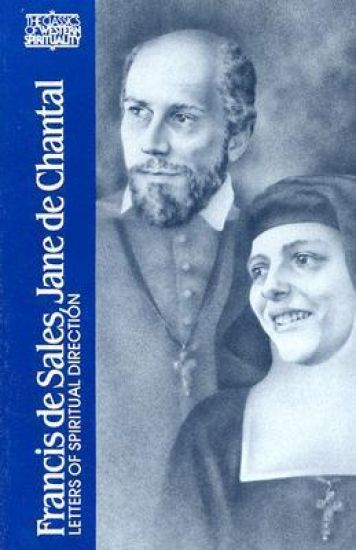
"...a milestone in American religious publishing." New Catholic World Francis de Sales, Jane de Chantal: Letters of Spiritual Direction translated by Peronne Marie Thibert, V.H.M. selected and introduced by Wendy M. Wright and Joseph F. Power, O.S.F.S. preface by Henri J.M. Nouwen "I know you have complete confidence in my affection; I have no doubt about this and delight in the thought. I want you to know and to believe that I have an intense and very special desire to serve you with all my strength. It would be impossible for me to explain either the quality or the goodness of this desire that I have to be at your service, but I can tell you that I believe it is from God, and for that reason, I cherish it and every day see it growing and increasing remarkably." Francis de Sales to Jane de Chantal Offered here in fresh translation are the letters of spiritual direction of two seventeenth century mystical writers, Francis de Sales and Jane de Chantal. These letters show us the daily attempts of laity, clergy, cloistered religious, bishops, and obscure windows to live in the authentic spirit of Jesus, and will speak not only to the historian of the period, but to all contemporary readers. This collection is unique, since many of these letters, which are treasures of lived Salesian teaching, are translated for the first time into the English language. It is also the first time that the letters have been presented together, and that a scholarly and comprehensive introduction to the Salesian spiritual tradition, as embodied in the lives and writings of both Francis de Sales and Jane de Chantal, has been attempted. †
The Prayer of St. Francis

The Prayer of St. Francis

Francis of Assisi

Paulist Press International,U.S.
2013
sidottu
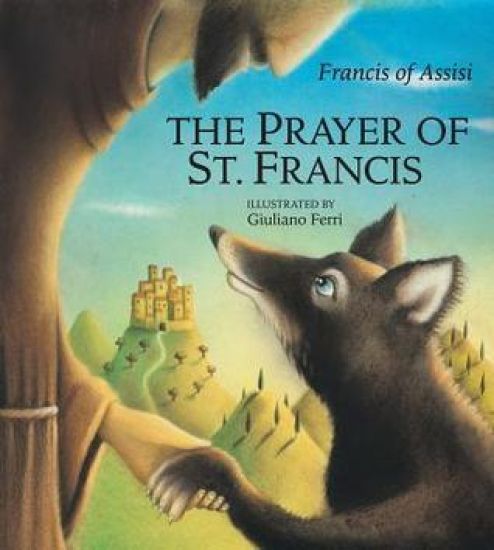
Although the prayer of St. Francis is widely known and loved by people of all ages, here is a new slant on it—a children's book that brings the prayer to life with tenderness, wonder, and joy. Accompanying each line of the prayer are sweet little animals paired with a wolf that can only be described at gentle and loving. Here is a wolf that is protector and helper to his little forest friends, bringing them light to banish the darkness, joy to counter their sadness, even contemplating the sunset with his arm around his friend the sheep. A short history of St. Francis and of the prayer is included to help readers put it in perspective. Children will be drawn into the warm, whimsical, and charming illustrations that truly make the prayer come alive. And as they read it to and with children, adults will find themselves smiling at and contemplating this book that will remind them of the beauty and simplicity of this prayer. †
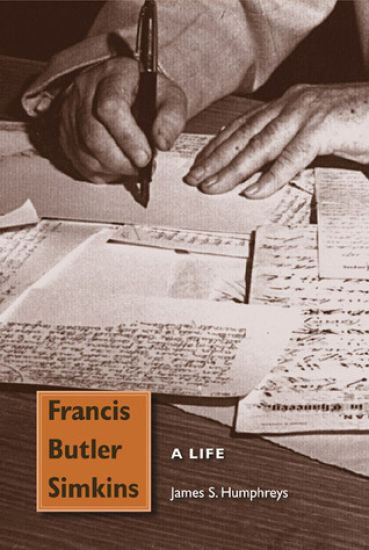
Francis Butler Simkins

Francis Butler Simkins

James S. Humphreys

University Press of Florida
2008
sidottu
Few men make their mark in their profession as indelibly as historian Francis Butler Simkins (1897-1966). Known as an eccentric, Simkins is almost as famous for falling asleep while performing his ceremonial duties as president-elect of the Southern Historical Association as he is for his wildly influential and radical scholarship.Simkins was considered one of the most liberal voices in the academic dialogue about Reconstruction and race relations in the South during the first part of his career, but his outlook changed drastically during the 1950s. This man, whose scholarship once challenged racism, became a staunch conservative - arguing in his final book that the Jim Crow South was ""everlasting"" and would never change.In this biography, James Humphreys takes a close look at Simkins as a man, to better understand him as a historian. He engages with Simkins' physical and mental eccentricities - his troubled health and career stresses - and explores the extent to which the historian was shaped by the values he learned during his childhood in segregationist South Carolina.
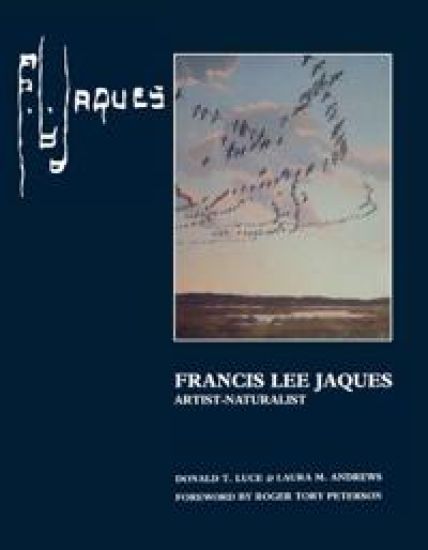
Francis Lee Jaques

Francis Lee Jaques

Donald Luce

University of Minnesota Press
1982
nidottu
Best known for the distinctive style of his dioramas at the American Museum of Natural History and other museums, Francis Lee Jaques was also a painter and illustrator whose elegant black-and-white drawings appeared in over 30 books about wildlife adn nature. This book, a biographical essay illustrated with his own drawings and paintings, is a lucid examination of his work within the context of American nature painting. In his foreword, Roger Tory Peterson says, “His dioramas and canvases are a sensitive and joyous celebration of the wild world - a record of the way it was in his time.”Published in association with the James Ford Bell Museum of Natural History, University of Minnesota.
Francis Bacon

Francis Bacon

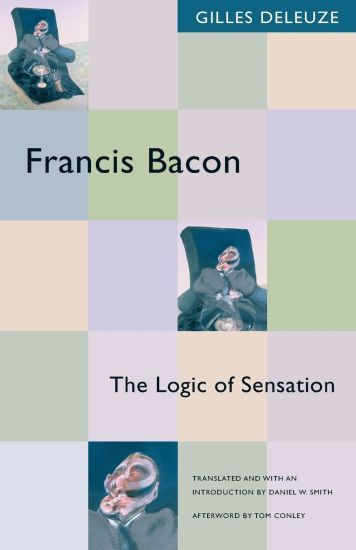
Gilles Deleuze

University of Minnesota Press
2005
nidottu
Translated and with an Introduction by Daniel W. Smith Afterword by Tom Conley Gilles Deleuze had several paintings by Francis Bacon hanging in his Paris apartment, and the painter's method and style as well as his motifs of seriality, difference, and repetition influenced Deleuze's work. This first English translation shows us one of the most original and important French philosophers of the twentieth century in intimate confrontation with one of that century's most original and important painters. In considering Bacon, Deleuze offers implicit and explicit insights into the origins and development of his own philosophical and aesthetic ideas, ideas that represent a turning point in his intellectual trajectory. First published in French in 1981, Francis Bacon has come to be recognized as one of Deleuze's most significant texts in aesthetics. Anticipating his work on cinema, the baroque, and literary criticism, the book can be read not only as a study of Bacon's paintings but also as a crucial text within Deleuze's broader philosophy of art. In it, Deleuze creates a series of philosophical concepts, each of which relates to a particular aspect of Bacon's paintings but at the same time finds a place in the "general logic of sensation." Illuminating Bacon's paintings, the nonrational logic of sensation, and the act of painting itself, this work—presented in lucid and nuanced translation—also points beyond painting toward connections with other arts such as music, cinema, and literature. Francis Bacon is an indispensable entry point into the conceptual proliferation of Deleuze's philosophy as a whole. Gilles Deleuze (1925–1995) was professor of philosophy at the University of Paris, Vincennes–St. Denis. He coauthored Anti-Oedipus and A Thousand Plateaus with Félix Guattari. These works, as well as Cinema 1, Cinema 2, The Fold, Proust and Signs, and others, are published in English by Minnesota. Daniel W. Smith teaches in the Department of Philosophy at Purdue University.
Francis Warrington Dawson and the Politics of Restoration

Francis Warrington Dawson and the Politics of Restoration

E. Clark

The University of Alabama Press
2002
nidottu
\u0022This is a book that anyone interested in South Carolina history, the emergence of the New South, and the southern press, so important to the regional culture, will find valuable. Clark has researched all the important manuscript collections and a wide variety of other sources. He also writes in a style that is lucid and imaginative.\u0022 —Journal of Southern History
Francis Ponge

Francis Ponge

Annette Sampon

Peter Lang Publishing Inc
1988
sidottu
Le monde poetique de Ponge est concret, physiquement present au regard, et a l'oeil de l'imagination. Nous ne pouvons y penetrer sans nous adresser au visuel, phenomene fondamental de son esthetique. L'etude des rapports entre la critique d'art de Ponge et sa poesie, entre l'art plastique et l'ecriture en general, demontre que l'ecriture, tout comme l'art est inscrite dans un espace visuel.
Francis Bacon

Francis Bacon

Catherine Drinker Bowen

Fordham University Press
1993
sidottu
The portrait Bowen paints of this controversial man, Francis Bacon (1561-1626), balances the outward life and actions of Bacon with the seemingly contradictory aspects of his refined philosophical reflections. When Bacon's more notorious attributes are set in historical context, his actions seem less personally vindictive against the backdrop of an entire age seemingly devoted to the very vanity and ingenuousness with which he is so often accused. As Lord Chancellor of England, Bacon was impeached by Parliament for taking bribes in office, convicted, and banished from London an the law courts. In a prayer Bacon composed during the interval following his punishment, he reveals that the dichotomy of his existence was no more deeply felt than by himself, and he readily admits that his obligations to society were not as suited to his nature as the study of philosophy, science and law. Modem scholars hold Bacon's philosophical works, "Novum Organum", "Advancement of Learning" and "New Atlantis" as his greatest achievements. Bowen's story reveals a man whose genius it was not to immerse himself in the rigour of scientific experimentation, but to realise what questions science should ask, and thereby reach beyond the status quo and appeal to the wider imagination of his generation. In his writings, Bacon challenged established social and religious orders, raised questions about mind/body relation and the role of dreams, and foresaw the day when scientists at colleges and universities would share experimentation. It is Bacon's legacy to have gone beyond his age and, out of pure intuition, anticipate the concerns of future generations.
Francis Bacon

Francis Bacon

Catherine Drinker Bowen

Fordham University Press
1993
pokkari
The portrait Bowen paints of this controversial man, Francis Bacon (1561-1626), balances the outward life and actions of Bacon with the seemingly contradictory aspects of his refined philosophical reflections. When Bacon's more notorious attributes are set in historical context, his actions seem less personally vindictive against the backdrop of an entire age seemingly devoted to the very vanity and ingenuousness with which he is so often accused. As Lord Chancellor of England, Bacon was impeached by Parliament for taking bribes in office, convicted, and banished from London an the law courts. In a prayer Bacon composed during the interval following his punishment, he reveals that the dichotomy of his existence was no more deeply felt than by himself, and he readily admits that his obligations to society were not as suited to his nature as the study of philosophy, science and law. Modem scholars hold Bacon's philosophical works, "Novum Organum", "Advancement of Learning" and "New Atlantis" as his greatest achievements. Bowen's story reveals a man whose genius it was not to immerse himself in the rigour of scientific experimentation, but to realise what questions science should ask, and thereby reach beyond the status quo and appeal to the wider imagination of his generation. In his writings, Bacon challenged established social and religious orders, raised questions about mind/body relation and the role of dreams, and foresaw the day when scientists at colleges and universities would share experimentation. It is Bacon's legacy to have gone beyond his age and, out of pure intuition, anticipate the concerns of future generations.