Kirjojen hintavertailu. Mukana 11 342 296 kirjaa ja 12 kauppaa.

Kirjahaku

Etsi kirjoja tekijän nimen, kirjan nimen tai ISBN:n perusteella.

1000 tulosta hakusanalla Frederick Beiser

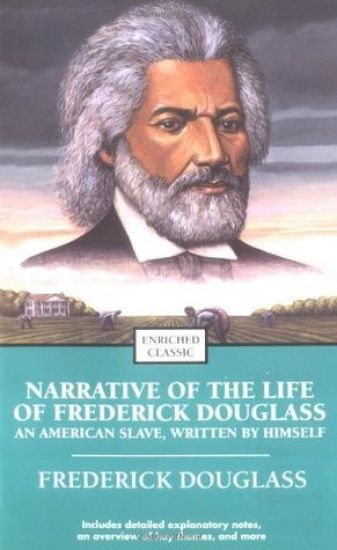
Narrative of the Life of Frederick Douglass: An American Slave, Written by Himself
Enriched Classics offer readers accessible editions of great works of literature enhanced by helpful notes and commentary. Each book includes educational tools alongside the text, enabling students and readers alike to gain a deeper and more developed understanding of the writer and their work. Frederick Douglass's powerful autobiographical account of life in bondage, his triumphant escape to freedom, and his analysis of slavery as a condition. Enriched Classics enhance your engagement by introducing and explaining the historical and cultural significance of the work, the author's personal history, and what impact this book had on subsequent scholarship. Each book includes discussion questions that help clarify and reinforce major themes and reading recommendations for further research. Read with confidence.
Frederick the Great and his Musicians: The Viola da Gamba Music of the Berlin School
After decades of stagnation during the reign of his father, the 'Barracks King', the performing arts began to flourish in Berlin under Frederick the Great. Even before his coronation in 1740, the crown prince commenced recruitment of a group of musician-composers who were to form the basis of a brilliant court ensemble. Several composers, including C.P.E. Bach and the Graun brothers, wrote music for the viola da gamba, an instrument which was already becoming obsolete elsewhere. They were encouraged in this endeavour by the presence in the orchestra from 1741 of Ludwig Christian Hesse, one of the last gamba virtuosi, who was described in 1766 as 'unquestionably the finest gambist in Europe'. This study shows how the unique situation in Berlin produced the last major corpus of music written for the viola da gamba, and how the more virtuosic works were probably the result of close collaboration between Hesse and the Berlin School composers. The reader is also introduced to the more approachable pieces which were written and arranged for amateur viol players, including the king's nephew and ultimate successor, Frederick William II. O'Loghlin argues that the aesthetic circumstances which prevailed in Berlin brought forth a specific style that is reflected not only in the music for viola da gamba. Characteristics of this Berlin style are identified with reference to a broad selection of original written sources, many of which are hardly accessible to English-speaking readers. There is also a discussion of the rather contradictory reception history of the Berlin School and some of its composers. The book concludes with a complete thematic catalogue of the Berlin gamba music, with a listing of original manuscript sources and modern publications. The book will appeal to professional and amateur viola da gamba players as well as to scholars of eighteenth-century German music.
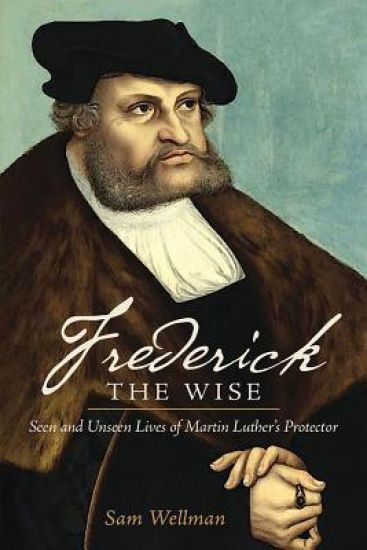
Frederick the Wise

Frederick the Wise

Sam Wellman

CONCORDIA PUBLISHING HOUSE LTD
2015
pokkari
Frederick the Wise unlocks German research to make available in English, for the first time, a full-length story of Frederick III of Saxony. The fascinating biographical journey reveals why this noteworthy elector risked his realm of Saxony to protect the fiery monk Martin Luther and the developing reforms of the Church. As one of the most powerful territorial princes of the Holy Roman Empire of his time, Frederick's "humanity and integrity were rare for someone of his elite status", notes Dr. Paul M. Bacon. "Elector Frederick the Wise of Saxony was much more than simply Martin Luther's noble protector."A valuable resource for students of German history and the Reformation period.Features: Discusses how Frederick dominated other princes of the Holy Roman Empire for nearly 40 yearsTells why Frederick's only "wife"-but not their children-had to be kept "secret"Chronology of events relevant to Frederick the WiseIndex of persons and places
Frederick Starr

Frederick Starr

Donald McVicker

AltaMira Press,U.S.
2012
sidottu
This definitive, detail-packed biography is the first of Frederick Starr (1856-1933), a founding father of American anthropology at the University of Chicago. It presents a major reevaluation of Starr’s place as the missionizer of anthropology, illuminates the consequences of the professionalization of anthropology, and yields a greater understanding of the United States as it moved into a position of global power. Donald McVicker considers Frederick Starr’s colorful life in the context of the times. In many respects Starr’s early career paralleled that of Franz Boas, “the architect of American anthropology.” Nonetheless, as Boas led professional anthropology into the twentieth century in the United States, Starr, the popularizer, increasingly fell behind. Today, if Starr is remembered at all, he is usually described in terms of his intellectual, professional, and ethical failings. Yet his collections, publications, and photographic and paper archives provide a rich set of resources for archaeologists, ethnologists, folklorists, and historians. McVicker argues that Starr’s mission to bring anthropology to the public and enlighten them was as valid a goal during his career as was Boas’s goal to professionalize the field.
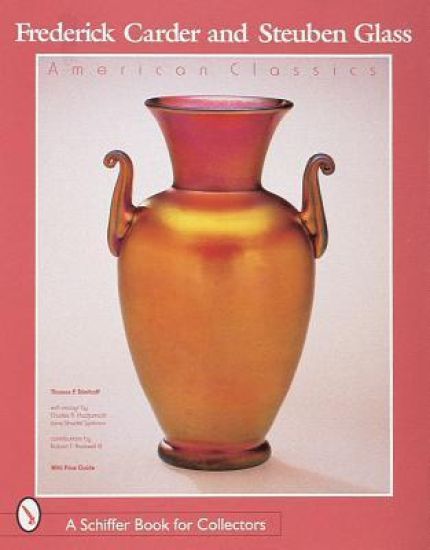
Frederick Carder and Steuben Glass

Frederick Carder and Steuben Glass

Thomas P. Dimitroff

Schiffer Publishing Ltd
1998
sidottu
This essential reference work provides a detailed study of Frederick Carder, his contributions to the Steuben Glass Works, and the captivating works of art he produced in glass. To dazzle and delight the reader, there are over 760 photographs and 450 line drawings, the vast majority of which provide illustration for 800 pieces of Steuben glass from the famous Rockwell collections. Reference material and photographs never before in print are provided. The text evaluates Carder and the Steuben Glass Works that he cofounded in 1903 in a critical light. It reviews Carder's lengthy and productive career, analyzes his changing role within the company, and places Carder's artistic contributions within the matrix of the international decorative arts industries of his time. A section valuable to all collectors is one in which many aspects of identification and evaluation are covered--signatures, relative rarity, and dating.
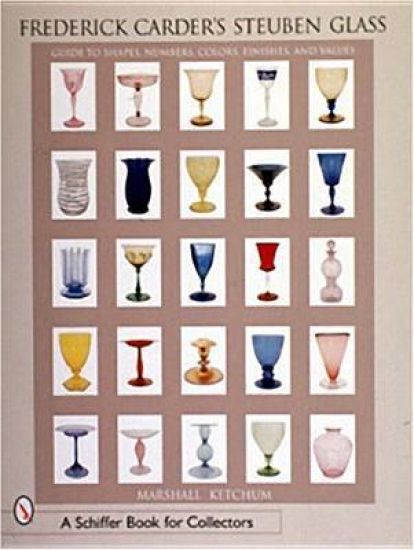
Frederick Carder's Steuben Glass

Frederick Carder's Steuben Glass

Marshall Ketchum

Schiffer Publishing Ltd
2002
nidottu
This new book is a valuable aid when used in conjunction with eight important books which picture F. Carder's Steuben glass. The tabulated format is easy to use. The line drawings of shapes in Paul Gardner's classic book The Glass of Frederick Carder (reprinted by Schiffer Publishing), auction records of the last seven years, and references to photographs in the eight books cited are cross-referenced for easy access. In addition, 40 new color photographs of Carder Steuben glass, which have not been shown in other publications, are included here. Finally, the respected authorities on this finest of American manufactured glass speak in unison to today's researchers. Curators, historians, glass dealers, scholars, and collectors alike owe a round of applause to Marshall Ketchum for this precise and important reference work; this book will make their jobs much easier.
Frederick Carder's Steuben Glass

Frederick Carder's Steuben Glass

Marshall Ketchum

Schiffer Publishing Ltd
2006
nidottu
This new edition is a valuable aid when used in conjunction with eight important books that picture Frederick Carder's Steuben glass. The easy-to-use tabulated format cross references the line drawings of shapes found in Paul Gardner's classic book The Glass of Frederick Carder (reprinted by Schiffer Publishing), auction records from the last eleven years, and references to photographs in the eight books cited. This revised second edition features a greatly expanded photo section with over 100 new photos; drawings of over 60 new glass shapes found in the archives of the Rakow Research Library at the Corning Museum of Glass in Corning, New York; and a new chapter on Steuben candlesticks. It also expands the auction results from about 2,000 to over 8,500, and includes additional auction houses not covered in the first edition. Curators, historians, glass dealers, scholars, and collectors alike owe a round of applause to Marshall Ketchum for this precise, important, and now updated reference work; this book will make their jobs much easier.
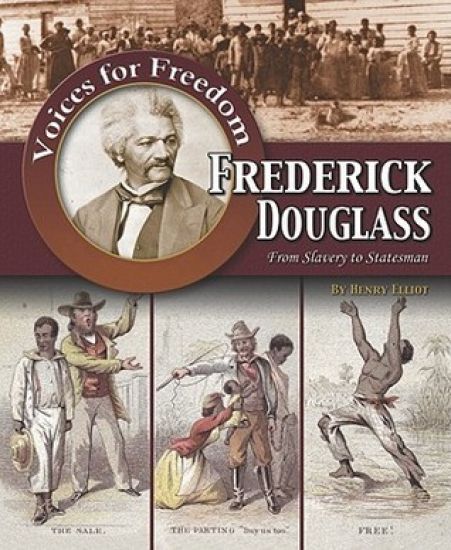
Frederick Douglass

Frederick Douglass

Henry Elliot

Crabtree Publishing Co,Canada
2009
nidottu
Born into slavery, Douglass became an eloquent spokesperson for both black’s and women’s rights. During and after the Civil War, Douglass became a confidant of presidents Abraham Lincoln and Andrew Johnson. Douglass also argued for African Americans to be allowed to join the Union army in the fight for their own freedom.
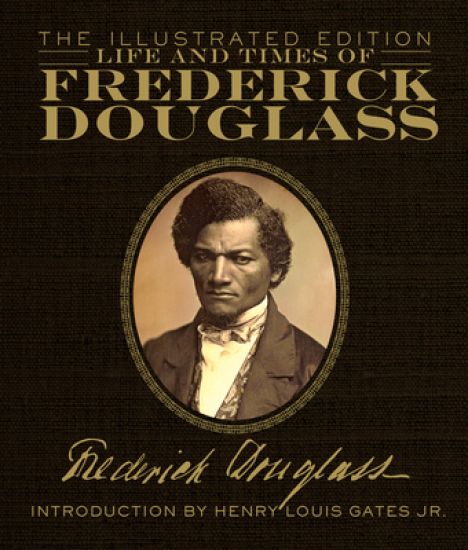
Life and Times of Frederick Douglass

Life and Times of Frederick Douglass

Frederick Douglass

Chartwell Books Inc.,U.S.
2021
sidottu
This richly illustrated edition of this classic American autobiography sheds new light on Douglass’s famous text for a new generation of readers.Famous orator and former slave Frederick Douglass published his third and last autobiography, Life and Times of Frederick Douglass, in 1881. No longer in danger as an escaped slave, it goes into greater detail and encompasses Douglass’s entire life, from his early years living with his grandmother in Maryland to the events during and after the Civil War, including his meetings with presidents and dignitaries and his deep involvement with the burgeoning suffragist movement. His account reveals what life was like as a slave and how Douglass went on to escape from slavery and then dedicate his life to advocating equality for all people. Including an introduction by prominent historian and PBS Finding Your Roots host Henry Louis Gates Jr., Douglass’s words are augmented by:Historic photographs, memorabilia, and mapsFull-color photography of the key Douglass-specific sites and landmarks as they stand todayLarge sidebars written by soldiers, statesmen, and abolitionists from the antebellum periodPieces by well-known historians and prominent African-AmericansNew commentary by current historians and writersGain an even deeper understanding of one of the most important figures in American history with this illustrated edition of his final autobiography.
Frederick the Great and the Seven Years' War, 1756-1763
The Seven Years' War (1756-1763), known as the French and Indian War in North America, was perhaps the first war that might be called a world war. It involved the major European countries, North and Central America, the coast of West Africa, the Philippines, and India. A major player in the war was Frederick the Great (1712-1786), the king of Prussia and a great military leader. The first major work on the monarch and his role in the war for more than a century, this book sheds light on many aspects of military and European history.
Frederick County, Maryland Land Records Abstracts, 1778-1784, Liber WR1 Through WR4
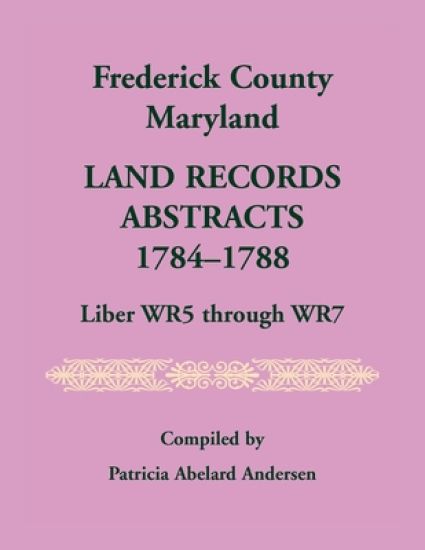
This volume includes the first four volumes, done under the supervision of William Ritchie, Clerk of Frederick County Court, and labeled WR1 through WR4, containing records from the Revolutionary War Period of 1778-1784.Some of the more interesting records recorded include two naturalizations for former German POWs, two court martials for militia men not appearing for duty, a discharge record signed by General Anthony Wayne, information about establishing a gunlock manufactury in Frederick Town and the sales of Confiscated British property, including Frederick Town ground rents owned by Daniel Dulaney, who left for England at the beginning of the Revolutionary War period.Although it is becoming increasingly easy to access these records online now through the Maryland State Archives, the value that abstracts offer in locating records through their every name indexing, cannot be matched with the indexes available online. The official indexes do not always identify estate sales, bills of sale, Negro sales or manumissions, or depositions and do not index information within deeds, such as mention of neighbors, as well as other documents brought to the court to be recorded. Also, many researchers have difficulty reading the old hand written books, so this also provides a guide and finding aid for the beginning genealogist. The page numbers of the deeds in the original volume are given in the abstracts, so that when desired, the original deeds can be accessed and printed from the Maryland State Archives Web Site.Abstracts are best used as brief guides and indexes to original records, and to find people mentioned in deeds who would otherwise be lost in the records. This series of abstracts focuses on the names of parties in the deeds. This volume contains three indices to aid the researcher: a brief index to interesting items of note; a lengthy full-name index, which includes an occupation section (occupations will sometimes help distinguish a man); and an index to place names, town lots and land tract names.
Frederick County, Maryland Estate Docket Index Book, Volume 4
By an act of February 1777, the General Assembly established the Orphans' Court. This court was empowered to take all probate of wills, grant letters of administration and letters testamentary, as well as warrants to appraisers in cases where there was no dispute, and in every respect had the same power, jurisdiction, and authority in connection with the register of wills that the deputy commissary had before that time in connection with the county court. The Orphans' Court was authorized to bind out children as apprentices under the following circumstances: when profits of the orphan's estate were not sufficient for their maintenance, if they were the children of beggars or illegitimate children, and when sufficient support was not afforded to children of out-of-state parents.From 1817, the Register of Wills was empowered to receive inventories and accounts of sales, and to state guardians', executors' and administrators' accounts subject to review by the court. He was authorized to take probate of wills in 1832. From 1806 until the Civil War, the Register was authorized to grant certificates of freedom to Negroes and was required to keep a record of those he issued.The first three volumes in this series are presented in a table format. Entries are arranged alphabetically by the first letter of the decedent's surname. Column headings contain the following: Decedent; Administrator or executor; Bonds: date and reference; Bondsmen; Inventory or sale of personal property, date and reference; Inventory of current money and debts due, date and reference; Inventory of stocks, bonds, real estate, date and reference; Sale of real estate, date and reference; First account, final account, dates and references; and Remarks (often "2nd and fl" - meaning second and final). The full-name and place index in each volume refers to the original page numbers in the docket book.This volume, Frederick County, Maryland Estate Docket Index Book, Volume 4: Combined Compiled Index, 1815-ca 1950, contains a combination of all indexes from the three docket books (Frederick County, Maryland Estate Docket Index Book, Volume 1: A to G, 1815-ca 1950; Volume 2: H to R, 1815-ca 1950, and Volume 3: S to Z, 1815-ca 1950). This index includes names, places and businesses found in all three docket books along with the original book and original page number in the docket itself. It does not reference the page number in the transcribed books. Additions to the docket indexes continued into the 1990s.2022, 81/2x11, paper, 284 pp.
In the Words of Frederick Douglass

In the Words of Frederick Douglass

Frederick Douglass; John Stauffer

Cornell University Press
2012
sidottu
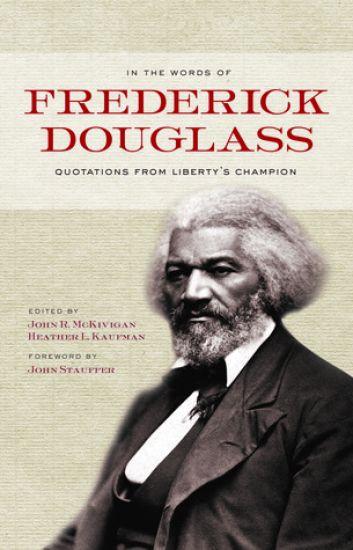
"No people are more talked about and no people seem more imperfectly understood. Those who see us every day seem not to know us."—Frederick Douglass on African Americans "There is no negro problem. The problem is whether the American people have loyalty enough, honor enough, patriotism enough, to live up to their own constitution."—on civil rights "Woman should have justice as well as praise, and if she is to dispense with either, she can better afford to part with the latter than the former."—on women "The thing worse than rebellion is the thing that causes rebellion."—on rebellion "A man is never lost while he still earnestly thinks himself worth saving; and as with a man, so with a nation."—on perseverance "I am ever pleased to see a man rise from among the people. Every such man is prophetic of the good time coming."—on Lincoln Frederick Douglass, a runaway Maryland slave, was witness to and participant in some of the most important events in the history of the American Republic between the years of 1818 and 1895. Beginning his long public career in 1841 as an agent of the Massachusetts Anti-Slavery Society, Douglass subsequently edited four newspapers and championed many reform movements. An advocate of morality, economic accumulation, self-help, and equality, Douglass supported racial pride, constant agitation against racial discrimination, vocational education for blacks, and nonviolent passive resistance. He was the only man who played a prominent role at the 1848 meeting in Seneca Falls that formally launched the women's rights movement. He was a temperance advocate and opposed capital punishment, lynching, debt peonage, and the convict lease system. A staunch defender of the Liberty and Republican parties, Douglass held several political appointments, frequently corresponded with leading politicians, and advised Presidents Lincoln, Grant, Hayes, Garfield, and Harrison. He met with John Brown before his abortive raid on Harpers Ferry, helped to recruit African American troops during the Civil War, attended most national black conventions held between 1840 and 1895, and served as U.S. ambassador to Haiti. Frederick Douglass has left one of the most extensive bodies of significant and quotable public statements of any figure in American history. In the Words of Frederick Douglass is a rich trove of quotations from Douglass. The editors have compiled nearly seven hundred quotations by Douglass that demonstrate the breadth and strength of his intellect as well as the eloquence with which he expressed his political and ethical principles.
The Papers of Frederick Law Olmsted

The Papers of Frederick Law Olmsted

Frederick Law Olmsted

Johns Hopkins University Press
1977
sidottu
"The park throughout is a single work of art, and as such, subject to the primary law of every work of art, namely, that it shall be framed upon a single, noble motive, to which the design of all its parts, in some more or less subtle way, shall be confluent and helpful."-Frederick Law Olmsted For decades Frederick Law Olmsted (1822-1903) designed parks and park systems across the United States, leaving an enduring legacy of designed public space that is enjoyed, studied, and protected today. Olmsted's plans and professional correspondence are a rich source for understanding his remarkable contribution to the quality of urban life in this country and the development of the profession of landscape architecture. His writings also provide a unique record of society and politics in post-Civil War America. Historians, landscape architects, conservationists, city planners and citizens' groups continue to turn to Olmsted for inspiration in their planning and protection of public open space in our cities. This latest volume of the Papers of Frederick Law Olmsted presents the record of his last years of residence in New York City. It includes reports on the design of Riverside and Morningside parks and Tompkins Square in Manhattan, as well as his comprehensive plan for the street system and rapid transit routes of the Bronx. It records his continuing work on Central Park and presents his final retrospective statement, "The Spoils of the Park." In addition, the volume contains an annotated version of the journal in which Olmsted recorded instances of political maneuvering and patronage politics in the years prior to his dismissal from the New York parks department in 1878. Later chapters chronicle the early stages of his planning of the Boston park system-the Back Bay Fens, Arnold Arboretum, and Riverway. Other major commissions, each with its own political complications, were the grounds of the U. S. Capitol, the completion of the new state capitol in Albany, the designing of a park on Mount Royal in Montreal, and construction of the park system of Buffalo, N. Y. The volume also presents Olmsted's commentary on issues of the times including Reconstruction policy and Civil Service reform. The Olmsted Papers project is supported by the National Endowment for the Humanities, the National Historical Publications and Records Commission, the National Trust for the Humanities, the National Association for Olmsted Parks, as well as private foundations and individuals.
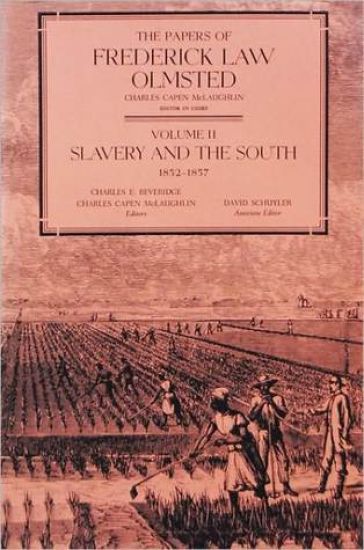
The Papers of Frederick Law Olmsted

The Papers of Frederick Law Olmsted

Frederick Law Olmsted

Johns Hopkins University Press
1981
sidottu
"An indispensable work for any student of the Old South. The book is not merely indispensable; it is challenging and controversial."—New York TimesFor decades Frederick Law Olmsted (1822–1903) designed parks and park systems across the United States, leaving an enduring legacy of designed public space that is enjoyed, studied, and protected today. His plans and professional correspondence offer a rich source for understanding his remarkable contribution to the quality of urban life in this country and the development of the profession of landscape architecture. Olmsted's writings also provide a unique record of society and politics in post–Civil War America. Historians, landscape architects, conservationists, city planners, students, and citizens' groups continue to turn to Olmsted for ideas about the development and conservation of green spaces in urban areas.The Olmsted Papers project is supported by the National Endowment for the Humanities, the National Historical Publications and Records Commission, the National Trust for the Humanities, the National Association for Olmsted Parks, as well as private foundations and individuals.