
Kirjahaku
Etsi kirjoja tekijän nimen, kirjan nimen tai ISBN:n perusteella.
1000 tulosta hakusanalla Frederick Newmeyer
The progress of his life from a slave to a leader in the movements for emancipation and Black labor are recounted by this nineteenth-century Black leader
In this sensitive intellectual biography David W. Blight undertakes the first systematic analysis of the impact of the Civil War on Frederick Douglass' life and thought, offering new insights into the meaning of the war in American history and in the Afro-American experience. Frederick Douglass' Civil War follows Douglass' intellectual and personal growth from the political crises of the 1850s through secession, war, black enlistment, emancipation, and Reconstruction. This book provides an engrossing story of Douglass' development of a social identity in relation to transforming events, and demonstrates that he saw the Civil War as the Second American Revolution, and himself as one of the founders of a new nation. Through Douglass' life, his voice, and his interpretations we see the Civil War era and its memory in a new light.

Tall and handsome, vigorous and hot-tempered, fearless to a fault, Frederick W. Lander (1821- 1862) became one of the most name-recognized Americans in the years 1854 to 1862. A top-notch railroad and wagon-road engineer in the western territories, a popular lyceum speaker, a published fiction writer and poet, an adept negotiator with Native Americans, and an agent for the Lincoln administration and the Union army, the Massachusetts native attracted newspaper coverage from coast to coast for his renown and versatility. His name evoked emotion and passion among his friends and associates, including artists, poets, explorers, engineers, soldiers, and politicians, but at his untimely death early in the Civil War, he quickly and tragically descended into anonymity. With an energy that befits his subject, Gary L. Ecelbarger brings to life this intriguing, romantic personality of the nineteenth century, tempting the imagination to consider what Lander might have accomplished had he lived longer.Using more than five hundred unpublished letters and documents written by Lander and his colleagues, superiors, and subordinates, Ecelbarger delves into all of the major aspects of Lander's life but focuses upon its final chapter in the Civil War. Promoted directly from unpaid aide-de-camp to brigadier general, Lander was quickly dubbed ""the great natural American soldier"" by Lieutenant General Winfield Scott for his brilliant promise as a military leader. The author offers a richly detailed narrative of Lander's courageous participation in three campaigns during the first year of the conflict: Rich Mountain, May- July, 1861; Ball's Bluff, September- October, 1861; and the previously undocumented campaign against Stonewall Jackson, January- March, 1862.Ecelbarger studies Lander's flaws, attributes, and achievements to provide a judicious, comprehensive analysis of his actions and character. In Frederick W. Lander, he produces the spellbinding story of a once-forgotten hero who now appears life size.
Frederick Douglass and Herman Melville
The University of North Carolina Press
2008
nidottu
Frederick Douglass (1818-1895) and Herman Melville (1819-1891) addressed in their writings a range of issues that continue to resonate in American culture: the reach and limits of democracy; the nature of freedom; the roles of race, gender, and sexuality; and the place of the United States in the world. Yet they are rarely discussed together, perhaps because of their differences in race and social position. Douglass escaped from slavery and tied his well-received nonfiction writing to political activism, becoming a figure of international prominence. Melville was the grandson of Revolutionary War heroes and addressed urgent issues through fiction and poetry, laboring in increasing obscurity.In eighteen original essays, the contributors to this collection explore the convergences and divergences of these two extraordinary literary lives. Developing new perspectives on literature, biography, race, gender, and politics, this volume ultimately raises questions that help rewrite the color line in nineteenth-century studies.The contributors are Elizabeth Barnes, Hester Blum, Russ Castronovo, John Ernest, William Gleason, Gregory Jay, Carolyn L. Karcher, Rodrigo Lazo, Maurice S. Lee, Robert S. Levine, Steven Mailloux, Dana D. Nelson, Samuel Otter, John Stauffer, Sterling Stuckey, Eric J. Sundquist, Elisa Tamarkin, Susan M. Ryan, David Van Leer, Maurice Wallace, Robert K. Wallace, and Kenneth W. Warren.
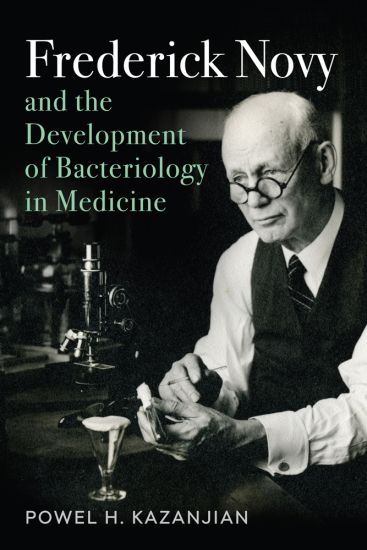
Frederick Novy and the Development of Bacteriology in Medicine
Powel Harold Kazanjian
Rutgers University Press
2017
sidottu
At the turn of the twentieth century, Frederick Novy was the leader among a new breed of full-time bacteriologists at American medical schools. Although historians have examined bacteriologic work done in American health department laboratories, there has been little examination of similar work completed within U.S. medical schools during this period. In Frederick Novy and the Development of Bacteriology in Medicine, medical historian, medical researcher, and clinician Powel H. Kazanjian uses Novy’s archived letters, laboratory notebooks, lecture notes, and published works to examine medical research and educational activities at the University of Michigan and other key medical schools during a formative period in modern medical science.
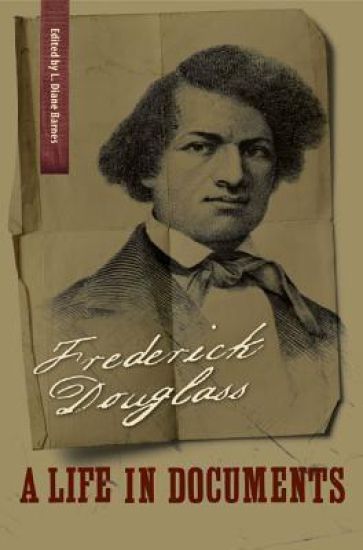
Frederick Douglass
University of Virginia Press
2013
nidottu
Frederick Douglass was born enslaved in February 1818, but from this most humble of beginnings, he rose to become a world-famous orator, newspaper editor, and champion of the rights of women and African Americans. He not only survived slavery to live in freedom but also became an outspoken critic of the institution and an active participant in the U.S. political system. Douglass advised presidents of the United States and formally represented his country in the diplomatic corps. He was the most prominent African American activist of the nineteenth century, and he left a treasure trove of documentary evidence detailing his life in slavery and achievements in freedom. This volume gathers and interprets valuable selections from a variety of Douglass’s writings, including speeches, editorials, correspondence, and autobiographies.
Frederick Law Olmsted is famous for his urban landscape designs: Central Park in Manhattan, Prospect Park in Brooklyn, and Franklin Park in Boston. Olmsted devoted much of his later life to this work. What was the source of this creative energy and imagination in his fascinating years? Melvin Kalfus is the first author to examine Olmsted's troubled, sometimes tragic childhood and adolescence in a search for the inner sources of his creative imagination. Kalfus argues that Olmsted's distressing early experiences fired his ambition and led him so obsessively to seek the world's esteem through his works. Kalfus also looks at Olmsted's varied early career during which he worked as an apprentice merchant, a seaman, a farmer, a manager of a mining plantation in California, a journalist, and author of three istorically important books on slavery, and as the General Secretary of the Civil War's Sanitary Commission, and enormous project organized to provide medical aid to Union soldiers.
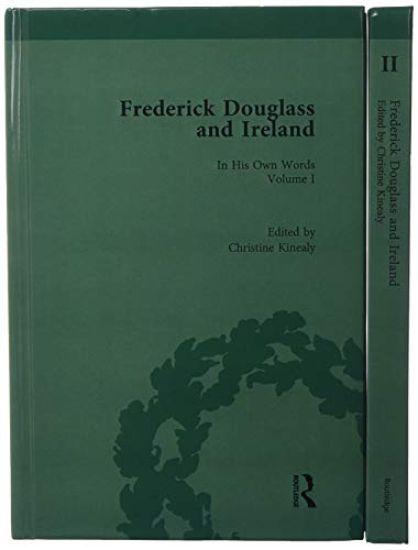
Frederick Douglass and Ireland
CRC Press Inc
2018
muu
Frederick Douglass spent four months in Ireland at the end of 1845 that proved to be, in his own words, ‘transformative’. He reported that for the first time in his life he felt like a man, and not a chattel. Whilst in residence, he became a spokesperson for the abolition movement, but by the time he left the country in early January 1846, he believed that the cause of the slave was the cause of the oppressed everywhere. This book adds new insight into Frederick Douglass and his time in Ireland. Contemporary newspaper accounts of the lectures that Douglass gave during his tour of Ireland (in Dublin, Wexford, Waterford, Cork, Limerick, and Belfast) have been located and transcribed. The speeches are annotated and accompanied by letters written by Douglass during his stay. In this way, for the first time, we hear Douglass in his own words. This unique approach allows us to follow the journey of the young man who, while in Ireland, discovered his own voice.
Selected Works of Frederick J. Almgren, Jr
Frederick J. Almgren
American Mathematical Society
1999
sidottu
A collection of some of the work of Frederick J Almgren, Jr, the man most noted for defining the shape of geometric variational problems and for his role in founding The Geometry Center. It includes a summary by Sheldon Chang of the famous 1,700 page paper on singular sets of area-minimizing $m$-dimensional surfaces in $R^n$.
In his introduction Mr. Foss gives us a short sketch of Delius; contributions by Rogber Quilter, Charles Kennedy and Percy Scott.
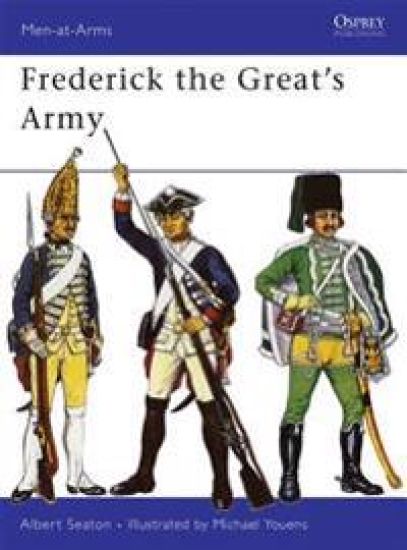
This book examines the uniforms, equipment, history and organisation of the men who served in the army of Frederick the Great. Major engagements in the First and Second Silesian Wars (1740-1742 and 1744-1745) and The Seven Years' War (1756-1763) are all covered. Uniforms are shown in full illustrated detail.
DISCOVER ONE OF THE MOST IMPORTANT ACCOUNTS OF SLAVERY IN NINETEENTH CENTURY AMERICA One of history’s greatest crimes, the American slave trade led to the suffering of untold numbers of men and women. But how can we better understand the lives and experiences of those who endured it? Narrative of the Life of Frederick Douglass is a harrowing first hand look at the brutal indignities of slavery in the nineteenth century, and the society that allowed it to happen. To better understand our shared present, we need to fully grapple with our difficult past. Douglass’ Narrative is a key piece of that puzzle. An insightful introduction by Debra Newman Ham, a former Black history archivist for the Library of Congress, analyzes the text and looks at the key events in Douglass’ life.
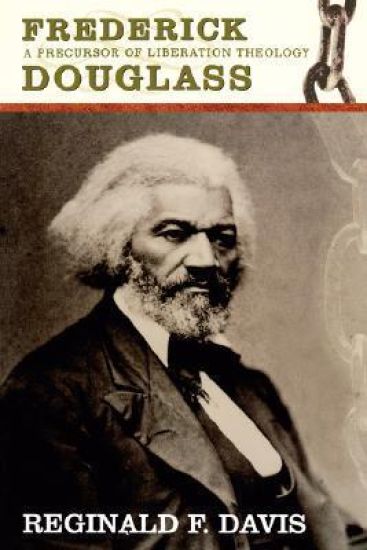
Frederick Douglass: A Precursor of Liberation Theology deals with the evolution of Frederick Douglass's philosophical and theological development. This book is another paradigm that expands the debate and places Douglass's thought in a more appropriate context, namely anticipating liberation theology. Since no consensus exists about Douglass's philosophical and theological development, Reginald F. Davis attempts to settle a dispute in Douglass studies that revolves around his religious odyssey and in particular the character and cause of his philosophical and theological development. The dispute among scholars is concerned with where to locate Douglass on the theological spectrum. Some scholars identify Douglass as having moved away from traditional forms of Christian millennialism, which elevates not the human agent but an omnipotent God who apocalyptically intervenes in human affairs and history. Still others interpret Douglass as having moved outside the circle of theism to enlightenment humanism. There is also an unsettled debate about the cause of Douglass's theological shift. One view attributes Douglass's shift to a psychological factor of rejection by White Churchmen over his support for radical policies like abolitionism. Another perspective attributes Douglass's shift to enlightenment principles of natural law and rationality. Davis utilizes selected categories from liberation theology to provide a more accurate exegesis of Douglass's study to encourage a new angle of interpretation of Douglass's philosophical and theological evolution.
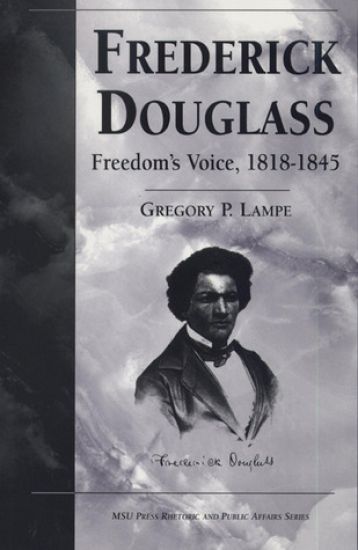
This volume in the Rhetoric & Public Affairs series chronicles Frederick Douglass's preparation for a career in oratory, his emergence as an abolitionist lecturer in 1841, and his development and activities as a public speaker and reformer from 1841 to 1845.Lampe's meticulous scholarship overturns much of the conventional wisdom about this phase of Douglass's life and career uncovering new information about his experiences as a slave and as a fugitive; it provokes a deeper and richer understanding of this renowned orator's emergence as an important voice in the crusade to end slavery. Contrary to conventional wisdom, Douglass was well prepared to become a full-time lecturer for the Massachusetts Anti-Slavery Society in 1841. His emergence as an eloquent voice from slavery was not as miraculous as scholars have led us to believe.Lampe begins by tracing Douglass's life as slave in Maryland and as fugitive in New Bedford, showing that experiences gained at this time in his life contributed powerfully to his understanding of rhetoric and to his development as an orator. An examination of his daily oratorical activities from the time of his emergence in Nantucket in 1841 until his departure for England in 1845 dispels many conventional beliefs surrounding this period, especially the belief that Douglass was under the wing of William Lloyd Garrison.Lampe's research shows that Douglass was much more outspoken and independent than previously thought and that at times he was in conflict with white abolitionists. Included in this work is a complete itinerary of Douglass's oratorical activities, correcting errors and omissions i
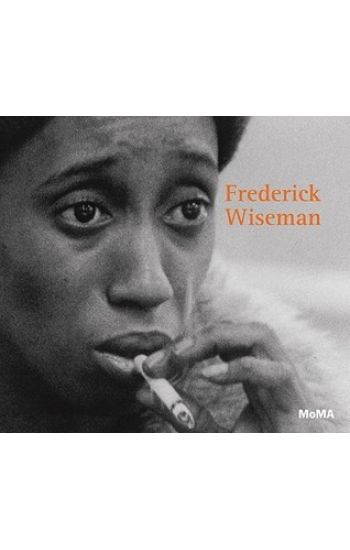
In a career that spans more than four decades, FrederickWiseman has made thirty-eight films that together form a monumental chronicle of latetwentieth- century institutional and cultural life. The dilemmasWiseman poses in his films – moral, philosophical, legal, medical, technological, political, religious and aesthetic – are both urgent and vexing, from his controversial debut, Titicut Follies (1967), the only American film ever censored for reasons other than national security or obscenity, to his recent critical and commercial success La Danse – The Paris Opera Ballet (2009) and forthcoming film Boxing Gym (2010). FrederickWiseman, the first publication in English to provide a comprehensive overview ofWiseman’s work to date (including projects for theatre and opera), features original essays by a variety of distinguished writers, critics, filmmakers and actors, and byWiseman himself. Richly illustrated with stills from his films, this volume is an incisive examination of one of cinema’s most fearless and innovative filmmakers.
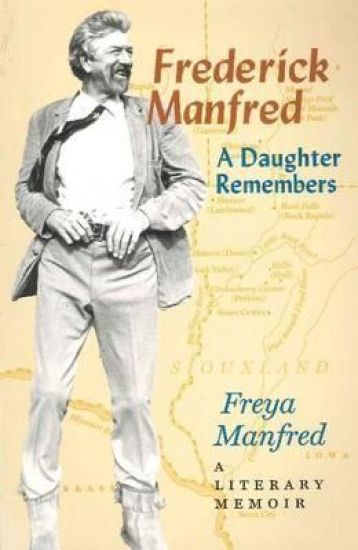
In this poignant memoir, poet-novelist Freya Manfred recounts the artistic life and death of her father, the prolific and highly regarded author Frederick Manfred. Using family letters and passages from her father's novels as well as her own memoirs, she explores their powerful personal and literary relationship, which spanned nearly five decades. Freya manfred described what it meant to be the daughter of a strong-willed man who was dedicated, sometimes at great cost, to a creative life. Her story starts with the tender power and beauty of his funeral in 1994, then moves back to a clear-eyed and often humorous depiction of their home life, which was shaped by her father's insistence on the quiet and solitude necessary for his writing. She remembers the shift in their relationship as her literary career blossomed and he added the roles of mentor and friend. Finally, she shares frank and loving detail of her family's struggle to help her father die well.