Kirjojen hintavertailu. Mukana 12 468 708 kirjaa ja 12 kauppaa.

Kirjahaku

Etsi kirjoja tekijän nimen, kirjan nimen tai ISBN:n perusteella.

1000 tulosta hakusanalla Freeman Gregory A.

The Jean Freeman Gallery Does Not Exist

The Jean Freeman Gallery Does Not Exist

Christopher Howard

MIT Press
2018
sidottu
An examination of a 1970s Conceptual art project-advertisements for fictional shows by fictional artists in a fictional gallery-that hoodwinked the New York art world.From the summer of 1970 to March 1971, advertisements appeared in four leading art magazines-Artforum, Art in America, Arts Magazine, and ARTnews-for a group show and six solo exhibitions at the Jean Freeman Gallery at 26 West Fifty-Seventh Street, in the heart of Manhattan's gallery district. As gallery goers soon discovered, this address did not exist-the street numbers went from 16 to 20 to 24 to 28-and neither did the art supposedly exhibited there. The ads were promoting fictional shows by fictional artists in a fictional gallery. The scheme, eventually exposed by a New York Times reporter, was concocted by the artist Terry Fugate-Wilcox as both work of art and critique of the art world. In this book, Christopher Howard brings this forgotten Conceptual art project back into view. Howard demonstrates that Fugate-Wilcox's project was an exceptionally clever embodiment of many important aspects of Conceptualism, incisively synthesizing the major aesthetic issues of its time-documentation and dematerialization, serialism and process, text and image, publishing and publicity. He puts the Jean Freeman Gallery in the context of other magazine-based work by Mel Bochner, Judy Chicago, Yoko Ono, and Ed Ruscha, and compares the fictional artists' projects with actual Earthworks by Walter De Maria, Peter Hutchinson, Dennis Oppenheim, and more. Despite the deadpan perfection of the Jean Freeman Gallery project, the art establishment marginalized its creator, and the project itself was virtually erased from art history. Howard corrects these omissions, drawing on deep archival research, personal interviews, and investigation of fine-printed clues to shed new light on a New York art world mystery.
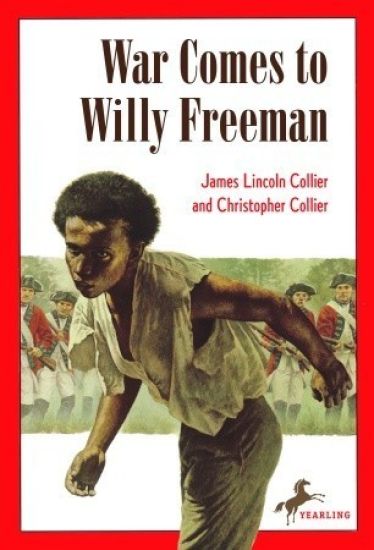
War Comes to Willy Freeman

War Comes to Willy Freeman

James Lincoln Collier

Bantam Dell Publishing Group, Div of Random House, Inc
1987
pokkari
Willy Freeman's life changes forever when she witnesses her father's death at the hands of the Redcoats and returns home to find that the British have taken her mother as a prisoner to New York City.Willy, disguised as a boy, begins her long search for her mother and luckily finds a haven at the famous Fraunces Tavern. But even with the help of Sam Fraunces and her fellow worker, Horace, Willy knows that to be black, female, and free leaves her open to danger at every turn. What will tomorrow bring?
Public Speaking the Freeman Way: The Five Universal Laws of Public Speaking I Learned from the Legendary Dr. Thomas F. Freeman
When I heard that Denzel Washington traveled to Houston, Texas to meet with Dr. Thomas F. Freeman (Doc), the head coach of the Texas Southern University (TSU) Debate Team, I knew the two-time academy award winner searched for and selected the best debate coach in the country. Why did Denzel Washington take time out of his busy schedule to come all the way to Houston, Texas to visit Dr. Freeman in his office on the campus of Texas Southern University? In preparation for the movie The Great Debaters, Denzel Washington and the cast sought the advice and consultation of Dr. Freeman and members of the TSU Debate Team to give them real insight into how ordinary students are transformed into extraordinary communicators. Public Speaking the Freeman Way was conceived out of my desire to honor Dr. Freeman by sharing with the world the Five Universal Laws of public speaking I learned from him as his student. Law I. Master Your Mental SelfPrinciple: Know Thy Powerful SelfLaw II. Disciplined PreparationPrinciple: Fail to plan, Plan to failLaw III. Speak Before You SpeakPrinciple: Your Body Carries a "Message of Your Choice"Law IV. Speak When You SpeakPrinciple: Get the Attention of Your Audience and Keep It Law V: Know When to Shut Up Principle: Always end things wellYour "FEAR" of speaking will no longer control you once you learn Public Speaking the Freeman Way
A Mary Wilkins Freeman Reader

A Mary Wilkins Freeman Reader

Mary Wilkins Freeman

University of Nebraska Press
1997
pokkari
Mary Wilkins Freeman (1852–1930), born in Randolph, Massachusetts, began to publish stories about New England in the early 1880s. In the following decades, Freeman drew widespread praise for her intimate portraits of women and her realistic depictions of rural New England life. She published short stories, essays, novels, plays, and children's books. Her stories, written in a clear and direct prose, are remarkable for their unpretentious, sympathetic portrayals of the lives of ordinary New Englanders of Freeman's era. Many of the stories depict rebellion against oppressive social and private conditions. Others describe conflicting desires for independence and lasting relationships. This volume of twenty-eight stories is the first to provide a representative sample of Freeman's finest work, from all phases of her career. It makes plain why Freeman (in the words of editor Mary R. Reichardt) is widely recognized as an important figure "in the history of American women's fiction . . . and the development of the American short story."
The Letters of William Freeman, London Merchant, 1678-1685
A rare source of information about late-seventeenth-century trans-Atlantic enterprise and London business, through the letters of a sugar planter and slave trader. The letters written by William Freeman, who had moved from the Caribbean to London to combine these pursuits with the work of a general commission merchant trading to the English West Indies, are a rare source of information about late-seventeenth-century trans-Atlantic enterprise and London business. Selections reproduced here are addressed to partners, agents, employees, correspondents and customers in Freeman’s native Leeward Islands, Africa, Madeira, Portugal, France, Ireland, Scotland and the West of England. Freeman's generation participated in the first large-scale cultivation of plantation sugar in the Caribbean Leeward Islands, and in the first sizeable introduction of African slaves into English America, and these two commodities would define the economics of the first Anglo-American empire until its demise.
The Story of the Freeman

The Story of the Freeman

Francis Neilson

Literary Licensing, LLC
2012
sidottu
The Story of the Freeman is a book written by Francis Neilson that delves into the history of the concept of freedom and what it means to be a free person. The author explores the different ways in which freedom has been interpreted and understood throughout history, from ancient times to the present day. The book examines the various struggles and movements that have fought for freedom, including the American Revolution, the French Revolution, and the struggle for civil rights in the United States. It also looks at the role of individuals who have fought for freedom, including William Wallace, Mahatma Gandhi, and Martin Luther King Jr. The Story of the Freeman is a comprehensive and thought-provoking exploration of the meaning of freedom and its importance in human history.Supplement To The American Journal Of Economics And Sociology, V6, No. 1, October, 1946.This scarce antiquarian book is a facsimile reprint of the old original and may contain some imperfections such as library marks and notations. Because we believe this work is culturally important, we have made it available as part of our commitment for protecting, preserving, and promoting the world's literature in affordable, high quality, modern editions, that are true to their original work.
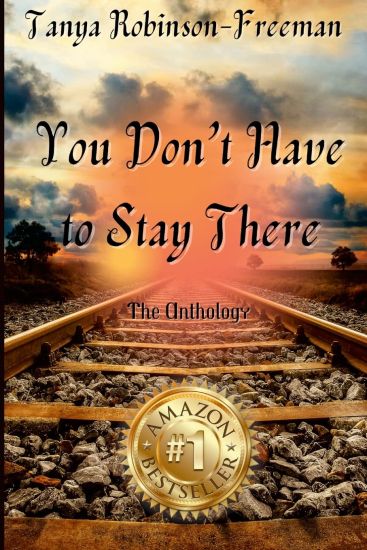
Tanya Robinson-Freeman - You Don't Have to Stay There
These Great Stories in this Anthology show us how to push through past pain. After reading this Anthology your thought pattern will be changed. If you find that the pain that you feeling is progressively becoming worse, is severe, intense, or disabling you should push through it. Always remember that your feelings are just a thought. When you change your thought pattern your feelings change. When we look deep inside ourselves and realize that we are True Conquers then we understand that we must push past the pain. Pushing past the pain changes your thinking and we move on. You Don't Have To Stay There.