
Kirjahaku
Etsi kirjoja tekijän nimen, kirjan nimen tai ISBN:n perusteella.
1000 tulosta hakusanalla Gabriel Compayre
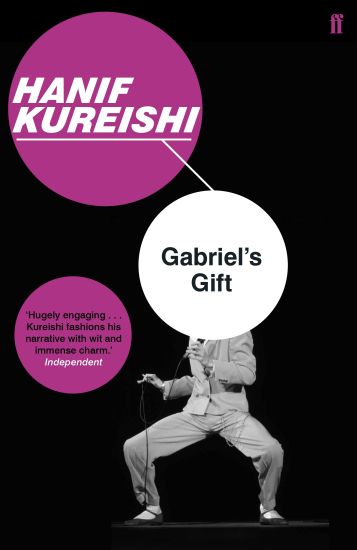
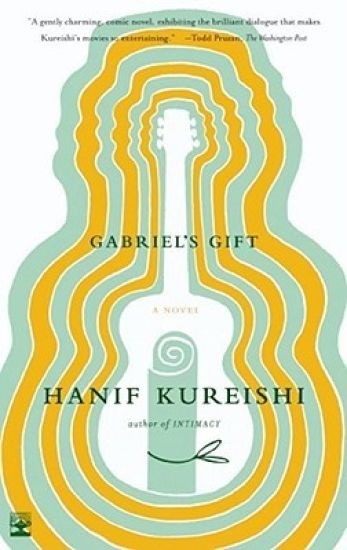
Gabriel is a fifteen-year-old North London schoolboy trying to come to terms with a new life, after the equilibrium of his family home has been shattered by the ousting of his father. Fending for himself, Gabriel is forced to grow up quickly. But a chance meeting with a seventies rock star crystallises the turbulent emotions inside Gabriel, and helps him to recognise and engage with his rare gift . . .
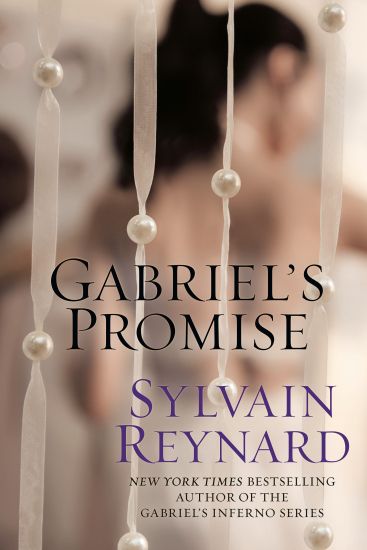
New York Times bestselling author Sylvain Reynard returns with the fourth installment of the beloved Gabriel's Inferno series. When Gabriel and Julia Emerson first lay eyes on their newborn daughter, Clare, they realize life as they know it will never be the same. Gabriel has vowed to be a good father when he suddenly receives an invitation to give a series of lectures in Edinburgh, Scotland--an opportunity of high prestige--but that would mean leaving his wife and child in Boston. Hesitant to bring it up, he keeps the opportunity from Julia as long as he can, not knowing she has a secret of her own. When a frightening situation arises that threatens their new family, both parents must make sacrifices. With the family in danger, the looming question remains: Will Gabriel pursue his lectureship in Edinburgh, leaving Julia and Clare vulnerable in Boston, or will he abandon the chance of a lifetime in order to ensure his family's safety?
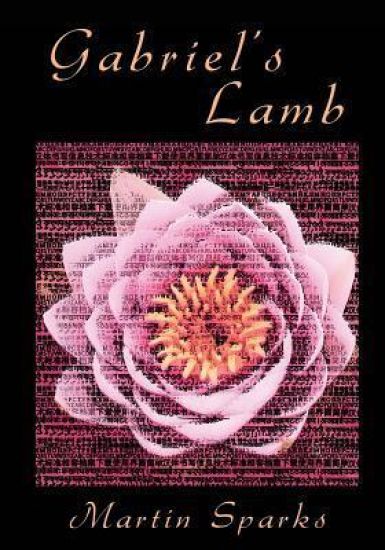
Martin Sparks debut novel is a layer cake of science fiction, medical ethics, and reflections on the borders between science, faith, and politics. In a genre dominated by action stories, tie-ins, and archetypes, the detailed characters and careful science stand out, creating a science fiction story which could unfold in anyone's small town. Twelve-year-old Rosetta has a problem. God speaks to her and fills her life with joy and certainty she longs to share. But on top of the usual problem that no one listens to kids, whenever she tries to talk about God, people send her to "specialists." Worse yet, the latest trip to a specialist went horribly wrong, stranding her in remote Ithaca, New York, far from her home laboratory. So she must search for family in this strange country of lonely people, and despite what kings, priests, and scholars say about her, carry on heeding the voices in her head. But powerful forces stalk Rosie. A high technology firm is desperate to get her back before their rivals get a chance to study her. A government both threatened and tempted by the secrets she embodies needs them to stay secret - one way or another. And a powerful few who take prophesy very seriously are unwilling to let Rosie's version of God interfere with their implementation of the scriptures. Rosetta's allies are few. A fire investigator stumped by an eight foot circle of glass burned into concrete, an unhappily retired workaholic, a Pakistani woman on the run from the Taliban, and a restless university professor are all connected by the girl. But when each of them seems unable to cope with their own lives, how will they curb excesses of science, religion, and politics- and save a child? A sweeping narrative... Rosetta's story touches on an array of timely themes, ranging from Christian fundamentalism to genetic engineering to domestic terrorism...A compelling mystery. - Kirkus Review

A treasured cat with a big problem.The Andrews feed poor Gabby cheap tinned fish. This is unsatisfactory for such a refined feline. Gabby decides to investigate options in the local eats street, not without a few setbacks
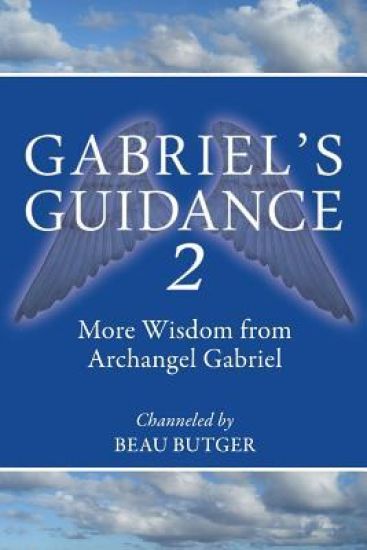
Gabriel's Guidance 2: More Wisdom from Archangel Gabriel
Beau Butger
Be Love Publishing
2017
nidottu

Gabriel Garcia Marquez, author of the modern classic One Hundred Years of Solitude and Love in the Time of Cholera, is one of the greatest and most popular writers of the late-twentieth century. As Gerald Martin tells the story of the author's fascinating rise to wealth and international fame, he reveals the tensions in Garcia Marquez's life between celebrity and literary quality, between politics and writing, and between power, solitude and love. Interviewing more than three hundred people including Fidel Castro, Felipe Gonzalez, Carlos Fuentes and Mario Vargas Llosa, the author's large family as well as 'Gabo' himself, Martin immerses himself in Garcia Marquez's world. This at first 'tolerated' and now 'official' biography is as gripping and revealing as the writer's journalism and as complex and involving as any of his fiction.
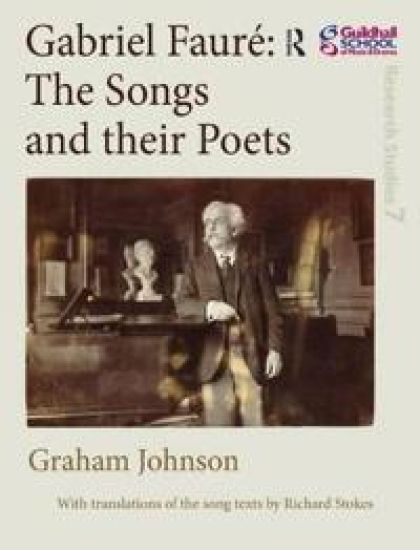
The career of Gabriel Fauré as a composer of songs for voice and piano traverses six decades (1862-1921); almost the whole history of French mélodie is contained within these parameters. In the 1860s Fauré, the lifelong protégé of Camille Saint-Saëns, was a suavely precocious student; he was part of Pauline Viardot's circle in the 1870s and he nearly married her daughter. Pointed in the direction of symbolist poetry by Robert de Montesquiou in 1886, Fauré was the favoured composer from the early 1890s of Winnarretta Singer, later Princesse de Polignac, and his songs were revered by Marcel Proust. In 1905 he became director of the Paris Conservatoire, and he composed his most profound music in old age. His existence, steadily productive and outwardly imperturbable, was undermined by self-doubt, an unhappy marriage and a tragic loss of hearing. In this detailed study Graham Johnson places the vocal music within twin contexts: Fauré's own life story, and the parallel lives of his many poets. We encounter such giants as Charles Baudelaire and Paul Verlaine, the patrician Leconte de Lisle, the forgotten Armand Silvestre and the Belgian symbolist Charles Van Lerberghe. The chronological range of the narrative encompasses Fauré's first poet, Victor Hugo, who railed against Napoleon III in the 1850s, and the last, Jean de La Ville de Mirmont, killed in action in the First World War. In this comprehensive and richly illustrated study each of Fauré's 109 songs receives a separate commentary. Additional chapters for the student singer and serious music lover discuss interpretation and performance in both aesthetical and practical terms. Richard Stokes provides parallel English translations of the original French texts. In the twenty-first century musical modernity is evaluated differently from the way it was assessed thirty years ago. Fauré is no longer merely a 'Master of Charms' circumscribed by the belle époque. His status as a great composer of timeless
Looking for something fresh and creative for the Advent season? Here's a charming set of five lighthearted plays that's sure to engage audiences and set the holiday spirit while remaining focused on the scriptural message. Written in whimsical rhyming verse, the scenes detail the prophecies of the Messiah and the story of the Incarnation through the interaction of three angels (Gabriel, Wonderful, and, Marvelous) with several biblical characters. Congregations of any size will find these sketches easy to use -- only a small cast is needed, and the readers? theater format means no extensive costuming or staging is required.

Bernard Shaw and Gabriel Pascal
Gabriel Pascal; Bernard Shaw
University of Toronto Press
1996
sidottu
After movie-makers in England bungled film versions of Bernard Shaw's How He Lied to Her Husband and Arms and the Man, producers and directors in Germany and Holland botched those based on Pygmalion, and a Hollywood screenplay desecrated The Devil's Disciple, Shaw took a chance on Gabriel Pascal and gave him permission to produce a movie version of Pygmalion in England. The contract was signed on 13 December 1935 and Pascal, a charming, flamboyant Hungarian emigre with relatively little experience in cinema, did the playwright proud. Shaw's gamble paid off in this Pygmalion, which, to this day, is usually claimed to be the best film version of any of his plays. This first collection of the correspondence of Bernard Shaw and Gabriel Pascal contains 268 letters, the greatest portion of which have not been previously published. They provide an intimate, behind-the-scenes view of the film industry's day-to-day workings and of the art of movie-making, from the signing of the first contract between Shaw and Pascal, to Shaw's death in 1950. The letters reveal the great extent to which Pascal, unlike his predecessors, scrupulously kept Shaw informed of what he did. We learn about whom Pascal negotiated with, the merits of association with certain individuals or businesses, contract problems, the backbiting and backstabbing of the industry, difficulties with casting, and progress throughout the filming. Shaw accepted and embellished some of Pascal's ideas for production, and vehemently disagreed with others. Their correspondence highlights the differences in personality between the two men. Shaw was ever the astute businessman, while Pascal was the eager artist. Shaw the methodical mastermind contrasted sharply with Pascal the entrepreneur with many projects under development, few of which came to fruition. Most important, however, the letters, postal cards, and telegrams collected here reveal how Pascal fought for the integrity of Shavian cinema; how, as a director, he tried to create films that were true to their dramatic sources; and how, in partnership with Pascal, Shaw's cinematic writings flourished.
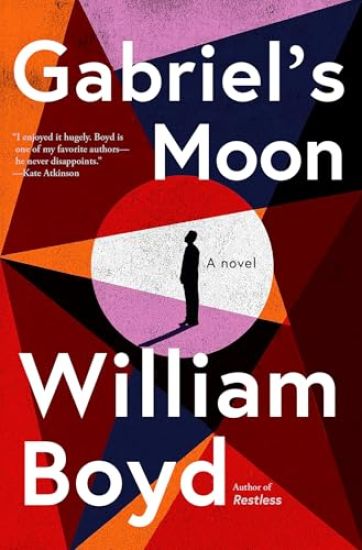
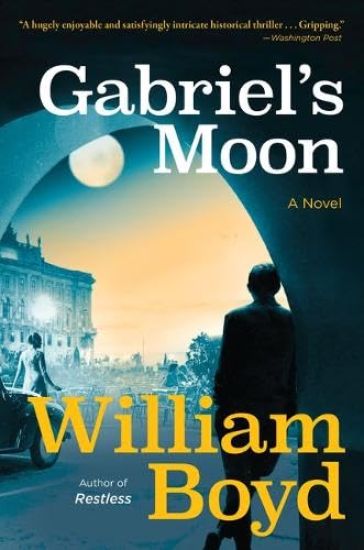
From the internationally bestselling author beloved by readers everywhere, William Boyd offers his most exhilarating novel yet, following a reluctant spy drawn into the shadows of espionage and obsessionGabriel Dax is a young man haunted by the memories of a fire that took his mother's life. Every night, when sleep finally comes, he dreams about his childhood home in flames. His days are spent on the move as an acclaimed travel writer, capturing the changing landscapes of Europe in the grip of the Cold War. When he is offered the chance to interview Patrice Lumumba, newly elected president of the People's Republic of the Congo, he finds himself drawn into a web of duplicities and betrayals.Falling under the spell of Faith Green, an enigmatic and ruthlessly efficient MI6 handler, he becomes "her spy," unable to resist her demands. But amid the peril, paranoia, and passion consuming Gabriel's new covert life, there will also be revelations closer to home that may change his own story, and the fates of those around him.Traveling from the vibrant streets of sixties London to the sun-soaked cobbles of Cadiz and the frosty squares of Warsaw, Gabriel's Moon is a remarkable accomplishment from one of our greatest storytellers.

Gabriel Okara, a prize-winning author whose literary career spans six decades, is rightly hailed as the elder statesman of Nigerian literature. The first Modernist poet of anglophone Africa, he is best known for The Fisherman’s Invocation (1978), The Dreamer, His Vision (2005), and for his early experimental novel, The Voice (1964). Arranged in six sections, Gabriel Okara: Collected Poems includes the poet’s earliest lyric verse along with poems written in response to Nigeria’s war years; literary tributes and elegies to fellow poets, activists, and loved ones long dead; and recent dramatic and narrative poems. The introduction by Brenda Marie Osbey contextualizes Okara’s work in the history of Nigerian, African, and English language literatures. Gabriel Okara: Collected Poems is at once a treasure for those long in search of a single authoritative edition and a revelation and timely introduction for readers new to the work of one of Africa’s most revered poets.
Gabriel's Rebellion tells the dramatic story of what was perhaps the most extensive slave conspiracy in the history of the American South. Douglas Egerton illuminates the complex motivations that underlay two related Virginia slave revolts: the first, in 1800, led by the slave known as Gabriel; and the second, called the 'Easter Plot,' instigated in 1802 by one of his followers. Although Gabriel has frequently been portrayed as a messianic, Samson-like figure, Egerton shows that he was a literate and highly skilled blacksmith whose primary goal was to destroy the economic hegemony of the 'merchants,' the only whites he ever identified as his enemies. According to Egerton, the social, political, and economic disorder of the Revolutionary era weakened some of the harsh controls that held slavery in place during colonial times. Emboldened by these conditions, a small number of literate slaves--most of them highly skilled artisans--planned an armed insurrection aimed at destroying slavery in Virginia. The intricate scheme failed, as did the Easter Plot that stemmed from it, and Gabriel and many of his followers were hanged. By placing the revolts within the broader context of the volatile political currents of the day, Egerton challenges the conventional understanding of race, class, and politics in the early days of the American republic.
Anthony Minghella's 1996 film The English Patient won nine Academy Awards_, including one for Best Original Score. Though Gabriel Yared had previously composed scores for several films, including Betty Blue, Camille Claudel, and Vincent & Theo, his work on The English Patient launched him into international public consciousness. His score for this film testifies to the continued appeal of a classical, noncommercial style of scoring, eschewing the use of contemporary pop music for a more 'timeless' sound. In Gabriel Yared's The English Patient: A Film Score Guide, author Heather Laing offers the most in-depth examination to date of the work of the composer. Laing examines Yared's approach to film scoring, his compositional techniques and the impact of his partnership with Minghella before and after The English Patient_through an exploration of such films as The Moon in the Gutter, Betty Blue, Tatie Danielle, IP5, The Lover, City of Angels, and The Talented Mr. Ripley. The integral role of music in The English Patient is contextualized within a detailed analysis of the film's narrative construction, themes, and motifs. The soundtrack is examined as a whole, and the specific 'soundworlds' of each character, location, and relationship are drawn out as the basis for the overall style and construction of the score. Musical themes are viewed in both musical and narrative terms, and musical connections between the themes are identified. A close analysis of the placement and development of musical themes throughout the film reveals the complex musical journey that forms a unique and integral element of the characters.
Anthony Minghella's 1996 film The English Patient won nine Academy Awards™, including one for Best Original Score. Though Gabriel Yared had previously composed scores for several films, including Betty Blue, Camille Claudel, and Vincent & Theo, his work on The English Patient launched him into international public consciousness. His score for this film testifies to the continued appeal of a classical, noncommercial style of scoring, eschewing the use of contemporary pop music for a more 'timeless' sound. In Gabriel Yared's The English Patient: A Film Score Guide, author Heather Laing offers the most in-depth examination to date of the work of the composer. Laing examines Yared's approach to film scoring, his compositional techniques and the impact of his partnership with Minghella before and after The English Patient—through an exploration of such films as The Moon in the Gutter, Betty Blue, Tatie Danielle, IP5, The Lover, City of Angels, and The Talented Mr. Ripley. The integral role of music in The English Patient is contextualized within a detailed analysis of the film's narrative construction, themes, and motifs. The soundtrack is examined as a whole, and the specific 'soundworlds' of each character, location, and relationship are drawn out as the basis for the overall style and construction of the score. Musical themes are viewed in both musical and narrative terms, and musical connections between the themes are identified. A close analysis of the placement and development of musical themes throughout the film reveals the complex musical journey that forms a unique and integral element of the characters.