Kirjojen hintavertailu. Mukana 11 342 296 kirjaa ja 12 kauppaa.

Kirjahaku

Etsi kirjoja tekijän nimen, kirjan nimen tai ISBN:n perusteella.

1000 tulosta hakusanalla Geoff Cottrell

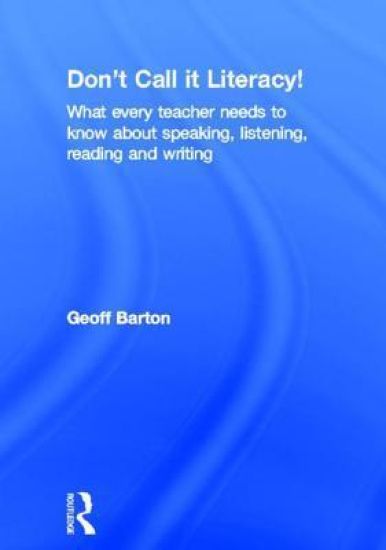
Don't Call it Literacy!

Don't Call it Literacy!

Geoff Barton

Routledge
2012
nidottu
"Every teacher in English is a teacher of English," said George Sampson, one of the early school inspectors, back in 1921. It’s never been truer, or more relevant.Literacy has a major impact on young people’s life-chances and it is every teacher’s responsibility to help build their communication, reading and writing skills. However, this book isn’t just about literacy; it’s also about what great teachers do in their classrooms, about applying knowledge consistently across classrooms, in order to help pupils to become more confident in their subjects.This book shows every teacher – whatever your subject – the simple steps which could transform your students into better speakers, listeners, readers and writers. Harnessing a range of straightforward, but powerful techniques, it shows you how to help each student in your subject to improve their spelling, to use the key vocabulary of your subject more accurately and to speak, read and write with confidence like a historian, scientist, designer or mathematician. The book is structured into clear sections which are then divided into short, easy-to-absorb units on the classroom implications of what we know about literacy. Don’t Call it Literacy! also includes: language commentaries which exemplify points made by the author; talking points at the end of each unit for self-assessment; a glossary for non-specialists; subject specific vocabulary for building students’ word power; tutor time spellings lists; a reading list on teaching, language, literacy and education.Written by a leading authority in the field, this book will help both trainee and practising secondary school teachers to turn their classroom into literacy-friendly environments, increasing the motivation and achievement of their students.
Portfolio and Programme Management Demystified

Portfolio and Programme Management Demystified

Geoff Reiss; Paul Rayner

Routledge
2012
nidottu
You’re now responsible for a programme, or you’ve got a portfolio to manage? Where do you start? Right here!Projects are not simply the bread and butter of an organisation. Form them into programmes or portfolios and they can be prioritised and integrated to deliver change to your organization in line with your strategic vision. You will be able to control costs and risks and bring together a complex series of themes effectively.This overhauled second edition now combines portfolio management as a parallel theme with programme management, and it is brought in line with the current thinking of the Association for Project Management and the Project Management Institute. It is written for managers in both the public and private sectors. This new edition includes half a dozen short case studies (from Belgium’s Fortis Bank, a software company, local government, and central government), along with more on cross-functional management.Together with Project Management Demystified, also from Routledge (third edition, 2007), it provides the tools to manage your projects, your programmes and your portfolio to a very high level.
Managing Adaptation to Climate Risk

Managing Adaptation to Climate Risk

Geoff O'Brien; Phil O'Keefe

Routledge
2013
sidottu
Climate change is the single largest threat to the attainment of the Millennium Development Goals (MDGs) and sustainable development. Addressing climate risk is a challenge for all. This book calls for greater collaboration between climate communities and disaster development communities. In discussing this, the book will evaluate the approaches used by each community to reduce the adverse effects of climate change. One area that offers some promise for bringing together these communities is through the concept of resilience. This term is increasingly used in each community to describe a process that embeds capacity to respond to and cope with disruptive events. This emphasizes an approach that is more focused on pre-event planning and using strategies to build resilience to hazards in an adaptation framework. The book will conclude by evaluating the scope for a holistic approach where these communities can effectively contribute to building communities that are resilient to climate driven risks.
Managing Adaptation to Climate Risk

Managing Adaptation to Climate Risk

Geoff O'Brien; Phil O'Keefe

Routledge
2013
nidottu
Climate change is the single largest threat to the attainment of the Millennium Development Goals (MDGs) and sustainable development. Addressing climate risk is a challenge for all. This book calls for greater collaboration between climate communities and disaster development communities. In discussing this, the book will evaluate the approaches used by each community to reduce the adverse effects of climate change. One area that offers some promise for bringing together these communities is through the concept of resilience. This term is increasingly used in each community to describe a process that embeds capacity to respond to and cope with disruptive events. This emphasizes an approach that is more focused on pre-event planning and using strategies to build resilience to hazards in an adaptation framework. The book will conclude by evaluating the scope for a holistic approach where these communities can effectively contribute to building communities that are resilient to climate driven risks.
Marxist Political Economy

Marxist Political Economy

Geoff Pilling

Routledge
2012
sidottu
Geoff Pilling’s work shows that Marxist theory is relevant to those struggling to understand the problems of capitalist society today, and that the work not only of Marx and Engels but that of later Marxist theorists, including Lenin is worth studying. It also shows that to understand the problems of today’s society needs more than narrow specialist economic analysis, but a deep awareness of current developments in society.
Teach Now! The Essentials of Teaching
Being taught by a great teacher is one of the great privileges of life. Teach Now! is an exciting new series that opens up the secrets of great teachers and, step-by-step, helps trainees to build the skills and confidence they need to become first-rate classroom practitioners. Teach Now! The Essentials of Teaching provides the fundamental knowledge for becoming a great teacher. Combining a grounded, modern rationale for learning and teaching with highly practical training approaches it covers everything you need to know from preparing for your teaching practice to getting your first job.Harnessing a range of simple, but powerful techniques, the book shows you how you can translate the Teachers’ Standards into your own classroom practice and provide the evidence that you have met them. It also demystifies what the best teachers know and do instinctively to create students who want to learn and get a buzz from developing new skills. The book is structured in clear sections which are then divided into short, easy-to-absorb units offering clear, straightforward advice on all aspects of teaching including:why teach?the application and recruitment process for traininghelping students’ achieve good progressplanning, differentiation and assessmentbehaviour managementusing language effectively in the classroommanaging parents’ eveningsbeing an effective tutorhow to have lunch!With talking points to encourage reflection and a wide range of examples to illustrate practice, Teach Now! The Essentials of Teaching provides expert guidance as you start your exciting and rewarding career as an outstanding teacher.
Teach Now! The Essentials of Teaching
Being taught by a great teacher is one of the great privileges of life. Teach Now! is an exciting new series that opens up the secrets of great teachers and, step-by-step, helps trainees to build the skills and confidence they need to become first-rate classroom practitioners. Teach Now! The Essentials of Teaching provides the fundamental knowledge for becoming a great teacher. Combining a grounded, modern rationale for learning and teaching with highly practical training approaches it covers everything you need to know from preparing for your teaching practice to getting your first job.Harnessing a range of simple, but powerful techniques, the book shows you how you can translate the Teachers’ Standards into your own classroom practice and provide the evidence that you have met them. It also demystifies what the best teachers know and do instinctively to create students who want to learn and get a buzz from developing new skills. The book is structured in clear sections which are then divided into short, easy-to-absorb units offering clear, straightforward advice on all aspects of teaching including:why teach?the application and recruitment process for traininghelping students’ achieve good progressplanning, differentiation and assessmentbehaviour managementusing language effectively in the classroommanaging parents’ eveningsbeing an effective tutorhow to have lunch!With talking points to encourage reflection and a wide range of examples to illustrate practice, Teach Now! The Essentials of Teaching provides expert guidance as you start your exciting and rewarding career as an outstanding teacher.
Sociology and School Knowledge

Sociology and School Knowledge

Geoff Whitty

Routledge
2017
sidottu
The rise of a radical ‘new’ sociology of education during the early 1970s focused attention on the nature of school knowledge. Although this new approach was set to revolutionize the subject, within a few years, many people considered these developments an eccentric interlude, with little relevance to curriculum theory or practice.First published in 1985, this book offers a more positive view of the new sociology of education and its contribution to our understanding of the curriculum. In doing so, it argues that some of the radical promise of the new sociology of education could be realised, but only if sociologists, teachers and political movements of the left work more closely together.
Sociology and School Knowledge

Sociology and School Knowledge

Geoff Whitty

Routledge
2018
nidottu
The rise of a radical ‘new’ sociology of education during the early 1970s focused attention on the nature of school knowledge. Although this new approach was set to revolutionize the subject, within a few years, many people considered these developments an eccentric interlude, with little relevance to curriculum theory or practice.First published in 1985, this book offers a more positive view of the new sociology of education and its contribution to our understanding of the curriculum. In doing so, it argues that some of the radical promise of the new sociology of education could be realised, but only if sociologists, teachers and political movements of the left work more closely together.
Nazism as Fascism

Nazism as Fascism

Geoff Eley

Routledge
2013
sidottu
Offering a dynamic and wide-ranging examination of the key issues at the heart of the study of German Fascism, Nazism as Fascism brings together a selection of Geoff Eley’s most important writings on Nazism and the Third Reich.Featuring a wealth of revised, updated and new material, Nazism as Fascism analyses the historiography of the Third Reich and its main interpretive approaches. Themes include:Detailed reflection on the tenets and character of Nazi ideology and institutional practicesExamination of the complicated processes that made Germans willing to think of themselves as NazisDiscussion of Nazism’s presence in the everyday lives of the German PeopleConsideration of the place of women under the Third ReichIn addition, this book also looks at the larger questions of the historical legacy of Fascist ideology and charts its influence and development from its origin in 1930’s Germany through to its intellectual and spatial influence on a modern society in crisis.In Nazism as Fascism Geoff Eley engages with Germany’s political past in order to evaluate the politics of the present day and to understand what happens when the basic principles of democracy and community are violated. This book is essential reading not only for students of German history, but for anyone with an interest in history and politics more generally.
Nazism as Fascism

Nazism as Fascism

Geoff Eley

Routledge
2013
nidottu
Offering a dynamic and wide-ranging examination of the key issues at the heart of the study of German Fascism, Nazism as Fascism brings together a selection of Geoff Eley’s most important writings on Nazism and the Third Reich.Featuring a wealth of revised, updated and new material, Nazism as Fascism analyses the historiography of the Third Reich and its main interpretive approaches. Themes include:Detailed reflection on the tenets and character of Nazi ideology and institutional practicesExamination of the complicated processes that made Germans willing to think of themselves as NazisDiscussion of Nazism’s presence in the everyday lives of the German PeopleConsideration of the place of women under the Third ReichIn addition, this book also looks at the larger questions of the historical legacy of Fascist ideology and charts its influence and development from its origin in 1930’s Germany through to its intellectual and spatial influence on a modern society in crisis.In Nazism as Fascism Geoff Eley engages with Germany’s political past in order to evaluate the politics of the present day and to understand what happens when the basic principles of democracy and community are violated. This book is essential reading not only for students of German history, but for anyone with an interest in history and politics more generally.
Introducing Functional Grammar

Introducing Functional Grammar

Geoff Thompson

Routledge
2013
sidottu
Introducing Functional Grammar, third edition, provides a user-friendly overview of the theoretical and practical aspects of the systemic functional grammar (SFG) model.No prior knowledge of formal linguistics is required as the book provides: An opening chapter on the purpose of linguistic analysis, which outlines the differences between the two major approaches to grammar - functional and formal. An overview of the SFG model - what it is and how it works. Advice and practice on identifying elements of language structure such as clauses and clause constituents. Numerous examples of text analysis using the categories introduced, and discussion about what the analysis shows. Exercises to test comprehension, along with answers for guidance.The third edition is updated throughout, and is based closely on the fourth edition of Halliday and Matthiessen's Introduction to Functional Grammar. A glossary of terms, more exercises and an additional chapter are available on the product page at: https://www.routledge.com/9781444152678.Introducing Functional Grammar remains the essential entry guide to Hallidayan functional grammar, for undergraduate and postgraduate students of language and linguistics.
Community Resilience and Environmental Transitions
This book discusses the resilience of communities in both developed and developing world contexts. It investigates the notion of ‘resilience’ and the challenges faced by local communities around the world to deal with disturbances (natural hazards or human-made) that may threaten their long-term survival. Using global examples, specific emphasis is placed on how learning processes, traditions, policies and politics affect the resilience of communities and what constraints and opportunities exist for communities to raise resilience levels.
Understanding The New Statistics

Understanding The New Statistics

Geoff Cumming

Routledge
2011
sidottu
This is the first book to introduce the new statistics - effect sizes, confidence intervals, and meta-analysis - in an accessible way. It is chock full of practical examples and tips on how to analyze and report research results using these techniques. The book is invaluable to readers interested in meeting the new APA Publication Manual guidelines by adopting the new statistics - which are more informative than null hypothesis significance testing, and becoming widely used in many disciplines.Accompanying the book is the Exploratory Software for Confidence Intervals (ESCI) package, free software that runs under Excel and is accessible at www.thenewstatistics.com. The book’s exercises use ESCI's simulations, which are highly visual and interactive, to engage users and encourage exploration. Working with the simulations strengthens understanding of key statistical ideas. There are also many examples, and detailed guidance to show readers how to analyze their own data using the new statistics, and practical strategies for interpreting the results. A particular strength of the book is its explanation of meta-analysis, using simple diagrams and examples. Understanding meta-analysis is increasingly important, even at undergraduate levels, because medicine, psychology and many other disciplines now use meta-analysis to assemble the evidence needed for evidence-based practice.The book’s pedagogical program, built on cognitive science principles, reinforces learning: Boxes provide "evidence-based" advice on the most effective statistical techniques. Numerous examples reinforce learning, and show that many disciplines are using the new statistics.Graphs are tied in with ESCI to make important concepts vividly clear and memorable.Opening overviews and end of chapter take-home messages summarize key points.Exercises encourage exploration, deep understanding, and practical applications.This highly accessible book is intended as the core text for any course that emphasizes the new statistics, or as a supplementary text for graduate and/or advanced undergraduate courses in statistics and research methods in departments of psychology, education, human development , nursing, and natural, social, and life sciences. Researchers and practitioners interested in understanding the new statistics, and future published research, will also appreciate this book. A basic familiarity with introductory statistics is assumed.
Understanding The New Statistics

Understanding The New Statistics

Geoff Cumming

Routledge
2011
nidottu
This is the first book to introduce the new statistics - effect sizes, confidence intervals, and meta-analysis - in an accessible way. It is chock full of practical examples and tips on how to analyze and report research results using these techniques. The book is invaluable to readers interested in meeting the new APA Publication Manual guidelines by adopting the new statistics - which are more informative than null hypothesis significance testing, and becoming widely used in many disciplines.Accompanying the book is the Exploratory Software for Confidence Intervals (ESCI) package, free software that runs under Excel and is accessible at www.thenewstatistics.com. The book’s exercises use ESCI's simulations, which are highly visual and interactive, to engage users and encourage exploration. Working with the simulations strengthens understanding of key statistical ideas. There are also many examples, and detailed guidance to show readers how to analyze their own data using the new statistics, and practical strategies for interpreting the results. A particular strength of the book is its explanation of meta-analysis, using simple diagrams and examples. Understanding meta-analysis is increasingly important, even at undergraduate levels, because medicine, psychology and many other disciplines now use meta-analysis to assemble the evidence needed for evidence-based practice.The book’s pedagogical program, built on cognitive science principles, reinforces learning: Boxes provide "evidence-based" advice on the most effective statistical techniques. Numerous examples reinforce learning, and show that many disciplines are using the new statistics.Graphs are tied in with ESCI to make important concepts vividly clear and memorable.Opening overviews and end of chapter take-home messages summarize key points.Exercises encourage exploration, deep understanding, and practical applications.This highly accessible book is intended as the core text for any course that emphasizes the new statistics, or as a supplementary text for graduate and/or advanced undergraduate courses in statistics and research methods in departments of psychology, education, human development , nursing, and natural, social, and life sciences. Researchers and practitioners interested in understanding the new statistics, and future published research, will also appreciate this book. A basic familiarity with introductory statistics is assumed.
Management and Business Skills in the Built Environment

Management and Business Skills in the Built Environment

Geoff Crook; Mike Waterhouse

Spon Press
1995
nidottu
The third book in this series is written by a team of interdisciplinary teachers and professionals, led by Mike Waterhouse and Geoff Crook, is aimed at students and professionals in the built environment who wish to develop their management and business skills. In a rapidly changing world where techniques and custom and practice can date soon after discovery, where organisations are constantly changing shape and style to cope with rapid technological, economic, political and social change, there is a need for managers and built environment professionals who know how to learn, who are self-aware enough to know when they don't know, and who have the confidence and personal substance to be able to initiate the required learning activites when necessary.
Building Energy Management Systems

Building Energy Management Systems

Geoff Levermore

Spon Press
2000
nidottu
Energy management systems are used to monitor building temperature inside and outside buildings and control the boilers and coolers. Energy efficiency is a major cost issue for commerce and industry and of growing importance on university syllabuses. Fully revised and updated, this text considers new developments in the control of low energy and HVAC systems and contains two new chapters. Written for practising engineers (essential for control engineers) and energy managers in addition to being essential reading for under/postgraduate courses in building services and environmental engineering.
Building Energy Management Systems

Building Energy Management Systems

Geoff Levermore

Spon Press
2000
sidottu
Energy management systems are used to monitor building temperature inside and outside buildings and control the boilers and coolers. Energy efficiency is a major cost issue for commerce and industry and of growing importance on university syllabuses. Fully revised and updated, this text considers new developments in the control of low energy and HVAC systems and contains two new chapters. Written for practising engineers (essential for control engineers) and energy managers in addition to being essential reading for under/postgraduate courses in building services and environmental engineering.
Heinemann Advanced History: China, 1900-76

Heinemann Advanced History: China, 1900-76

Geoff Stewart

pearson education limited
2006
nidottu
Heinemann Advanced History titles focus on periods of great change in countries that are once again taking centre stage in world politics. Affordable and authoritative, Heinemann Advanced History features practice questions as well as advice on planning essays and interpreting tough exam questions. Written by highly respected and experienced teachers and examiners they provide tailored support for students making the jump from GCSE to A-Level.