
Kirjahaku
Etsi kirjoja tekijän nimen, kirjan nimen tai ISBN:n perusteella.
1000 tulosta hakusanalla George Ferdinand Weisel
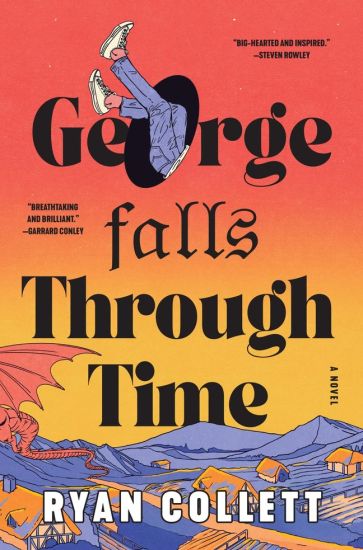
GEORGE FALLS THROUGH TIME IS. . . "Incredibly entertaining and intelligent." —GARRARD CONLEY "Big-hearted and inspired." —STEVEN ROWLEY "Funny, surprising, profound." —GRANT GINDER "Unputdownable." —LUNA MCNAMARA Less meets the year 1300 in this exhilarating and thoughtfully genre-defying literary novel about a man transported through time in a moment of extreme stress, whose modern anxieties are replaced by medieval brutalities Newly laid off George’s internet bill is in his ex-boyfriend’s name. He’s got a spider-infested apartment, and two of the six dogs he’s walking in London have just escaped. It’s pure undiluted stress that sends him into a spiral, all the way to the year 1300. When he comes to, George recognizes the same rolling hills of Greenwich Park. But the luxuries and phone service of modernity are nowhere. In their place are locals with a bizarre, slanted speech in awe of his foreign clothes, who swiftly toss him in a dungeon. Despite the barbarity of a medieval world, a servant named Simon helps George acclimate to a simpler, easier existence—until a summons from the King threatens to send his life up in flames. George Falls Through Time isas much an inward journey as an outward one: an immersive exploration of identity and dislocation that pits present-day sensibilities against a raw and alien backdrop, a strangely perfect canvas for the absurd anxieties of our modern lives. It's a profound meditation on the nature of desire perfect for fans of Madeline Miller and The Ministry of Time.

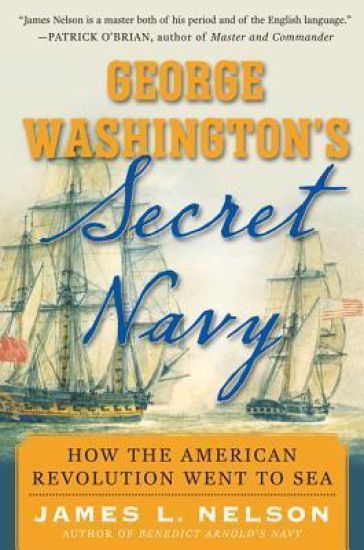
George Washington's Secret Navy
MCGRAW-HILL EDUCATION - EUROPE
2008
sidottu
In 1775 General George Washington secretly armed a handful of small ships and sent them to sea against the world's mightiest navy. From the author of the critically acclaimed Benedict Arnold's Navy, here is the story of how America's first commander-in-chief--whose previous military experience had been entirely on land--nursed the fledgling American Revolution through a season of stalemate by sending troops to sea. Mining previously overlooked sources, James L. Nelson's swiftly moving narrative shows that George Washington deliberately withheld knowledge of his tiny navy from the Continental Congress for more than two critical months, and that he did so precisely because he knew Congress would not approve. Mr. Nelson has taken an episode that occupies no more than a few paragraphs in other histories of the Revolution and, with convincing research and vivid narrative style, turned it into an important, marvelously readable book."--Thomas Fleming, author of The Perils of Peace: America's Struggle to Survive after Yorktown "A gripping and fascinating book about the daring and heroic mariners who helped George Washington change the course of history and create a nation. Nelson wonderfully brings to life a largely forgotten but critically important piece of America's past."--Eric Jay Dolin, author of Leviathan: The History of Whaling in America "The political machinations are as exciting as the blood-stirring ship actions in this meticulously researched story of the shadowy beginnings of American might on the seas."--John Druett, author of Island of the Lost: Shipwrecked at the Edge of the World

One shining yet overlooked moment that changed the course of the Revolutionary WarIn the opening months of 1781, General George Washington feared his army would fail to survive another campaign season. The spring and summer only served to reinforce his despair, but in late summer the changing circumstances of war presented a once-in-a-war opportunity for a French armada to hold off the mighty British navy while his own troops with French reinforcements drove Lord Cornwallis's forces to the Chesapeake. The Battle of the Capes would prove the only time the French ever fought the Royal Navy to a draw, and for the British army it was a catastrophe. Cornwallis confidently retreated to Yorktown, expecting to be evacuated by a British fleet that never arrived. In the end he had no choice but to surrender. Although the war sputtered on another two years, its outcome was never in doubt after Yorktown.General Washington's Great Gamble is the story of the greatest naval engagement of the American Revolution. It is also a study in leadership, good and bad, political machinations and the wild, unpredictable circumstances that led to the extraordinary confluence of military and naval resources at that time and place. Topics include:Looking South; Sea Power for the General; Arnold; Copper Bottoms; Head of Elk; The Battle of Cape Henry; An Attempt to Conquer Virginia; Greene and Cornwallis: Looking North; The American Command; The Battle of Guilford Courthouse; Pyrrhic Victory; Reinforcing the Chesapeake; "[T]he enemy have turned so much of their attention to the Southern States..."; The Battle of Blandford; The British War at Sea; Juncture; "I am inclined to think well of York..."; The Promise of a Fleet; The Battle of Green Springs; The March on New York; An Operation to the Southward; The Arrival of De Grasse; The Battle of the Capes;Cornwallis Surrenders
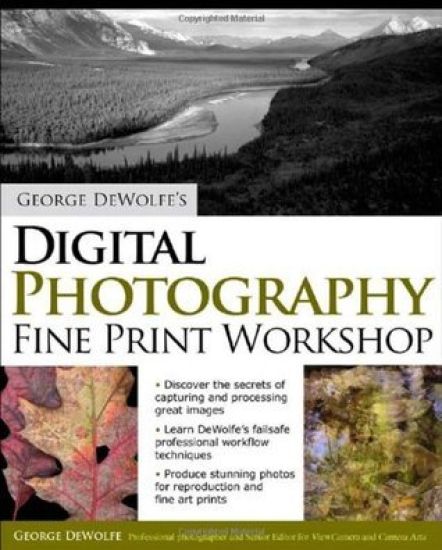
George DeWolfe's Digital Photography Fine Print Workshop
George DeWolfe
McGraw-Hill Professional
2006
nidottu
Publisher's Note: Products purchased from Third Party sellers are not guaranteed by the publisher for quality, authenticity, or access to any online entitlements included with the product.Learn the secrets of fine art digital photographyProduce captivating and high-quality photographs easily and consistently with help from this invaluable guide, based on renowned photographer George DeWolfe’s most popular workshop. Inside, you will learn his “16-bit workflow” technique for mastering the craft of printing fine art photographs. You will also discover how to set up a successful “closed loop” environment--one in which you handle the entire photographic process yourself, sending nothing out for processing, manipulating, or development. Learning the qualities and techniques essential to creating a digital fine print with light, substance, and presence requires skill, experience, time, and vision. George DeWolfe’s Digital Photography Fine Print Workshop puts all of this expertise at your fingertips.

'George Sand' (Aurore Dupin, 1804-1876) was France's bestselling writer, rivalled in her time only by Victor Hugo. She was at the centre of French intellectual and artistic life: her circle included Liszt and Delacroiz, Blazac and Flaubert. Yet she was known as much for her excessive life as for her plays, stories and enduring novels like Indiana, Lelia and Mauprat. The daughter of a prostitute and an aristocrat, Sand grew up acutely aware of social injustice and prejudice. Convent-educated, she became a mischievous, flamboyant rebel: her long, troubled romance with Chopin was just one of many affairs with well-known figures, but her most desperate love was for a beautiful actress.

George Orwell's best-known novels, Animal Farm, describing a revolution that goes horribly wrong, and Nineteen Eighty-Four, portraying a world where human freedom has been crushed, are two of the most famous, well-quoted and influential political satires ever written. The other novels in this volume also tell stories of people at odds with repressive institutions: the corrupt imperialism of Burmese Days, disaffection with materialistic society in Keep the Aspidistra Flying, the perils of modern suburban living in Coming Up for Air and surviving on the streets in A Clergyman's Daughter.All the novels brought together here display Orwell's humour, his understanding of human nature and his great compassion.
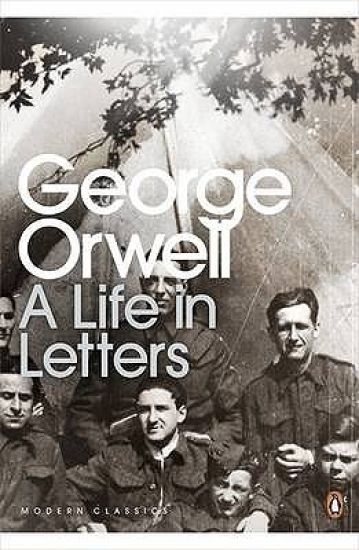
With such varied correspondents as T. S. Eliot, Stephen Spender and Anthony Powell, for nearly forty years George Orwell wrote and received the letters that are now collected together in A Life in Letters, edited with an introduction by Peter Davison in Penguin Modern Classics.Personal as well as political, Orwell's letters offer a fascinating window into the mind of a phenomenal man. We are privy to snatched glimpses of his family life: his son Richard's developing teeth, the death of his wife Eileen, and his own illness. Candid portraits of Barcelona during the Spanish Civil War, his opinions on bayonets, and on the chaining of German prisoners display his magnificent talent as a political writer, and letters to friends and his publisher provide a unique insight into the development and publication of some of the most important novels in the English language. A Life in Letters features previously unpublished material, including letters which shed new light on a love that would haunt him for his whole life, as well as revealing the inspiration for some of his most famous characters. Presented for the first time in a dedicated volume, this selection of Orwell's letters is an indispensible companion to his diaries.'Arguably the most influential writer thrown up by the West in the twentieth century ... the real Orwell - whoever he is - continues to take shape'The Times

A very funny family story written by one of the nation's most beloved writers for childrenLaura is amazed when her baby brother George starts talking to her when he's only four weeks old, particularly as he sounds like a grown-up! It's a big secret to keep from their parents and the rest of the family and leads to all sorts of comic confusion until George's first birthday - when he makes a speech to his startled family.'Dick King-Smith is a huge favourite with children' - Observer
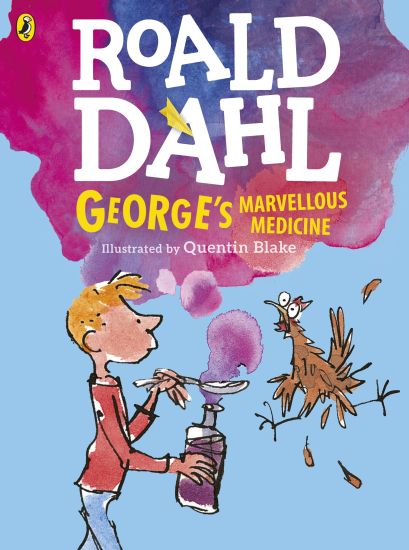
Phizzwhizzing new cover look and branding for the World's NUMBER ONE Storyteller!George Kranky's Grandma is a miserable grouch. George really hates that horrid old witchy woman.One Saturday morning, George is in charge of giving Grandma her medicine.So-ho! Ah-ha! Ho-hum! George knows exactly what to do.A magic medicine* it will be. One that will either cure her completely . . . or blow off the top of her head.*WARNING: Do not try to make George's Marvellous Medicine yourselves at home. It could be dangerous.Listen to GEORGE'S MARVELLOUS MEDICINE and other Roald Dahl audiobooks read by some very famous voices, including Kate Winslet, David Walliams and Steven Fry - plus there are added squelchy soundeffects from Pinewood Studios! Look out for new Roald Dahl apps in the App store and Google Play- including the disgusting TWIT OR MISS! and HOUSE OF TWITS inspired by the revolting Twits."A true genius . . . Roald Dahl is my hero" David Walliams

Puffin Audiobooks present a phizz-whizzing reading of Roald Dahl's George's Marvellous Medicine, read by Derek Jacobi. The audiobook features original music and 3D sound design by Pinewood film studios.George Kranky is eight-years-old and wondering what sort of mischief he might get into. George's Grandma is a grizzly old grouch and George wants to teach her a lesson . . .And when Grandma's finished drinking George's marvellous medicine, she'll really have something to grumble about.Listen to GEORGE'S MARVELLOUS MEDICINE and other Roald Dahl audiobooks read by some very famous voices, including Kate Winslet, David Walliams and Steven Fry - plus there are added squelchy soundeffects from Pinewood Studios! Look out for new Roald Dahl apps in the App store and Google Play- including the disgusting TWIT OR MISS! inspired by the revolting Twits.

George IV spent most of his life waiting to become king: as a pleasure-loving and rebellious Prince of Wales during the sixty-year reign of his father, George III, and for ten years as Prince Regent, when his father went mad. 'The days are very long when you have nothing to do' he once wrote plaintively, but he did his best to fill them with pleasure - women, art, food, wine, fashion, architecture. He presided over the creation of the Regency style, which came to epitomise the era, and he was, with Charles I, the most artistically literate of all our kings. Yet despite his life of luxury and indulgence, George died alone and unmourned. Stella Tillyard has not written a judgemental book, but a very human and enjoyable one, about this most colourful of all British kings.
The acclaimed Penguin Monarchs series: short, fresh, expert accounts of England's rulers - now in paperbackIf Ethelred was notoriously 'Unready' and Alfred 'Great', King George VI should bear the designation of 'George the Dutiful'. Throughout his life he dedicated himself to the pursuit of what he thought he ought to be doing rather than what he wanted to do. Inarticulate and loathing any sort of public appearances, he accepted that it was his destiny to figure regularly and conspicuously in the public eye, gritted his teeth, largely conquered his crippling stammer and got on with it. He was not born to be king, but he made an admirable one, and was the figurehead of the nation at the time of its greatest trial, during the Second World War. This is a sparklingly brilliant and enjoyable book about him.
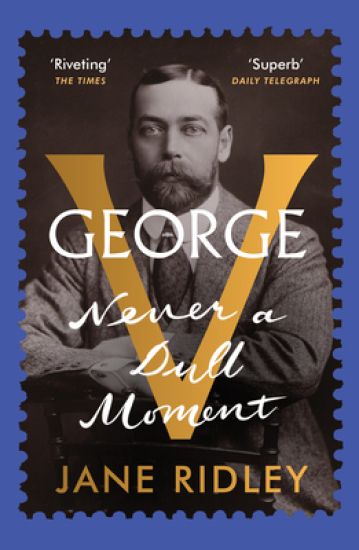
The acclaimed Penguin Monarchs series: short, fresh, expert accounts of England's rulers - now in paperbackFor a man with such conventional tastes and views, George V had a revolutionary impact. Almost despite himself he marked a decisive break with his flamboyant predecessor Edward VII, inventing the modern monarchy, with its emphasis on frequent public appearances, family values and duty. George V was an effective war-leader and inventor of 'the House of Windsor'. In an era of ever greater media coverage - frequently filmed and initiating the British Empire Christmas broadcast - George became for 25 years a universally recognised figure. He was also the only British monarch to take his role as Emperor of India seriously. While his great rivals (Tsar Nicolas and Kaiser Wilhelm) ended their reigns in catastrophe, he plodded on.David Cannadine's sparkling account of his reign could not be more enjoyable, a masterclass in how to write about Monarchy, that central - if peculiar - pillar of British life.
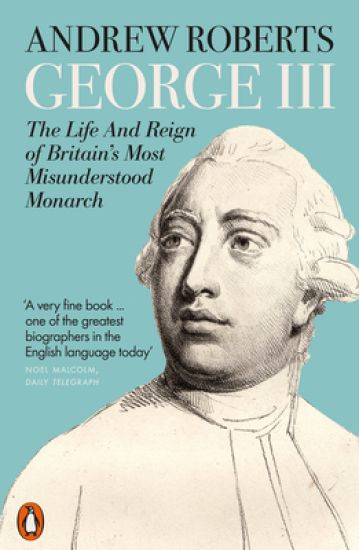
The Times Book of the Year*Winner of the Elizabeth Longford Prize for Historical Biography, 2022**Winner of the General Society of Colonial Wars' Distinguished Book Award, 2021**Winner of the History Reclaimed Book of the Year, 2022**Shortlisted for the Duff Cooper Prize, 2021*Andrew Roberts, one of Britain's premier historians, overturns the received wisdom on George IIIGeorge III, Britain's longest-reigning king, has gone down in history as 'the cruellest tyrant of this age' (Thomas Paine, eighteenth century), 'a sovereign who inflicted more profound and enduring injuries upon this country than any other modern English king' (W.E.H. Lecky, nineteenth century), 'one of England's most disastrous kings' (J.H. Plumb, twentieth century) and as the pompous monarch of the musical Hamilton (twenty-first century).Andrew Roberts's magnificent new biography takes entirely the opposite view. It portrays George as intelligent, benevolent, scrupulously devoted to the constitution of his country and (as head of government as well as head of state) navigating the turbulence of eighteenth-century politics with a strong sense of honour and duty. He was a devoted husband and family man, a great patron of the arts and sciences, keen to advance Britain's agricultural capacity ('Farmer George') and determined that her horizons should be global. He could be stubborn and self-righteous, but he was also brave, brushing aside numerous assassination attempts, galvanising his ministers and generals at moments of crisis and stoical in the face of his descent - five times during his life - into a horrifying loss of mind.The book gives a detailed, revisionist account of the American Revolutionary War, persuasively taking apart a significant proportion of the Declaration of Independence, which Roberts shows to be largely Jeffersonian propaganda. In a later war, he describes how George's support for William Pitt was crucial in the battle against Napoleon. And he makes a convincing, modern diagnosis of George's terrible malady, very different to the widely accepted medical view and to popular portrayals.Roberts writes, 'the people who knew George III best loved him the most', and that far from being a tyrant or incompetent, George III was one of our most admirable monarchs. The diarist Fanny Burney, who spent four years at his court and saw him often, wrote 'A noble sovereign this is, and when justice is done to him, he will be as such acknowledged'. In presenting this fresh view of Britain's most misunderstood monarch, George III shows one of Britain's premier historians at his sparkling best.
King of Britain for sixty years and the last king of what would become the United States, George III inspired both hatred and loyalty and is now best known for two reasons: as a villainous tyrant for America's Founding Fathers, and for his madness, both of which have been portrayed on stage and screen.In this concise and penetrating biography, Jeremy Black turns away from the image-making and back to the archives, and instead locates George's life within his age: as a king who faced the loss of key colonies, rebellion in Ireland, insurrection in London, constitutional crisis in Britain and an existential threat from Revolutionary France as part of modern Britain's longest period of war.Black shows how George III rose to these challenges with fortitude and helped settle parliamentary monarchy as an effective governmental system, eventually becoming the most popular monarch for well over a century. He also shows us a talented and curious individual, committed to music, art, architecture and science, who took the duties of monarchy seriously, from reviewing death penalties to trying to control his often wayward children even as his own mental health failed, and became Britain's longest reigning king.

From the bestselling author of Charlie and the Chocolate Factory and Matilda George's grandma is a grouch She's always mean to George (and not much nicer to his parents, either). One day, when George is put in charge of giving Grandma her medicine, he wonders if he can come up with his own remedy to try and help Grandma become less of a grump. Using some rather unusual ingredients, George creates a magic medicine, a remedy for everything. But will it stop his grandma from being so horrible . . . or will it shoot sparks out of the top of her head?
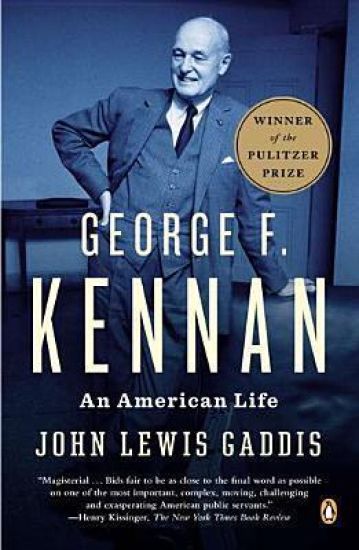
Winner of the 2012 Pulitzer Prize in Biography Widely and enthusiastically acclaimed, this is the authorized, definitive biography of one of the most fascinating but troubled figures of the twentieth century by the nation's leading Cold War historian. In the late 1940s, George F. Kennan--then a bright but, relatively obscure American diplomat--wrote the "long telegram" and the "X" article. These two documents laid out United States' strategy for "containing" the Soviet Union--a strategy which Kennan himself questioned in later years. Based on exclusive access to Kennan and his archives, this landmark history illuminates a life that both mirrored and shaped the century it spanned.