Kirjojen hintavertailu. Mukana 12 083 983 kirjaa ja 12 kauppaa.

Kirjahaku

Etsi kirjoja tekijän nimen, kirjan nimen tai ISBN:n perusteella.

1000 tulosta hakusanalla George Shepard

George Meléndez Wright

George Meléndez Wright

Jerry Emory

THE UNIVERSITY OF CHICAGO PRESS
2026
nidottu
The first biography of a visionary biologist whose groundbreaking ideas regarding wildlife and science revolutionized national parks. When twenty-three-year-old George Meléndez Wright arrived in Yosemite National Park in 1927 to work as a ranger naturalist—the first Hispanic person to occupy any professional position in the National Park Service (NPS)—he had already visited every national park in the western United States, including McKinley (now Denali) in Alaska. Two years later, he would organize the first science-based wildlife survey of the western parks, forever changing how the NPS would manage wildlife and natural resources. At a time when national parks routinely fed bears garbage as part of “shows” and killed “bad” predators like wolves, mountain lions, and coyotes, Wright’s new ideas for conservation set the stage for the modern scientific management of parks and other public lands. Tragically, Wright died in a 1936 car accident while working to establish parks and wildlife refuges on the US-Mexico border. To this day, he remains a celebrated figure among conservationists, wildlife experts, and park managers. In this book, Jerry Emory, a conservationist and writer connected to Wright’s family, draws on hundreds of letters, field notes, archival research, interviews, and more to offer both a biography of Wright and a historical account of a crucial period in the evolution of US parks and the wilderness movement. With a foreword by former NPS director Jonathan B. Jarvis, George Meléndez Wright is a celebration of Wright’s unique upbringing, dynamism, and enduring vision that places him at last in the pantheon of the great American conservationists.
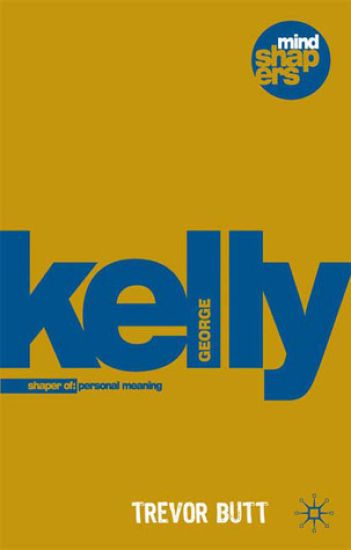
George Kelly

George Kelly

Trevor Butt

Red Globe Press
2008
nidottu
Kelly's pragmatic approach to psychology arose from his clinical practice and has been a strong formative influence on clinical psychology and personality theory. Taking us through the development of Kelly's work and setting it in its historical context, this is a fascinating account of one of the foremost personality theories of the 20th century.
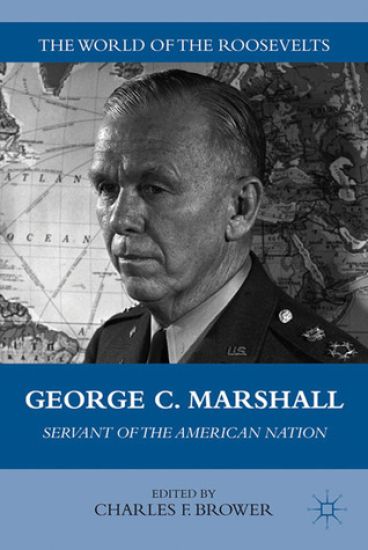
George C. Marshall

George C. Marshall

Palgrave Macmillan
2011
sidottu
Bringing together a who's who of Marshall scholars, this volume examines the major roles assumed by Marshall over his five-decade career - soldier; statesman and peacemaker; and leader and manager - to illuminate key issues and themes surrounding the man and his era.
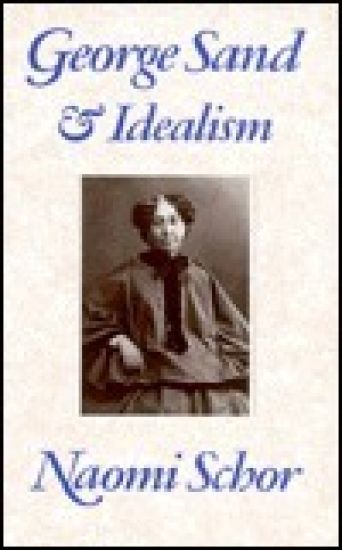
George Sand and Idealism

George Sand and Idealism

Naomi Schor

Columbia University Press
1993
sidottu
A reanalysis of Sand's major writing, ranging from her early short stories to her later fiction, which identifies her writing as an example of an aesthetic mode often associated with femininity. The study compares Sand's place in the history of the realist novel to that of her male counterparts.
George F. Kennan

George F. Kennan

Walter Hixson

Columbia University Press
1991
pokkari
This brilliant and eloquent book by a distinguished scholar and critic examines the history, the limits, and the promise of the human mind and the knowledge of which it is capable. Professor Highet explores the meaning of our culture from the intellectual and moral monuments of the Greeks, Romans, and Judeo-Christians, and our contemporary thinkers. Out of this book comes a clear definition of knowledge and insights into the strength and limitations of the mind.
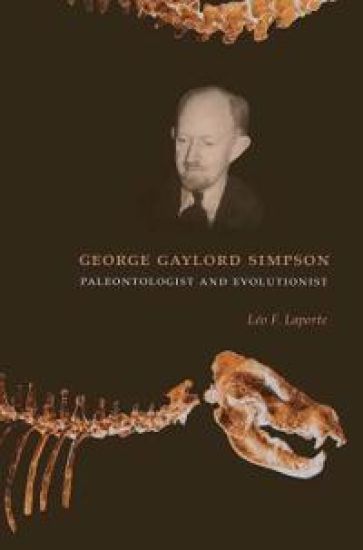
George Gaylord Simpson

George Gaylord Simpson

Léo F. Laporte

Columbia University Press
2000
sidottu
In 1978 the distinguished paleontologist George Gaylord Simpson published his autobiography, Concession to the Improbable, which gave the basic facts of his life but left more questions than it answered. Now Leo F. Laporte presents this absorbing intellectual study of Simpson's major areas of work. Focusing on Simpson's scientific contributions, Laporte provides chapters on Simpson's earliest paleontological research through his distinguished Alexander Agassiz professorship at Harvard and his extensive fieldwork for the American Museum of Natural History, where he developed the core themes set forth in his most prestigious work, Tempo and Mode in Evolution (Columbia University Press, 1944). Simpson was arguably the first evolutionary paleontologist to combine descriptive taxonomy with the modern approaches of genetics and statistical analysis. Despite his brilliance Simpson was a difficult person to know; Laporte addresses the nature of Simpson's interpersonal problems with colleagues during his life. An introductory overview provides the biographical context of Simpson's career and provides the framework for his major paleontological and evolutionary contributions.
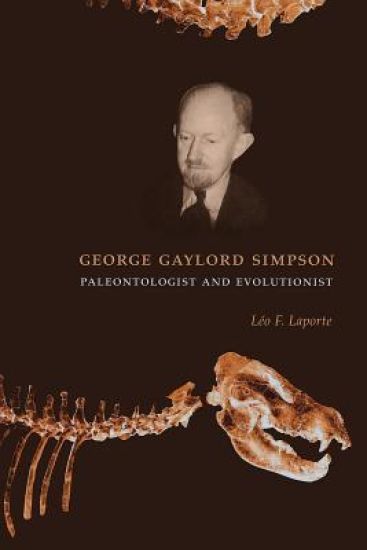
George Gaylord Simpson

George Gaylord Simpson

Léo F. Laporte

Columbia University Press
2000
pokkari
In 1978 the distinguished paleontologist George Gaylord Simpson published his autobiography, Concession to the Improbable, which gave the basic facts of his life but left more questions than it answered. Now Leo F. Laporte presents this absorbing intellectual study of Simpson's major areas of work. Focusing on Simpson's scientific contributions, Laporte provides chapters on Simpson's earliest paleontological research through his distinguished Alexander Agassiz professorship at Harvard and his extensive fieldwork for the American Museum of Natural History, where he developed the core themes set forth in his most prestigious work, Tempo and Mode in Evolution (Columbia University Press, 1944). Simpson was arguably the first evolutionary paleontologist to combine descriptive taxonomy with the modern approaches of genetics and statistical analysis. Despite his brilliance Simpson was a difficult person to know; Laporte addresses the nature of Simpson's interpersonal problems with colleagues during his life. An introductory overview provides the biographical context of Simpson's career and provides the framework for his major paleontological and evolutionary contributions.
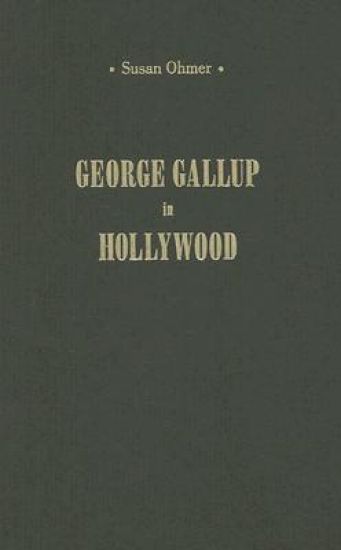
George Gallup in Hollywood

George Gallup in Hollywood

Susan Ohmer

Columbia University Press
2006
sidottu
George Gallup in Hollywood is a fascinating look at the film industry's use of opinion polling in the 1930s and '40s. George Gallup's polling techniques first achieved fame when he accurately predicted that Franklin D. Roosevelt would be reelected president in 1936. Gallup had devised an extremely effective sampling method that took households from all income brackets into account, and Hollywood studio executives quickly pounced on the value of Gallup's research. Soon he was gauging reactions to stars and scripts for RKO Pictures, David O. Selznick, and Walt Disney and taking the public's temperature on Orson Welles and Desi Arnaz, couples such as Fred Astaire and Ginger Rogers, and films like Gone with the Wind, Dumbo, and Fantasia. Through interviews and extensive research, Susan Ohmer traces Gallup's groundbreaking intellectual and methodological developments, examining his comprehensive approach to market research from his early education in the advertising industry to his later work in Hollywood. The results of his opinion polls offer a fascinating glimpse at the class and gender differences of the time as well as popular sentiment toward social and political issues.
George Gallup in Hollywood

George Gallup in Hollywood

Susan Ohmer

Columbia University Press
2006
pokkari
George Gallup in Hollywood is a fascinating look at the film industry's use of opinion polling in the 1930s and '40s. George Gallup's polling techniques first achieved fame when he accurately predicted that Franklin D. Roosevelt would be reelected president in 1936. Gallup had devised an extremely effective sampling method that took households from all income brackets into account, and Hollywood studio executives quickly pounced on the value of Gallup's research. Soon he was gauging reactions to stars and scripts for RKO Pictures, David O. Selznick, and Walt Disney and taking the public's temperature on Orson Welles and Desi Arnaz, couples such as Fred Astaire and Ginger Rogers, and films like Gone with the Wind, Dumbo, and Fantasia. Through interviews and extensive research, Susan Ohmer traces Gallup's groundbreaking intellectual and methodological developments, examining his comprehensive approach to market research from his early education in the advertising industry to his later work in Hollywood. The results of his opinion polls offer a fascinating glimpse at the class and gender differences of the time as well as popular sentiment toward social and political issues.
George Cukor's People

George Cukor's People

Joseph McBride

Columbia University Press
2025
sidottu
The director of classic films such as Sylvia Scarlett, The Philadelphia Story, Gaslight, Adam’s Rib, A Star Is Born, and My Fair Lady, George Cukor is widely admired but often misunderstood. Reductively stereotyped in his time as a “woman’s director”—a thinly veiled, disparaging code for “gay”—he brilliantly directed a wide range of iconic actors and actresses, including Cary Grant, Greta Garbo, Spencer Tracy, Joan Crawford, Marilyn Monroe, and Maggie Smith. As Katharine Hepburn, the star of ten Cukor films, told the director, “All the people in your pictures are as goddamned good as they can possibly be, and that’s your stamp.”In this groundbreaking, lavishly illustrated critical study, Joseph McBride provides insightful and revealing essayistic portraits of Cukor’s actors in their most memorable roles. The queer filmmaker gravitated to socially adventurous, subversively rule-breaking, audacious dreamers who are often sexually transgressive and gender fluid in ways that seem strikingly modern today. McBride shows that Cukor’s seemingly self-effacing body of work is characterized by a discreet way of channeling his feelings through his actors. He expertly cajoled actors, usually gently but sometimes with bracing harshness, to delve deeply into emotional areas they tended to keep safely hidden. Cukor’s wry wit, his keen sense of psychological and social observation, his charm and irony, and his toughness and resilience kept him active for more than five decades in Hollywood. George Cukor’s People gives him the in-depth, multifaceted examination his rich achievement deserves.