Kirjojen hintavertailu. Mukana 12 390 323 kirjaa ja 12 kauppaa.

Kirjahaku

Etsi kirjoja tekijän nimen, kirjan nimen tai ISBN:n perusteella.

1000 tulosta hakusanalla Gerry Murphy

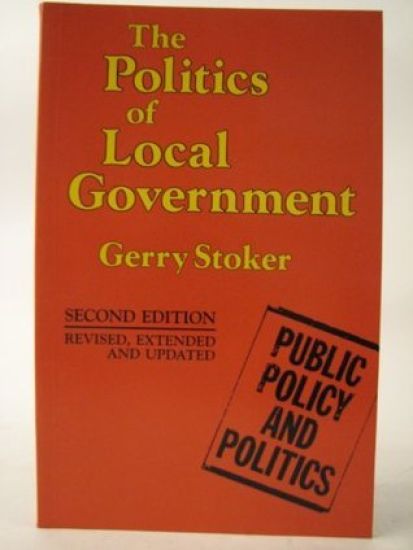
The Politics of Local Government

The Politics of Local Government

Gerry Stoker

Palgrave Macmillan
1988
nidottu
The last decade has seen an increase in political and ideological conflict in local government. This book analyzes this context and examines both the operation of elected local authorities and the rise of a non-directly elected local governement.
Kissinger and Brzezinski

Kissinger and Brzezinski

Gerry Argyris Andrianopoulos

Palgrave Macmillan
1991
sidottu
Going beyond superficial comparisons of Kissinger and Brzezinski, this study, by comparing their views on world politics and on strategy and tactics for achieving national goals and examining the consistency of their beliefs and actions while in and out of office, finds that, despite Brzezinski's attacks on Kissinger, he shared many of his views and copied many of his actions while in office and that their policy-making behaviour was, indeed, strongly influenced by their shared beliefs.
The Politics of Local Government

The Politics of Local Government

Gerry Stoker

Palgrave Macmillan
1991
nidottu
The comprehensively revised second edition of this successful text provides an up-to-date analysis of the changing world of local politics in Britain. Substantial new sections have been added on local political parties, hung councils, the politics of non-elected local government, recent developments in privatisation, and the politics of the poll tax. The book now provides a systematic treatment of the Thatcher legacy in local politics, the philosophy and strategy which underpinned it and likely futures in the post-Thatcher era. Reviews of the 1st edition: '...should be read by anyone seeking to understand local government and its possible futures.' George Jones, Local Government Chronicle '...an excellent and stimulating introductory text.' Peter McLaverty, Sociological Review
The Dimensions of Elder Abuse

The Dimensions of Elder Abuse

Gerry Bennett; Paul Kingston; Bridget Penhale

Red Globe Press
1997
nidottu
Adopting an interdisciplinary framework in recognition of the range of domestic and institutional settings in which elder abuse can occur, this book both explains the nature of this under-reported and little understood problem and addresses the vital question of how practitioners can best work towards its prevention. Locating elder abuse in a spectrum of family violence, the book gives a balanced account of relevant perspectives on it, drawn from the medical, legal, health and social welfare spheres.
The New Management of British Local Governance
This book presents a detailed analysis of the new management of public services at the local level, drawing on the work of the ESRC Local Governance Programme. The radical transformation of public service delivery is assessed in terms of its overall impact as well as its operation in particular service areas. Efficiency has improved and services have gained a user focus yet the new management appears to be full of contradictions and distortions, in many respects creating as many problems as it solves.
The New Politics of British Local Governance
This book examines the changing nature of local politics, drawing on the latest research from the ESRC Local Governance Programme. It assesses the emergence of new forms of élite organisations and changing power relations in the context of increasing roles for business and other partners. Public responses to changes in local governance are covered in depth including new forms of participation and protest. The book concludes with a consideration of the extent to which the emerging system of local governance can meet the social and economic challenges created by globalization.
The New Politics of British Local Governance
This book examines the changing nature of local politics, drawing on the latest research from the ESRC Local Governance Programme. It assesses the emergence of new forms of élite organisations and changing power relations in the context of increasing roles for business and other partners. Public responses to changes in local governance are covered in depth including new forms of participation and protest. The book concludes with a consideration of the extent to which the emerging system of local governance can meet the social and economic challenges created by globalization.
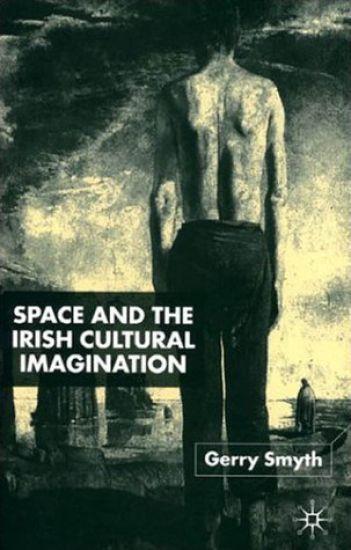
Space and the Irish Cultural Imagination

Space and the Irish Cultural Imagination

Gerry Smyth

Palgrave Macmillan
2001
sidottu
This book reconstitutes the category of 'space' as a crucial element within contemporary cultural, literary and historical studies in Ireland. The study is based on the dual premise of an explosion of interest in the category of space in modern cultural criticism and social inquiry, and the consolidation of Irish studies as a significant scholarly field across a number of institutional and intellectual contexts. Besides a methodological/theoretical introduction and extended case studies, the book includes an auto-critical dimension which extends its interest into the fields of local history and life-writing.
Transforming Local Governance

Transforming Local Governance

Gerry Stoker

Red Globe Press
2003
sidottu
Drawing on the author's unrivalled experience and expertise in both research and policy-making, this important new book provides a systematic assessment of the changing nature of local governance in Britain and a conceptual framework for understanding the new governance of localities. The author analyzes in detail what New Labour has been trying to do to local governance and management and assesses how and why it has achieved only a mixed record of change. The book concludes by providing a vision of good local governance and an assessment of future challenges for research and reform.
Transforming Local Governance

Transforming Local Governance

Gerry Stoker

Red Globe Press
2003
nidottu
Drawing on the author's unrivalled experience and expertise in both research and policy-making, this important new book provides a systematic assessment of the changing nature of local governance in Britain and a conceptual framework for understanding the new governance of localities. The author analyzes in detail what New Labour has been trying to do to local governance and management and assesses how and why it has achieved only a mixed record of change. The book concludes by providing a vision of good local governance and an assessment of future challenges for research and reform.
A Cultural History of the English Language
This book presents a new interpretation of the history of English. Access to large corpuses of English has allowed scholars to assess the minutiae of linguistic change with much greater precision than before, often pinpointing the beginnings of linguistic innovations in place and time. The author uses the findings from this research to relate major historical events to change in the language, in particular to areas of linguistic inquiry that have been of particular importance in recent years, such as discourse analysis, stylistics and work on pidgins and creoles. The book does not attempt to chronicle changes in syntax or pronunciation and spelling, but is designed to complement a corpus-based study of formal changes. The story of English is brought up to the late 1990s to include, amongst other things, discussions of Estuary English and the implications of the information superhighway.
The Crusade of a Walloon Volunteer
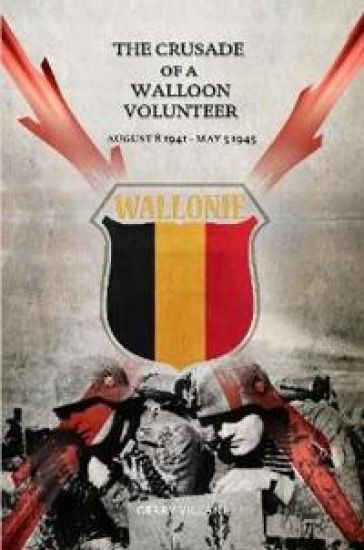
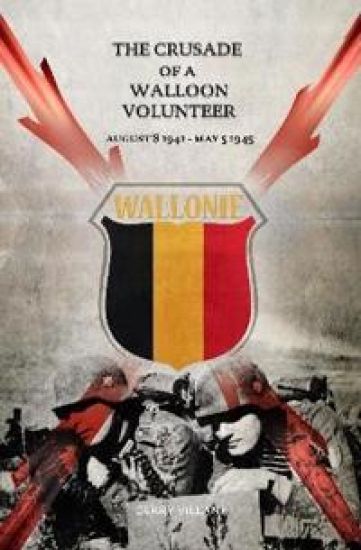
Raymond was born on October 13, 1922 in Dampremy (province of Hainaut, Belgium). During the turbulent times of the occupation in Belgium he joined the "Legion Wallonie" on August 8, 1941 at the same time as his father Marcel and Rexist leader Leon Degrelle. He was initially attached to the 1st Platoon, 1st Company as a MG gunner. During his 4 years on the eastern front he participated in many major battles like, but not limited to Gromovayabalka or the "Valley of Thunder," the Caucasus and Cherkasy. Wounded several times during combat he saw many of his good friends die during these terrible battles but he would always return to the front lines since his fate was already sealed as a volunteer of the Waffen SS. He climbed up the ranks from private to officer of the Waffen SS and after his graduation as an officer in March 1945 he returned to the front and joined "Kampfgruppe Derriks." On May 5, 1945 he was captured by the Americans and later convicted for treason by the Belgian authorities
The Crusade of a Walloon Volunteer
Raymond was born on October 13, 1922 in Dampremy (province of Hainaut, Belgium). During the turbulent times of the occupation in Belgium he joined the "Legion Wallonie" on August 8, 1941 at the same time as his father Marcel and Rexist leader Leon Degrelle. He was initially attached to the 1st Platoon, 1st Company as a MG gunner. During his 4 years on the eastern front he participated in many major battles like, but not limited to Gromovayabalka or the "Valley of Thunder," the Caucasus and Cherkasy. Wounded several times during combat he saw many of his good friends die during these terrible battles but he would always return to the front lines since his fate was already sealed as a volunteer of the Waffen SS. He climbed up the ranks from private to officer of the Waffen SS and after his graduation as an officer in March 1945 he returned to the front and joined "Kampfgruppe Derriks." On May 5, 1945 he was captured by the Americans and later convicted for treason by the Belgian authorities.
Voices of the Waffen SS

Voices of the Waffen SS

Gerry Villani

Lulu.com
2019
sidottu
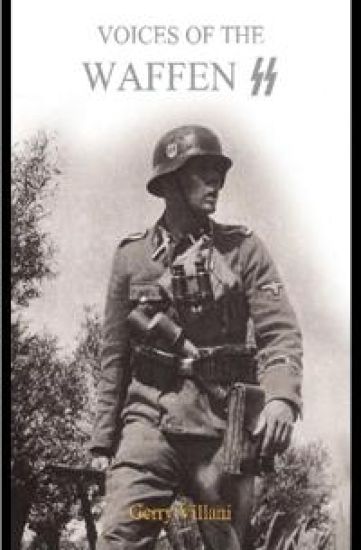
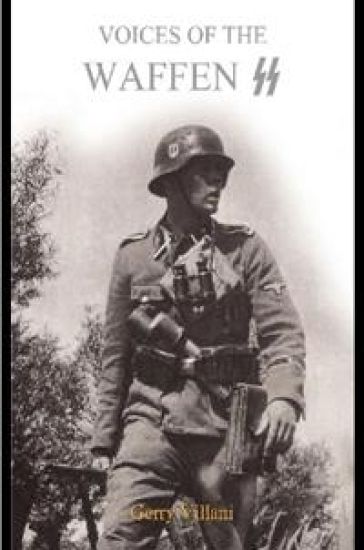
The Waffen SS were Hitler's elite forces during WWII. They were the forces that were feared by the enemy and praised by their allies. During the Nuremberg Trials, the Waffen SS was condemned as part of a criminal organization, however, the Nuremberg Trials exempted conscripts from that condemnation. On several occasions, the Waffen SS was criticized by Heer commanders for their reckless disregard for casualties while taking or holding objectives, however, the Waffen SS divisions eventually proved themselves as capable soldiers. The poor initial performance was mainly due to the emphasis on political indoctrination rather than proper military training before the war. Despite this, the experience gained from the Polish, French, and Balkan campaigns and the peculiarly egalitarian form of training soon turned Waffen SS units into elite formations. These are the stories of the men that once were part of this elite force, not to glorify the Nazi regime or crimes committed by them, but to give them a voice too.
Voices of the Waffen SS

Voices of the Waffen SS

Gerry Villani

Lulu.com
2019
pokkari
The Waffen SS were Hitler's elite forces during WWII. They were the forces that were feared by the enemy and praised by their allies. During the Nuremberg Trials, the Waffen SS was condemned as part of a criminal organization, however, the Nuremberg Trials exempted conscripts from that condemnation. On several occasions, the Waffen SS was criticized by Heer commanders for their reckless disregard for casualties while taking or holding objectives, however, the Waffen SS divisions eventually proved themselves as capable soldiers. The poor initial performance was mainly due to the emphasis on political indoctrination rather than proper military training before the war. Despite this, the experience gained from the Polish, French, and Balkan campaigns and the peculiarly egalitarian form of training soon turned Waffen SS units into elite formations. These are the stories of the men that once were part of this elite force, not to glorify the Nazi regime or crimes committed by them, but to give them a voice too.
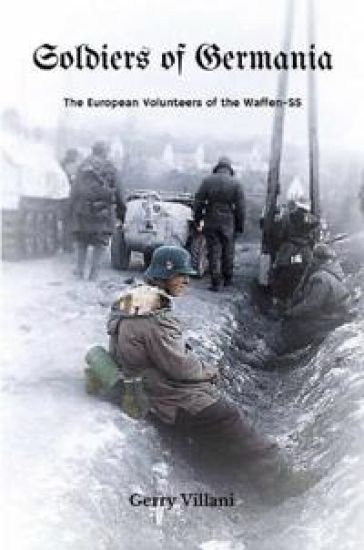
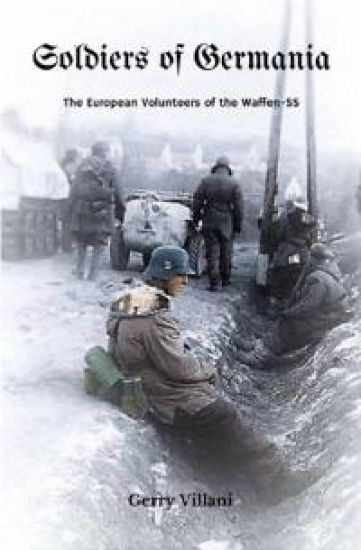
Soldiers of Germania - The European volunteers of the Waffen SS.
They called themselves the "assault generation" and they had largely been born in the years during and after World War I. Coming from every nation of Europe, they had risen up against communism and banded together under one flag for a common cause. They joined the German Army in World War II, a volunteer army that was better known as the Waffen SS. And it was in the Waffen SS, the elite fighting force of Germany, where the first modern European army was born. A new society of front fighters emerged from many different European nations; it was a society that had been forged in the sacrifice, sweat, and blood on the battlefield. Maybe their heritage and culture was different but their uniforms and motto were one and the same: Meine Ehre Heisst Treue!
Soldiers of Germania - The European volunteers of the Waffen SS.
They called themselves the "assault generation" and they had largely been born in the years during and after World War I. Coming from every nation of Europe, they had risen up against communism and banded together under one flag for a common cause. They joined the German Army in World War II, a volunteer army that was better known as the Waffen SS. And it was in the Waffen SS, the elite fighting force of Germany, where the first modern European army was born. A new society of front fighters emerged from many different European nations; it was a society that had been forged in the sacrifice, sweat, and blood on the battlefield. Maybe their heritage and culture was different but their uniforms and motto were one and the same: Meine Ehre Heisst Treue!
Music and Irish Identity

Music and Irish Identity

Gerry Smyth

Routledge
2019
nidottu
Music and Irish Identity represents the latest stage in a life-long project for Gerry Smyth, focusing here on the ways in which music engages with particular aspects of Irish identity. The nature of popular music and the Irish identity it supposedly articulates have both undergone profound change in recent years: the first as a result of technological and wider industrial changes in the organisation and dissemination of music as seen, for example, with digital platforms such as YouTube, Spotify and iTunes. A second factor has been Ireland’s spectacular fall from economic grace after the demise of the "Celtic Tiger", and the ensuing crisis of national identity. Smyth argues that if, as the stereotypical association would have it, the Irish have always been a musical race, then that association needs re-examination in the light of developments in relation to both cultural practice and political identity. This book contributes to that process through a series of related case studies that are both scholarly and accessible. Some of the principal ideas broached in the text include the (re-)establishment of music as a key object of Irish cultural studies; the theoretical limitations of traditional musicology; the development of new methodologies specifically designed to address the demands of Irish music in all its aspects; and the impact of economic austerity on musical negotiations of Irish identity. The book will be of seminal importance to all those interested in popular music, cultural studies and the wider fate of Ireland in the twenty-first century.
Death and Dying

Death and Dying

Gerry R. Cox; Neil Thompson

Routledge
2020
nidottu
Death and Dying is an important core text for students and professionals interested in developing a holistic understanding of death and dying. Chapters are replete with case studies, activities, key point boxes, and other features that enable readers to develop a sociologically informed understanding of the broad range of complex issues that underpin death and dying. Written by two established and highly respected experts in the field, it offers a thoroughgoing account of a wide range of social aspects of death and dying, filling gaps left by the traditionally narrow focus of the existing literature. By drawing the suggested sociological perspectives and highlighting the role of social policy, the authors put forward a fresh perspective of the field of thanatology. This book is a major contribution in progressing knowledge and understanding of dying and death for students and professionals in counseling, health and human services.