Kirjojen hintavertailu. Mukana 11 437 762 kirjaa ja 12 kauppaa.

Kirjahaku

Etsi kirjoja tekijän nimen, kirjan nimen tai ISBN:n perusteella.

1000 tulosta hakusanalla Gilbert Dalgalian

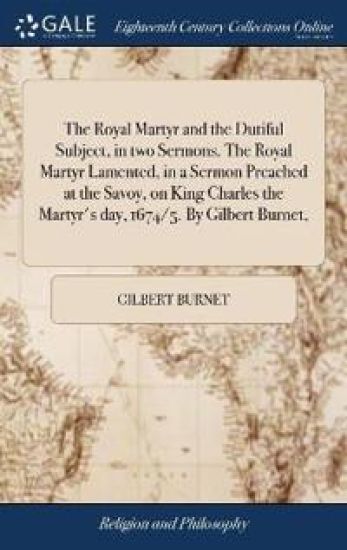
The Royal Martyr and the Dutiful Subject, in Two Sermons. the Royal Martyr Lamented, in a Sermon Preached at the Savoy, on King Charles the Martyr's Day, 1674/5. by Gilbert Burnet,
The 18th century was a wealth of knowledge, exploration and rapidly growing technology and expanding record-keeping made possible by advances in the printing press. In its determination to preserve the century of revolution, Gale initiated a revolution of its own: digitization of epic proportions to preserve these invaluable works in the largest archive of its kind. Now for the first time these high-quality digital copies of original 18th century manuscripts are available in print, making them highly accessible to libraries, undergraduate students, and independent scholars.The Age of Enlightenment profoundly enriched religious and philosophical understanding and continues to influence present-day thinking. Works collected here include masterpieces by David Hume, Immanuel Kant, and Jean-Jacques Rousseau, as well as religious sermons and moral debates on the issues of the day, such as the slave trade. The Age of Reason saw conflict between Protestantism and Catholicism transformed into one between faith and logic -- a debate that continues in the twenty-first century.++++The below data was compiled from various identification fields in the bibliographic record of this title. This data is provided as an additional tool in helping to insure edition identification: ++++British LibraryN013156London: reprinted by W. Redmayne for J. Meredith and are to be sold by J. Morphew, 1710. 48p.; 8
Observations on the History and Evidences of the Resurrection of Jesus Christ. By Gilbert West, Esq. The Second Edition, Revised and Corrected by the Author
The 18th century was a wealth of knowledge, exploration and rapidly growing technology and expanding record-keeping made possible by advances in the printing press. In its determination to preserve the century of revolution, Gale initiated a revolution of its own: digitization of epic proportions to preserve these invaluable works in the largest archive of its kind. Now for the first time these high-quality digital copies of original 18th century manuscripts are available in print, making them highly accessible to libraries, undergraduate students, and independent scholars.The Age of Enlightenment profoundly enriched religious and philosophical understanding and continues to influence present-day thinking. Works collected here include masterpieces by David Hume, Immanuel Kant, and Jean-Jacques Rousseau, as well as religious sermons and moral debates on the issues of the day, such as the slave trade. The Age of Reason saw conflict between Protestantism and Catholicism transformed into one between faith and logic -- a debate that continues in the twenty-first century.++++The below data was compiled from various identification fields in the bibliographic record of this title. This data is provided as an additional tool in helping to insure edition identification: ++++British LibraryT121831With a half-title and a final advertisement leaf.London: printed for R. Dodsley, 1747. xvi,456, 2]p.; 8
A Treatise Concerning the Truth of the Christian Religion. By Gilbert Burnet ... To Which is Added, A Discourse on Miracles, by John Locke Esq
The 18th century was a wealth of knowledge, exploration and rapidly growing technology and expanding record-keeping made possible by advances in the printing press. In its determination to preserve the century of revolution, Gale initiated a revolution of its own: digitization of epic proportions to preserve these invaluable works in the largest archive of its kind. Now for the first time these high-quality digital copies of original 18th century manuscripts are available in print, making them highly accessible to libraries, undergraduate students, and independent scholars.The Age of Enlightenment profoundly enriched religious and philosophical understanding and continues to influence present-day thinking. Works collected here include masterpieces by David Hume, Immanuel Kant, and Jean-Jacques Rousseau, as well as religious sermons and moral debates on the issues of the day, such as the slave trade. The Age of Reason saw conflict between Protestantism and Catholicism transformed into one between faith and logic -- a debate that continues in the twenty-first century.++++The below data was compiled from various identification fields in the bibliographic record of this title. This data is provided as an additional tool in helping to insure edition identification: ++++Bodleian Library (Oxford)N024007'A discourse on miracles' has its own titlepage, pagination and register. With three final advertisement pages.Glasgow: printed by Robert Foulis, and sold by him there, and at Edinburgh by Mess. G. Hamilton and J. Balfour, 1743. 2],91, 1]; 2],21, 3]p.; 12
Some Passages of the Life and Death of John Earl of Rochester. Written at His Desire, ... by Gilbert Burnett, ... to Which Is Subjoined, a Further Account of His Conversion, ... by Robert Parsons,
The 18th century was a wealth of knowledge, exploration and rapidly growing technology and expanding record-keeping made possible by advances in the printing press. In its determination to preserve the century of revolution, Gale initiated a revolution of its own: digitization of epic proportions to preserve these invaluable works in the largest archive of its kind. Now for the first time these high-quality digital copies of original 18th century manuscripts are available in print, making them highly accessible to libraries, undergraduate students, and independent scholars.The Age of Enlightenment profoundly enriched religious and philosophical understanding and continues to influence present-day thinking. Works collected here include masterpieces by David Hume, Immanuel Kant, and Jean-Jacques Rousseau, as well as religious sermons and moral debates on the issues of the day, such as the slave trade. The Age of Reason saw conflict between Protestantism and Catholicism transformed into one between faith and logic -- a debate that continues in the twenty-first century.++++The below data was compiled from various identification fields in the bibliographic record of this title. This data is provided as an additional tool in helping to insure edition identification: ++++National Library of WalesT193814Originally published in 1680.Berwick: printed and sold by Robert Taylor, 1765?]. viii,111, 1]p.; 8
The Danger of an Unconverted Ministry, Considered in a Sermon on Mark VI. 34. Preached at Nottingham, in Pennsylvania, March 8. Anno 1739,40. By Gilbert Tennent
The 18th century was a wealth of knowledge, exploration and rapidly growing technology and expanding record-keeping made possible by advances in the printing press. In its determination to preserve the century of revolution, Gale initiated a revolution of its own: digitization of epic proportions to preserve these invaluable works in the largest archive of its kind. Now for the first time these high-quality digital copies of original 18th century manuscripts are available in print, making them highly accessible to libraries, undergraduate students, and independent scholars.The Age of Enlightenment profoundly enriched religious and philosophical understanding and continues to influence present-day thinking. Works collected here include masterpieces by David Hume, Immanuel Kant, and Jean-Jacques Rousseau, as well as religious sermons and moral debates on the issues of the day, such as the slave trade. The Age of Reason saw conflict between Protestantism and Catholicism transformed into one between faith and logic -- a debate that continues in the twenty-first century.++++The below data was compiled from various identification fields in the bibliographic record of this title. This data is provided as an additional tool in helping to insure edition identification: ++++Library of CongressW030695Philadelphia: Printed by Benjamin Franklin, in Market-Street, 1740. 31, 1]p.; 8
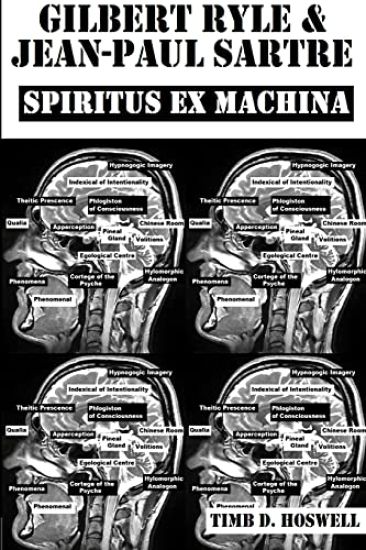
Gilbert Ryle & Jean Paul Sartre, Spiritus Ex Machina
Gilbert Ryle was one of the most famous philosophers last century. His work The Concept of Mind started a revolution within Analytic Philosophy of Mind. Ryle's revolutionary insight was to reconstruct the mind from the ordinary language of everyday people. Yet few people know that Ryle was himself deeply influenced by Jean-Paul Sartre. This work plumbs those depths beginning with an interview Ryle gave shortly before he died and a confession that he used Sartre's argument on Hume in his work. The book is the perfect introduction for the budding Philosopher, Psychologist or Psychiatrist interested in Ryle's work, while offering new surprises for the dedicated Analytic Philosopher or Rylean scholar.
Gilbert Stuart and the Impact of Manic Depression

Gilbert Stuart and the Impact of Manic Depression

Dorinda Evans

Ashgate Publishing Limited
2013
sidottu
Early American painter Gilbert Stuart has long been mistakenly represented as a hard-drinking rogue, habitual liar, and inexplicable financial failure. To explain his stylistic unevenness as an artist, he is assumed to have had an inferior assistant, but the documentary evidence for an assistant who painted on his portraits is non-existent-in fact, there is evidence to the contrary. This ground-breaking study demonstrates that Stuart suffered from a hereditary form of manic depression, leading him to create pictures that contain peculiar lapses characteristic of a manic-depressive, or bipolar, artist. Using documentary and empirical evidence-from diaries and letters to x-radiographs of paintings-this book fills important gaps in our knowledge of Stuart, and connects the strange visual effects in some of Stuart's paintings with cognitive deficits attendant with the disorder. In addition to Stuart, other bipolar artists, including George Romney, Raphaelle Peale, Gilbert Stuart Newton, and William Rimmer, are discussed in relation to these deficits, revealing patterns which carry broader implications for all manic-depressive artists. This volume is a significant contribution not only to studies of Stuart and the four other painters but also to our understanding of the mind of a manic-depressive artist. It bridges the broad disciplines of art history and psychopathology.