Kirjojen hintavertailu. Mukana 11 342 296 kirjaa ja 12 kauppaa.

Kirjahaku

Etsi kirjoja tekijän nimen, kirjan nimen tai ISBN:n perusteella.

1000 tulosta hakusanalla Goethe

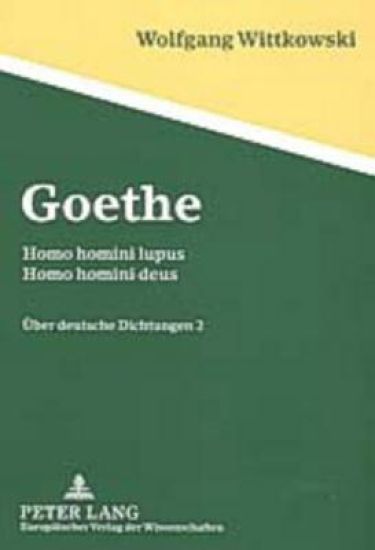
Goethe

Goethe

Wolfgang Wittkowski

Peter Lang AG
2004
nidottu
Beachtet man die lange vernachlassigten Phanomene ethischer Natur, befreien sich zentrale Werke Goethes von weitergeschleppter altvaterischer wie neumodisch-ideologischer Verfalschung. Sie geraten auf die Fusse und erweisen Goethes menschliche, asthetische und politische Weisheit als so allgemeingultig, dass sie heute eher noch aktueller, unentbehrlicher erscheint. AEusserlich angepasst und diplomatisch, opponierte der Dichter subversiv. Sorebelliert Iphigenie gegen religioesen und weltlichen Autoritatsmissbrauch, desgleichen die unerhoert analytische Liebestragoedie Tasso gegen Hofdunkel. Angeblich unpolitisch, bewahrt Egmont ethisch-politisches Genie in Anlehnung an Machiavelli. Der schlichte Hermann ubertrifft Dorotheas imponierenden ersten Verlobten und Sympathisanten der Revolution. Die naturliche Tochter, Faust entlarven Betrug und Machtwillen hinter schoenklingenden Parolen. Mit umsichtiger Diatetik der Seele, der Ethik und seiner polar ausbalancierten Kunst warnt Goethe vor dem Menschen, der an anderen zum Wolf, und ruhmt ihn, wo er an ihnen zum Gott, zur Goettin wird.
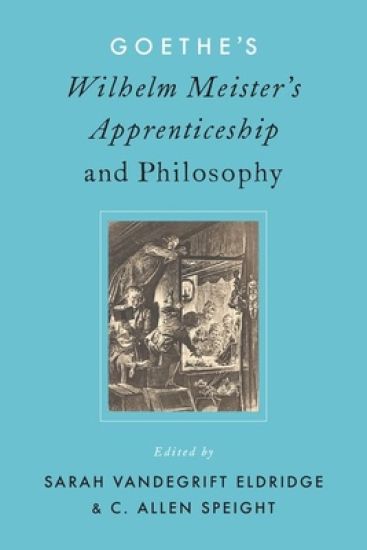
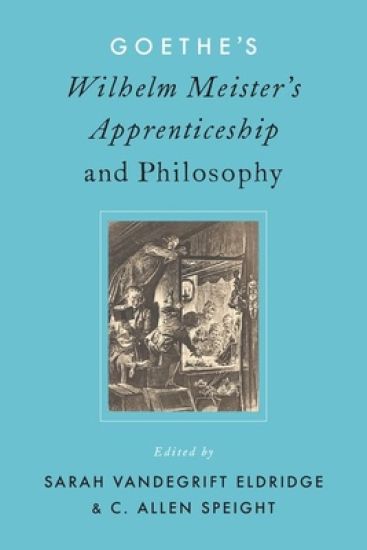
Goethe's Wilhelm Meister's Apprenticeship and Philosophy
In the decades after its publication, Goethe's Wilhelm Meister's Apprenticeship served as a touchstone for such major philosophical and literary figures as Schopenhauer, Schleiermacher, and Schlegel, and was widely understood to be one of the greatest novels of the German canon. But in the decades and centuries following, the attention it has received in both disciplines has diminished in comparison to either Goethe's Sorrows of Young Werther or his Elective Affinities. This volume follows the impetus of its early respondents to examine deeply what exactly Goethe's long and complicated novel is doing, and how it engages with problems and themes of human life. An interdisciplinary group of eminent scholars grapple with the novel's engagement with central philosophical questions such as individuality, development, and authority; aesthetic formation and narrative (and human) contingency; and gender, sexuality, and marriage. That these questions and their working-through in Wilhelm Meisters Lehrjahre are in tension with one another speaks ultimately to how literature explores philosophical questions in ways that are open-ended, creative, and contain potential for new and different solutions to living with them. This unique philosophical approach to the form and purpose of a literary masterpiece illuminates new inroads into a novel at once famously complex and influential, and into the projects of one Germany's greatest writers.
Goethe's Wilhelm Meister's Apprenticeship and Philosophy
In the decades after its publication, Goethe's Wilhelm Meister's Apprenticeship served as a touchstone for such major philosophical and literary figures as Schopenhauer, Schleiermacher, and Schlegel, and was widely understood to be one of the greatest novels of the German canon. But in the decades and centuries following, the attention it has received in both disciplines has diminished in comparison to either Goethe's Sorrows of Young Werther or his Elective Affinities. This volume follows the impetus of its early respondents to examine deeply what exactly Goethe's long and complicated novel is doing, and how it engages with problems and themes of human life. An interdisciplinary group of eminent scholars grapple with the novel's engagement with central philosophical questions such as individuality, development, and authority; aesthetic formation and narrative (and human) contingency; and gender, sexuality, and marriage. That these questions and their working-through in Wilhelm Meisters Lehrjahre are in tension with one another speaks ultimately to how literature explores philosophical questions in ways that are open-ended, creative, and contain potential for new and different solutions to living with them. This unique philosophical approach to the form and purpose of a literary masterpiece illuminates new inroads into a novel at once famously complex and influential, and into the projects of one Germany's greatest writers.
Goethe's Naturalistic Anthropology

Goethe's Naturalistic Anthropology

Matthew Bell

Clarendon Press
1994
sidottu
For many readers in the English-speaking world, Goethe is somehow separate from the European intellectual and literary tradition. In this unique and wide-ranging study, Matthew Bell aims to correct this view by showing how Goethe portrayed human beings as part of a natural continuum, very much in the spirit of the Enlightenment. Dr Bell's fresh readings of Goethe's major and lesser-known texts are set against the background of the science and philosophy of the age, and the writer's debts to other thinkers are analysed. The development of Goethe as a writer and thinker is traced from his sentimental epistolary novel Werther - read in the context of the rise of psychological theory in the Englightment - to the emergence of his own theory of `empirical psychology' in the great roman a clef of 1809, Die Wahverwandtschaften. In a major new interpretation of Wilhelm Meisters Lehriahre, Matthew Bell follows the ideal of organic growth from the novel's origins in Engligtenment optimism to its revision in an atmosphere of post-revolutionary scepticism. Placing Goethe in an anthropological context, Goethe's Naturalistic Anthropology demonstrates that eighteenth-century anthropological thought provides an essential, hitherto overlooked context for the understanding of Goethe's literary enterprise from Werther to Die Wahllverwandtschaften.
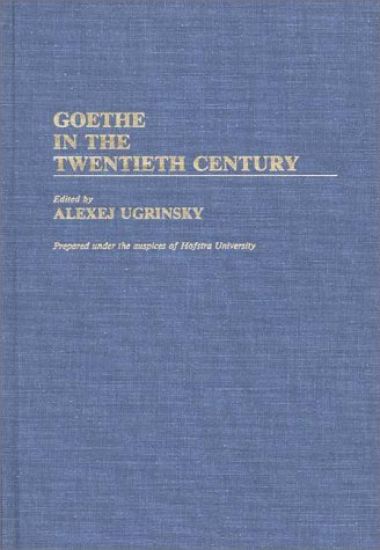
Goethe in the Twentieth Century

Goethe in the Twentieth Century

Praeger Publishers Inc
1987
sidottu
Born in 1749, Johann Wolfgang von Goethe was one of the giants of world literature and the last European to embody the multi-faceted expertise of the Renaissance personality. Assembled to commemorate the 150th anniversary of his death, the essays included here are appropriately written from a variety of perspectives-- literary, humanistic, and scientific. A genuinely interdisciplinary collection, this volume is witness to the powerful influence Goethe's works have had on a wide range of subjects from fiction, drama, and art to physics, psychology, and psychiatry. The collection also demonstrates the extent to which his ideas have transcended national boundaries, as well as historic ones.