The Reformation of the Subject is a study of the cultural contradictions that gave birth to the English Protestant epic. In lucid and theoretically sophisticated language, Linda Gregerson examines the fraught ideological, political and gender conflicts that are woven into the texture of The Faerie Queene and Paradise Lost. She reminds us that Reformation iconoclasts viewed verbal images with the same aversion as visual images, because they too were capable of waylaying the human imagination. Through a series of detailed readings, Gregerson examines the different strategies adopted by Spenser and Milton as they sought to distinguish their poems from idols yet preserve the shaping power that iconoclasts have long attributed to icons. Tracing the transformation of the epic poem into an instrument for the reformation of the political subject, Gregerson thus provides an illuminating contribution to our understanding of the ways in which subjectivities are historically produced.
Liber Brevior: With Rhythmic Signs Of Solesmes is a book published by the Gregorian Institute of America. This book is a collection of Gregorian chants, which are a form of liturgical music that originated in the Catholic Church. The chants in this book are arranged according to the liturgical calendar and include chants for various feasts and seasons. The book is intended for use by choirs and musicians who perform Gregorian chants in the traditional manner. The book includes the rhythmic signs of Solesmes, which are a set of markings used to indicate the rhythm of the chants. These markings are an important part of the Solesmes method of chant performance, which emphasizes a smooth and flowing style of singing. Overall, this book is a valuable resource for anyone interested in the performance of Gregorian chants in the traditional style.Contains Table Of Movable Feasts, Preface To Vatican Edition, Rules For Interpretation, Prayers For The Ordinary And The Canon Of The Mass, The Ordinary Chants Of The Mass, Common Tones Of The Mass, Requiem Mass And The Burial Service, Proper Of The Time, Common Of The Saints, Votive Masses, Proper Of The Saints, Sunday At Vespers, Common Of The Blessed Virgin Mary, Chants At Benediction Of The Most Blessed Sacrament, Graduals, Versicles Of The Alleluia, And Tracts In The Tones Of Simple Or Solemn Psalmody, Various Indices.This scarce antiquarian book is a facsimile reprint of the old original and may contain some imperfections such as library marks and notations. Because we believe this work is culturally important, we have made it available as part of our commitment for protecting, preserving, and promoting the world's literature in affordable, high quality, modern editions, that are true to their original work.
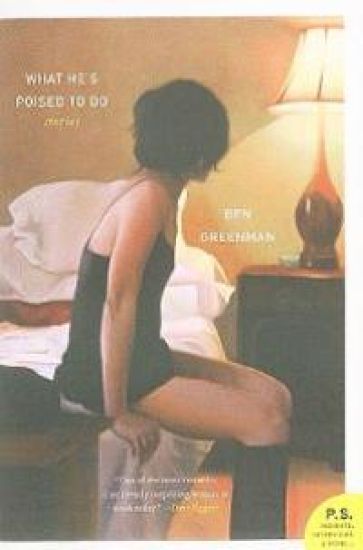
"Ben Greenman seems incapable of writing anything dry or familiar or expected. He is one of the most versatile, consistently surprising writers at work today." --Dave Eggers A diverse and moving collection of witty, fabular, haunting stories about love, infidelity, and the vanishing art of letter writing--from the acclaimed novelist and New Yorker editor Ben Greenman. Fans of the works of Keith Gessen, Ben Kunkel, Nathaniel Rich, and John Wray will find much to love in the beautiful, poignant stories of What He's Poised to Do.
New Yorker editor and McSweeney's contributor Ben Greenman reshapes Russian literature's most celebrated stories around America's most popular pop culture icons, probing the deep complexities of Anton Chekov (not to mention those of Cruise or Kardashian). Thought-provoking and funny, these wryly re-imagined tales will be sure-fire favorites for every kind of reader, whether your favorite escapes are celebrity memoirs like L.A. Candy and The Truth about Diamonds, re-conceived classics like Wicked, literary parodies like Pride and Prejudice and Zombies, or masterpieces of fiction from authors like Tolstoy, Pushkin and Chekhov himself.
The Slippage is a wry, wistful tale of marriage, lust, and disconnection from Ben Greenman, the critically acclaimed author of What He's Poised to Do.William Day must confront some uncomfortable truths about his life and his future when his wife Louisa asks him to build her house. The take-it-or-leave-it demand becomes all the more difficult to swallow when he finds himself grappling with a past recklessness, an ex-girlfirend's son he considers his own, and his own wants for what lies ahead.Sure to appeal to everyone who has ever been in love and had their heart broken, The Slippage shares uncanny truths about intimacy and modern relationships.
2018 Nautilus Book Awards Silver WinnerWhat if you could unlock a better answer to your most vexing problem—in your workplace, community, or home life—just by changing the question?Talk to creative problem-solvers and they will often tell you, the key to their success is asking a different question.Take Debbie Sterling, the social entrepreneur who created GoldieBlox. The idea came when a friend complained about too few women in engineering and Sterling wondered aloud: "why are all the great building toys made for boys?" Or consider Nobel laureate Richard Thaler, who asked: "would it change economic theory if we stopped pretending people were rational?" Or listen to Jeff Bezos whose relentless approach to problem solving has fueled Amazon’s exponential growth: “Getting the right question is key to getting the right answer.” Great questions like these have a catalytic quality—that is, they dissolve barriers to creative thinking and channel the pursuit of solutions into new, accelerated pathways. Often, the moment they are voiced, they have the paradoxical effect of being utterly surprising yet instantly obvious.For innovation and leadership guru Hal Gregersen, the power of questions has always been clear—but it took some years for the follow-on question to hit him: If so much depends on fresh questions, shouldn’t we know more about how to arrive at them? That sent him on a research quest ultimately including over two hundred interviews with creative thinkers. Questions Are the Answer delivers the insights Gregersen gained about the conditions that give rise to catalytic questions—and breakthrough insights—and how anyone can create them.
This book argues that postwar Britain's 'imperial over-extension' has been exaggerated. Britain developed and adjusted its defence strategy based upon the perceived Communist threat and available resources. It was especially successful at adapting to meet the strategic and resource challenges from the Far East from 1947-54. There British and Gurkha forces were deployed only in contingencies that threatened vital British interests, while the U.S. and Commonwealth allies were persuaded to accept key wartime missions, thus preserving Britain's ability to fight in Western Europe.
A long-awaited yet startlingly urgent new collection from “a contemporary master”*—a fierce, big-hearted eye on our last, tumultuous decade, and our fragile environment *Los Angeles Review of Books Linda Gregerson’s long-awaited new collection is a tour de force, a compendium of lives touched by the radical fragility of the planet and, ultimately, the endless astonishment and paradox of being human within the larger ecosystem, “in a world where every breath I take is luck.” From the Syrian refugee and ecological crises, to police brutality and COVID, to the Global Seed Vault buried under permafrost, the poems ask: How does consciousness relate to the individual body, the individual to the communal, the community to our environment? How do we mourn a loved one, and how do we mourn strangers? The magnificent poems in Canopy catalogue and reckon with humanity and the natural world, mortality, rage, love, grief, and survival.
A long-awaited yet startlingly urgent new collection from "a contemporary master"*--a fierce, big-hearted eye on our last, tumultuous decade, and our fragile environment *Los Angeles Review of Books Linda Gregerson's long-awaited new collection is a tour de force, a compendium of lives touched by the radical fragility of the planet and, ultimately, the endless astonishment and paradox of being human within the larger ecosystem, "in a world where every breath I take is luck." From the Syrian refugee and ecological crises, to police brutality and COVID, to the Global Seed Vault buried under permafrost, the poems ask: How does consciousness relate to the individual body, the individual to the communal, the community to our environment? How do we mourn a loved one, and how do we mourn strangers? The magnificent poems in Canopy catalogue and reckon with humanity and the natural world, mortality, rage, love, grief, and survival.
This book explores the usage and significance of the word "like" across a wide range of disciplines, focusing in particular on its influence in education and pedagogy. From the advent of the "like button" on Facebook to the common verbal tic, liking has become an integral part of our everyday lives. By drawing on feminist, queer, and other critical traditions, the authors evaluate this phenomenon in order to interrogate its history, its linguistic function, its role in labor and economics, and its ties to, and separation from, religion. As the notion of "like" becomes more and more ubiquitous, this critical volume demonstrates the need to consider like, liking, and likeability when thinking about the institutions that impact us daily.