Kirjojen hintavertailu. Mukana 11 627 067 kirjaa ja 12 kauppaa.

Kirjahaku

Etsi kirjoja tekijän nimen, kirjan nimen tai ISBN:n perusteella.

1000 tulosta hakusanalla Hans Rust; Rust Hans 1879-

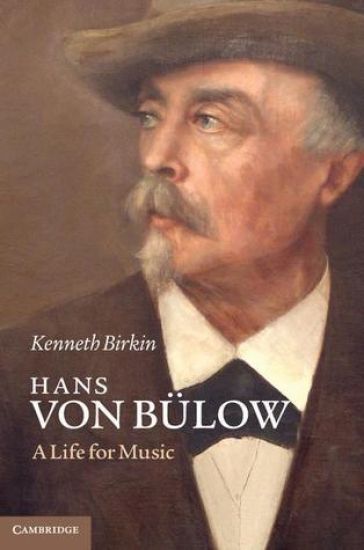
Hans von Bülow

Hans von Bülow

Birkin Kenneth

Cambridge University Press
2011
sidottu
Drawing upon an extensive selection of rare letters, reviews and memoirs, Kenneth Birkin sets Hans von Bülow's work as a recitalist, chamber-music artist and orchestral conductor at the centre of a disturbed and eventful life. Bülow's Zukunftsmusik advocacy and ruthless criticism of performance standards in Berlin and Munich antagonised a musical 'establishment' nonetheless spellbound by his keyboard and orchestral mastery. Birkin pays particular attention to the Tristan and Meistersinger premieres, Cosima's desertion, the European and American tours and operatic activities in Hamburg and Hanover, as well as Bülow's pedagogic activities and forays into musical journalism. The book makes liberal use of Bülow's correspondence, published and unpublished, which personalises the narrative. Contemporary comments and reviews, translated here for the first time, give the reader an insight into the critical and public reaction. An extensive Appendix records the dates and venues of all Bülow's public appearances, both as pianist and conductor.
The Captivity of Hans Stade of Hesse in A.D. 1547–1555, Among the Wild Tribes of Eastern Brazil
The publications of the Hakluyt Society (founded in 1846) made available edited (and sometimes translated) early accounts of exploration. The first series, which ran from 1847 to 1899, consists of 100 books containing published or previously unpublished works by authors from Christopher Columbus to Sir Francis Drake, and covering voyages to the New World, to China and Japan, to Russia and to Africa and India. First published in English in 1874, this book contains Hans Stade's autobiographical account of his capture by the indigenous Brazillian Tupinamba people in 1554, and his description of their customs. Stade was held prisoner for a year, and according to his sensational report he witnessed many acts of cannibalism and was offered roasted human flesh by the chief of a Tupinamba village. The nineteenth-century editor added a preface describing the area of Brazil in question, where he himself had spent three years of 'exile'.
Memoirs of Hans Hendrik, the Arctic Traveller, Serving under Kane, Hayes, Hall and Nares, 1853–1876
First published in 1878, this English translation of the memoirs of Hans Hendrik (c.1834–89), a native Greenlander, provides a valuable alternative perspective on polar exploration in the nineteenth century. Inuit were often employed on Arctic expeditions of the period. Hendrik is remarkable, however, not only because his skills as a guide and hunter were called on repeatedly during several expeditions - notably those led by Elisha Kent Kane, Isaac Israel Hayes, Charles Francis Hall and George Strong Nares - but also because he wrote his own account of these experiences. The memoirs show that Hendrik distinguished himself through his application of survival skills and that he dealt with numerous challenges, including the forced abandonment of ship and drifting for months on an ice floe. Instances of sickness and malnutrition are also recorded, as is the poor treatment that Hendrik and other Inuit sometimes experienced from their employers.
Hans Kelsen's Normativism

Hans Kelsen's Normativism

Carsten Heidemann

Cambridge University Press
2022
pokkari
Hans Kelsen's Pure Theory of Law is the most prominent example of legal normativism. This text traces its origins and its genesis. In philosophy, normativism started with Hume's distinction between Is- and Ought-propositions. Kant distinguished practical from theoretical judgments, while resting even the latter on normativity. Following him, Lotze and the Baden neo-Kantians instrumentalized normativism to secure a sphere of knowledge which is not subject to the natural sciences. Even in his first major text, Kelsen claims that law is solely a matter of Ought or normativity. In the second phase of his writings, he places himself into the neo-Kantian tradition, holding legal norms to be Ought-judgments of legal science. In the third phase, he advocates a barely coherent naive normative realism. In the fourth phase, he supplements the realist view with a strict will-theory of norms, coupled with set-pieces from linguistic philosophy; classical normativism is more or less dismantled.
Hans Folz and Print Culture in Late Medieval Germany
In this study, author Caroline Huey analyzes the copious literary output of medieval poet and barber-surgeon Hans Folz in all its variety-whether Meisterlied, Reimpaarspruch or carnival play. Heretofore, published research to do with Folz's multifaceted and compelling oeuvre has been fragmentary, because scholars have restricted themselves by genre in examining themes in Folz's work. By integrating the different themes across Folz's output, and by integrating consideration (previously neglected by earlier critics) of Folz's role as barber-surgeon, Huey offers new insights as to the interaction of these themes and to the character of the poet's work overall. She shows that ultimately Folz is concerned with the circulation of knowledge and power, correct and incorrect behavior, and, above all, with finding order. In each chapter, Huey examines a particular theme from Folz's life and/or work. She looks at how adeptly he commandeers the new technology of printing to further his own ends; how his ubiquitous physicality connects his medical body to his Christian body; his attitude toward women; and the anti-Jewish thread in his work.
Hans Christian Andersen and Music

Hans Christian Andersen and Music

Anna Harwell Celenza

Routledge
2017
nidottu
Hans Christian Andersen was the most prominent Danish author of the nineteenth century. Now known primarily for his fairy tales, during his lifetime he was equally famous for his novels, travelogues, poetry, and stage works, and it was through these genres that he most often reflected on the world around him. With the bicentennial of Andersen's birth in 2005, there is still much about the writer that is not yet common knowledge. This book explores a single aspect of that void - his interest in and relationship to the musical culture of nineteenth-century Europe. Why look to Andersen for information about music? To begin, Andersen had a musical background. He enjoyed a brief career as an opera singer and dancer at the Royal Theater in Copenhagen, and in later years he went on to produce opera libretti for the Danish and German stage. Andersen was also an avid music devotee. He made thirty major European tours during his seventy years, and on each of these trips he regularly attended opera and concert performances, recording his impressions in a series of travel diaries. In short, Andersen was a well-informed listener, and as this book reveals, his reflections on the music of his age serve as valuable sources for the study of music reception in the nineteenth century. Over the course of his life, Andersen embraced and then later rejected performers such as Maria Malibran, Franz Liszt, and Ole Bull, and his interest in opera and instrumental music underwent a series of dramatic transformations. In his final years, Andersen promoted figures as disparate as Wagner and Mendelssohn, while strongly objecting to Brahms. Although such changes in taste might be interpreted as indiscriminate by modern-day readers, this study shows that such shifts in opinion were not contradictory, but rather quite logical given the social and cultural climate of the age.
Hans Mol and the Sociology of Religion
Hans Mol was born in the Netherlands during the 1920s. His imprisonment by the Gestapo during World War II began a long intellectual journey, exploring the role of religion in society. His work on the sociology of religion throughout the 20th and 21st Century is distinctive in its quest for both methodological and existential balancePart One of this book includes a brief outline of Mol’s most influential theory as originally explicated in Identity and the Sacred (1976). This is followed by a look at the initial reception of that theory in relation to the competing concepts of Mol’s contemporaries. Part Two is comprised of four previously-unpublished essays written by Mol during the 70s and 80s. Covering topics from evolution to evangelicalism, the papers display the sweeping ambition of this sociologist as well as the tone and contours of his intellectual articulation. In the Postscript this volume concludes with select transcripts of interviews conducted between Adam Powell and Hans Mol during the Spring of 2012. This volume of Mol’s work will be of keen interest to academics and students with an interest in the sociology of religion post-World War II and the development of contemporary Christian theology.
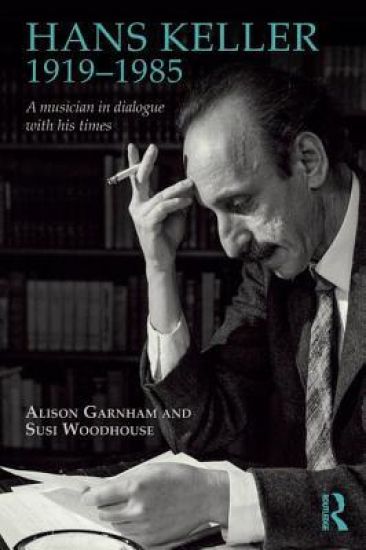
Hans Keller 1919 - 1985

Hans Keller 1919 - 1985

Alison Garnham; Susi Woodhouse

Routledge
2018
nidottu
Hans Keller 1919–1985: A musician in dialogue with his times is the first full biography of Hans Keller and the first appearance in print of many of his letters. Eight substantial chapters, integrating original documents with their historical context, show the development of Keller’s ideas in response to the people and events that provoked them.A musician of penetrating insight, Keller was also an exceptional writer and broadcaster, whose remarkable mind dominated British musical life for forty years after the Second World War. It was a vital time for music in Britain, fuelled by unprecedented public investment in the arts and education and the rapid development of recording and broadcasting. Keller was at the centre of all that was happening and his far-sighted analysis of the period is deeply resonant today.Illustrated throughout by extracts from Keller’s writings, diaries and correspondence with musicians including Arnold Schoenberg, Benjamin Britten and Yehudi Menuhin, this book vividly conveys the depth of his thought and the excitement of the times. Published for the centenary of Keller’s birth, it is an illuminating celebration of his life and works for all those interested in the music and history of post-war Britain.
Hans Keller and the BBC

Hans Keller and the BBC

A. M. Garnham

Routledge
2019
nidottu
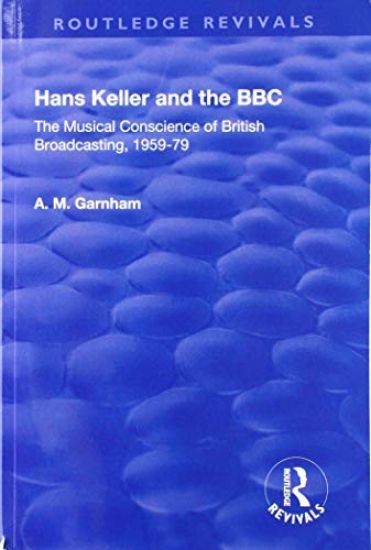
Originally published in 2003, Hans Keller and the BBC is a vivid portrait of the changing face of British broadcasting seen through the work of one of its most significant personalities. Starting with an examination of Keller’s early psychological interests, and the evolution of his method of ‘functional analysis’ of music (with which the BBC was intimately concerned), the book charts the huge contribution Keller made to British music during his BBC years. Also explored in detail are the successive crises of the Third Programme and its replacement by Radio 3, together with Keller’s leading role in opposing the decline of the BBC’s cultural idealism. Drawing on a wealth of primary sources, much of which has never been previously examined, this study paints a striking picture of Keller’s personality in combination with the BBC’s turbulent inner workings, showing the effect of one remarkable individual on the most powerful musical institution in 20th-century Britain.
Hans Keller and the BBC

Hans Keller and the BBC

A. M. Garnham

Routledge
2017
sidottu
Originally published in 2003, Hans Keller and the BBC is a vivid portrait of the changing face of British broadcasting seen through the work of one of its most significant personalities. Starting with an examination of Keller’s early psychological interests, and the evolution of his method of ‘functional analysis’ of music (with which the BBC was intimately concerned), the book charts the huge contribution Keller made to British music during his BBC years. Also explored in detail are the successive crises of the Third Programme and its replacement by Radio 3, together with Keller’s leading role in opposing the decline of the BBC’s cultural idealism. Drawing on a wealth of primary sources, much of which has never been previously examined, this study paints a striking picture of Keller’s personality in combination with the BBC’s turbulent inner workings, showing the effect of one remarkable individual on the most powerful musical institution in 20th-century Britain.
Hans Eysenck: Consensus And Controversy
During the last forty years, Hans Eysenck's brilliant contribution to knowledge has beenwell-known world-wide. From its early transmission, his work has not been without itscritics. Naturally, criticisms persist, although his work continues to be frequentlyacknowledged with great admiration in the channels of psychology. With such prolificwork, it would seem justified to consider the discrepancies, the omissions, together withthe various interpretations which have been and are currently being highlighted.