

Kirjahaku
Etsi kirjoja tekijän nimen, kirjan nimen tai ISBN:n perusteella.
1000 tulosta hakusanalla Hans W. Cohn

Mercedes-Benz W 126
Heribert Hofner; Hans-Peter Lange; Stefan Commertz
Heel Verlag Gmbh
2018
sidottu

So wird's gemacht. Mercedes E-Klasse W 210 6/95 bis 3/02
Hans-Rüdiger Etzold
Delius Klasing Vlg GmbH
1997
nidottu

The Seeds: Whatever happened to SS General Hans Kammler?
N. W. Boyer
Independently Published
2019
nidottu
This novel originated from a post in a blog that was written by N.W. Boyer in Boyer Writes. This post on SS General Hans Kammler asked the question: "What ever happened to Gen.Kammler?" After World War II, a number of high-ranking officers fled to places like Argentina. This question seemed to be of great interest to Boyer's readers. Some readers wrote emails that they knew where General Kammler had lived. One even said the General was an uncle who was elderly and had escaped prosecution. General Kammler, as portrayed in this book is entirely fiction. The accounts of him, however are based on historical facts. General Kammler, was in fact from 1944, was head of advanced weapons development in Nazi Germany, including the Me-262 jets, the V-2 rockets and perhaps even the exotic Bell Project. The enormous interest in General Kammler led Boyer to explore the thoughts of where he might be hiding and thus, this novel evolved. All characters are fictional, but many of the places described in the novel, as the World Seed Vault in Norway, sometimes referred to as the "Doomsday Seed Vault" or actual places. For many readers, the people and culture of the Middle East, are generally not understood by other parts of the world. This only increases the mystery behind the writing of this historical fiction by N.W. Boyer

The German Friend: War and Postwar Letters from German Anti-Nazi Prinz Hubertus zu Löwenstein to American Hans Christian, 1942-1947
John W. Larson
Createspace Independent Publishing Platform
2014
nidottu
In 1942 John W. Larson was a student at Hamline University in St. Paul, Minnesota, when he befriended a visiting lecturer from Germany, Prince Hubertus L wenstein, a prominent scholar whose anti-Nazi views forced him into exile after Hitler came to power. Larson and L wenstein began a correspondence that lasted throughout World War II and into the postwar era. In his letters, L wenstein shares his thoughts on Nazism, German democracy, the Weimar Republic, life in exile, and his impressions of major events during the war. In 1946 L wenstein returned to Germany, and his letters to Larson document the widespread starvation, unemployment, and destruction that he found there. In The German Friend, Larson compiles more than four hundred of L wenstein's letters. Unlike his careful academic papers, the scholar's personal opinions shine through in his correspondence, and he shares views that, as a scholar, he would rarely express in his public writing. Accompanied by Larson's editorial introductions and explanations of L wenstein's developing thoughts, A German Friend is a unique and invaluable resource for scholars, students, and enthusiasts of World War II, as well as a revealing glimpse into the mind of one of Germany's more influential twentieth-century thinkers.
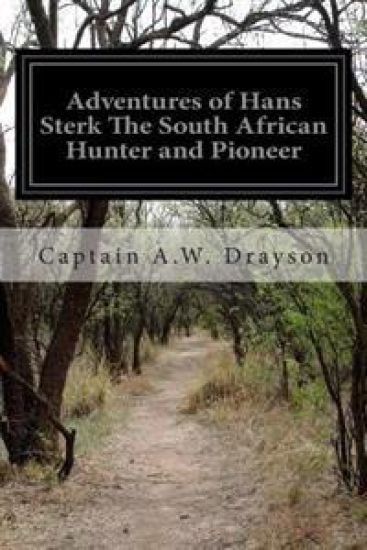
Adventures of Hans Sterk the South African Hunter and Pioneer
Captain a. W. Drayson
Createspace Independent Publishing Platform
2014
nidottu

Adventures of Hans Sterk the South African Hunter and Pioneer
Captain a. W. Drayson
Createspace Independent Publishing Platform
2015
nidottu
Buridanizm w Pol'she w dokopernskij period
Mechislaw Markowski; Yanina Drax; Hans-Ul'rih Völer
Palmarium Academic Publishing
2019
nidottu
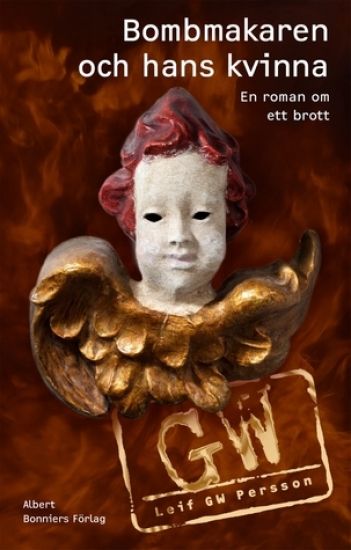
Det är måndagen den elfte maj när Lisa Mattei, operativ chef på Säkerhetspolisen, får ett telefonsamtal från sin chef. Ett al Shabaab-näste i Eskilstuna förbereder ett terrorattentat i Sverige. Närmare bestämt under Kungafamiljens nationaldagsfirande på Skansen. Mattei samlar kompetent folk kring sig och ett intensivt och metodiskt spaningsarbete börjar. Stämmer tipset? Finns det en mullvad inom Säpo?Måndagens telefonsamtal förändrar allt och sätter nationen i höjd beredskap.Bombmakaren och hans kvinna utkom för första gången 2015.

Hirsaugiensis, W: Musik Wilhelms Von Hirschau (1883)
Wilhelmus Hirsaugiensis; Hans Muller
KESSINGER PUBLISHING, LLC
2009
nidottu
Among the Zulus: The Adventures of Hans Sterk South African Hunter and Pioneer
Major-Gen A. W. Drayson
Literary Licensing, LLC
2014
nidottu

W plus V - FOS Hessen / FOS und HBFS Rheinland-Pfalz Pflichtbereich 11 - Wirtschaft und Verwaltung
Kai Franke; Alexander Rauch; Hans-Peter von den Bergen
Cornelsen Verlag GmbH
2017
nidottu

Hans Herken Gewidmet
Helmut Coper; H. Kewitz; W. Kalow
Springer-Verlag Berlin and Heidelberg GmbH Co. K
1988
nidottu

Absolutistische und relativistische Raumvorstellungen (nach Stephen W. Hawking)
Britta Daniel; Hans-Peter Tonn
Grin Publishing
2007
pokkari
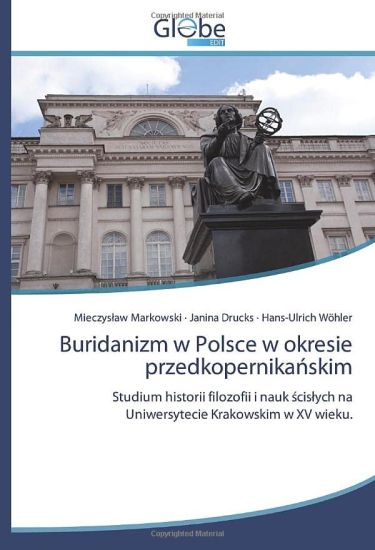
Buridanizm w Polsce w okresie przedkopernika¿skim
Mieczys¿aw Markowski; Janina Drucks; Hans-Ulrich Wöhler
Globeedit
2020
nidottu
Among the Zulus the Adventures of Hans Sterk South African Hunter and Pioneer
Major-Gen. A. W. Drayson
KESSINGER PUBLISHING CO
2004
pokkari
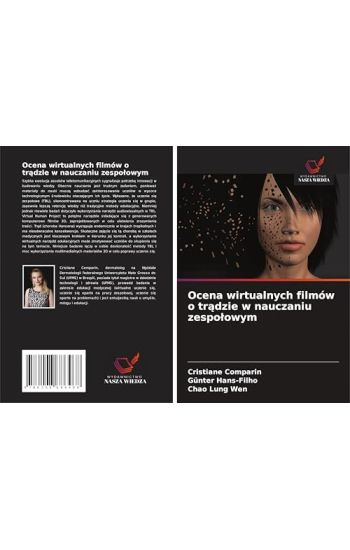
Ocena wirtualnych filmów o tr¿dzie w nauczaniu zespo¿owym
Cristiane Comparin; Günter Hans-Filho; Chao Lung Wen
Wydawnictwo Nasza Wiedza
2025
nidottu

AMONG THE ZULUS THE ADVENTURES OF HANS S
MAJOR-GEN. DRAYSON; A. W. (ILT) Cooper; A. W. Drayson
UNKNOWN
2007
sidottu

KJ Benhavns Belejring Og Fyens Gjenerobring. 1658-59. Efter Forfatterens D D Samlede AF P. Fr. Rist Og H. W. Harbou.
S Ren Anton So Rensen; Frederik Hans Walther Harbou
British Library, Historical Print Editions
2012
pokkari

Ett liv med Matisse, Picasso och Christo : Theodor Ahrenberg och hans samli
Monte Packham; Staffan Ahrenberg; Olivier Berggruen; Daniel Birnbaum; Jeanette Bonnier; Jean-Louis Cohen; Erling Kagge; Eberhard W. Kornfeld; Hans Ulrich Obrist; Carrie Pilto; Simon de Pury
Arvinius+Orfeus Publishing
2018
sidottu
Efter andra världskriget började Theodor Teto Ahrenberg (1912-1989) att skapa en av de mest ambitiösa och egensinniga privata samlingar av modern konst som funnits; en samling som alltjämt i stort sett är okänd. Den innehöll närmare tusen verk av etablerade mästare som Matisse, Picasso och Chagall, och av banbrytande yngre konstnärer som Kantor, Baertling och Tinguely. Ahrenbergs komplexa och personliga samling formades av hans övertygelse om att han inte bara var samlare utan även katalysator någon som underlättade för utställningar, samarbeten och uppdrag, och använde konsten för att motsätta sig konservatism och självbelåtenhet. Samlingen beslagtogs 1962 av de svenska myndigheterna, under omtvistade förhållanden, och skingrades sedan. Det fanns också långt gångna planer på att skapa ett nytt konstmuseum av världsklass, ritat av Le Corbusier, på vattnet utanför Norr Mälarstrand. Även dessa planer skingrades. Ahrenberg byggde sedan upp en ny och än mer progressiv samling som lyfte fram konstnärer ur 60-talets avantgarde, såsom Christo, Arman, Lucio Fontana och Niki de Saint Phalle. Med hjälp av ett rikt bildmaterial och korrespondens, varav mycket aldrig tidigare har publicerats, utforskar denna bok på ett uttömmande sätt Ahrenbergs fascinerande samlingar och liv.