
Kirjahaku
Etsi kirjoja tekijän nimen, kirjan nimen tai ISBN:n perusteella.
1000 tulosta hakusanalla Heini Gruffudd

Heine, M: Erinnerungen An Heinrich Heine Und Seine Familie (
Maximilian Heine
KESSINGER PUBLISHING, LLC
2010
nidottu

Heinz, H: Geschichte Der Bromberger Schutzengilde Nach Hands
Hugo Heinz
KESSINGER PUBLISHING, LLC
2010
nidottu

Heine, G: Geschichte Des Landes Anhalt Und Seiner Fursten
Gerhard Heine
KESSINGER PUBLISHING, LLC
2010
nidottu


Heine, C: Johannes Velten, Ein Beitrag Zur Geschichte Des De
Carl Heine
KESSINGER PUBLISHING, LLC
2010
nidottu


Heine's Poems: Roses and Cypress
Literary Licensing, LLC
2013
nidottu

Heinrich Heine's Memoiren Und Neugesammelte Gedichte, Prosa Und Briefe...
Heine Heinrich
Nabu Press
2012
pokkari



It's not easy to stand up to school bullies when your life is falling apart at home. When her Mum finally finds out what is making Heidi miserable, she also finds a way to give her daughter strength, hope, faith in God's love, belief in herself. Bullies aren't all that tough! Zero Tolerance for bullies everywhere.

Heidi is a girl who has been raised by her aunt Dete in Maienfeld, Switzerland after the early deaths of her parents. However Dete would like to concentrate on her career. So she brings Heidi to her grandfather (Alm-Uncle) Alm-Uncle is good-hearted but mistrusts anybody and wants to keep the child from all evils of the world. So he refuses to send Heidi to school; instead she goes to the pastures, together with Peter, a shepherd boy looking after the goats. Heidi, is happy and healthy, leading a carefree life with her grandfather, her new friend, Peter, and the goats on the Alm. But Heidi's happiness is short-lived when she is sent to stay with a rich city family as a companion for a sick girl, Clara. Although she grows fond of the older girl, Heidi is terribly homesick.Heidi becomes ill of homesickness, she starts to walk in her sleep. When the doctor sees Heidi walking around in her sleep, he finds the right diagnosis and sends her back to the alps.

Heidi is a girl who has been raised by her aunt Dete in Maienfeld, Switzerland after the early deaths of her parents. However Dete would like to concentrate on her career. So she brings Heidi to her grandfather (Alm-Uncle) Alm-Uncle is good-hearted but mistrusts anybody and wants to keep the child from all evils of the world. So he refuses to send Heidi to school; instead she goes to the pastures, together with Peter, a shepherd boy looking after the goats. Heidi, is happy and healthy, leading a carefree life with her grandfather, her new friend, Peter, and the goats on the Alm. But Heidi's happiness is short-lived when she is sent to stay with a rich city family as a companion for a sick girl, Clara. Although she grows fond of the older girl, Heidi is terribly homesick.Heidi becomes ill of homesickness, she starts to walk in her sleep. When the doctor sees Heidi walking around in her sleep, he finds the right diagnosis and sends her back to the alps.
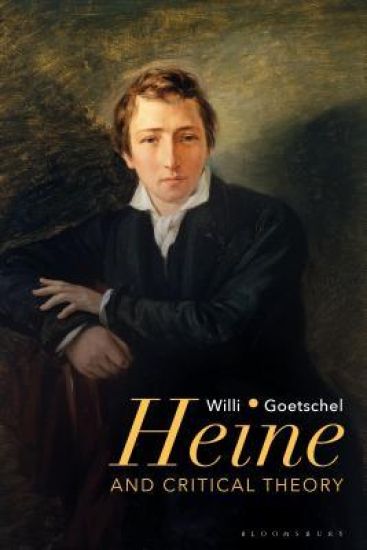
Heinrich Heine's role in the formation of Critical Theory has been systematically overlooked in the course of the successful appropriation of his thought by Marx, Nietzsche, Freud, and the legacy they left, in particular for Adorno, Benjamin and the Frankfurt School. This book examines the critical connections that led Adorno to call for a “reappraisal” of Heine in a 1948 essay that, published posthumously, remains under-examined. Tracing Heine’s Jewish difference and its liberating comedy of irreverence in the thought of the Frankfurt School, the book situates the project of Critical Theory in the tradition of a praxis of critique, which Heine elevates to the art of public controversy. Heine’s bold linking of aesthetics and political concerns anticipates the critical paradigm assumed by Benjamin and Adorno. Reading Critical Theory with Heine recovers a forgotten voice that has theoretically critical significance for the formation of the Frankfurt School. With Heine, the project of Critical Theory can be understood as the sustained effort to advance the emancipation of the affects and the senses, at the heart of a theoretical vision that recognizes pleasure as the liberating force in the fight for freedom.
Heinrich Heine's role in the formation of Critical Theory has been systematically overlooked in the course of the successful appropriation of his thought by Marx, Nietzsche, Freud, and the legacy they left, in particular for Adorno, Benjamin and the Frankfurt School. This book examines the critical connections that led Adorno to call for a “reappraisal” of Heine in a 1948 essay that, published posthumously, remains under-examined. Tracing Heine’s Jewish difference and its liberating comedy of irreverence in the thought of the Frankfurt School, the book situates the project of Critical Theory in the tradition of a praxis of critique, which Heine elevates to the art of public controversy. Heine’s bold linking of aesthetics and political concerns anticipates the critical paradigm assumed by Benjamin and Adorno. Reading Critical Theory with Heine recovers a forgotten voice that has theoretically critical significance for the formation of the Frankfurt School. With Heine, the project of Critical Theory can be understood as the sustained effort to advance the emancipation of the affects and the senses, at the heart of a theoretical vision that recognizes pleasure as the liberating force in the fight for freedom.

Heine on Shakespeare; a Translation of his Notes on Shakespeare Heroines
Heinrich Heine
Sagwan Press
2018
pokkari
This work has been selected by scholars as being culturally important, and is part of the knowledge base of civilization as we know it. This work was reproduced from the original artifact, and remains as true to the original work as possible. Therefore, you will see the original copyright references, library stamps (as most of these works have been housed in our most important libraries around the world), and other notations in the work.This work is in the public domain in the United States of America, and possibly other nations. Within the United States, you may freely copy and distribute this work, as no entity (individual or corporate) has a copyright on the body of the work.As a reproduction of a historical artifact, this work may contain missing or blurred pages, poor pictures, errant marks, etc. Scholars believe, and we concur, that this work is important enough to be preserved, reproduced, and made generally available to the public. We appreciate your support of the preservation process, and thank you for being an important part of keeping this knowledge alive and relevant.


Ciara Jansen stars in a BBC Radio full-cast dramatisation of the classic children's story. When Heidi, a lively orphan girl, goes to live with her grandfather in a little hut high in the Alps she soon learns to live in perfect harmony with her surroundings, leading a carefree life with her constant companion, Peter, a young goatherd. But her happiness is short-lived when she is sent to stay with a rich city family as a companion for the sick Clara. Although she becomes fond of the older girl, Heidi is terribly homesick. Will she ever be able to return to the Alps and the happiness she once knew with her friends? Johanna Spyri's touching story of the adventures of a young Swiss girl is one of the most popular children's stories ever written. Heidi's pleasure in the beauty of the Swiss mountains and her rich relationships with her friends and family are perfectly evoked in this warm and lively full-cast radio dramatisation.
