
Kirjahaku
Etsi kirjoja tekijän nimen, kirjan nimen tai ISBN:n perusteella.
1000 tulosta hakusanalla Helga Samset

A collection of poems by Veigl Helga, written in 2022.


A Witch's Week of Spells and Activities
Helga C. Loueen
Createspace Independent Publishing Platform
2012
nidottu





Blondie and Dagwood: A Novel of the Great American Family
Helga Lund
Literary Licensing, LLC
2013
nidottu
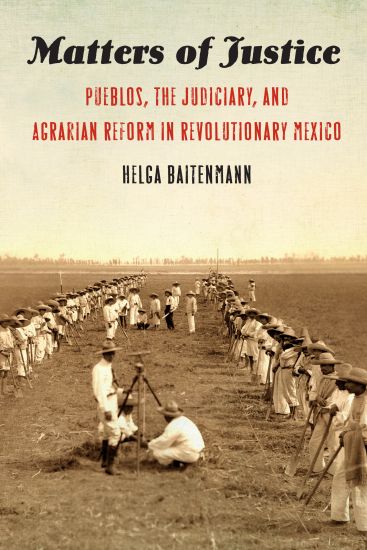
After the fall of the Porfirio DÍaz regime, pueblo representatives sent hundreds of petitions to Pres. Francisco I. Madero, demanding that the executive branch of government assume the judiciary’s control over their unresolved lawsuits against landowners, local bosses, and other villages. The Madero administration tried to use existing laws to settle land conflicts but always stopped short of invading judicial authority. In contrast, the two main agrarian reform programs undertaken in revolutionary Mexico-those implemented by Emiliano Zapata and Venustiano Carranza-subordinated the judiciary to the executive branch and thereby reshaped the postrevolutionary state with the support of villagers, who actively sided with one branch of government over another. In Matters of Justice Helga Baitenmann offers the first detailed account of the Zapatista and Carrancista agrarian reform programs as they were implemented in practice at the local level and then reconfigured in response to unanticipated inter- and intravillage conflicts. Ultimately, the Zapatista land reform, which sought to redistribute land throughout the country, remained an unfulfilled utopia. In contrast, Carrancista laws, intended to resolve quickly an urgent problem in a time of war, had lasting effects on the legal rights of millions of land beneficiaries and accidentally became the pillar of a program that redistributed about half the national territory.
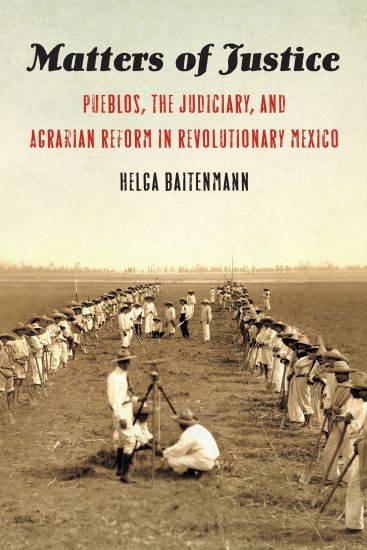
After the fall of the Porfirio DÍaz regime, pueblo representatives sent hundreds of petitions to Pres. Francisco I. Madero, demanding that the executive branch of government assume the judiciary’s control over their unresolved lawsuits against landowners, local bosses, and other villages. The Madero administration tried to use existing laws to settle land conflicts but always stopped short of invading judicial authority. In contrast, the two main agrarian reform programs undertaken in revolutionary Mexico-those implemented by Emiliano Zapata and Venustiano Carranza-subordinated the judiciary to the executive branch and thereby reshaped the postrevolutionary state with the support of villagers, who actively sided with one branch of government over another. In Matters of Justice Helga Baitenmann offers the first detailed account of the Zapatista and Carrancista agrarian reform programs as they were implemented in practice at the local level and then reconfigured in response to unanticipated inter- and intravillage conflicts. Ultimately, the Zapatista land reform, which sought to redistribute land throughout the country, remained an unfulfilled utopia. In contrast, Carrancista laws, intended to resolve quickly an urgent problem in a time of war, had lasting effects on the legal rights of millions of land beneficiaries and accidentally became the pillar of a program that redistributed about half the national territory.

El plano y la brújula
Helga Montalvan; Francisco Zaragoza Zaldivar
Createspace Independent Publishing Platform
2014
nidottu
En marzo de 1595 aparece en la bah a de La Habana el cad ver de un indio con las piernas amputadas y una figura enigm tica inscrita en el pecho. Presuntamente se trata de un asesinato vinculado a rituales her ticos. Dos inquisidores, Erico Lorenzo y Francisco Treviranus, se dedicar n a descifrar el problema.Paralelamente, Juan de Tejeda, un exgobernador de la Villa de San Crist bal de La Habana, aquejado por una dolorosa enfermedad, rememora los hechos que lo han llevado a renegar de su fe cat lica. A Juan de Tejeda est ntimamente relacionado un cirujano de oscuro origen, acaso un converso, de apellido Zamarra, enfrascado en hallar una cura para la enfermedad del exgobernador. Ciertos eventos vinculan a Zamarra con los inquisidores Lorenzo y Treviranus: Zamarra tuvo una novia, una negra esclava, Caridad, que le fue arrebatada por Treviranus; adem s, los inquisidores sometieron al cirujano a un proceso por herej a, motivo veros mil de un ulterior deseo de venganza por parte del m dico.Relacionado con estos personajes, aparece en la novela el ingeniero Bautista Antonelli, encargado por Felipe II de la protecci n de la Carrera de Indias. Este Antonelli literario es un gran esp a y conspirador. Las intrigas que urde conforman el esqueleto del relato y le dan unidad a una trama apasionante que cautivar y regocijar al lector por lo singular de su desarrollo y por lo imprevisto de sus desenlaces, encantos a los que se suma el de sus hembras sensuales, sus pantagru licas fiestas y la ingeniosa y universal irreverencia.

Forgiveness is NOT an Option: The Dawn of a New Day
Helga a. Clarke
Createspace Independent Publishing Platform
2014
nidottu
One of the most persistent concerns about the future is whether it will be dominated by the predictive algorithms of AI – and, if so, what this will mean for our behaviour, for our institutions and for what it means to be human. AI changes our experience of time and the future and challenges our identities, yet we are blinded by its efficiency and fail to understand how it affects us. At the heart of our trust in AI lies a paradox: we leverage AI to increase our control over the future and uncertainty, while at the same time the performativity of AI, the power it has to make us act in the ways it predicts, reduces our agency over the future. This happens when we forget that that we humans have created the digital technologies to which we attribute agency. These developments also challenge the narrative of progress, which played such a central role in modernity and is based on the hubris of total control. We are now moving into an era where this control is limited as AI monitors our actions, posing the threat of surveillance, but also offering the opportunity to reappropriate control and transform it into care. As we try to adjust to a world in which algorithms, robots and avatars play an ever-increasing role, we need to understand better the limitations of AI and how their predictions affect our agency, while at the same time having the courage to embrace the uncertainty of the future.
One of the most persistent concerns about the future is whether it will be dominated by the predictive algorithms of AI – and, if so, what this will mean for our behaviour, for our institutions and for what it means to be human. AI changes our experience of time and the future and challenges our identities, yet we are blinded by its efficiency and fail to understand how it affects us. At the heart of our trust in AI lies a paradox: we leverage AI to increase our control over the future and uncertainty, while at the same time the performativity of AI, the power it has to make us act in the ways it predicts, reduces our agency over the future. This happens when we forget that that we humans have created the digital technologies to which we attribute agency. These developments also challenge the narrative of progress, which played such a central role in modernity and is based on the hubris of total control. We are now moving into an era where this control is limited as AI monitors our actions, posing the threat of surveillance, but also offering the opportunity to reappropriate control and transform it into care. As we try to adjust to a world in which algorithms, robots and avatars play an ever-increasing role, we need to understand better the limitations of AI and how their predictions affect our agency, while at the same time having the courage to embrace the uncertainty of the future.

Her Sister Bella and Other Stories
Helga Wolff
Createspace Independent Publishing Platform
2016
nidottu


Cats 101: The Ultimate Cat Guide
Helga Schwartz
Createspace Independent Publishing Platform
2016
nidottu
The Equality Workbook: Freedom in Christ from the Oppression of Patriarchy
Helga Edwards Msw; Bob Edwards Msw
Createspace Independent Publishing Platform
2016
nidottu
Influenced by the patriarchy of Roman culture and ancient Greek philosophy, church leaders in the 3rd and 4th centuries began to translate and interpret the Bible with a systematic bias against women. This bias was carried over into the Protestant Reformation, and it continues to influence how the Bible is read and understood today. This workbook was written to help readers identify and remove patriarchal bias from Bible translation and commentary. As this bias is removed, it will become clear that far from being the will of God, patriarchy is a human tradition rooted in prejudice. This workbook also focuses on helping women to recover from the harmful effects of patriarchy. To help with the recovery process, the following topics are explored: - overcoming the lies of shame - suffering - the grief process - patriarchy and domestic abuse - rejecting patriarchal stereotypes - managing triggers - setting boundaries - freedom from codependence - healthy egalitarian relationships - communication and problem-solving - overcoming negative patterns in relationships - living in balance. Women are encouraged to be empowered by God to bring healing and freedom to the world in Jesus' name.