
Kirjahaku
Etsi kirjoja tekijän nimen, kirjan nimen tai ISBN:n perusteella.
1000 tulosta hakusanalla Hermann Bendix

In March 1935, Goering unveiled to the world his formerly "black,' secret German Air Force, the later dreaded Luftwaffe. That April, he married his second wife, a popular German stage actress, and in May solidified Germany's pre-1939 surprisingly good relations with neighbouring Poland. In March 1936, the Luftwaffe took part in the peaceful occupation of the formerly French-occupied Rhineland, and by the end of the year, Goering was also the recognized economic dictator of the Third Reich via heading the Nazi Four Year Plan. A State Visit to Rome in January 1937 made him a main player regarding the future Reich alliance with Fascist Italy and that November, he hosted Europe's largest hunting exposition of 50 years at Berlin. Overshadowing all of this, however, was the top-secret Hossbach war conference, at which Hitler announced his intention go to war by 1943 in order to seize Russian territory for an expanded German empire in the east. In all of the above, Goering was the main player, second only to Hitler, especially regarding the economy and the air force.
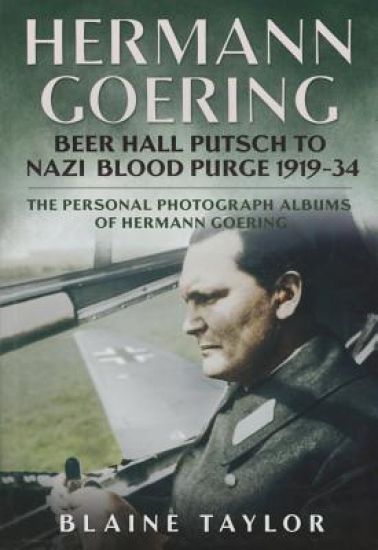
In 1919, Hermann Goering went to Denmark as a stunt flyer, then on to Sweden to fly passengers, one of whom introduced the daredevil to his future first wife, a then married Swedish Countess; they scandalized Stockholm. Goering joined the Nazi Party, as commander of the early SA Stormtroopers. In the celebrated Beer Hall Putsch of 1923, Goering was severely wounded, and fled. Thus began a four-year exile in which Goering became a practising morphine addict in Austria, Italy, and Sweden, and was committed to an insane asylum in a straitjacket. Goering returned to Germany under a political amnesty, and blackmailed Hitler into putting him up for election to the Reichstag as a Nazi candidate in 1928. He won, and four years later, was elected its President.He helped convince Germany's power elite to name Hitler Reich Chancellor on 30 January 1933. Taking over Prussia's police force-and during the upheaval of the Reichstag fire and trial-Goering ruthlessly smashed all non-Nazi parties. Then came the inter-Party Blood Purge of the Night of the Long Knives of 30 June 1934 that Goering directed in Berlin.This cemented his position as the Fuhrer's second-in-command, after having been declared insane!
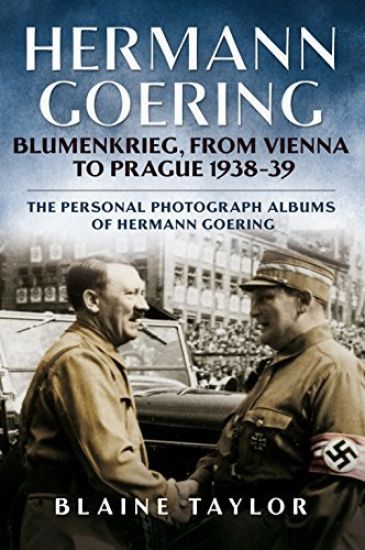
The year 1938–39 was when Hitler set out on the road of pre-war bloodless conquests, which led to the actual shooting combat over Poland in September 1939. Both willing and unwilling, Hermann Goering was his main acolyte in achieving the peaceful military occupations of Austria and the Czech–German Sudetenland in 1938, followed by that of Bohemia and Moravia, plus Memel in 1939.¶ Prior to this, Goering played perhaps the key role in the Nazi overthrow of the Third Reich’s conservative military and foreign services, being named field marshal as his reward. Having helped Franco win the Spanish Civil War, Goering’s Air Force Legion Kondor also returned home victorious, having acquired valuable air war experience in aces, aircraft, and tactics, which served Goering well in the first phase of World War II. A major factor in making the Allies back down to Germany at the infamous Munich Pact Conference, Goering’s Luftwaffe was the key bargaining chip that gained these unprecedented territorial acquisitions for Hitler—all without a shot being fired. He also helped achieve alliances with Fascist Slovakia and Italy.

When modern readers think of Hermann Goring, what probably comes to mind is the overweight drug addict and convicted war criminal who cheated the hangman's noose at Nuremberg by committing suicide just hours before he was due to be hanged. Or perhaps there is the image of his powerful German air force in the Second World War---the Luftwaffe---bombing defenceless European cities and towns in the early part of the war, until it was defeated by the British Royal Air Force in the epic Battle of Britain in 1940. Perhaps the reader might think of Goring the debauched art collector who pirated captured collections all over Nazi Europe during the Occupation years. All of these images are correct, but here we see another Hermann Goring: the slim, dashing fighter pilot and combat ace of an earlier struggle, the Great War, or World War I of 1914-18, which he began as an infantry officer fighting the French Army in the 1914 Battle of the Frontiers. During a hospitalization, his friend Bruno Lorzer convinced him to become an aerial observer-photographer, photographing the mighty French fortress of Verdun. He did, and began these never-before-seen personal photo albums of men and aircraft at war: up close.
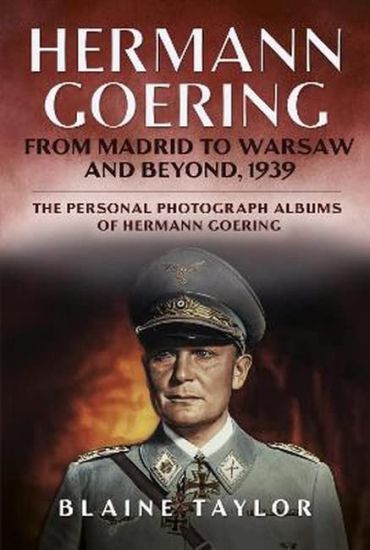
1939 was a glorious year for Hermann Goering. He spent it entertaining dignitaries visiting the Third Reich, attending galas, going on official visits, giving rousing speeches at factories and military parades, and indulging in his love of fine art, rich cuisine and sumptuous clothes and jewels. Ever vain, pompous and ambitious, in 1939 he attained the summit of his power and popularity when Hitler, speaking to a packed Reich Chancellery on 1 September, named him his successor. Goering's rise was inseparable from that of his Luftwaffe. As commander-in-chief, he basked in the glory of the Condor Legion's victory in Spain in April 1939 and the Luftwaffe's decisive role in the Blitzkrieg of Poland in September. From these encounters, the Luftwaffe emerged as the world's most feared and respected air force-but beyond the trappings of victory, there were deep-seated flaws. Fearing their exposure against a more powerful enemy, Goering did not want Germany to go to war with Great Britain and France. Hermann Goering: From Madrid to Warsaw and Beyond, 1939 is a photographic chronicle of a momentous year in the life of the Luftwaffe's commander-in-chief, showing him at his most happy and self-confident, and equally, at his most anxious about what the future might bring.
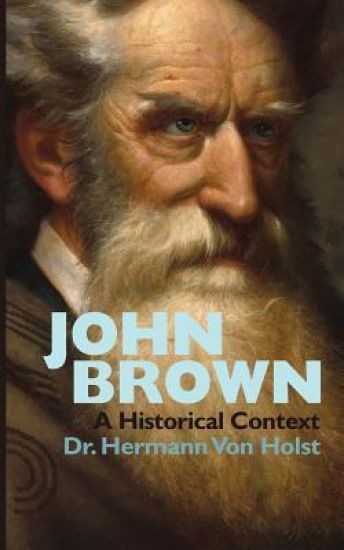
This volume is a reminder that slavery was truly an awful institution that, even today in its legacy, continues to plague the United States. During its height, abolitionists "waved the bloody flag" and vigorously protested to end it, though it took plunging the nation into the Civil War to result in it being finally eradicated. One person that took a powerful stand against "the peculiar institution" was John Brown. Though Brown had led forces against pro-slavery opponents earlier, it wasn't until 1859 when he grabbed the national stage by leading forces, particularly enslaved African Americans, at Harper's Ferry. Unfortunately, the movement was ultimately unsuccessful, and Brown was captured and tried for treason against the Commonwealth of Virginia (before Harper's Ferry was part of West Virginia). He was hanged despite vocal opposition from his supporters. Yet, his work as an abolitionist created extraordinary ripples of tension that significantly fueled the drift towards war. Dr. Hermann Von Holst (1841 - 1904) was a historian who was born in Germany, emigrated to the United States after the end of the Civil War to teach, and then moved back and forth between the US and Germany on various teaching appointments. He wrote and taught extensively, focusing on American history. Von Holst was particularly moved by John Brown, and astounded by the Confederate apologists who housed a complete lack of understanding and empathy for the horrors of slavery. Charles Town, West Virginia, where Brown met his end, is now the home of the American Public University System, which has done much to restore the town and maintains a museum in its library. This edition is dedicated to Dr. Wallace Boston, enthusiastic friend of Charles Town history and longtime President of APUS.
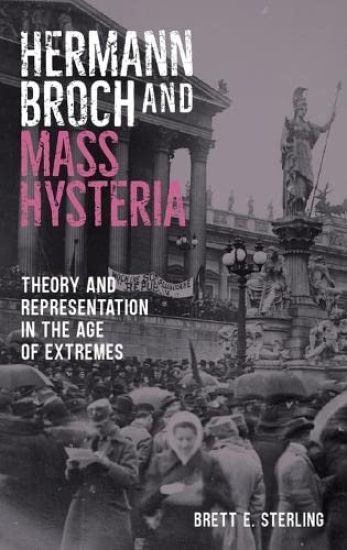
The first English-language monograph on Hermann Broch's literary and theoretical work on mass hysteria. Winner of the 2023 Radomír Luža Prize for the Best Manuscript in Austrian/Czechoslovak Studies in the World War II Era Austrian Jewish author Hermann Broch (1886-1951), a leading figure of European Modernism, spent decades attempting to understand the phenomenon of mass hysteria. With his work, he hoped to help protect society from the allure of mass hysteria, embodied in the fanatical appeal of National Socialism. He was torn between two approaches to the problem: using literature to diagnose and expose the irrational knowledge that underpins mass hysteria, and employing theory as a more precise and effective means of doing the same. In this first English-language monograph on the topic, Brett E. Sterling traces the development of Broch's understanding of the mass from an initial confrontation in 1918 to a recurring theme in his fiction and ultimately to the monumental but incomplete Massenwahntheorie (Theory of Mass Hysteria, 1939-48). In thorough readings of Broch's major fictional and theoretical works, the analysis centers on the question of how his literature and theory provide distinct but complementary approaches to conceiving and representing the elusive figure of the mass and the attendant experience of mass hysteria. With political extremism and conspiratorial thinking on the rise, Sterling makes the case that Broch's insights into mass hysteria - literary as well as theoretical - are of renewed relevance to a contemporary audience.

Hermann Hesse's Global Impact
BOYDELL BREWER LTD
2024
sidottu
A timely collection of new essays arguing for the continuing relevance and impact of Hesse's works around the world. Hermann Hesse remains one of the great figures of world literature. He is the world's 35th most translated author, with more than 1,500 translations of his works currently listed on UNESCO's Index Translatorium. Our understanding of the reciprocal transcultural reception of literature has been radically transformed in the last two decades, starting with David Damrosch's What Is World Literature? (2003). Meanwhile, some forty years have passed since Martin Pfeifer's anthology Hermann Hesses weltweite Wirkung (Hermann Hesse's Worldwide Impact) was published, which means it is time to consider Hesse's global impact again, though not in terms of a country-by-country study. Rather, this book explores Hesse's continuing global relevance more broadly. Hesse is "global" in the sense that his themes touch on the non-material side of human existence in a way that readers in different cultural communities respond to. His prose and poetry offer an oasis of calm, authenticity, and spirituality - a mental terrain of profound and genuine meaning. The present collection of new essays argues that this "spiritual capital" may help readers of Hesse in uncertain times, beyond the doctrines of organized religions or ideologies, assisting them in inhabiting creatively both the world of literature and the visceral world of the early 21st century. Contributors: Flavia Arzeni, Thomas Cyron, Helga Esselborn-Krumbiegel, Carina Gröner, Karl-Josef Kuschel, Thomas Taro Lennerfors, Volker Michels, Christopher Newton, Shrikant Arun Pathak, John Pizer, Adam Roberts, Christiane Schönfeld, Laszlo V. Szabo, Girissha Ameya Tilak, Oscar von Seth, Jennifer Walker, Yoichi Yamamoto, Michal Zawadzki, and Chunhua Zhan.

This MEGAPACK(R) assembles three of Hesse's most important works: Demian (1919), Siddhartha (1922), and Steppenwolf (1927). Each novel reflects Hesse's fascination with the inner struggles of individuals searching for meaning in a confusing and changing world.Demian, published shortly after World War I, explores youthful rebellion, self-realization, and the mysterious nature of human consciousness. It captured the uncertainty and restlessness of post-war Europe.Siddhartha delves into spiritual enlightenment, following the journey of a young man in ancient India seeking personal fulfillment beyond religious dogma. Its simple yet profound message resonated strongly with readers, becoming especially popular among young people in the 1960s.Steppenwolf explores existential themes of isolation, the duality of human nature, and the quest for personal identity, becoming a defining text for many readers in the mid-20th century, particularly those grappling with similar personal and cultural anxieties.If you enjoyed this volume of Wildside Press's best-selling MEGAPACK(R) ebook series, search your favorite online bookseller for "Wildside Press MEGAPACK" to see more than 400 other volumes in the series, covering fiction in all genres, from literary to westerns, from romance to science fiction and fantasy. All are bargain priced and sure to please Accept to substitutes for these great collections.


Hermann Cohen – Writings on Neo–Kantianism and Jewish Philosophy
Samuel Moyn; Robert S. Schine
Brandeis University Press
2021
sidottu
Hermann Cohen (1842–1918) was among the most accomplished Jewish philosophers of modern times—if not the single most significant. But his work has not yet received the attention it deserves. This newly translated collection of his writings—most of which are appearing in English for the first time—illuminates his achievements for student readers and rectifies lapses in his intellectual reception by prior generations. It presents chapters from Cohen’s Ethics of Pure Will, conflicting interpretations of Cohen by Franz Rosenzweig and Alexander Altmann, and finally the eulogy to Cohen delivered at graveside by Ernst Cassirer. Containing full annotations and selections that concentrate both on the philosophical core of Cohen’s writings and the politics of interpretation of his work at the time of his death and after, Hermann Cohen truly brings to light all of Cohen’s accomplishments.
Hermann Cohen – Writings on Neo–Kantianism and Jewish Philosophy
Samuel Moyn; Robert S. Schine
Brandeis University Press
2021
nidottu
Hermann Cohen (1842–1918) was among the most accomplished Jewish philosophers of modern times—if not the single most significant. But his work has not yet received the attention it deserves. This newly translated collection of his writings—most of which are appearing in English for the first time—illuminates his achievements for student readers and rectifies lapses in his intellectual reception by prior generations. It presents chapters from Cohen’s Ethics of Pure Will, conflicting interpretations of Cohen by Franz Rosenzweig and Alexander Altmann, and finally the eulogy to Cohen delivered at graveside by Ernst Cassirer. Containing full annotations and selections that concentrate both on the philosophical core of Cohen’s writings and the politics of interpretation of his work at the time of his death and after, Hermann Cohen truly brings to light all of Cohen’s accomplishments.
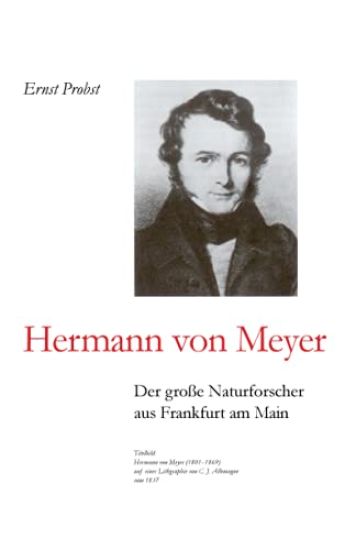
Der bedeutendste Wirbeltierpal ontologe des 19. Jahrhunderts in Deutschland und vielleicht sogar in Europa steht im Mittelpunkt des Taschenbuches "Hermann von Meyer: Der gro e Naturforscher aus Frankfurt am Main". Verfasser ist der Wiesbadener Wissenschaftsautor Ernst Probst, der ab 1977 viele Zeitungsartikel und ab 1986 zahlreiche B cher ber pal ontologische Themen schrieb. Viele Sammler und Museen vertrauten Meyer ihre Fossilien zur Untersuchung an. Von 1828 bis 1869 verfasste der Freizeitforscher mehr als 300 Fachpublikationen. Zu den vielen Urzeittieren, denen er einen wissenschaftlichen Namen gab, geh rten die Dinosaurier Plateosaurus und Stenopelix, etliche Flugsaurier, der Urvogel Archaeopteryx, Wildpferde und ein R sseltier. Nach ihm haben andere Experten insgesamt 37 fossile Pflanzen und Tiere benannt. Trotz einer Gehbehinderung besuchte Meyer auf eigene Kosten etliche Fundstellen, Sammlungen und Tagungen. F r seine wissenschaftliche Arbeit nahm er kein Geld an. Seinen Lebensunterhalt verdiente er als "Bundescassen-Controlleur" und "Bundescassier" des "Deutschen Bundestages" in Frankfurt am Main.
Hermann and Dorothea
Johann Wolfgang Von Goethe
Createspace Independent Publishing Platform
2018
nidottu
There are few modern poems of any country so perfect in their kind as the Hermann and Dorothea of Goethe. In clearness of characterization, in unity of tone, in the adjustment of background and foreground, in the conduct of the narrative, it conforms admirably to the strict canons of art; yet it preserves a freshness and spontaneity in its emotional appeal that are rare in works of so classical a perfection in form.

Hermann Hesse once stated that his Japanese readers understood him best among all his readers worldwide – a little known fact among readers of Hesse in the West. This book examines Hesse’s reception in Japan and of Japan in the context of a transcultural reception process. It traces the different phases of Hesse’s reception in Japan and contextualises this reception in terms of the regional setting of East Asia and the cultural authority of imperial Japan. The role of transcultural mediators as figurative nodes in the world literature system is analysed, with a particular focus on the key role played by Hesse’s «Japanese» cousin, Wilhelm Gundert. Finally, Hesse’s epistolary exchange with his Japanese readers is unfolded to show how deep affinities arise, which result in the creation of a type of «spiritual» capital. This epistolary exchange, together with the translation of the Zen bible Pi Yen Lu by Wilhelm Gundert, inspired Hesse to write a series of three unique Zen-poems as a means of expressing a lifelong search for transcendence.
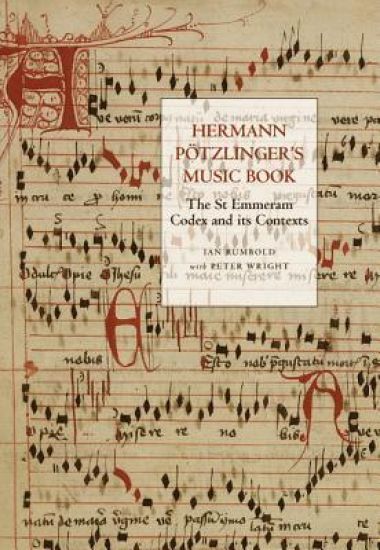
A study of one of the most significant medieval manuscripts containing music, and its owner, sheds light on many aspects of contemporary culture. Hermann Pötzlinger (+ 1469), the university-educated schoolmaster of the monastery of St Emmeram, Regensburg, was the creator of one of the largest and most intriguing collections of late-medieval polyphonic music to have survivedfrom Central Europe. His music book, the so-called 'St Emmeram Codex' (Munich, Bayerische Staatsbibliothek, Clm 14274), was compiled in the years immediately following his graduation from Vienna University in 1439. It contains aunique cross-section of polyphonic vocal music not only from the West but also from Central and Eastern Europe; moreover, it is only one among more than a hundred scholarly manuscripts that he copied or acquired during his career. This volume presents an in-depth study of the manuscript and of the professional networks and academic culture within which it was compiled; its context as part of one of the largest surviving personal libraries of its time is also explored. It will appeal to all those interested in early music and other aspects of late-medieval life and culture. Dr IAN RUMBOLD is an independent scholar; PETER WRIGHT is Professor of Music at the University of Nottingham.

Hermann's Tortoise Owner's Guide. Hermann's Tortoise book for Diet, Costs, Care, Diet, Health, Behavior and Interaction. Hermann's Tortoise Pet.
Ben Team
Pesa Publishing
2017
pokkari
Hermann's tortoises are small, hardy and endearing turtles, who often thrive in captivity. But unfortunately, many people acquire them without first learning how to properly care for them. This often leads to frustrated keepers and rejected reptiles, which is bad for all parties. Accordingly, prospective keepers must learn as much as possible about the biology, behavior and ecology of the species, in order to provide their pets with the highest quality of life possible.Inside, you will find all of the information you need to care for these tortoises properly. By heeding the advice contained here, continuing to learn everything you can about the species and paying attention to your animal's behavior, you'll have a great chance to provide your new Hermann's tortoise with a long, healthy life.Covered in this book: - Acquiring - Anatomy - Behavior - Biology - Breeding - Captive Considerations - Daily Care - Description - Diet - Ecology - Enclosure - Health - Husbandry - Interaction - Lighting - Maintenance - Monitoring - Myths and Misunderstandings - Taxonomy - The ideal environment .... and much more
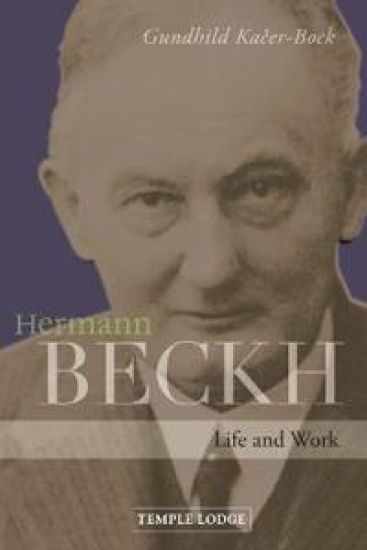
Hermann Beckh (1875-1937) was one of the co-founders of The Christian Community. A remarkable linguist and universal scholar, he mastered six European and six Oriental languages and published more than twenty works on the humanities, dealing with Christology, Cosmology and Musicology. Having first studied Law, he later channeled his extensive research of Hinduism and Buddhism into a renewal of sacramental Christianity. 'Without the Professor', wrote his colleague Rudolf Meyer, the beginnings of the new religious movement were 'unthinkable'. Gundhild Kacer-Bock - daughter of Beckh's priest-colleague and fellow author Emil Bock - creates a lively picture of a unique personality. Beginning with his birth in Nuremberg and education in Munich, she reviews Beckh's manifold studies and writings, his meeting with Rudolf Steiner in 1911, the founding of the Movement for Religious Renewal in Stuttgart in 1922, and the seminal Christmas Conference in Dornach in 1923. Having known Beckh personally, she builds on her own memories as well as Beckh's recorded memoirs, and utilizes newly-discovered letters and documents. This new edition contains Beckh's fairy-tale 'The Story of the Little Squirrel, the Moonlight Princess and the Little Rose' (with colour illustrations by Tatjana Schellhase), with additional appreciations of the author and an illustrative plate section. --- 'A University Professor, who had been a Judge and Orientalist, now became a priest with us. He actively took part in carrying the birth of the new ritual words; he was an expert in the mysteries of language... An abundance of books came into existence whose significance perhaps will only be properly appreciated in the future.' - Emil Bock (1959)
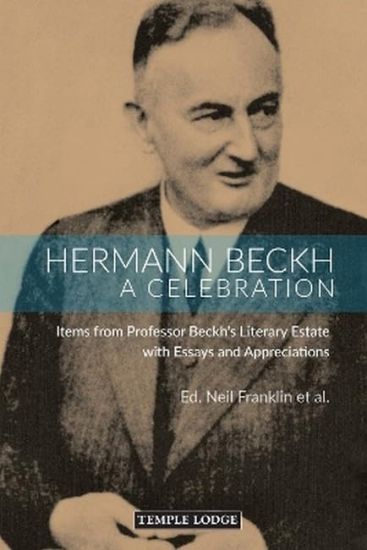
Hermann Beckh, A Celebration
TEMPLE LODGE PUBLISHING
2025
nidottu
The universal scholar Hermann Beckh (1875-1937), Orientalist and Christian priest, 'carried in his soul love for the Word, love for the stars, and love for music'. A long-overdue reassessment of his life's work is presented here, marking the completed publication of his Collected Works in English. Featuring previously unknown items from his literary estate, appreciations by contemporary colleagues and results of current research, this celebration significantly contributes to our understanding of Beckh's achievements.Such a comprehensive 'Renaissance man' as Professor Beckh is rare in an age of specialists. In his search for the eternal sources of Creation, he was inspired by his spiritual teacher, Rudolf Steiner (1861-1925). In anthroposophy, Beckh discovered confirmations of his search into the cultural origins of both East and West. Thus, he applied accurate scholarship and a new thinking in studies devoted to language, music, the origins of speech, the life of Buddha, the secrets of the Gospel, the Apocalypse, and the liturgy.Previously unpublished surveys of Schiller's plays, Wagner's music dramas and research into the Zodiac are included, as well as surviving letters written by Beckh to Rudolf Steiner. Appreciations from ten colleagues - including Rudolf Meyer and Alfred Heidenreich - feature along with ten essays by Neil Franklin, Alan Stott, Katrin Binder and others, exploring what Beckh means in the 21st century. Celebration also pays tribute to Beckh's biographer, Gundhild Kacer-Bock. The book comprises a 'first-and-final' volume - a true commemoration of Beckh's legacy.