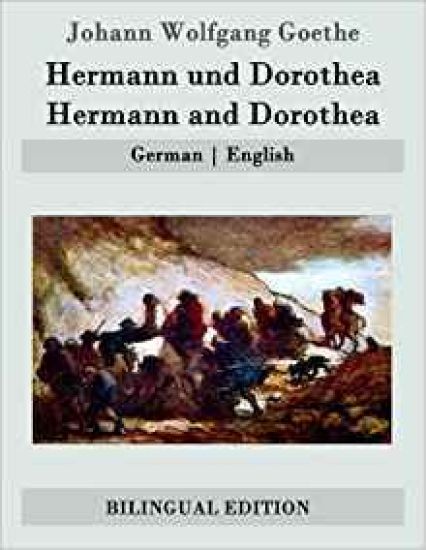
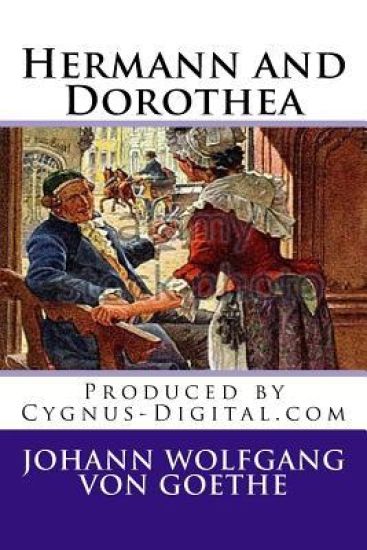
Johann Wolfgang Goethe: Hermann und Dorothea / Hermann and Dorothea. German - English Zweisprachige Ausgabe. bersetzt von Ellen Frothingham Gro format, 216 x 279 mm Berliner bilinguale Ausgabe, 2015 Absatzgenau synchronisierter Parallelsatz in zwei Spalten, bearbeitet und eingerichtet von Thomas A. Martin. Erstdruck: In: Taschenbuch f r 1798, Berlin 1797. Textgrundlage ist die Ausgabe: Johann Wolfgang von Goethe: Berliner Ausgabe. Herausgegeben von Siegfried Seidel: Poetische Werke Band 1-16]; Kunsttheoretische Schriften und bersetzungen Band 17-22], Berlin: Aufbau, 1960 ff. Herausgeber der Reihe: Michael Holzinger Reihengestaltung: Viktor Harvion Umschlaggestaltung unter Verwendung des Bildes: Honor -Victorin Daumier, Fl chtlinge, um 1850 Gesetzt aus Minion Pro, 11 pt.
Hermann and Dorothea is an epic poem, an idyll, written by German writer Johann Wolfgang von Goethe between 1796 and 1797, and was to some extent suggested by Johann Heinrich Voss's Luise, an idyll in hexameters, which was first published in 1782-84. Goethe's work is set around 1792 at the beginning of the French Revolutionary Wars, when French forces under General Custine invaded and briefly occupied parts of the Palatinate. The story of the well-settled burgher's son marrying a poor fugitive was contained in an account of the Salzburg Protestants who, for their religion, in 1731 fled from their old homes into Germany. The inhabitants and conditions of the little town which is the scene of Hermann and Dorothea are pictured in contrast to the turmoil of the French Revolution, for they stand for the foundations on which civilization will always rest. The leading characters represent the standard callings of men - the farmer, the merchant, the apothecary-doctor, the minister, the judge. The hero is the true son of mother earth, given to tilling the soil and harvesting his crops. The life both in family and community is depicted as the fundamental social forms, with some hints of national life. The love story of the young couple is free from wild romance, indeed their love makes them look to the future not with any anticipation of pleasure or extravagance, but with the instinctive conviction that the true blessings of life flow from the performance of necessary tasks. The public spirit of Hermann's father germinates also in the son's character as his burning patriotism protests against the French invasion. But the spirit that permeates the poem as a whole is that of trust in the future and sympathy with mankind. Ewald Eiserhardt, who reviews this work for Encyclopedia Americana, cites the serene flow of presentation, the masterly descriptions of landscape and home, the plastic vigor of the main figures, the balance of color, all as rendering Hermann and Dorothea a great work of literary art.
Nina und Holger leben in einer Traumwelt. Unbek mmerte Freiheit, gesellschaftsfernes Nichtstun und bedingungslose Liebe am Aussteiger- und Surferstrand von Tarifa. Bedroht nur von der eigenen Vernunft, ihrer Sinnsuche und letztlich auch von ihrer Vergangenheit, versuchen sie, ihre Liebe fest- und die Zeit anzuhalten. Eine lebensbejahende, fremd vertraute und spannende Suche nach einer neuen Zeit.Lesermeinungen: "Ein Roman, wie geschaffen f r die Sehnsucht nach dem n chsten Sommer.""Dieser Roman packt auf eine verwirrende Art durch seine Ehrlichkeit.""Ein tiefgr ndiger, locker leichter, berzeugender und spannender Aussteigerliebesroman."
Hermann Karl Hesse (1877- 1962) war ein deutschsprachiger Schriftsteller, Dichter und Maler. Weltweite Bekanntheit erlangte er mit Prosawerken wie Siddhartha oder Der Steppenwolf und mit seinen Gedichten (z. B. "Stufen"). 1946 wurde ihm der Nobelpreis f r Literatur und 1954 der Orden Pour le m rite f r Wissenschaft und K nste verliehen. In diesem buch: Siddhartha, 1922 Demian, Die Geschichte von Emil Sinclairs Jugend, 1919 Eine Stunde hinter Mitternacht, 1889 Knulp: Drei Geschichten aus dem Leben Knulps, 1915 Klingsors letzter Sommer, 1920 Boccaccio, 1904 Hermann Lauscher, 1908 Peter Camenzind, 1904 Unterm Rad, 1906 Diesseits, 1907 Romantische Lieder, 1899
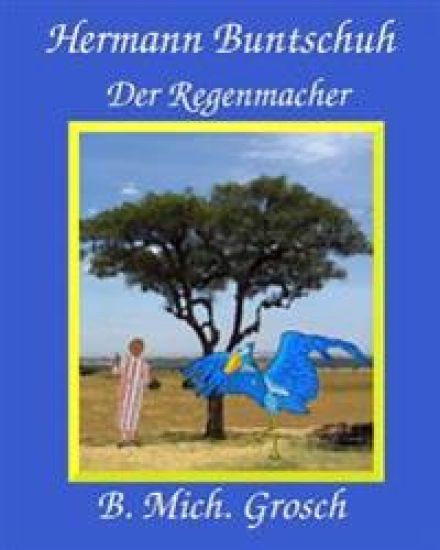
https: //youtu.be/1oqEPg4W9cQ Vorschau zum Video Hermann Buntschuh - Der Regenmacher Information Ab sofort erhalten Sie zum Kauf des Buches 'Hermann Buntschuh' auf Anfrage das 10-min tige Video kostenfrei als Zugabe. Bitte senden Sie den Kaufbeleg per E-Mail an die Mail-Adresse des Autoren ( bmg (at) b-mich-grosch . de) und Sie erhalten einen Link nebst Passwort zum Download des Videos. (Dieses Angebot gilt sowohl f r Druckausgaben als auch das E-Buch.) Vorschau auf youtube: https: //www.youtube.com/watch?v=1oqEPg4W9cQ In Afrika herrscht D rre und Hermann Buntschuh, der freundliche Vogel, macht sich auf, um Wolken und Regen zu holen. Ab 4 Jahren zum Vorlesen. In Reimen.
There are few modern poems of any country so perfect in their kind as the Hermann and Dorothea of Goethe. In clearness of characterization, in unity of tone, in the adjustment of background and foreground, in the conduct of the narrative, it conforms admirably to the strict canons of art; yet it preserves a freshness and spontaneity in its emotional appeal that are rare in works of so classical a perfection in form.
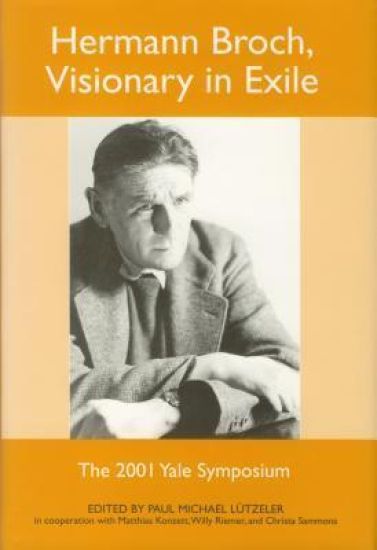
Studies of one of the foremost 20c Austrian writers, as a critic and as a novelist and dramatist. The Austrian novelist Hermann Broch ranks with Kafka and Musil among the three greatest 20th-century Austrian novelists and belongs to the century's most gifted novelists in German from whatever country. He established his reputation with The Sleepwalkers, a trilogy of political and philosophical novels. His best-known work is The Death of Virgil, a long, challenging work in a lyrical, exuberant, and sometimes nearly incomprehensible style, akind of cerebral stream-of-consciousness of the dying Virgil. Broch also wrote extensively about modern art and architecture, Hofmannsthal, and mass psychology. He has a special connection to Yale, as he lived the last years of his life there after having escaped Austria in 1938. The participants in the Yale Symposium of April 2001 are among the world's most prominent Broch scholars. Fourteen of their presentations have been extensively revised for this volume, which focuses on Broch as critic and as novelist and dramatist. Topics include Broch's views on kitsch and art, and on drama; his cultural criticism; his cooperation with Borgese and Arendt; his theory of mass psychology; history in his works, Ernst Kretschmer's influence on him; Virgil and Celan's Atemwende; Jean Starr Untermeyer's translation of Virgil; guilt and the fall in Those without Guilt; and Broch reception in Japan. Paul Michael Lützeler is Distinguished University Professor of German at Washington University St. Louis and editor of Broch's collected works. MATTHIAS KONZETT is associate professor of German at Yale; WILLY RIEMER is associate professor of German at the University of Delaware, and CHRISTA SAMMONS is curator of the German collections of the Beinecke Library at Yale.
Published to accompany the 2019 Grolier Club exhibition Alphabet Magic: A Centennial Exhibition of the Work of Hermann & Gudrun Zapf, Herman Zapf and the World He Designed is the first comprehensive biography of Hermann Zapf (1918–2015), whom Robert Bringhurst has called "the greatest type designer of our time, and very possibly the greatest type designer of all time.” Informed by Jerry Kelly’s scrupulous research at the Hermann Zapf archive in the Herzog August Bibliothek in Wolfenbüttel and at the Cary Collection at the Rochester Institute of Technology, and enriched by his decades of conversations with Zapf and his associates, this fascinating account of Zapf’s life details his experiences with type companies, printers, publishers, and colleagues. It also explores Zapf’s modern design aesthetic and engagement with the staggering technological advances of typography during the twentieth century. Featuring rarities and never-before-seen works and photos, Herman Zapf and the World He Designed features definitive lists of Zapf's type designs and major calligraphic works. It is not, however, merely an in-depth appreciation of Zapf's work but also an insightful consideration of his work in relation to his life.
In March 1935, Goering unveiled to the world his formerly "black,' secret German Air Force, the later dreaded Luftwaffe. That April, he married his second wife, a popular German stage actress, and in May solidified Germany's pre-1939 surprisingly good relations with neighbouring Poland. In March 1936, the Luftwaffe took part in the peaceful occupation of the formerly French-occupied Rhineland, and by the end of the year, Goering was also the recognized economic dictator of the Third Reich via heading the Nazi Four Year Plan. A State Visit to Rome in January 1937 made him a main player regarding the future Reich alliance with Fascist Italy and that November, he hosted Europe's largest hunting exposition of 50 years at Berlin. Overshadowing all of this, however, was the top-secret Hossbach war conference, at which Hitler announced his intention go to war by 1943 in order to seize Russian territory for an expanded German empire in the east. In all of the above, Goering was the main player, second only to Hitler, especially regarding the economy and the air force.
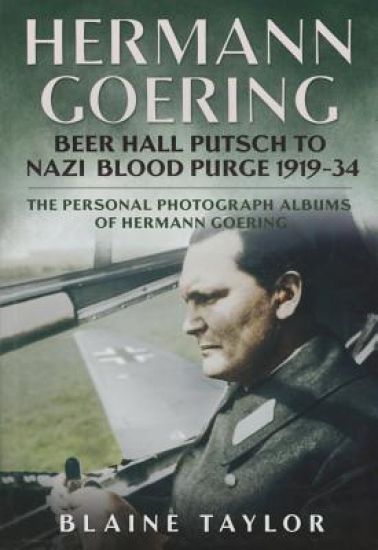
In 1919, Hermann Goering went to Denmark as a stunt flyer, then on to Sweden to fly passengers, one of whom introduced the daredevil to his future first wife, a then married Swedish Countess; they scandalized Stockholm. Goering joined the Nazi Party, as commander of the early SA Stormtroopers. In the celebrated Beer Hall Putsch of 1923, Goering was severely wounded, and fled. Thus began a four-year exile in which Goering became a practising morphine addict in Austria, Italy, and Sweden, and was committed to an insane asylum in a straitjacket. Goering returned to Germany under a political amnesty, and blackmailed Hitler into putting him up for election to the Reichstag as a Nazi candidate in 1928. He won, and four years later, was elected its President.He helped convince Germany's power elite to name Hitler Reich Chancellor on 30 January 1933. Taking over Prussia's police force-and during the upheaval of the Reichstag fire and trial-Goering ruthlessly smashed all non-Nazi parties. Then came the inter-Party Blood Purge of the Night of the Long Knives of 30 June 1934 that Goering directed in Berlin.This cemented his position as the Fuhrer's second-in-command, after having been declared insane!
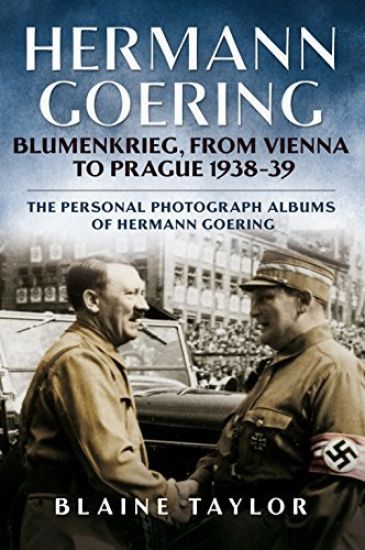
The year 1938–39 was when Hitler set out on the road of pre-war bloodless conquests, which led to the actual shooting combat over Poland in September 1939. Both willing and unwilling, Hermann Goering was his main acolyte in achieving the peaceful military occupations of Austria and the Czech–German Sudetenland in 1938, followed by that of Bohemia and Moravia, plus Memel in 1939.¶ Prior to this, Goering played perhaps the key role in the Nazi overthrow of the Third Reich’s conservative military and foreign services, being named field marshal as his reward. Having helped Franco win the Spanish Civil War, Goering’s Air Force Legion Kondor also returned home victorious, having acquired valuable air war experience in aces, aircraft, and tactics, which served Goering well in the first phase of World War II. A major factor in making the Allies back down to Germany at the infamous Munich Pact Conference, Goering’s Luftwaffe was the key bargaining chip that gained these unprecedented territorial acquisitions for Hitler—all without a shot being fired. He also helped achieve alliances with Fascist Slovakia and Italy.
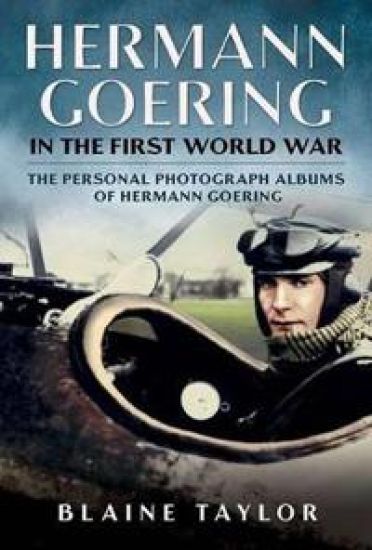
When modern readers think of Hermann Goring, what probably comes to mind is the overweight drug addict and convicted war criminal who cheated the hangman's noose at Nuremberg by committing suicide just hours before he was due to be hanged. Or perhaps there is the image of his powerful German air force in the Second World War---the Luftwaffe---bombing defenceless European cities and towns in the early part of the war, until it was defeated by the British Royal Air Force in the epic Battle of Britain in 1940. Perhaps the reader might think of Goring the debauched art collector who pirated captured collections all over Nazi Europe during the Occupation years. All of these images are correct, but here we see another Hermann Goring: the slim, dashing fighter pilot and combat ace of an earlier struggle, the Great War, or World War I of 1914-18, which he began as an infantry officer fighting the French Army in the 1914 Battle of the Frontiers. During a hospitalization, his friend Bruno Lorzer convinced him to become an aerial observer-photographer, photographing the mighty French fortress of Verdun. He did, and began these never-before-seen personal photo albums of men and aircraft at war: up close.