Kirjojen hintavertailu. Mukana 11 244 527 kirjaa ja 12 kauppaa.

Kirjahaku

Etsi kirjoja tekijän nimen, kirjan nimen tai ISBN:n perusteella.

1000 tulosta hakusanalla Isaac Jenkinson

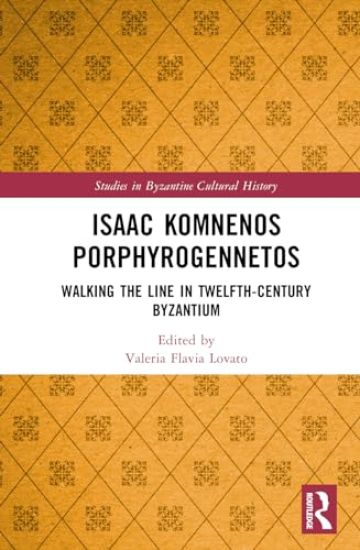
Isaac Komnenos Porphyrogennetos
Twelfth-century Byzantium is characterized by a striking artistic vitality and profound socio-political changes. The Constantinopolitan elites, led by the Komnenian dynasty initiated by Alexios I, were the driving force behind the renewed intellectual landscape and power dynamics of the century. Despite the wealth of studies devoted to the Komnenians, the sebastokrator Isaac (1093–after 1152) has received limited attention in modern scholarship.Yet, Isaac is a fascinating figure at the crossroads of different worlds. He was an intellectual, the author of the first running commentary on the Iliad ever written in Byzantium. He was a patron, sponsoring magnificent buildings and supporting artists in and outside the capital. He was a would-be usurper, attempting to seize the throne several times. He was a shrewd diplomat, forging alliances with Armenian, Turkish, and Latin rulers.Modern scholars have so far failed to see the interplay between Isaac’s multiple personae. Isaac the scholar is rarely brought into conversation with Isaac the usurper, Isaac the patron, or Isaac the world traveller. Bringing together experts from a range of disciplines, this book fills a significant gap in the literature. As the first comprehensive study of one of the protagonists of the Komnenian era, it is essential reading for students of the Byzantine Empire. In addition, the portrait of Isaac presented here provides scholars of pre-modern civilizations with a relevant case study. By exposing the permeability of the theoretical and geographical ‘borders’ we use to conceptualize the past, Isaac epitomizes the interconnectedness at the heart of the so-called Global Middle Ages.
Isaac Vossius's De poematum cantu et viribus rhythmi, 1673
Dr Peter Martens provides the first complete edited English translation of, and commentary on, Issac Vossius’s De poematum cantu et viribus rythmi, a late seventeenth-century work of Continental musical humanism, all the more interesting for being published in England and dedicated to royalist Henry Bennett, Duke of Arlington. This treatise plays an important but poorly understood role in the continued development of rhythmopoeia; Vossius continues the arguments of figures such as Vincenzo Galilei and Marin Mersenne - desiring to link linguistic rhythm, music, and the passions - by proposing a practical, if undemonstrated, method for doing so based on ancient poetic feet. This resuscitation of poetic feet in the service of affect is made explicit by Vossius, but is undoubtedly more familiar to musicologists from Wolfgang Caspar Printz's 1696 Phrynis Mitilenaeus or Johann Mattheson's 1739 Der vollkommene Capellmeister. Vossius, or more correctly, De poematum cantu, was often cited during the century after its publication, and no modern treatment of rhythmopoeia seems complete without a citation or short excerpt from this work. There is little secondary literature that focuses on this treatise, but what does exist links this work directly to John Dryden's composition of his 1687 and 1697 St. Cecilia odes, and their musical settings by Giovanni Battista Draghi and Jeremiah Clarke, respectively. In Dean Mace and H. Neville Davies' debate over the extent of Vossius's influence on these works can be found a rich picture of the contentious issues surrounding text-setting and musical affect that so occupied a great many writers in late-seventeenth-century England. A full translation and accompanying discussion of Vossius's own sources and musical influences allows English-language students and scholars to access and study this work in the depth and to the degree it deserves.
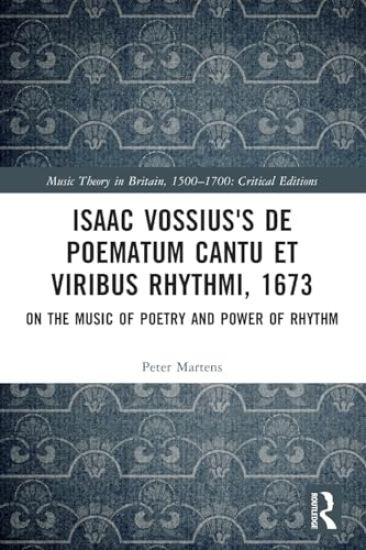
Isaac Vossius's De poematum cantu et viribus rhythmi, 1673
Dr Peter Martens provides the first complete edited English translation of, and commentary on, Issac Vossius’s De poematum cantu et viribus rythmi, a late seventeenth-century work of Continental musical humanism, all the more interesting for being published in England and dedicated to royalist Henry Bennett, Duke of Arlington. This treatise plays an important but poorly understood role in the continued development of rhythmopoeia; Vossius continues the arguments of figures such as Vincenzo Galilei and Marin Mersenne - desiring to link linguistic rhythm, music, and the passions - by proposing a practical, if undemonstrated, method for doing so based on ancient poetic feet. This resuscitation of poetic feet in the service of affect is made explicit by Vossius, but is undoubtedly more familiar to musicologists from Wolfgang Caspar Printz's 1696 Phrynis Mitilenaeus or Johann Mattheson's 1739 Der vollkommene Capellmeister. Vossius, or more correctly, De poematum cantu, was often cited during the century after its publication, and no modern treatment of rhythmopoeia seems complete without a citation or short excerpt from this work. There is little secondary literature that focuses on this treatise, but what does exist links this work directly to John Dryden's composition of his 1687 and 1697 St. Cecilia odes, and their musical settings by Giovanni Battista Draghi and Jeremiah Clarke, respectively. In Dean Mace and H. Neville Davies' debate over the extent of Vossius's influence on these works can be found a rich picture of the contentious issues surrounding text-setting and musical affect that so occupied a great many writers in late-seventeenth-century England. A full translation and accompanying discussion of Vossius's own sources and musical influences allows English-language students and scholars to access and study this work in the depth and to the degree it deserves.

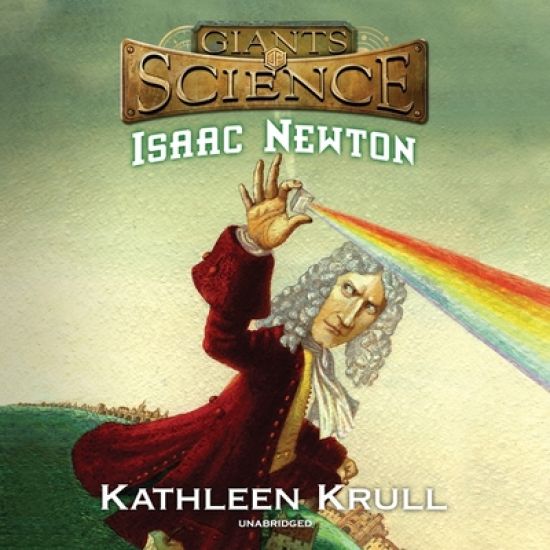
Isaac Newton Lib/E

Isaac Newton Lib/E

Kathleen Krull

Blackstone Publishing
2020
cd
Kathleen Krull's biographies for young readers have received accolades from publications such as Publishers Weekly and School Library Journal, and here she profiles Sir Isaac Newton--the father of calculus and the man who pioneered studies of gravityWhat was Isaac Newton like? Secretive, vindictive, withdrawn, obsessive, and, oh, yes, brilliant. His imagination was so large that, just "by thinking on it," he invented calculus and figured out the scientific explanation of gravity. Yet Newton was so small-minded that he set out to destroy other scientists who dared question his findings. This compelling portrait of Newton, contradictions and all, places him against the backdrop of 17th-century England, a time of plague, the Great Fire of London, and two revolutions. Krull details Newton's lonely childhood, his education, and his sometimes tumultuous relationship with contemporaries in this captivating and concise look at one of history's greatest geniuses.