Em N s Desatados, Ryle se aprofunda em temas essencialmente eclesi sticos, comuns n o s aos anglicanos, mas a muitos dos diversos seguimentos do cristianismo protestante. Os pontos disputados dizem respeito desde quest es muitas vezes considerados sacramentais, como o Batismo, a Regenera o e a Ceia do Senhor, aos temas mais comuns, como Idolatria, Igreja, Adora o e Confiss o. Como nos demais livros, Ryle faz uma defesa da Religi o Evang lica, que ao seu ver, o modo mais simples da f crist . Sem d vida, vale a pena conhecer seus pontos de vistas. Seu lema, na avalia o das controv rsias, essencialmente o mesmo: "N o pode ser verdade aquilo que n o estiver de acordo com as Sagradas Escrituras".
A Sketch of the Life and Labors of George Whitefield, a classical book, has been considered important throughout the human history, and so that this work is never forgotten we at Alpha Editions have made efforts in its preservation by republishing this book in a modern format for present and future generations. This whole book has been reformatted, retyped and designed. These books are not made of scanned copies of their original work and hence the text is clear and readable.
Practical Religion; Being Plain Papers on the Daily Duties, Experience, Dangers, and Privileges of Professing Christians, a classical book, has been considered important throughout the human history, and so that this work is never forgotten we at Alpha Editions have made efforts in its preservation by republishing this book in a modern format for present and future generations. This whole book has been reformatted, retyped and designed. These books are not made of scanned copies of their original work and hence the text is clear and readable.
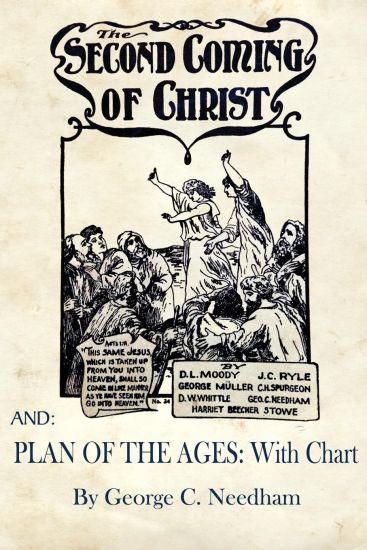
BOOK 1: The Second Coming of Christ: (Originally published in 1896.)It has eight chapters, each one written by a well-known minister of the era, except the last chapter written by J.W., who is unknown now but was likely well-known at the time. (It was part of the original book and NOT added later )Written for the layman, not the scholar, each chapter is in one way or another about the return of Christ. It is a very good book for anyone seeking to learn the basics of the second coming of Christ, called eschatology.AUTHORS of the chapters: 1. Harriet Beecher Stowe2. D. L. Moody3. J. C. Ryle4. George Muller5. D.W. White6. G. C. Needham7. Charles H. Spurgeon8. J.W.***********BOOK 2: PLAN OF THE AGES: With Chart(Originally published in 1893)By George C. NeedhamThis book has a great chart of the different ages, with detailed explanation.(See back cover of the book (also inside) to see the chart.)This book goes great with the first one because George C. Needham also wrote a chapter in the first one.
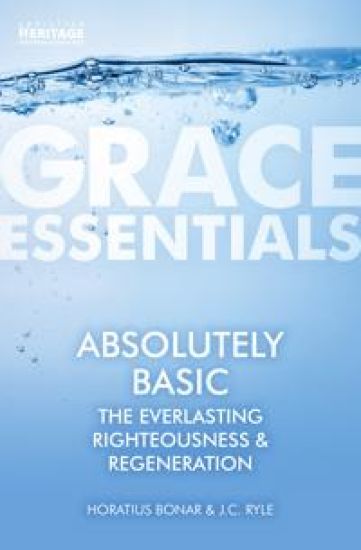
This book contains two parts. The first is an updated and abriged version of Horatius Bonar’s book The Everlasting Righteousness, first published in 1874. Its central theme is the substitutionary work of Jesus Christ. Bonar shows that, in Jesus Christ, God has provided the only way to deal with the problem of our sin. Because Jesus is the perfect substitute, anyone who believes in him receives a legal pardon from God, and the perfect righteousness of Jesus becomes theirs. This truth has enormous consequences for believers, and Bonar explains some of them in this wonderful book. The second part is an updated version of Regeneration by J. C. Ryle, about the new birth. Ryle addresses what it means to be born again, and what it looks like in the life of a Christian.
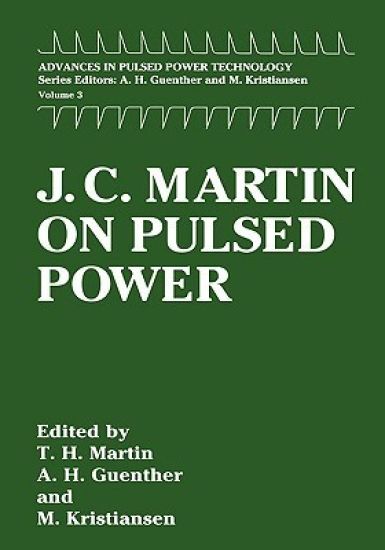
As indicated in the Foreword to this series on Advances in Pulsed Power Technologies, the pioneering roots of modern pulsed power as related by J.C. "Charlie" Martin and his co-workers of the Atomic Weapons Research Establishment, Aldermaston, Reading UK is an important if not essential record of the experiential history of the major developer of pulsed power advances during the post-World War II period. It finds great utility as an instructive accounting of the trials, tribulations and, finally, an almost chronological walk through their thoughts as they diligently and happily travel the yellow brick road to success. It is recounted in the inimitable style of "Charlie" Martin as only he can relate, with some insightful perspectives by Mike Good man, a constant companion, and collaborator who shares his unique view of "Charlie" and the Aldermaston Group. This collection of selected articles is unique, for in large part, the documentation of their struggle and final triumph have not been formerly published in any archival manner. One reason, we suspect, was the defense-related application and significance of their work, compounded by the constant need for progress which did not allow for the time consuming preparation of formal submission to the literature. This also explains the "urgent" and sometimes terse manner of their writings. Yet the material remains remarkably current because we are dealing, in large measure, with pulsed systems less sensitive to those factors involved in slower pulsed scenarios.
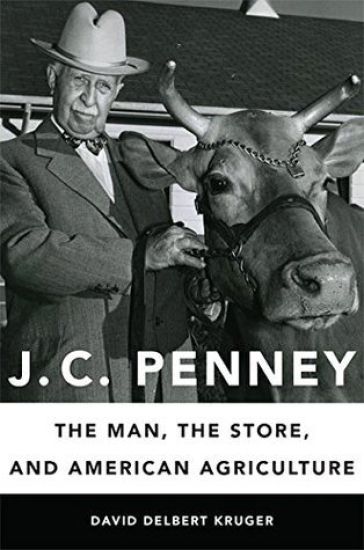
What is now called JCPenney, a fixture of suburban shopping malls, started out as a small-town Main Street store that fused its founder's interests in agriculture, retail business, religion, and philanthropy. This book - at once a biography of Missouri farm boy-turned-business icon James Cash Penney and the story of the company he started in 1902 - brings to light the little-known agrarian roots of an American department store chain. David Delbert Kruger explores how the company, its stores, and their famous founder shaped rural America throughout the twentieth century. ""Most of our stores,"" Penney explained in 1931, ""are located in agricultural regions where the tide of merchandising rises and falls with the prosperity of the farmers."" Despite the growth of cities in the early twentieth century, Penney maintained his stores' commitment to serving the needs of farmers and small-town folk. Tracing this dedication to Penney's rural upbringing, Kruger describes how, from one store in the sheep-ranching and mining town of Kemmerer, Wyoming, J. C. Penney Co. became a familiar chain on Main Street, USA, purveying value, providing good jobs, and marking rites of passage in many an American childhood. Kruger paints a biographical and historical picture of an American business mogul distinctly different from comparable capitalists such as Andrew Carnegie, Henry Ford, or Sam Walton. Despite his chain's corporate structure, Penney imbued each store with a Golden Rule philosophy that demanded mutual respect between customers, employees, competitors, suppliers, and communities. By tracing that spirit to its agrarian source, and following it through the twentieth century, J. C. Penney: The Man, the Store, and American Agriculture provides a new perspective on this American cultural institution - and on its founder's unique brand of American capitalism.
Title: Voyage au Canada ... fait depuis l'an 1751 a € 1761 par J. C. B. i.e. J. C. Bonnefons? With an introduction by H. R. Casgrain.] Publisher: British Library, Historical Print Editions The British Library is the national library of the United Kingdom. It is one of the world's largest research libraries holding over 150 million items in all known languages and formats: books, journals, newspapers, sound recordings, patents, maps, stamps, prints and much more. Its collections include around 14 million books, along with substantial additional collections of manuscripts and historical items dating back as far as 300 BC. The HISTORY OF TRAVEL collection includes books from the British Library digitised by Microsoft. This collection contains personal narratives, travel guides and documentary accounts by Victorian travelers, male and female. Also included are pamphlets, travel guides, and personal narratives of trips to and around the Americas, the Indies, Europe, Africa and the Middle East. ++++ The below data was compiled from various identification fields in the bibliographic record of this title. This data is provided as an additional tool in helping to insure edition identification: ++++ British Library Bonnefons, J C.; Casgrain, Henri Raymond.; 1887. 255 p.; 8 . 10470.f.18. This work has been selected by scholars as being culturally important, and is part of the knowledge base of civilization as we know it. This work was reproduced from the original artifact, and remains as true to the original work as possible. Therefore, you will see the original copyright references, library stamps (as most of these works have been housed in our most important libraries around the world), and other notations in the work. This work is in the public domain in the United States of America, and possibly other nations. Within the United States, you may freely copy and distribute this work, as no entity (individual or corporate) has a copyright on the body of the work. As a reproduction of a historical artifact, this work may contain missing or blurred pages, poor pictures, errant marks, etc. Scholars believe, and we concur, that this work is important enough to be preserved, reproduced, and made generally available to the public. We appreciate your support of the preservation process, and thank you for being an important part of keeping this knowledge alive and relevant.