Kirjojen hintavertailu. Mukana 12 390 323 kirjaa ja 12 kauppaa.

Kirjahaku

Etsi kirjoja tekijän nimen, kirjan nimen tai ISBN:n perusteella.

1000 tulosta hakusanalla J.David Logan

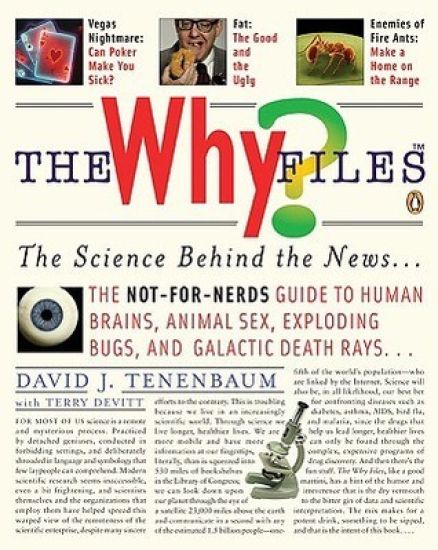
The Why Files

The Why Files

David J. Tenenbaum; Terry Devitt

Penguin Putnam Inc
2009
pokkari
Science magazine meets The Onion, Mental Floss, and Mad magazine in this ingenious guide to the science behind the news For more than a decade, the intrepid folks at whyfiles.org-the #1 science destination on the web-have been exploring the science behind newsworthy events. Now condensed into a book written with the site's characteristic wit, The Why Files features scores of articles organized into sections that mirror any city's daily newspaper: World News, Metro, Business Life, Sports, Arts & Leisure, Travel, Style, Opinion Page, and more. Who knew that science can explain why extremists say "God Told Us to Kill," how poker can make you sick, why great racehorses have big butts, and if electrocution is the best way to zap a bug? For those who love accurate science served up with humor in a one-of-a-kind newscast, this decidedly non-geeky guide is a must.
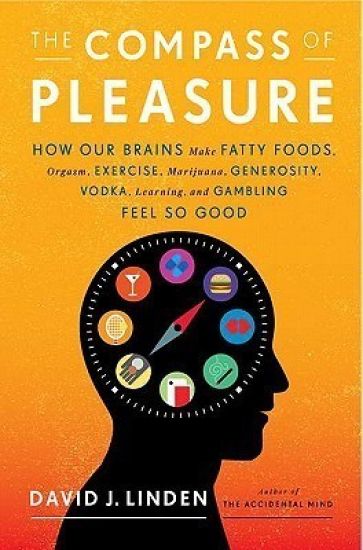
The Compass of Pleasure: How Our Brains Make Fatty Foods, Orgasm, Exercise, Marijuana, Generosity, Vodka, Learning, and Gambling Feel So Good
From the New York Times bestselling author comes a "hugely entertaining" (NPR.org) look at vice and virtue through cutting-edge scienceAs he did in his award-winning book The Accidental Mind, David J. Linden--highly regarded neuroscientist, professor, and writer--weaves empirical science with entertaining anecdotes to explain how the gamut of behaviors that give us a buzz actually operates. The Compass of Pleasure makes clear why drugs like nicotine and heroin are addictive while LSD is not, how fast food restaurants ensure that diners will eat more, why some people cannot resist the appeal of a new sexual encounter, and much more. Provocative and illuminating, this is a radically new and thorough look at the desires that define us.
The Art Of Language Invention

The Art Of Language Invention

David J. Peterson

Penguin USA
2015
nidottu
An insider's tour through the construction of invented languages from the bestselling author and creator of languages for the HBO series Game of Thrones and the Syfy series Defiance From master language creator David J. Peterson comes a creative guide to language construction for sci-fi and fantasy fans, writers, game creators, and language lovers. Peterson offers a captivating overview of language creation, covering its history from Tolkien's creations and Klingon to today's thriving global community of conlangers. He provides the essential tools necessary for inventing and evolving new languages, using examples from a variety of languages including his own creations, punctuated with references to everything from Star Wars to Michael Jackson. Along the way, behind-the-scenes stories lift the curtain on how he built languages like Dothraki for HBO's Game of Thrones and Shiv isith for Marvel's Thor: The Dark World, and an included phrasebook will start fans speaking Peterson's constructed languages. The Art of Language Invention is an inside look at a fascinating culture and an engaging entry into a flourishing art form--and it might be the most fun you'll ever have with linguistics.
Touch: The Science of the Hand, Heart, and Mind
The "New York Times" bestselling author of "The Compass of Pleasure" examines how our sense of touch is interconnected with our emotions Dual-function receptors in our skin make mint feel cool and chili peppers hot. Without the brain s dedicated centers for emotional touch, an orgasm would feel more like a sneeze convulsive, but not especially nice. From skin to nerves to brain, the organization of our body s touch circuits is a complex and often counterintuitive system that affects everything from our social interactions to our general health and development. In "Touch," neuroscientist and bestselling author David J. Linden explores this critical interface between our bodies and the outside world, between ourselves and others. Along the way, he answers such questions as: Why do women have more refined detection with their fingertips than men? Is there a biological basis for the use of acupuncture to relieve pain?How do drugs like Ecstasy heighten and motivate sensual touch?Why can t we tickle ourselves? Linking biology and behavioral science, "Touch" offers an entertaining and enlightening answer to how we feel in every sense of the word."
Assessment and Intervention with Children and Adolescents Who Misuse Fire

Assessment and Intervention with Children and Adolescents Who Misuse Fire

David J. Kolko; Eric M. Vernberg

Oxford University Press Inc
2017
nidottu
It's surprisingly common for children and adolescents to play with fire and to actually set fires. A single fire has the potential to cause a cascade of serious consequences to children, families, and their community, sometimes with devastating impact. Yet, there is limited practical information and evidence-based advice available to help programs and practitioners with children and adolescents who engage in this behavior. Assessment and Intervention with Children and Adolescents Who Misuse Fire presents practical guidelines to facilitate the clinical assessment and treatment of youth firesetting. Based on nearly four decades of research and intervention experience, the treatment is directed toward reducing any inappropriate involvement in fire or related activities in order to lower the risk for property damage, personal injury, and other adverse consequences associated with these behaviors. This evidence-based intervention provides clinicians with a comprehensive program for school-aged children, early adolescents, and adolescents, and the child and his/her caregiver(s) are both important participants in treatment. The modular approach allows for therapists to be flexible in deciding which topics to cover in order to best meet the needs of children and families. This treatment model encourages more appropriate and safe behaviors in both children/adolescents and their caregivers and provides skills likely to discourage fire involvement. In addition, the materials promote controlling exposure to incendiary materials and opportunities to use fire. The intervention is provided in a single volume, encompassing a practitioner guide, parent workbook, and child/adolescent workbook, including handouts for participating clients.
Philosophy of Mind

Philosophy of Mind

David J. Chalmers

Oxford University Press Inc
2021
nidottu
Philosophy of Mind: Classical and Contemporary Readings is a grand tour of writings on the perplexing questions about the nature of the mind. The most comprehensive and best-selling collection of its kind, the book includes selections that range from the classical contributions of Descartes to the leading edge of contemporary debates. Extensive sections cover foundational issues, the nature of consciousness, and the nature of mental content. Three of the selections are published for the first time, while many other articles have been revised especially for this volume. Each section opens with an introduction by the editor.
Clinical Trials in Cancer

Clinical Trials in Cancer

David J Girling; Mahesh K B Parmar; Sally P Stenning; Richard J Stephens; Lesley A Stewart

Oxford University Press
2003
sidottu
Clinical Trials in Cancer provides concise, accessible and practical information on the practicalities of planning, designing, conducting, analysing, reporting, and interpreting phase III clinical trials predominantly, but also single-arm and randomized phase II trials. The book shows clearly how recent developments and current thinking can be implemented. Information on the need to decide and measure realistic target differences in trials, the conduct and interpretation of interim analyses, patient advocacy, good clinical practice, the study of quality of life, the role of meta-analyses, and informed consent and other ethical issues are also covered. This book will prove invaluable for medical, statistical, and biological cancer researchers, health care professionals, and researchers in the pharmaceutical industry. Trial sponsors, principal investigators, members of data monitoring and trial supervisory committees, specialists invited to provide independent assessments, and many others involved in all aspects of research related to clinical trials should also find this book helpful.
A Course on Plasticity Theory

A Course on Plasticity Theory

David J. Steigmann

Oxford University Press
2023
sidottu
Plasticity Theory is characterized by many competing and often incompatible points of view. This book seeks to strengthen the foundations of continuum plasticity theory, emphasizing a unifying perspective grounded in the fundamental notion of material symmetry. Steigmann's book offers a systematic framework for the proper understanding of established models of plasticity and for their modern extensions and generalizations. Particular emphasis is placed on the differential-geometric aspects of the subject and their role in illuminating the conceptual foundations of plasticity theory. Classical models, together with several subjects of interest in contemporary research, are developed in a unified format. The book is addressed to graduate students and academics working in the field of continuum mechanics.
Understanding Plato

Understanding Plato

David J. Melling

Oxford University Press
1987
nidottu
This is the first balanced introduction to Plato's work to bringing Plato himself alive, as well as discussing the importance of his works. In so doing, it allows a better understanding of who he was, what sort of world he inhabited, why his works were important in his own day, and why, two thousand years after his death, they are still regarded as so significant. By also describing the Greek society in which Plato lived, it succeeds in placing his work firmly in context for modern readers.
Forced Justice

Forced Justice

David J. Armor

Oxford University Press Inc
1995
sidottu
After twenty-five years of experience and research concerning desegregation, Armor considers where desegregation policy has failed, where it has succeeded, and where it may be headed. Armor shows how he arrived at his conclusions by reviewing major social science studies and drawing on extensive case materials.
The Conscious Mind

The Conscious Mind

Chalmers David J.

OXFORD UNIVERSITY PRESS INC
1996
sidottu
What is consciousness? How do physical processes in the brain give rise to the self-aware mind and to feelings as profoundly varied as love or hate, aesthetic pleasure or spiritual yearning? These questions today are among the most hotly debated issues among scientists and philosophers, and we have seen in recent years superb volumes by such eminent figures as Francis Crick, Daniel C. Dennett, Gerald Edelman, and Roger Penrose, all firing volleys in what has come to be called the consciousness wars. Now, in The Conscious Mind, philosopher David J. Chalmers offers a cogent analysis of this heated debate as he unveils a major new theory of consciousness, one that rejects the prevailing reductionist trend of science, while offering provocative insights into the relationship between mind and brain. Writing in a rigorous, thought-provoking style, the author takes us on a far-reaching tour through the philosophical ramifications of consciousness. Chalmers convincingly reveals how contemporary cognitive science and neurobiology have failed to explain how and why mental events emerge from physiological occurrences in the brain. He proposes instead that conscious experience must be understood in an entirely new light - as an irreducible entity (similar to such physical properties as time, mass, and space) that exists at a fundamental level and cannot be understood as the sum of its parts. And after suggesting some intriguing possibilities about the structure and laws of conscious experience, he details how his unique reinterpretation of the mind could be the focus of a new science. Throughout the book, Chalmers provides fascinating thought experiments that trenchantly illustrate his ideas. For example, in exploring the notion that consciousness could be experienced by machines as well as humans, Chalmers asks us to imagine a thinking brain in which neurons are slowly replaced by silicon chips that precisely duplicate their functions - as the neurons are replaced, will consciousness gradually fade away? The book also features thoughtful discussions of how the author's theories might be practically applied to subjects as diverse as artificial intelligence and the interpretation of quantum mechanics. All of us have pondered the nature and meaning of consciousness. Engaging and penetrating, The Conscious Mind adds a fresh new perspective to the subject that is sure to spark debate about our understanding of the mind for years to come.
Digital Logic and State Machine Design

Digital Logic and State Machine Design

David J. Comer

Oxford University Press Inc
1995
sidottu
From one of the best known and successful authors in the field, this new edition provides concise, practical coverage of digital system design aimed at undergraduates. The primary goal of this book is to illustrate that sequential circuits can be designed using state machine techniques. These methods apply to sequential circuit design as efficiently as Boolean algebra and Karnaugh mapping methods apply to combinatorial design. Comer presents the techniques involved, then proceeds directly to designing digital systems - a task comprising producing the schematic or block diagram of a system based on a given set of specifications. The design serves as the basis for the construction of the actual hardware system. This new edition introduces state machines earlier than in previous editions, amd adds new chapters on programmable logic devices and computer organization.
Beginnings Count

Beginnings Count

David J. Rothman

Oxford University Press Inc
1997
sidottu
In the wake of the recent unsuccessful drive for health care reform, many people have been asking themselves what brought about the failure of this as well as past attempts to make health care accessible to all Americans. The author of this original exploration of U.S. health policy supplies an answer that is bound to raise some eyebrows. After a careful analysis of the history and issues of health care, David Rothman concludes that it is the average employed, insured "middle class"--the vaguely defined majority of American citizens--who deny health care to the poor. The author advances his argument through the examination of two distinctive characteristics of American health care and the intricate links between them: the ubiquitous presence of technology in medicine, and the fact that the U.S. lacks a national health insurance program. Technology bears the heaviest responsibility for the costliness of American medicine. Rothman traces the histories of the "iron lung" and kidney dialysis machines in order to provide vivid evidence for his claim that the American middle class is fascinated by technology and is willing to pay the price to see the most recent advances in physics, biology, and biomedical engineering incorporated immediately in medical care. On the other hand, the lack of a universal health insurance program in the U.S. is rooted in the fact that, starting in the 1930's, government health policy has been a reflection of the needs and concerns of the middle class. Playing up to middle class sensibilities, the American presidents, Senate and Congress based their policy upon the private rather than the public sector, whenever possible. They encouraged the purchase of insurance based on the laws of the marketplace, not provided by the government. Private health insurance and high-tech medicine came with a hefty price, with the end result that about 40 million Americans could not afford medical care and were left to fend for themselves. The author investigates the moral values underpinning these decisions, and goes to the bottom of the problem of why the United States remain the only developed country which continually proves unable to provide adequate health care to all its citizens.
Forced Justice

Forced Justice

David J. Armor

Oxford University Press Inc
1996
nidottu
School desegregation and "forced" busing first brought people to the barricades during the 1960s and 1970s, and the idea continues to spark controversy today whenever it is proposed. A quiet rage smolders in hundreds of public school systems, where court- ordered busing plans have been in place for over twenty years. Intended to remedy the social and educational disadvantages of minorities, desegregation policy has not produced any appreciable educational gains, while its political and social costs have been considerable. Now, on the fortieth anniversary of the Supreme Court's epic decision, Brown v. Board of Education, the legal and social justifications for school desegregation are ripe for reexamination. In Forced Justice, David J. Armor explores the benefits and drawbacks of voluntary and involuntary desegregation plans, especially those in communities with "magnet" schools. He finds that voluntary plans, which let parents decide which school program is best for their children, are just as effective in attaining long-term desegregation as mandatory busing, and that these plans generate far greater community support. Armor concludes by proposing a new policy of "equity" choice, which draws upon the best features of both the desegregation and choice movements. This policy promises both improved desegregation and greater educational choices for all, especially for the disadvantaged minority children in urban systems who now have the fewest educational choices. The debate over desegregation policy and its many consequences needs to move beyond academic journals and courtrooms to a larger audience. In addition to educators and policymakers, Forced Justice will be an important book for social scientists, attorneys and specialists in civil rights issues, and all persons concerned about the state of public education.
The Conscious Mind

The Conscious Mind

David J. Chalmers

Oxford University Press Inc
1998
nidottu
What is consciousness? How do physical processes in the brain give rise to the self-aware mind and to feelings as profoundly varied as love or hate, aesthetic pleasure or spiritual yearning? David J. Chalmers unveils a major new theory of consciousness, one that rejects the prevailing reductionist trend of science, while offering provocative insights into the relationship between mind and brain. Writing in a thought-provoking style, Chalmers proposes that conscious experience must be understood as an irreducible entity similar to such physical properties as time, mass, and space that exists at a fundamental level and cannot be understood as the sum of its parts. Engaging and penetrating, this book adds a fresh new perspective to the subject that is sure to spark debate about our understanding of the mind for years to come.
When Treatment Fails

When Treatment Fails

David J. Bearison

Oxford University Press Inc
2006
sidottu
Over 50,000 children die of medical causes each year in the U.S. and 85 percent of them do so in hospitals. While great strides have been made in palliative care, many of these children still suffer considerably in the last months of life. Studies have found that pediatricians, who often do not expect to confront death on a frequent basis, and other hospital staff typically feel inadequately trained to manage the situation and are emotionally unprepared for the death. All of the feelings associated with caring for a chronically ill child, guilt, anger, frustration, ambivalence, exhaustion, are magnified when a child's life can no longer be prolonged. When Treatment Fails will be based directly on the voices of those who care for children at the end of their lives, the doctors, nurses, social workers, pastoral counselors, and psychologists. Centered around seven cases, Bearison will elicit and record the stories of these professionals about their experiences caring for a patient. The narratives will illustrate how clinicians coming from different professional roles speak about the biological, psychological, spiritual, and social dimensions of caring for terminally ill patients. Bearison will analyze their ways of making sense and giving meaning to their difficult experiences, unearthing common and distinct themes and issues across disciplines. The book will also identify the ways their interdisciplinary teams facilitate or hinder each others work, and to what extent greater reciprocity can be achieved in providing the highest quality palliative care.
Analysis of Variance and Functional Measurement

Analysis of Variance and Functional Measurement

David J. Weiss

Oxford University Press Inc
2005
sidottu
Analysis of variance is the backbone of experimental research. This book is a clear and straightforward guide to how to do the analyses, with an emphasis on how to interpret statistical results and translate them into prose that will clearly tell the audience what the data are saying. There are plenty of end-of-chapter practice problems, all with suggested answers. Life in the laboratory doesn't always follow the script, so both new and established techniques are presented for coping with non-standard situations. Because data analysis is not a closed subject, pros and cons are presented for various options. The final chapter is the first elementary presentation of functional measurement, a methodology built upon analysis of variance. Initially developed by Norman H Anderson, functional measurement (also known as information integration theory) offers a powerful technology for studying cognitive processes. The accompanying CD contains analysis of variance software that is easy to use (really!), with an interface that greets the user with appropriate requests. In addition to programs for standard analyses, the software includes several specialized routines that have heretofore been presented only in journals. This guide will be an important resource for students and professionals in the social, behavioural and neurosciences.
The Character of Consciousness

The Character of Consciousness

David J. Chalmers

Oxford University Press Inc
2010
sidottu
What is consciousness? How does the subjective character of consciousness fit into an objective world? How can there be a science of consciousness? In this sequel to his groundbreaking and controversial The Conscious Mind, David Chalmers develops a unified framework that addresses these questions and many others. Starting with a statement of the "hard problem" of consciousness, Chalmers builds a positive framework for the science of consciousness and a nonreductive vision of the metaphysics of consciousness. He replies to many critics of The Conscious Mind, and then develops a positive theory in new directions. The book includes original accounts of how we think and know about consciousness, of the unity of consciousness, and of how consciousness relates to the external world. Along the way, Chalmers develops many provocative ideas: the "consciousness meter", the Garden of Eden as a model of perceptual experience, and The Matrix as a guide to the deepest philosophical problems about consciousness and the external world. This book will be required reading for anyone interested in the problems of mind, brain, consciousness, and reality.
The Character of Consciousness

The Character of Consciousness

David J. Chalmers

Oxford University Press Inc
2010
nidottu
What is consciousness? How does the subjective character of consciousness fit into an objective world? How can there be a science of consciousness? In this sequel to his groundbreaking and controversial The Conscious Mind, David Chalmers develops a unified framework that addresses these questions and many others. Starting with a statement of the "hard problem" of consciousness, Chalmers builds a positive framework for the science of consciousness and a nonreductive vision of the metaphysics of consciousness. He replies to many critics of The Conscious Mind, and then develops a positive theory in new directions. The book includes original accounts of how we think and know about consciousness, of the unity of consciousness, and of how consciousness relates to the external world. Along the way, Chalmers develops many provocative ideas: the "consciousness meter", the Garden of Eden as a model of perceptual experience, and The Matrix as a guide to the deepest philosophical problems about consciousness and the external world. This book will be required reading for anyone interested in the problems of mind, brain, consciousness, and reality.
Reforming Saints

Reforming Saints

David J. Collins

Oxford University Press Inc
2008
sidottu
In Reforming Saints, David J. Collins explains how and why Renaissance humanists composed Latin hagiography in Germany in the decades leading up to the Reformation. Contrary to the traditional wisdom, Collins's research uncovers a resurgence in the composition of saints' lives in the half century leading up to 1520. German humanists, he finds, were among the most active authors and editors of these texts. Focusing on forty Latin depictions of German saints written between 1470 and 1520, Collins finds patterns both in how these humanists chose their subjects and how they presented their holiness. He argues that the humanist hagiographers took up the writing of saints' lives to investigate Germany's medieval past, to reconstruct and exalt its greatness, and to advocate programs of religious and cultural reform. This literature, says Collins, left a legacy that polemicists and philologists in Catholic Europe would be using for their own purposes by the end of the sixteenth century. These hagiographic writings are thus both reflective and formative of the religious and cultural conflicts that defined this period of European history. To bolster his case, Collins draws not only on the Latin saints' lives, but also on vernacular lives, maps and chorographic documents, personal and professional letters, papal, urban, and municipal archives, painting, sculpture and broadside print, and medieval and early modern histories and chronicles. The result is a fresh, new portrait of the humanism of Renaissance Germany. With his surprising and insightful conclusions, Collins sheds new light on humanism's appropriation in Germany, particularly in its religious aspect. He approaches the humanists' writings on their own terms and recaptures the creative energy the humanists brought to the task of revising the legends of the saints. His scholarly perspective includes the roles of emperors, princes, abbots, city councilmen, artists, librarians, soldiers, peasants, and pilgrims, showing how humanists reached larger and less learned audiences than many other kinds of writing ever could. The cult of the saints and Renaissance humanism are two topics that have attracted considerable scholarly attention. Reforming Saints considers them as seldom before - at their intersection.