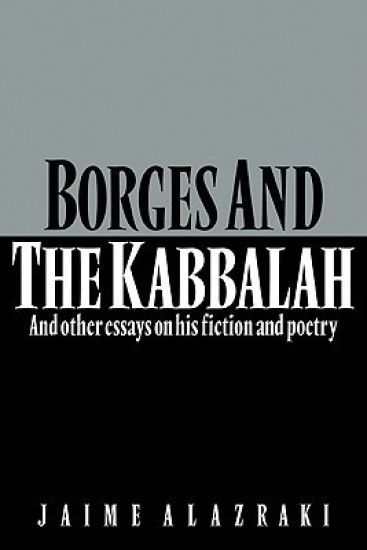
The Argentinian Jorge Luis Borges was one of the most influential figures to emerge from the great blossoming of South American literature in the twentieth century. As a scholar, poet, critic and writer of fiction he was widely read in English translation. This volume brings together a collection of essays on Borges by leading scholar Jaime Alazraki. Together the essays constitute an introduction to important aspects of Borges' oeuvre, including the influence of the Kabbalah, structure and style in the fiction, Borges' poetry, and Borges' impact on Latin American literature. Students and scholars of contemporary literature will find here in one volume the best of Professor Alazraki's short pieces on this great writer.
This book provides a new interpretation of the process of Spanish American independence (1808–26); one which emphasises political processes and cultural continuities, instead of the break with Spain. It is the first book to examine the representative government and popular elections introduced by the Spanish Constitution of 1812. Rodríguez argues that independence did not constitute an anti-colonial movement, as many scholars assert, but rather formed part of the broader Spanish political revolution. In America, a struggle over who would govern accompanied this revolution. Despite significant participation by the masses, the struggle for independence resulted in the triumph of the criollos, the New World bourgeoisie. The liberal tradition of constitutional, representative government that emerged during this period, together with the achievement of nationhood, constitutes the most significant heritage of Spanish American independence.
This book provides a new interpretation of the process of Spanish American independence (1808–26); one which emphasises political processes and cultural continuities, instead of the break with Spain. It is the first book to examine the representative government and popular elections introduced by the Spanish Constitution of 1812. Rodríguez argues that independence did not constitute an anti-colonial movement, as many scholars assert, but rather formed part of the broader Spanish political revolution. In America, a struggle over who would govern accompanied this revolution. Despite significant participation by the masses, the struggle for independence resulted in the triumph of the criollos, the New World bourgeoisie. The liberal tradition of constitutional, representative government that emerged during this period, together with the achievement of nationhood, constitutes the most significant heritage of Spanish American independence.
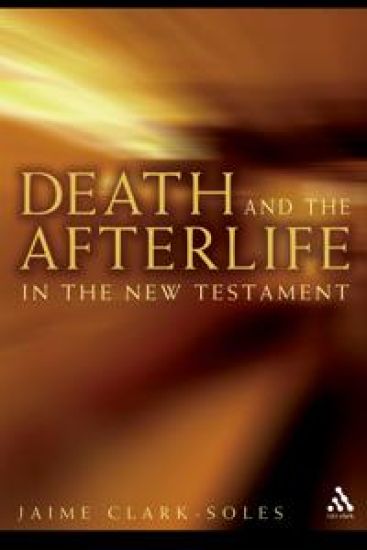
Clark-Soles began this project in order to answer the question, "What exactly does the New Testament say about death and afterlife?" It turns out that it says both more and less than one might hope or expect. By more, she means that every time the subject of death and what happens after death arises, it is clear that the authors' interests far exceed answering that single question. Their comments emerge from the concerns and experiences of living Christian communities, they relate to a larger theological and pastoral agenda, and their primary focus remains life on earth and the proper living of it. The texts say less than one may hope because no author sets out to answer my question directly. There is no systematic theology in the New Testament regarding death and aftelife. Certainly resurrection appears throughout, though differently emphasized and interpreted. Beyond that, the fascinating aspects of the question are in the details of the texts. Therefore, the appropriate question, as it turns out, is not: What does the New Testament say about death and afterlife, but what do various New Testament texts say about it? Others have sought to unify the New Testament witness, glossing over the individual pictures presented by the New Testament authors. Clark-Soles revels in the snapshots of the individuals and am less interested in the family photo. Clark-Soles inquires into the specific language that each author uses regarding death and afterlife. She explores anthropology, cosmology, eschatology, and, where relevant, theology and Christology. Finally, Clark-Soles suggests ways that the stated views function in each situation.
Gospel Activities for Women: Anxiety Edition is a practical and unique resource for women struggling with anxiety. This book features mental health activities, recipes, crafts, coloring, journaling, and prayer sections to help women work through their anxiety in a simple, fun, and unique way. Each page in the book is focused on saturating women's minds on the word, their thoughts on truth, and their bodies through writing, praying, coloring, and creating.
Do you find it hard to glorify God in all you do? Especially when you are dealing with suffering, sin, and being lured by the desires of the world? The Whole You practically looks at who we are so we can better understand how to deal with and properly handle the gift of our bodies and souls to be used for God. With engaging questions at the end of each chapter, and assessments to work through, this book is created to be read and worked through privately or also as a group discussion with other women.
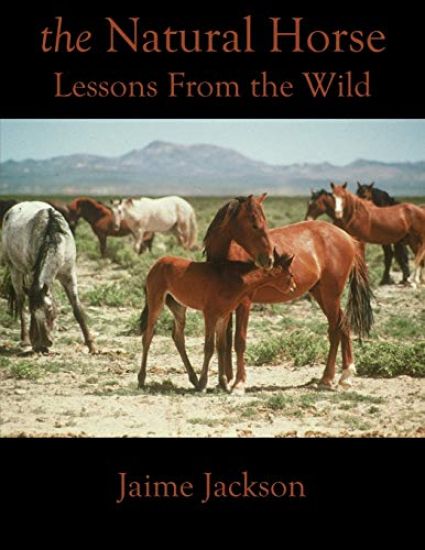
THE WILD, FREE-ROAMING HORSE of the U.S. Great Basin has given us a new vision for a vibrant and healthy natural horse. That vision is embodied in this newly updated and classic work, The Natural Horse: Lessons From the Wild.Paddock Paradise. Based on wild horse family band movements in their native ranges, Paddock Paradise is a unique tracking system within which horses living together in groups forge their own paths. Horse owners disburse hay and other essentials along these paths to stimulate movement and vitality "on track." Reasonably Natural Diet. Jackson took note in his range studies of the complexity of the wild horse diet. He and his colleagues have deduced a safe diet for horses, but urge the university sector to enter wild horse country to give the wild horse diet the comprehensive research it deserves.Natural Rider. Jackson holds that a paradigm for the natural rider should be rooted in the Natural Gait Complex of the species as seen in the wild. To this end he has laid out a painstaking analysis of the natural gaits based on his observations of wild horse behaviors.The Natural Trim. As a professional hoof man fully aware of the damaging effects of shoeing on the horse's hoof, Jackson saw the need to enter wild horse country to see what nature intended for the horse's hoof, and then report his findings. The Natural Horse delivers that message and a trimming method.
"And off she went to understand the world, and understand the world she did " The Adventures of Ellie is a book series dedicated to helping children understand the world around them. In Ellie's first adventure, The Strangest of Times, she deals with the uncertainty of the COVID pandemic and all of the changes that happen in her daily life. The story is written through Ellie's eyes as she learns to cope with the changes in healthy ways and find hope. The book includes discussion questions to help adults have a more in-depth conversation with their child, activities to continue the learning process, and tips for online learning at home.
If you have ever dreamed of meeting that special someone, Nice guys do not have to finish last will show you how to achieve that goal. Jaime Metcalf has been "coined" Mr. Nice guy by both colleagues and friends his entire life. In this self motivating book, he will show you how being a nice guy can work to your advantage, by using both his vast knowledge of meeting women, and explaining these techniques in an easy to understand format. "Nice Guys Do Not Have to Finish Last" is a revolutionary read that can work for most anyone that is serious about finding a long term relationship. It will give you the knowledge and courage to be the man that you always were but were afraid to be. "Nice Guys Do Not Have to Finish Last"is a guide book to reaching your true potential and finding that life long soul mate that you truly deserve.
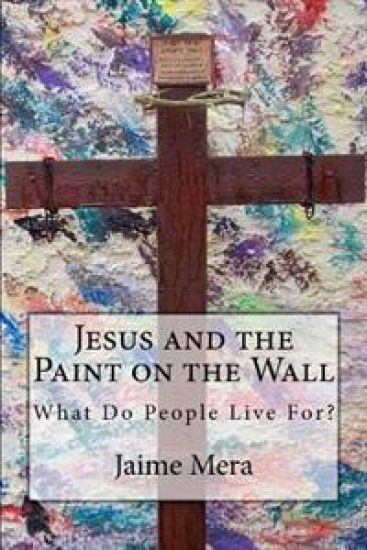
Have you ever wondered what it would be like to live in a piece of art? We all live against the wall, being forced around or enticed to follow things of this world. We see all the brilliant and dark colors in this world and call it life, while some people call it smelly stuff hitting the fan, then splattering all over the place. People live for many reasons, and most of the time they follow the painting on the wall, but there is something better. Jesus is our connection to live a life full of joy and righteousness, apart from the world.This book talks about life in general looking through perspectives of science, the spirit, and the person of Jesus Christ. Grace and truth is revealed as the person of Jesus, not religion, and how it can change our lives today.
Full-Length Play "A real crowd pleaser " -Backstage A mystery, a legend, an enduring friendship. Watson: The Last Great Tale of the Legendary Sherlock Holmes tells the story of a good man trapped in the shadow of a great man. Funny, moving, and theatrically inventive, this high-energy play balances witty comedy and dramatic mystery to recount the last great tale of the legendary Sherlock Holmes as seen through the eyes of his trusted friend and colleague, Dr. John H. Watson. From pantomime to Punch and Judy, and with the theatrical ingenuity of Broadway's The 39 Steps, Watson tells a grand tale of heroes and villains that will captivate your audience until the very end (Cast: 4F, 7M)
Most Christians are unaware of the doctrinal debates taking place within the religious academic community. When they are aware of these discussions, they may consider them irrelevant or even harmful to Christian practice. Jaime Clark- Soles invites seminarians, seminary faculty, and church leaders to find common ground by considering the various debates, the reasons they persist, the implications of each, and how they pertain to Christian identity and faith within the larger contemporary culture. Includes study questions.
What was it like to be a woman in the biblical period? It depended, in part, on who you were: a queen, a judge, a primary wife, a secondary wife, a widow, a slave, or some other kind of "ordinary woman." In Women in the Bible, Jaime Clark-Soles investigates how women are presented in Scripture, taking into account cultural views of both ancient societies as well as our own. While women today are exercising leadership in churches across a number of denominations and our scholarly knowledge related to women in the Bible has grown immensely, challenges remain. Most of Christendom still excludes women from religious leadership, and many Christians invoke the Bible to circumscribe women's leadership in the public square and in the home as well. It is more urgent than ever, therefore, to investigate closely, honestly, and intrepidly what the Bible does and doesn't say about women.In a multipronged approach, Clark-Soles treats well-known biblical women from fresh perspectives, highlights women who have been ignored, and recovers those who have been erased from historical memory by particular moves made in the transmission and translations of the text. She explores symbolic feminized figures like Woman Wisdom and the Whore of Babylon and reclaims the uses of feminine imagery in the Bible that often go unnoticed. Chapters focus on themes of God's relationship to gender, women and violence, women as creators, and women in the ministry of both Jesus and Paul. Clark-Soles aims to equip clergy and other leaders invested in the study of Scripture to consider women in the Bible from multiple angles and, as a result, help people of all genders to live God's vision of better, more just lives as we navigate the challenges of our complex, globally connected world.---Table of ContentsSeries ForewordAcknowledgmentsIntroduction1. Of Canaanites and Canines: Matthew 152. God across Gender3. Women and Violence in the Bible: Truth Telling, Solidarity, and Hope4. Women Creating5. The Book of Ruth: One of the "Women's Books" in the Bible6. Magnificent Mary and Her Magnificat: Like Mother, Like Son7. Women in Jesus's Life and Ministry8. Jesus across Gender9. Women in Paul's Ministry10. The Muting of Paul and His Female Coworkers: Women in the Deutero-Pauline EpistlesConclusion: In the End, Toward the End (Goal): Truth, with HopeWorks CitedScripture IndexSubject Index