Kirjahaku
Etsi kirjoja tekijän nimen, kirjan nimen tai ISBN:n perusteella.
1000 tulosta hakusanalla James Stratton


Brought to you by Penguin.Presenting a magical new reading of Roald Dahl's James and the Giant Peach, read by iconic British comedian James Acaster. This immersive audiobook is bursting with fantabulous sound effects, dynamic sound design, and original music composed by Rusty Bradshaw.James Henry Trotter is about to go on the adventure of a lifetime . . .James lives with his awful Aunt Sponge and Aunt Spiker, two of the meanest people you can imagine!Life isn't much fun at all, until something peculiar happens at the bottom of his garden . . .A peach at the very top of a tree begins to grow . . . and grow . . . and GROW! Inside are seven very unusual insects - all waiting to take James on a magical journey.But where will this very special GIANT PEACH take James and his new friends? And what will happen to his horrible aunts if they stand in their way?Listen to James and the Giant Peach and other fantastical Roald Dahl audiobooks, including:George's Marvellous Medicine, read by Romesh Ranganathan.Matilda, read by Kate Winslet.The BFG, read by David Walliams.The Twits, read by Richard Ayoade.The Witches, read by Lolly Adefope.© The Roald Dahl Story Company Ltd, 1961 (P) 2022 Penguin Audio

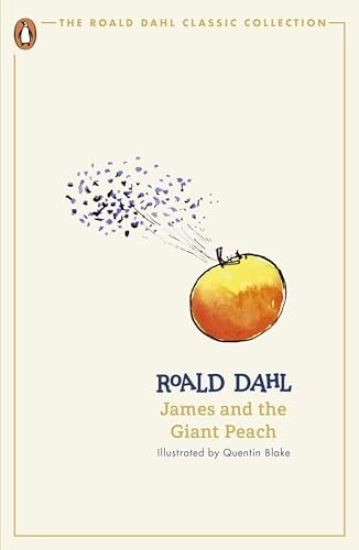
‘We are now about to visit the most marvellous places and see the most wonderful things!’This beautiful edition of James and the Giant Peach, part of The Roald Dahl Classic Collection, features official archive material from the Roald Dahl Museum and is perfect for Dahl fans old and new.So, enter a world where invention and mischief can be found on every page and where magic might be at the very tips of your fingers . . .The Roald Dahl Classic Collection reinstates the versions of Dahl’s books that were published before the 2022 Puffin editions, aimed at newly independent young readers.

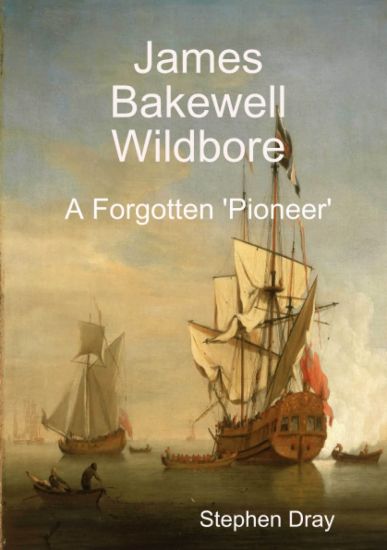
The first biography of a long-forgotten Congregationalist minister who had a significant role in Cornish non-conformist evangelicalism and, above all, played a central and critical role in promoting the modern missionary movement.

All Hail 'The Stag Nation'!In the beginning, there was our 'Book Of Joy'. A diary of our earliest deeds, our first impressions of the dark. But somewhere in the distant past this precious gift was stolen from us, substituted by cruel sleight of hand. Quick! Throw away that thing you have been reading! It is nothing but a 'Book Of Sorrow' and, believe me, you don't want to read any more of those! Come my friend, follow me, and we will recover your 'Book Of Joy'. Yes, that first chapter missing from all of our stories, a journal of the vague years. Let me be your corpse candle, your marsh light, your hand of glory through the darkness...James Stoorie takes you on a pagan's process through a folk horror heritage that we all share yet, until now, have forgotten.
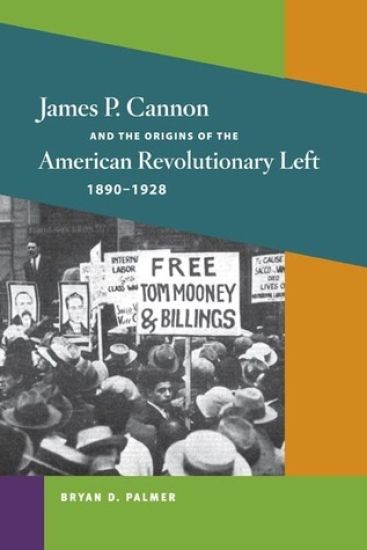
James P. Cannon and the Origins of the American Revolutionary Left, 1890-1928
Bryan D. Palmer
University of Illinois Press
2007
sidottu
Bryan D. Palmer's award-winning study of James P. Cannon's early years (1890-1928) details how the life of a Wobbly hobo agitator gave way to leadership in the emerging communist underground of the 1919 era. This historical drama unfolds alongside the life experiences of a native son of United States radicalism, the narrative moving from Rosedale, Kansas to Chicago, New York, and Moscow. Written with panache, Palmer's richly detailed book situates American communism's formative decade of the 1920s in the dynamics of a specific political and economic context. Our understanding of the indigenous currents of the American revolutionary left is widened, just as appreciation of the complex nature of its interaction with international forces is deepened.

By the 1980s, critics and the public alike considered James Baldwin irrelevant. Yet Baldwin remained an important, prolific writer until his death in 1987. Indeed, his work throughout the decade pushed him into new areas, in particular an expanded interest in the social and psychological consequences of popular culture and mass media. Joseph Vogel offers the first in-depth look at Baldwin's dynamic final decade of work. Delving into the writer's creative endeavors, crucial essays and articles, and the impassioned polemic The Evidence of Things Not Seen, Vogel finds Baldwin as prescient and fearless as ever. Baldwin's sustained grappling with "the great transforming energy" of mass culture revealed his gifts for media and cultural criticism. It also brought him into the fray on issues ranging from the Reagan-era culture wars to the New South, from the deterioration of inner cities to the disproportionate incarceration of black youth, and from pop culture gender-bending to the evolving women's and gay rights movements.Astute and compelling, James Baldwin and the 1980s revives and redeems the final act of a great American writer.

James P. Cannon and the Origins of the American Revolutionary Left, 1890-1928
Bryan D. Palmer
University of Illinois Press
2010
nidottu
Bryan D. Palmer's award-winning study of James P. Cannon's early years (1890-1928) details how the life of a Wobbly hobo agitator gave way to leadership in the emerging communist underground of the 1919 era. This historical drama unfolds alongside the life experiences of a native son of United States radicalism, the narrative moving from Rosedale, Kansas to Chicago, New York, and Moscow. Written with panache, Palmer's richly detailed book situates American communism's formative decade of the 1920s in the dynamics of a specific political and economic context. Our understanding of the indigenous currents of the American revolutionary left is widened, just as appreciation of the complex nature of its interaction with international forces is deepened.

By the 1980s, critics and the public alike considered James Baldwin irrelevant. Yet Baldwin remained an important, prolific writer until his death in 1987. Indeed, his work throughout the decade pushed him into new areas, in particular an expanded interest in the social and psychological consequences of popular culture and mass media. Joseph Vogel offers the first in-depth look at Baldwin's dynamic final decade of work. Delving into the writer's creative endeavors, crucial essays and articles, and the impassioned polemic The Evidence of Things Not Seen, Vogel finds Baldwin as prescient and fearless as ever. Baldwin's sustained grappling with "the great transforming energy" of mass culture revealed his gifts for media and cultural criticism. It also brought him into the fray on issues ranging from the Reagan-era culture wars to the New South, from the deterioration of inner cities to the disproportionate incarceration of black youth, and from pop culture gender-bending to the evolving women's and gay rights movements.Astute and compelling, James Baldwin and the 1980s revives and redeems the final act of a great American writer.
Earl J. Currie examines the standards, methods, and practices for railway operations that James J. Hill developed and applied so successfully for the Great Northern and other railways companies that he controlled. Currie compares the performance and quality of infrastructure of "Hill roads" to competitive railways and their successors to show how Hill's principles continue to form the core practices needed to run an efficient, well-disciplined railway operation even today.

The Complete Poetical Works of James Whitcomb Riley
James Whitcomb Riley
Indiana University Press
1993
pokkari
Few lives have left so vivid an impression upon a native environment as that of James Whitcomb Riley, the Hoosier Poet. His folksy, down-home rhymes are still enormously popular in his native state and beyond. This publication brings back into print the complete Riley repertoire of more than 1,000 poems, including such all-time favorites as "Little Orphant Annie" (far and away the best-loved of all Riley characters), "The Raggedy Man," "Our Hired Girl," "A Barefoot Boy," "The Bumblebee," "Granny," and "When the Frost Is on the Punkin." It is said that Indiana's best-known poet did not portray but invented the typical Hoosier. Applying imaginative skill, Riley altered and adapted the people around him to suit his purpose. As Jeannette Covert Nolan once put it, the figure who emerged was "a mellow, humorous rustic, a quaint, bucolic philosopher, unlettered but gifted with an earthy shrewdness, a peasant wisdom, a heart of gold, speaking a drawling, hybrid tongue, a dubious dialect as yet unidentified by any philologist." In his heyday Riley was famous all over the world. Though often called a children's poet, he actually wrote about children for adults, delighting in emotional reminders of an irretrievable past—perhaps one that never quite existed. Throughout his life Riley looked back wistfully and sentimentally upon his childhood days, turning the longings and unfulfilled dreams of youth into verse. So celebrated was he in Indiana that in many public elementary schools, students were required to memorize and recite one of his poems every week for admiring audiences of visiting parents. If I Knew What Poets Know If I knew what poets know, Did I know what poets do, If I knew what poets know, Would I write a rhyme Would I sing a song, I would find a theme Of the buds that never blow Sadder than the pigeon's coo Sweeter than the placid flow In the summer-time? When the days are long? Of the fairest dream: Would I sing of golden seeds Where I found a heart in pain, I would sing of love that lives Springing up in ironweeds? I would make it glad again; On the errors it forgives: And of rain-drop turned to snow, And the false should be the true, And the world would better grow If I knew what poets know? Did I know what poets do. If I knew what poets know. —James Whitcomb Riley

James Coleman
MIT Press
2003
pokkari
Illustrated critical essays on the work of artist James Coleman.James Coleman has emerged in recent years as one of the most important artists of visual postmodernism. His work has transformed critical debates about the status of the image in contemporary culture and influenced an entire generation of younger artists in ways that have not yet been fully acknowledged. Until recently, Coleman has enjoyed relatively little critical attention-in part because of his refusal to comment on his projects or to allow his work to be reconstructed outside of the context of its exhibition.The illustrated essays in this book span the entirety of Coleman's career to date, from his early postminimal and conceptual experiments with memory and perception, through his work in film, video, and narrative in the 1980s, to his current ongoing series of slide projections with voice-over that he calls simply "projected images." Reflecting the interdisciplinary nature of the debates induced by Coleman's work, the essays discuss issues of subjectivity and identity, nationalism, postcolonialism, memory, spectacle culture, digitalization, and new media. The contributors are Raymond Bellour, Benjamin Buchloh, Lynne Cooke, Jean Fisher, Luke Gibbons, Rosalind Krauss, Anne Rorimer, and Kaja Silverman. Written by curators, critics, and scholars and spanning the fields of art history, literary criticism, philosophy, and film theory, the essays attest to the interdisciplinary challenge of Coleman's work.