Kirjojen hintavertailu. Mukana 11 699 587 kirjaa ja 12 kauppaa.

Kirjahaku

Etsi kirjoja tekijän nimen, kirjan nimen tai ISBN:n perusteella.

1000 tulosta hakusanalla Jan Montefiore

Jan's Sanctuary Walk

Jan's Sanctuary Walk

Patricia M Daniels

Inscript Books
2019
sidottu
Jan's Sanctuary Walk is a novel about Jan Hendricks, a young clergywoman in her first appointment as lead pastor in a small-town Florida church during the late 1980s. Her excitement and nervousness about the assignment is soon married with worry and doubt, as her appointment is fraught with difficulties. Two tragic events devastate the small community and draw on Jan's skill and faith. She tries to comfort the town while balancing the demands of her family and church amidst discrimination against clergywomen. Will she be able to pastor this small church and strengthen her own insecurities about faith and her calling?
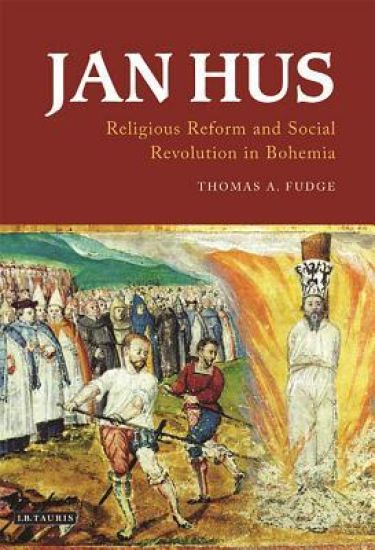
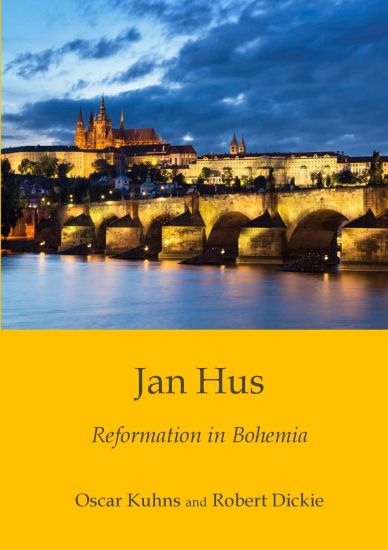
Jan Hus

Jan Hus

Fudge Thomas A.

I.B. Tauris
2017
nidottu
A century before Martin Luther and the Reformation, Jan Hus confronted the official Church and helped to change the face of medieval Europe. A key figure in the history of Europe and Christianity and a catalyst for religious reform and social revolution, Jan Hus was poised between tradition and innovation. Taking a stand against the perceived corruption of the Church, his continued defiance led to his excommunication and he was ultimately burned at the stake in 1415. What role did he play in shaping Medieval Europe? And what is his legacy for today? In this important and timely book Thomas A. Fudge explores Jan Hus, the man, his work and his legacy. Beginning his career at Prague University, this brilliant Bohemian preacher was soon catapulted by virtue of his radical and popular theology to the forefront of European affairs. This book fills a real gap in contemporary understanding of the medieval Church and offers an accessible and authoritative account of a most significant individual and his role in history. Jan Hus belongs to the pantheon of extraordinary figures from medieval religious history. His story is one of triumph and tragedy in a time of chaos and change.
Jan van Eyck within His Art

Jan van Eyck within His Art

Alfred Acres

REAKTION BOOKS
2023
sidottu
Jan van Eyck was one of the most inventive and influential artists in the entire European tradition. The phenomenal realism of his paintings, now six centuries old, still astounds observers in a world accustomed to high-resolution images. But other dimensions of his work are just as original and absorbing. Unlike any earlier artist, Van Eyck infused his paintings with himself. In addition to portraying, reflecting and implying his own presence in a variety of works, he also introduced his voice, hand and mind in an array of inscriptions, signatures and even a personal motto. Incorporating a wealth of new research and recent discoveries within a fresh exploration of the paintings themselves, this book reveals how profoundly Jan van Eyck transformed the very idea of what an artist could be.
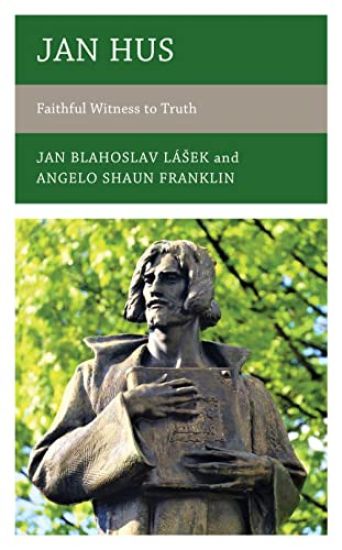
Jan Hus

Jan Hus

Jan Blahoslav Lášek; Angelo Shaun Franklin

BLOOMSBURY PUBLISHING PLC
2022
sidottu
The Bohemian reformer Jan Hus made a substantial and critical contribution to the development of the medieval church, owing especially to his views and teachings on Scripture, the church, faith, conscience, and spirituality. This book offers a presentation of Hus’s theological commitment centered on his understanding of truth. Lášek and Franklin explore Hus's preaching ministry and his long-drawn-out legal struggle against charges of heresy as ethical outworkings of this approach to truth. Central to this exploration is a new annotated translation of Hus’s Appeal to Jesus Christ as the Supreme Judge against the pope and canon law. This document was not only a protest against papal power, but expressed a fundamentally new legal situation: in bypassing canon law, it essentially represented a personal claim to freedom of conscience. This unheard-of principle from within the medieval legal framework preceded other related ecclesiastical and legal developments by several centuries. The authors argue that Hus’s appeal thus represents a momentous event in church history and European history as a whole. Due to the historical significance of his martyrdom and commemoration by many churches throughout Europe, this book demonstrates that Hus remains an important figure not only for the study of European history, but also for understanding contemporary values of Western civilization.
Jan Hus

Jan Hus

Jan Blahoslav Lášek; Angelo Shaun Franklin

BLOOMSBURY PUBLISHING PLC
2024
nidottu
The Bohemian reformer Jan Hus made a substantial and critical contribution to the development of the medieval church, owing especially to his views and teachings on Scripture, the church, faith, conscience, and spirituality. This book offers a presentation of Hus’s theological commitment centered on his understanding of truth. Lášek and Franklin explore Hus's preaching ministry and his long-drawn-out legal struggle against charges of heresy as ethical outworkings of this approach to truth. Central to this exploration is a new annotated translation of Hus’s Appeal to Jesus Christ as the Supreme Judge against the pope and canon law. This document was not only a protest against papal power, but expressed a fundamentally new legal situation: in bypassing canon law, it essentially represented a personal claim to freedom of conscience. This unheard-of principle from within the medieval legal framework preceded other related ecclesiastical and legal developments by several centuries. The authors argue that Hus’s appeal thus represents a momentous event in church history and European history as a whole. Due to the historical significance of his martyrdom and commemoration by many churches throughout Europe, this book demonstrates that Hus remains an important figure not only for the study of European history, but also for understanding contemporary values of Western civilization.
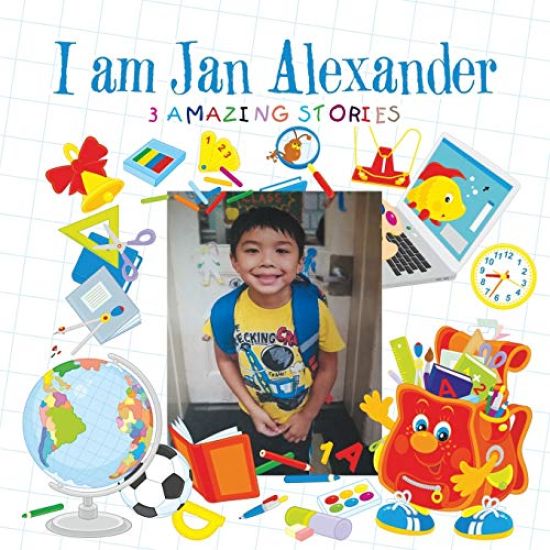
I Am Jan Alexander

I Am Jan Alexander

Jan Alexander Quintos

Xlibris Us
2019
pokkari
Jan is a six-year-old boy, and he is in kindergarten. He lives in Bloomfield, New Jersey. He loves his family and friends. Jan likes to play with his elder brother Josh and elder sister Alexa. He likes to draw and create his own stories. He likes to learn about planets and watch videos of the Incredibles and Lion King. He spends a lot of time in his own room playing with his toys and coloring books. His other interests are playing the piano and basketball.
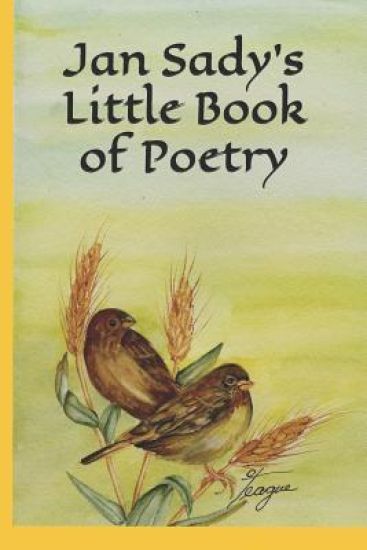
Jan Sady's Poems for All Seasons

Jan Sady's Poems for All Seasons

Janet R. Sady

Independently Published
2019
nidottu
A delightful little book of award winning poetry with original water-color and photos by the author. Nature is the inspiration for the poetry, photographs and paintings. Poetry paints pictures of what we see and feel. Allow the verses to draw you into a part of the beauty of nature and words.
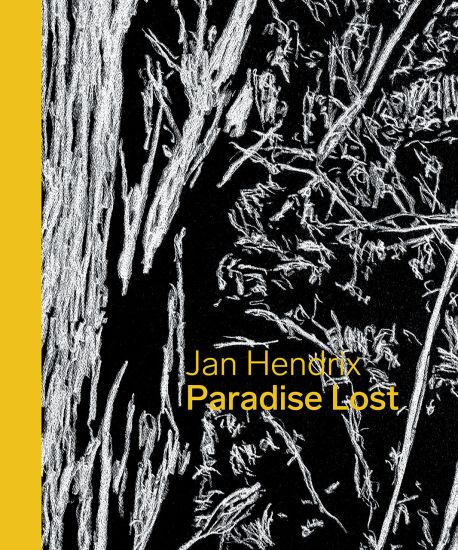
Jan Hendrix: Paradise Lost

Jan Hendrix: Paradise Lost

Jan Hendrix; Richard Deverell

Kew Publishing
2020
sidottu
Jan Hendrix is a Dutch-born, Mexico-based contemporary artist. His work is all about observation and analysis; nature and its diff erent ways of representing and telling extended stories, often in a non- linear narrative. Based on an exhibition at Kew Gardens, this book is a visual report of Hendrix’s multiple visits to the Kamay Botany Bay Area of New South Wales, Australia, made over a 20-year period. Beautiful and thought-provoking works convey his response to the fragile, changing landscape, under constant threat of fi re and destruction. His work also draws on first collections of plants at Kamay Botany Bay documented by botanists Joseph Banks, Daniel Solander and Sydney Parkinson as part of the HMS Endeavour expedition in 1770. Supporting texts by Art Historian Dawn Ades, CEO of the Bundanon Trust Deborah Ely, and filmmaker Michael Leggett contextualise the work of the artist. With a foreword by Kew Director Richard Deverell.
Jan Morris

Jan Morris

Alan Whicker; Arturo Di; Colin Thubron

Seren
2006
nidottu
"Tributes are tricky things. Too fawningly sentimental, they render the subject fantastical; too rigorously factual, they read like an obituary. This celebration of Jan Morris avoids the dilemma beautifully by inviting 21 equally felicitous writers to comment on a life packed with interest and a talent too large to be confined to a mere 120 pages... Essays from Alan Whicker, Simon Winchester, Peregrine Worsthorne and others brim with admiration and insight, but what stands out on the page at every turn are examples from Morris's unsurpassable work." Stephen Pritchard, The Observer: Paperback of the Week."Friends and colleagues write affectionately about a great Welsh writer who inhabits that delectable border between journalism and literature." Iain Finlayson, The TimesJan Morris is one of the world's leading writers. In this tribute to her on her eightieth birthday, a number of well-known people from the world of travel writing, journalism, broadcasting and publishing celebrate the writer, as well as the person, in specially written essays. Through anecdotes and personal memories, they illuminate with warm affection her work and influence, her personality and her extraordinary life. Insights are also provided through the eyes of a painter, photographer, historian, and mountaineer.A thoughtful introduction by Paul Theroux accompanies essays by George Band, Arturo Di Stefano, David Fieldhouse, Don George, David Holden, David Hurn, Pico Iyer, Julian Loose, Robert McCrum, Geoffrey Moorhouse, Patrick Nairne, Jim Perrin, Hilary Rubinstein, Ned Thomas, Colin Thubron, Erica Wagner, Alan Whicker, Simon Winchester and Peregrine Worsthorne.
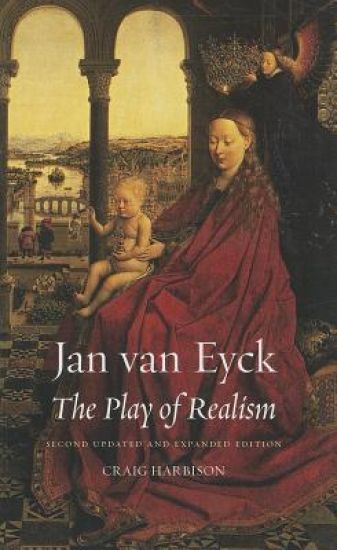
Jan van Eyck

Jan van Eyck

Craig Harbison

Reaktion Books
2011
nidottu
Jan van Eyck (1395-41) was the foremost artist of the Early Netherlandish School. Although Court painter to Duke Philip the Good of Burgundy, van Eyck’s surviving work was not executed for the Duke, but for rising Court bureaucrats, Italian merchants and members of the secular clergy, for whom he created a series of painstakingly detailed oil paintings of astonishing verisimilitude. Most explanations of the meanings behind these paintings have been grounded in the disguised religious symbolism critics have insisted are uppermost in them. Van Eyck, it is said, followed traditional theology in this respect – albeit in sophisticated ways; his realist art displayed in iconic and allusive forms the conventional symbols of Church teaching and popular piety.But in Jan van Eyck: The Play of Realism, such approaches to the art of this Netherlandish master are set aside. In a fascinating recovery of the neglected human dimension that is present in these works, Craig Harbison interrogates the personal histories of the worldly participants of such masterpieces as the Virgin and Child with George van der Paele, the Arnolfini Double Portrait and the Virgin and Child with Nicolis Rolin. In addition to exploring the domestic and financial circumstances of the sitters, the author reveals the remarkable degree to which they were caught up in the wider social and spiritual concerns of the early fifteenth century, including the increasing abuse of indulgences and benefices, the rise of religious scepticism and the spread of popular, anti-clerical private prayer.Since Jan van Eyck’s patrons sought to have themselves portrayed as both worldly and devout, the artist set out to satisfy this demand, but in a form of realism that contained within itself a playful, even, ironic, attitude towards the relations existing between individuals, society, religion – and, of course, the various forms of representation then available. As the author demonstrates – with the aid of abundant visual evidence in colour and in black and white – the artful mesh of pictured aspirations and ambivalences making up the painted world van Eyck invented are found always to be constructed along particular artistic and psychological fault-lines. By tracing these out for the reader, Harbison reveals how van Eyck presented his contemporaries with a more subtle and complex view of the value of appearances as a route to understanding the meaning of life.
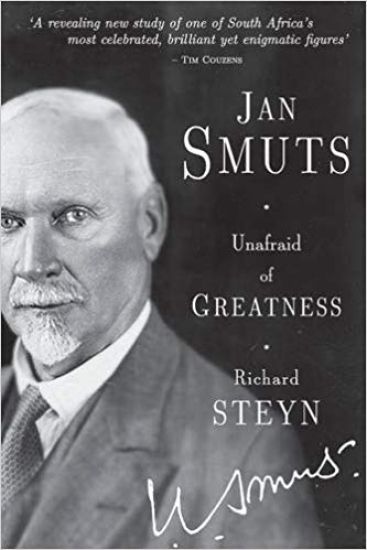
Jan Smuts: Unafraid of greatness

Jan Smuts: Unafraid of greatness

Richard Steyn

JONATHAN BALL PUBLISHERS SA
2015
nidottu
Jan Christian Smuts was soldier, statesman and intellectual, one of South Africa's greatest leaders. Yet little is said about him today even as we appear to live in a leadership vacuum. This is a re-examination of the life and thought of Jan Smuts. It is intended to remind a contemporary readership of the remarkable achievements of this impressive soldier-statesman. The author argues that there is a need to bring Smuts back into the present, that Smuts' legacy still has much to instruct. He draws several parallels between Smuts and President Thabo Mbeki, both intellectuals much lionised abroad and yet often distrusted at home. This book is a highly readable account of Smuts' life. It also examines a number of overarching themes: his relationships with women, spiritual life, intellectual life and his role as advisor to world leaders. Politics and international affairs receive the lion's share, but Smuts' unique contributions to other fields -- for example, botany -- are not neglected. This book does not shy away from the contradictions of its subject. Smuts was one of the architects of the United Nations, and a great champion of human rights, yet he could not see the need to reform the condition of the African majority in his own country.
Jan Smuts: Afrikaner sonder grense

Jan Smuts: Afrikaner sonder grense

Richard Steyn

Jonathan Ball Publishers SA
2017
pokkari
Jan Christiaan Smuts was 'n soldaat, staatsman, intellektueel en een van Suid-Afrika se grootste leiers. Tog word daar vandag min oor hom gepraat of geskryf, al beleef ons tans skynbaar 'n leierskapsvakuum. In Afrikaner sonder grense voer Richard Steyn aan dat ons hierdie indrukwekkende kryger-staatsman se lewe en denke moet herbesoek, omdat daar soveel te leer is uit sy merkwaardige prestasies. Die hoogs leesbare verslag ondersoek onder meer Smuts se rol as politieke leier, as adviseur van wereldleiers, sy spirituele en intellektuele lewe en sy verhoudings met vroue. Sy unieke bydraes op 'n verskeidenheid ander terreine, insluitend botanie, bewaring en filosofie, word ook bespreek. Afrikaner sonder grense skram egter nie weg van die paradoksale in Smuts nie. Hoewel hy een van die argitekte van die Verenigde Nasies en 'n groot kampvegter vir menseregte was, kon hy nie so ver kom om die plaaslike swart meerderheid politieke regte te gun nie.
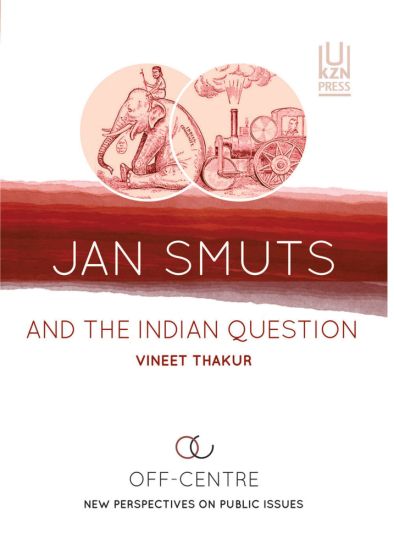
Jan Smuts and the Indian Question

Jan Smuts and the Indian Question

Vineet Thakur

University of KwaZulu-Natal Press
2017
nidottu
As the only surviving statesman of the Paris Peace Conference of 1919, Jan Smuts arrived for the first session of the United Nations in New York in 1946 to celebratory chants. His departure, a month and a half later, was terrifyingly dissimilar. The ‘counsellor of nations’ left a dejected man, with his honour, power and glory severely dented. The tragedy that befell Smuts’ international swansong was an Indian delegation, which, as Smuts bemoaned, used his own words against himself and showed him to be a hypocrite. This was eerily similar to a diplomatic onslaught Smuts had faced between 1917 and 1923 at the hands of another set of little-known Indian diplomats. Through these episodic histories, this book chronicles the ambivalent cosmopolitanism of Jan Smuts.
Jan Banning: Traces of War
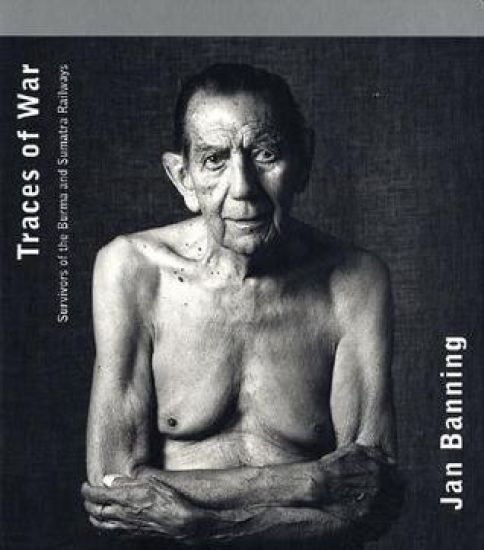
During the Second World War, thousands of Dutch, British, Australian and American POWs were forced by the Japanese to work on the railways in Burma and Sumatra. 50-80 per cent died under such terrible conditions. Photographer Jan Banning photographed 24 Dutch and Indonesian survivors, bravely revisiting this horrendous ordeal.Victory for the allied forces in the Pacific theatre of the Second World War will be celebrated in August 2005, 60 years after the Japanese Emperor Hirohito conceded defeat. Among the celebrants was a small, largely forgotten group who will once again have to relive their nightmares of the war in the Pacific.Dutch, English, Australian and American POWs were among more than a quarter of a million Asians - so called romushas - forced by the Japanese to work on railways in Burma and Sumatra. They worked in desperate conditions. Between 50 and 80 per cent of the romushas did not survive the regime, not least as a result of being torpedoed in transit. The sinking of the Junyo Maru, for instance, resulted in the deaths of 4000 romushas and 1500 prisoners of war.In Traces of War the Dutch photographer Jan Banning has interviewed and photographed just 24 of the Dutch and Indonesian survivors. The haunting images show them as they worked, naked from the waist up. The words elicit, with a matter-of-fact disinterest, the misery of their constant understanding of death. Unsurprisingly, after their experiences, they have hitherto been loath to discuss their ordeals.Jan Banning's Dutch publication of Traces of War has all but sold out. Trolley presents the English language version for the many thousands of relatives and children, and the few survivors, who want to know the truths of what happened in Burma and Sumatra.
Jan van Eyck and Portugal 's "Illustrious Generation"
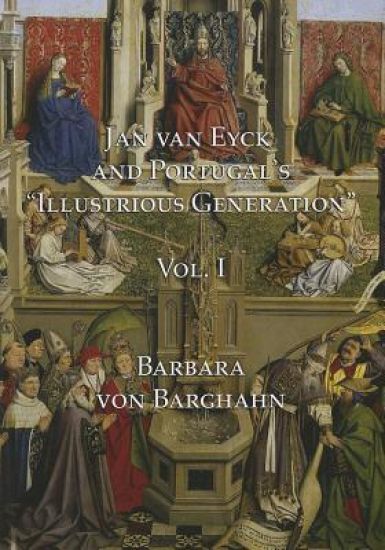
Barbara von Barghahn is Professor of Art History at George Washington University and a specialist in the art history of Portugal, Spain, and their colonial dominions, as well as Flanders (1400-1800). In 1993, she was conferred O Grão Comendador in the Portuguese Order of Prince Henry the Navigator. She has spent nearly a decade completing research about Jan van Eyck's diplomatic visits to the Iberian Peninsula. This manuscript investigates Van Eyck's patronage by the Crown of Portugal and his role as diplomat-painter of the Duchy of Burgundy following his first voyage to Lisbon in 1428-1429 when he painted two portraits of Infanta Isabella, who became the third wife of Philip the Good in 1430. New portrait identifications are provided in the Ghent Altarpiece (1432) and its iconographical prototype, the lost Fountain of Life. These altarpieces are analyzed with regard to King João I's conquest of Ceuta, achieved by his sons who were hailed as an"illustrious generation." Strong family ties between the dynastic houses of Avis and Lancaster explain Lusitania 's sustained fascination with Arthurian lore and the Grail quest. Several chapters of this book are overlaid with a chivalric veneer. A second "secret mission" to Portugal in 1437 by Jan van Eyck is postulated and this diplomatic visit is related to Prince Henrique the Navigator's expedition to Tangier and King Duarte's attempts to forge an alliance with Alfonso V of Aragon. Late Eyckian commissions are reviewed in light of this ill-fated crusade and additional new portraits are identified. The most significant artist of Renaissance Flanders appears to have been patronized as much by the House of Avis as by the Duchy of Burgundy.
Jan van Eyck and Portugal's "Illustrious Generation"
Barbara von Barghahn is Professor of Art History at George Washington University and a specialist in the art history of Portugal, Spain, and their colonial dominions, as well as Flanders (1400-1800). In 1993, she was conferred O Grão Comendador in the Portuguese Order of Prince Henry the Navigator. She has spent nearly a decade completing research about Jan van Eyck's diplomatic visits to the Iberian Peninsula. This manuscript investigates Van Eyck's patronage by the Crown of Portugal and his role as diplomat-painter of the Duchy of Burgundy following his first voyage to Lisbon in 1428-1429 when he painted two portraits of Infanta Isabella, who became the third wife of Philip the Good in 1430. New portrait identifications are provided in the Ghent Altarpiece (1432) and its iconographical prototype, the lost Fountain of Life. These altarpieces are analyzed with regard to King João I's conquest of Ceuta, achieved by his sons who were hailed as an"illustrious generation." Strong family ties between the dynastic houses of Avis and Lancaster explain Lusitania 's sustained fascination with Arthurian lore and the Grail quest. Several chapters of this book are overlaid with a chivalric veneer. A second "secret mission" to Portugal in 1437 by Jan van Eyck is postulated and this diplomatic visit is related to Prince Henrique the Navigator's expedition to Tangier and King Duarte's attempts to forge an alliance with Alfonso V of Aragon. Late Eyckian commissions are reviewed in light of this ill-fated crusade and additional new portraits are identified. The most significant artist of Renaissance Flanders appears to have been patronized as much by the House of Avis as by the Duchy of Burgundy.
Jan Morris

Jan Morris

Paul Clements

Scribe Publications
2022
sidottu
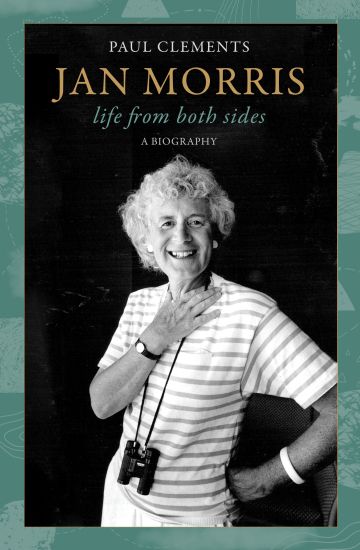
‘A marvel of clarity, fluency, and (Morris’s favourite word in her final days) kindness.’ The Sunday Times ‘A measured and elegant biography that Morris aficionados will find fascinating.’ The Times The first full account of a truly remarkable life. When Jan Morris passed away in 2020, she was considered one of Britain’s best-loved writers. The author of Venice, Pax Britannica, Conundrum, and more than fifty other books, her work was known for its observational genius, lyricism, and humour, and had earned her a passionate readership around the world. Morris’s life was no less fascinating than her oeuvre. Born in 1926, she spent her childhood amidst Oxford’s Gothic beauty and later participated in military service in Italy and the Middle East, before embarking on a career as an internationally fêted foreign correspondent. From being the only journalist to join the first ascent of Mount Everest in 1953 to covering the trial of Adolf Eichmann, Morris’s reportage spanned many of the twentieth century’s defining moments. However, public success masked a private dilemma that was only resolved when she transitioned genders in the 1960s, becoming renowned as a transgender pioneer. She went on to live happily with her wife, Elizabeth, in Wales for another five decades, and never stopped writing and publishing. Here, for the first time, the many strands of Morris’s rich and at times paradoxical life are brought together. Based on a wealth of interviews, archival material, and hitherto unpublished documents, Jan Morris: life from both sides portrays a person of extraordinary talent, curiosity, and joie de vivre.
Jan Morris

Jan Morris

Paul Clements

Scribe Publications
2023
pokkari
‘A marvel of clarity, fluency, and (Morris’s favourite word in her final days) kindness.’ The Sunday Times The first full account of the remarkable life of Jan Morris: writer, soldier, traveller, and trans pioneer. Jan Morris is widely considered one of Britain’s best-loved writers, known for her observational genius, lyricism, and humour. Born in 1926, she spent her childhood amidst Oxford’s Gothic beauty and later participated in military service in Italy and the Middle East, before becoming an internationally fêted foreign correspondent. However, public success masked a private dilemma that was only resolved when she transitioned gender in the late sixties. She went on to live happily with her wife Elizabeth in Wales for another five decades, and never stopped writing and publishing. Here, for the first time, the many strands of Morris’s rich and at times paradoxical life are brought together.