Kirjojen hintavertailu. Mukana 11 699 587 kirjaa ja 12 kauppaa.

Kirjahaku

Etsi kirjoja tekijän nimen, kirjan nimen tai ISBN:n perusteella.

1000 tulosta hakusanalla Jean MacColl

Jean-Paul Sartre and the Politics of Reason

Jean-Paul Sartre and the Politics of Reason

Dobson Andrew

Cambridge University Press
1993
sidottu
Andrew Dobson charts Sartre's transformation from novelist and apolitical philosopher of existentialism, before the Second World War, to a committed defender of Marxism and Marxist method after it. Examining Sartre's post-war work in detail, he shows how the biographies of Baudelaire, Genet and Flaubert, often considered tangential to his main oeuvres, are in fact central to this defence of Marxism, and should therefore be read as acts of political commitment. Andrew Dobson's study of posthumous sources, including the extended commentaries in English of Volume II of the Critique of dialectical reason, and in its insistence on reading Sartre's philosophical development as primarily politically motivated. It provides a clear reading of some of Sartre's less familiar works, situating them in an overarching social and political project.
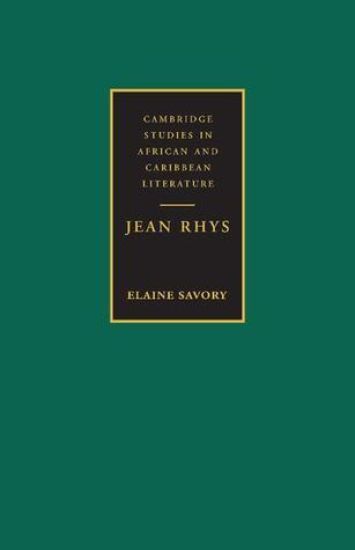
Jean Rhys

Jean Rhys

Elaine Savory

Cambridge University Press
1999
sidottu
Jean Rhys has long been central to debates in feminist, modernist, Caribbean, British and postcolonial writing. Elaine Savory's study, first published in 1999, incorporates and modifies previous critical approaches and is a critical reading of Rhys's entire oeuvre, including the stories and autobiography, and is informed by Rhys's own manuscripts. Designed both for the serious scholar on Rhys and those unfamiliar with her writing, Savory's book insists on the importance of a Caribbean-centred approach to Rhys, and shows how this context profoundly affects her literary style. Informed by contemporary arguments on race, gender, class and nationality, Savory explores Rhys's stylistic innovations - her use of colours, her exploitation of the trope of performance, her experiments with creative non-fiction and her incorporation of the metaphysical into her texts. This study offers a comprehensive account of the life and work of this most complex and enigmatic of writers.
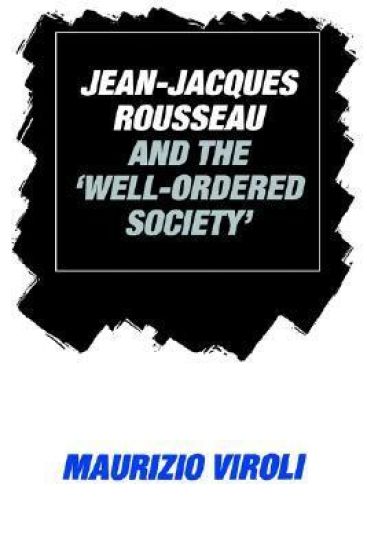
Jean-Jacques Rousseau and the 'Well-Ordered Society'

Jean-Jacques Rousseau and the 'Well-Ordered Society'

Maurizio Viroli

Cambridge University Press
2003
pokkari
This book studies a central but hitherto neglected aspect of Rousseau’s political thought: the concept of social order and its implications for the ideal society which he envisages. The antithesis between order and disorder is a fundamental theme in Rousseau’s work, and the author takes it as the basis for this study. In contrast with a widely held interpretation of Rousseau’s philosophy, Professor Viroli argues that natural and political order are by no means the same for Rousseau. He explores the differences and interrelations between the different types of order which Rousseau describes, and shows how the philosopher constructed his final doctrine of the just society, which can be based only on every citizen’s voluntary and knowing acceptance of the social contract and on the promotion of virtue above ambition. The author also shows the extent of Rousseau’s debt to the republican tradition, and above all to Machiavelli, and revises the image of Rousseau as a disciple of the natural-law school.
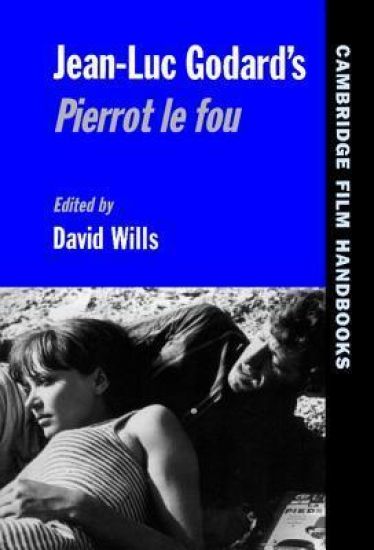
Jean-Luc Godard's Pierrot le Fou

Jean-Luc Godard's Pierrot le Fou

Cambridge University Press
2000
sidottu
Jean-Luc Godard's Pierrot le fou, made at the height of the French New Wave, remains a milestone in French cinema. More accessible than his later films, it represents the diverse facets of Godard's concerns and themes: a bittersweet analysis of male-female relations; an interrogation of the image; personal and international politics; the existential dilemmas of consumer society. This volume, first published in 2000, brings together essays by five prominent scholars of French film. They approach Pierrot le fou from the perspectives of image-and-word-play, aesthetics and politics, history, and high and popular culture, offering thought-provoking insights into the film, while demonstrating its relevance for a new generation of students of film. Also included are a selection of reviews of the film, as well as a complete filmography of Godard's work.
Jean-Luc Godard's Pierrot le Fou

Jean-Luc Godard's Pierrot le Fou

Cambridge University Press
2000
pokkari
Jean-Luc Godard’s Pierrot le fou, made at the height of the French New Wave, remains a milestone in French cinema. More accessible than his later films, it represents the diverse facets of Godard’s concerns and themes: a bittersweet analysis of male-female relations; an interrogation of the image; personal and international politics; the existential dilemmas of consumer society. This volume brings together essays by five prominent scholars of French film. They approach Pierrot le fou from the perspectives of image-and-word-play, aesthetics and politics, history, and high and popular culture, offering thought-provoking insights into the film, while demonstrating its relevance for a new generation of students of film. Also included are a selection of reviews of the film, as well as a complete filmography of Godard’s work.
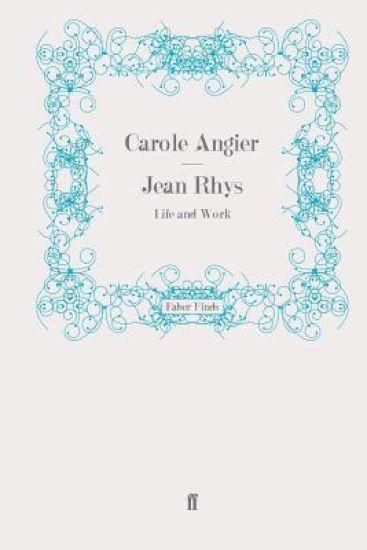
Jean Rhys

Jean Rhys

Carole Angier

Faber Faber
2011
nidottu
'An acute literary intelligence ... the reader comes to trust instinctively Angier's assessments.' New York TimesJean Rhys (1890-1979) had a long life of great difficulty. So inept was she in its management that her authority as the writer of five beautifully shaped and controlled novels appears mysterious: how could someone so bad at living be so good at writing about it?Carole Angier answers this question. Jean Rhys never denied that she used her own experience in her writings, but no one hitherto has understood so well the nature of, and reasons for, this use.On her way to understanding, Carole Angier discovered more about the life than seemed possible. Jean Rhys's childhood, her momentous first love affair, her three marriages, the disasters which befell her husbands, her drinking and its consequences: all are shown with unsparing clarity. Equally clearly, and more importantly, we see the dynamics of her personality as it underwent, and sometimes provoked, these experiences. Sometimes what is revealed is shocking; but Carole Angier's sympathy and compassion dispel dismay, and her brilliant demonstrations of how art was made of events and emotions restores admiration on foundations which are stronger than ever.Jean Rhys did not want anyone to write about her, but this first full biography put beyond question her standing as a great writer of our time, written with an intensity and clarity which mirrors her own. It is a work of exceptional intimacy, sensitivity and power.'Remarkable, the definitive biography. It is deeply researched, subtle, sympathetic.'Claire Tomalin Independent on Sunday'Mesmerising.' Washington Post
Jean-Baptiste Cléry

Jean-Baptiste Cléry

H Will Bashor

Diderot Press
2011
pokkari
While tending his family's garden one September morning in 1779, a young commoner encountered a prince in a chance meeting that would change both of their lives.The young man certainly never imagined that he was setting out on a journey that would take him from the quaint village where he was born to the magnificent courts of Russia, Poland and England. But neither could the young farm boy have imagined that he would one day also witness firsthand the horrific treatment of the royal family imprisoned in a dark medieval prison during the mayhem of the French Revolution. Cl ry, born Jean-Baptiste Cant Hanet, was the only personal servant to remain with King Louis XVI and his family in the tower of the Temple Prison. Although Cl ry himself was closely scrutinized in the tower and even threatened with the guillotine, he managed to secretly record the guards' cruel and merciless treatment of the king, Queen Marie-Antoinette, their two children, and the king's sister. JEAN-BAPTISTE CL RY is the first non-fiction work to provide insight into the cultural and psychological world of this tragic royal family from a very different perspective, that of a dedicated servant. Cl ry was the only personal servant permitted to accompany and remain with Louis and his family in the Temple where they were imprisoned in 1792. Isolated from his family, accused of spying, and eventually imprisoned himself for his loyalty, Cl ry spent his final days in exile in Austria.Was Cl ry wrongly accused of infidelity to the royal family? Was he an agent of the revolutionaries? JEAN-BAPTISTE CL RY separates fact from rumor, and finally unravels the truth about this ordinary man in an extraordinary setting with very extraordinary actors. The biography also exposes the inner struggles of the young servant who served as the personal valet to King Louis XVI and Queen Marie-Antoinette before their tragic rendezvous with the guillotine.Incorporating findings from research based on journals and memoirs from the late 18th and early 19th century France, the compelling story sheds light on the often neglected aspects of the lives of royal servants including their steadfast loyalty and dedication to the king's family as well as concern for their own personal well-being in dangerous, terrifying circumstances.
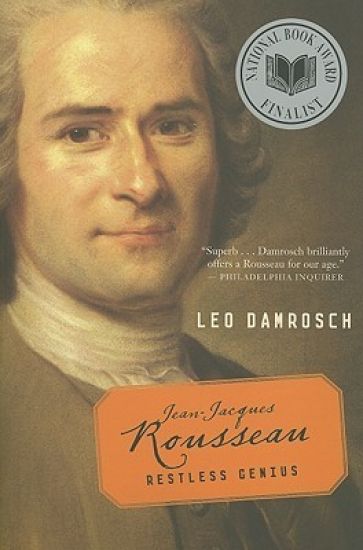
Jean-Jacques Rousseau: Restless Genius

Jean-Jacques Rousseau: Restless Genius

Leo Damrosch

Mariner Books
2007
nidottu
The philosopher Jean-Jacques Rousseau burst unexpectedly onto the eighteenth-century literary scene as a provocateur whose works electrified readers. An autodidact who had not written anything of significance by age thirty, Rousseau seemed an unlikely candidate to become one of the most influential thinkers in history. Yet the power of his ideas is felt to this day in our political and social lives. In a masterly and definitive biography, Leo Damrosch traces the extraordinary life of Rousseau with novelistic verve. He presents Rousseau's books -- The Social Contract, one of the greatest works on political theory; Emile, a groundbreaking treatise on education; and the Confessions, which created the genre of introspective autobiography -- as works uncannily alive and provocative even today. Jean-Jacques Rousseau offers a vivid portrait of the visionary's tumultuous life.